




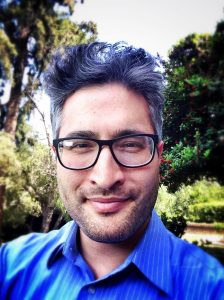
Today we’d like to introduce you to Todd Hioki.
Hi Todd, we’re thrilled to have a chance to learn your story today. So, before we get into specifics, maybe you can briefly walk us through how you got to where you are today?
In my early twenties, I was trying to figure out what I wanted to do with my life. I wanted to do something meaningful and was very interested in how humans grow and develop. A friend suggested that I might try working at a preschool. Honestly, I wouldn’t say I liked the job and wanted to quit, but I didn’t have another job waiting for me. I decided to take some classes in early childhood education, and everything changed. Learning about the different theorists, psychology, neurobiology, and the history of human development gave me a new way of seeing everything I was doing. I became committed to learning more. I wanted to work at the best school I could find and became a teacher at Pacific Oaks College and Children’s School. I earned a master’s degree from the college and taught at the preschool for twenty years. I had the extraordinary opportunity to join Dr. Allan Schore’s bi-weekly study group on interpersonal neurobiology. This gave me the interest and confidence to work on my humanistic psychology doctorate. During Covid, my wife, Leah, helped me start our home-based preschool which is about to start its second year.
Can you talk to us a bit about the challenges and lessons you’ve learned along the way. Looking back would you say it’s been easy or smooth in retrospect?
If there is one thing I have learned about development is that it is never easy. Real growth often is the result of successfully navigating some crisis. Whether you are an infant, a middle-aged preschool teacher like me, or navigating your golden years, this is true. The first struggle was understanding what it meant to be a teacher of young children. I learned that it has very little to do with what we traditionally associate with learning, such as A, B, C’s, or 1,2,3’s. I learned how to gain a child’s trust by being present, not only in their joy and wonder but also in their tantrums, fear, and sadness. As I became a better teacher and wanted to train other teachers, I had to learn how to teach complex ideas in ways that were easy to understand. When I tried to help shape policies that would affect how early childhood organizations were managed, I had to see how each part of the system understood its contribution to the effort. When my wife and I opened our new school, all these challenges converged on us simultaneously. It was like a kind of final trial that tested everything we knew. But it all seems to be coming together in the end.
Thanks – so what else should our readers know about your work and what you’re currently focused on?
I have spent the past twenty years asking the same questions over and over, “What does it mean to grow and develop? What is our job as preschool teachers? How can we help children create a solid foundation that will help them thrive in a complex, ever-changing world?” The more I collaborate with other teachers and the more research I review, the more curious I get. This puts me on equal ground with the children I am trying to teach. And I think parents are drawn to our school because they want to learn as much as they want their children to learn. One of the most significant challenges in being a parent at this time and in this place is not a lack of information but an overload of information. Parents can find hundreds of books on parenting that all seem to promise the correct answer yet these books often contradict each other. At our school, we don’t practice a single approach but learn how to find the process that fits a particular situation. And this is very similar to what we are teaching the children–how to participate in their world with a curious mind, a caring heart, and a flexible, persistent approach.
Can you talk to us about how you think about risk?
If crisis is at the heart of all growth, then risk-taking is essential. There is a risk when a child climbs a tree for the first time. There is a risk when a four-year-old asks if they can join another child’s game. There is a risk for a parent when they say “no” to their child who wants a piece of chocolate cake at 10 o’clock at night (because of the tantrum they know they will need to deal with). For my wife and I, it was a risk to open our own preschool. We can re-frame the term “risk-taking” as simply being vulnerable. Just like when a hermit crab gets too big for its old shell, it has to temporarily leave the security of that old life behind to find something that can accommodate growth. In my experience, it doesn’t seem to get easier. But I think I am becoming more brave. I know that the fear is only temporary and necessary. This is another thing we try to teach the children (and parents) in our program–how to be brave– to reach higher levels of being.
Contact Info:
- Website: magnoliacp.org


Popular
-

JordanL on ‘Breathe,’ Belief, and Building a Movement Beyond the Music
-
Megan Birney Rudert on How Access to Light Is Powering a More Sustainable and Equitable Future
-

Linda Kneidinger on Building Lasting Change Through Small Steps and Self-Compassion
-

Jolana Nika on Redefining Modern Connection Through Intentional, Real-Life Experiences
-

What did suffering teach you that success never could?
-
Who saw you clearly before you could see yourself?


