




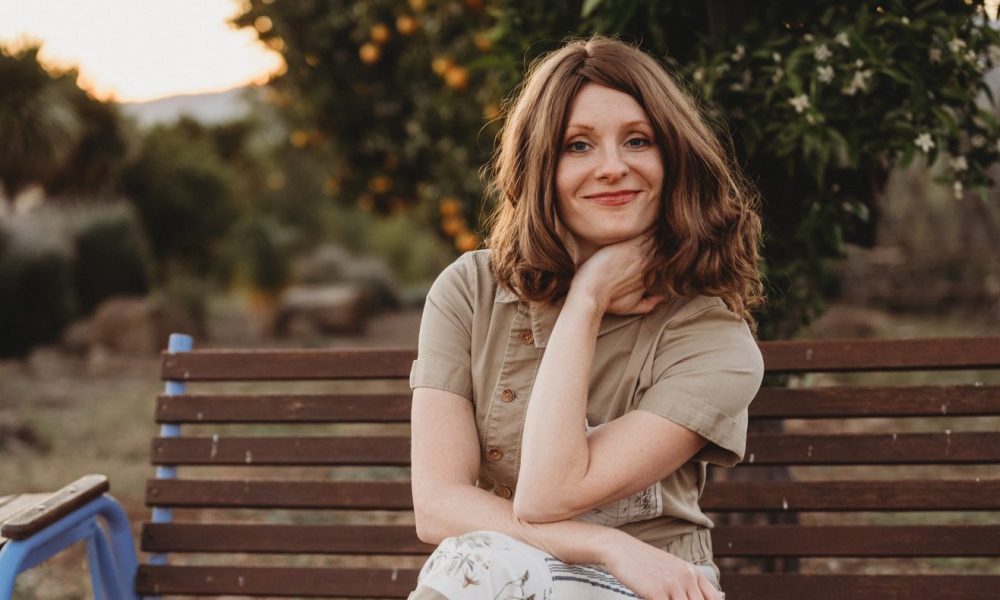
Today we’d like to introduce you to Cat Moore.
Hi Cat, we’re thrilled to have a chance to learn your story today. So, before we get into specifics, maybe you can briefly walk us through how you got to where you are today?
It’s wild to me that I’m the Director of Belonging at USC (helping students create meaningful friendships and communities), given that I spent the first 25 years of my life lonely. If this could be my story, there’s hope for anyone struggling to figure out friendship and belonging in LA. We’re all wired to connect broadly and deeply in nests of meaningful relationships and to become wifi hotspots of belonging that make others feel connected. Yes, even in what can sometimes feel like the social wasteland of Los Angeles. So what changed? Did I watch a TED talk on vulnerability or force my introverted self to a speed-friending event? Nope. I got pregnant and sat in the same Atwater Village Starbucks every single day. I didn’t even go to the cafe in order to make friends–everything that unfolded was accidental. I went because I like to read, write and draw and wanted to be in the flow of human life even though I was scared to interact with people. Something deep–our most basic need to belong–was probably driving me there without me consciously knowing it. I certainly didn’t have the language “I’m lonely” for the lifelong feeling of being trapped in a snowglobe, let alone a “friendship action plan.”
Who reading this has a bellybutton? This is our bodily, universal proof that we’re wired to connect and in fact, cannot live without each other. Belonging is our most basic human need, right and the #1 source of our happiness across the lifespan. Everyone came into the world tied by a cord to another person, and our lifelong process is to reconnect over and over again to friends, neighbors, co-workers, family to form the infrastructure of our lives. I knew this analytically, but I had never experienced that kind of interdependence until I was pregnant with my son, and from the inside out realized that I too am capable of connection and creating a space of belonging for someone else.
As my belly grew, staff and cafe regulars began breaking the ice with me. And very slowly, over several months, my snowglobe started to melt. People began sitting down at the empty seat across from me in the “latte window” while their drink brewed. All I did was make three minutes of space for them to sit down, slow down, and open up. I just listened. And cared. Whether they’d just got a promotion or their parent was sick. Whether they were a CEO or aspiring undertaker. And people would start crying, laughing, having insights into their next steps for work, etc. And they’d just thank me for listening. I felt like I was doing nothing, but somehow that “nothing” was everything.
It was changing me too. Like Dorothy, I felt I went from black and white living into technicolor. I’d been missing so much by hiding from humans for a quarter century. A lot of my own assumptions and beliefs about life were gently reshaped in the context of genuine friendship with people very different from me. Pretty soon, a line was forming at my table with people just wanting to have a moment of connection in the midst of the daily grind. Soon I started introducing people to each other, and a whole community started bubbling up and spilling out of the cafe into family-like relationships, professional collaborations and community events.
For example, several loner screenwriters and I formed the weekly “Writers Salon” out of Bon Vivant–a nearby eclectic restaurant– that grew to about 75 members over time, which met a huge social-mental health need, provided some accountability to get our projects done, and improved all our work through diverse collaborations. Several of the writers and I wanted to expand the experience to non-writers, so we launched “Curious Conversations,” which were two-way TED talks in neighbor’s houses where community members shared their wisdom around topics ranging from the “history of football” to “forgiveness.” All of this from making 3 minutes of space at my cafe table to “just” listen.
It would be this raggle-taggle community that would come to be the social safety net that caught me and my young son in the wake of a traumatic divorce. When I found myself all of a sudden a single mom–the loneliest group of lonely people–this new “framily” of mine were the arms we needed to hold us up. It was then that I realized that community wasn’t just a nice perk to life but often what keeps us alive. Through their kindness and support when I was at my lowest, I was able to take what I’d learned about connecting in cafes and develop strategies to help other organizations and communities learn to slow down and create conditions for belonging.
That’s when USC called. They were having a loneliness crisis that was turning into a mental health crisis, academic disengagement and dropout. (Turns out this was happening on nearly every campus in the US.) Could I do what I’d helped to do in the cafes on a college campus? The same college campus I spent friendless years on half my life ago? Turns out, YES, by doing the exact same thing: getting my skin in the game by being present with students, slowing down, creating space, listening, demonstrating care, over and over and over again. I created a course called CLICK! that helps students explore their belonging stories and create their own next step in their social journey. And the #1 piece of feedback I got across disciplines, ages, backgrounds was, “Thank you for creating space for us to talk about this openly–no one’s really talking about it, so it makes you think you’re the only one struggling like there’s something wrong with you.” Students walk away knowing there’s nothing “wrong with them” because they’ve been lonely, that they’re capable of deep friendships, and that they have the power to help someone else feel that they belong.
Loneliness is not new. But it has become a severe public health crisis and existential crisis in the past ten years, especially post-covid and among youth in the US. There’s too many reasons why to list. You’ll probably read posts advocating for large-scale public policy changes. Those are great; we need them. But what we have direct power over right now is how we show up for each other in the tiny spaces and tiny moments in our current lives. Just making eye contact with a stranger in passing decreases both people’s experience of loneliness. Just smiling, telling someone you like their boots, or inviting someone to sit for a sec isn’t just “nice”–it could save someone’s life.
We all face challenges, but looking back would you describe it as a relatively smooth road?
The three main obstacles to belonging:
– Hurry: when we are moving too fast, thinking about the next to-do list items buried in our phones, we can’t be present. All meaningful connections happen in real-time, in real moments. We have to slow down in order to connect.
– Assumptions: our assumptions about who is “worth” connecting with, how we connect, and who genuinely wants to connect with us may be interfering with our ability to give people a chance. Becoming aware of our reflexes when it comes to initiating and deepening connections can help us make new choices that promote healthy connections.
– Vulnerability: connections will stay stuck in small talk or surface-level activities without someone being vulnerable. This doesn’t mean you overshare your medical history or most embarrassing moments–trust is built slowly and by degree. Yes, it is scary. But it is the way to know if someone is able and willing to take the connection deeper.
Appreciate you sharing that. What else should we know about what you do?
I’m a speaker, writer and creative and activist seeking to inspire and empower people to become wifi hotspots of belonging.
What does success mean to you?
Success is refusing to let anything in life stop you from loving.
Contact Info:
- Website: www.Cat-Moore.com
- Linkedin: https://www.linkedin.com/in/cat-moore-15664462/


Popular
-

Que Johnson on Building Brands That Last: From Visibility to True Market Authority
-

Christina Wren Steps Into the Director’s Chair to Tell Stories That Feel Like Home
-

Portraits of the Valley
-

LA’s Most Inspiring Stories
-

JordanL on ‘Breathe,’ Belief, and Building a Movement Beyond the Music
-

Megan Birney Rudert on How Access to Light Is Powering a More Sustainable and Equitable Future


