




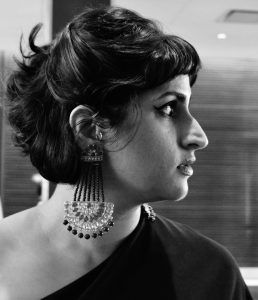
Today we’d like to introduce you to Ami Boghani.
Ami, we appreciate you taking the time to share your story with us today. Where does your story begin?
I’m a first-generation Indian-American and I grew up in Acton, Massachusetts in the 1980s and 90s. My dad has always been really into movies and photography and both my parents are avid readers, so I grew up devouring books, movies and TV shows.
By the time I was 11 or 12, I was obsessed with teen pop culture – The Babysitters’ Club, Sweet Valley Twins & High, Saved by the Bell, Beverly Hills 90210, My So-Called Life and the mother of them all, Clueless. I was 14 when I saw Clueless for the first time – something just clicked for me. It made me so damn happy. That was the moment I knew I wanted to make movies and TV. Specifically, I wanted to make movies and TV shows that reflected my experience as an Asian-American teenager. I loved Cher Horowitz, I related hard to Angela Chase, but neither of them looked like me. Nobody on TV looked like me.
I went to Wesleyan University for its film program. I need to shout out my awesome parents here because they have always been supportive of my career choices. They were like, do what you want as long as you earn a living. Anyway, after I graduated with a degree in film studies and English, I moved to New York City with my friends and pounded the pavement in search of any job related to media. After a year or so of writing grants and logging interviews for documentaries and loading cameras on student film sets and god knows what else, I eventually landed a job as the assistant to Mira Nair, the Indian filmmaker who made Salaam Bombay! (still one of my favorite films of all time), and Monsoon Wedding, which had just come out.
I worked for Mira for a decade – developing scripts, working on set, running non-profit initiatives, and producing short films. The job allowed me to travel – to Uganda, Kenya, Tanzania, Rwanda, Ethiopia, India, Pakistan, Italy, France, UAE, Qatar, Turkey, and more. I co-wrote and co-produced Mira’s feature film The Reluctant Fundamentalist, which came out in 2013. After that, I decided to focus on writing full-time.
Would you say it’s been a smooth road, and if not what are some of the biggest challenges you’ve faced along the way?
I am lucky in many ways but the road has not been completely smooth – is anyone’s? Going freelance was tough on my psyche, for sure. I spent years writing pages and pages that nobody wanted to read or being offered writing “jobs” that didn’t pay at all (don’t you wish you could put “it’ll be good for your resume” on your rent checks?) With every rejection, I felt a lot of guilt – like I was wasting my education and my parents’ sacrifices. The imposter syndrome weighed heavily on me – like, who am I, a brown girl who got mediocre grades in school, to think I deserve a career in Hollywood?
I was well into my 30s and paying my bills by hostessing, babysitting, and tutoring. Every morning, I would watch from my window as my fellow Brooklyn-ites filed out of their apartments and onto the subway on their way to work while I was sitting alone in front of my computer, willing myself to come up with something brilliant. I used to call it “screaming into the abyss.”
In retrospect, I’m grateful I stuck it out – I’m a much better writer because of it. I needed that time to define my writing voice and hone my skills. However, everything changed after I had a baby. It’s hard to hustle when you’re raising a tiny human! I realized I either had to switch professions or move to Los Angeles, where I’d have a better chance at earning a living as a writer. My wonderful husband was like, yeah, follow your dreams! So he quit his job as a music journalist (an industry rife with its own issues) and in 2018, after 15 years in Brooklyn, we packed up our apartment and our adorable toddler and left. It was a risk – neither of us had jobs when we got here. And then, you know, COVID. But we got through it, and I’m so grateful for my family and our health and the wonderful life we’ve built in LA.
Can you tell our readers more about what you do and what you think sets you apart from others?
I write content for kids and teens and I love it – I truly feel this is what I was meant to do. I tend toward Asian-American and/or female-centric stories. I ghost-wrote a Nancy Drew book called A Script for Danger (#10 of the Nancy Drew Diaries series). I also co-wrote The Ever Never Handbook with Soman Chainani as part of his bestselling series, The School for Good and Evil. He’s brilliant and it was so fun to be part of his world! On the TV side, I was a (small) part of the Emmy-nominated writing team for Alma’s Way on PBS Kids, which was really exciting because I grew up watching Sesame Street and Sonia Manzano is an icon. I’ve also written for several Dreamworks Animation shows but they won’t be out for a while.
What sort of changes are you expecting over the next 5-10 years?
I’ve seen a heartening increase in diversity both in front of and behind the camera over the past two decades. An Indian-American teenager in 2023 doesn’t have to force him/her/themselves to relate to Zack Morris! I find it inspiring to see so many brilliant women of color working as screenwriters and TV writers today, but the industry still has a long way to go as far as making this an accessible career for people from every kind of background.
As you probably know, the WGA is on strike. I’ve been a WGA member for 15 years and a member of TAG (the animation guild) for 2. I can say from experience that it is really hard to make a living doing creative work in this industry and it’s only gotten harder. I have watched many talented, deserving friends leave the business for financial reasons, and it sucks. It’s OUR loss.
Contact Info:
- Website: www.amiboghani.com
- Instagram: @bog-face
- Other: https://www.imdb.com/name/nm2039868/

Popular
-

Christina Wren Steps Into the Director’s Chair to Tell Stories That Feel Like Home
-

Portraits of the Valley
-

LA’s Most Inspiring Stories
-
JordanL on ‘Breathe,’ Belief, and Building a Movement Beyond the Music
-
Megan Birney Rudert on How Access to Light Is Powering a More Sustainable and Equitable Future
-
Linda Kneidinger on Building Lasting Change Through Small Steps and Self-Compassion


