




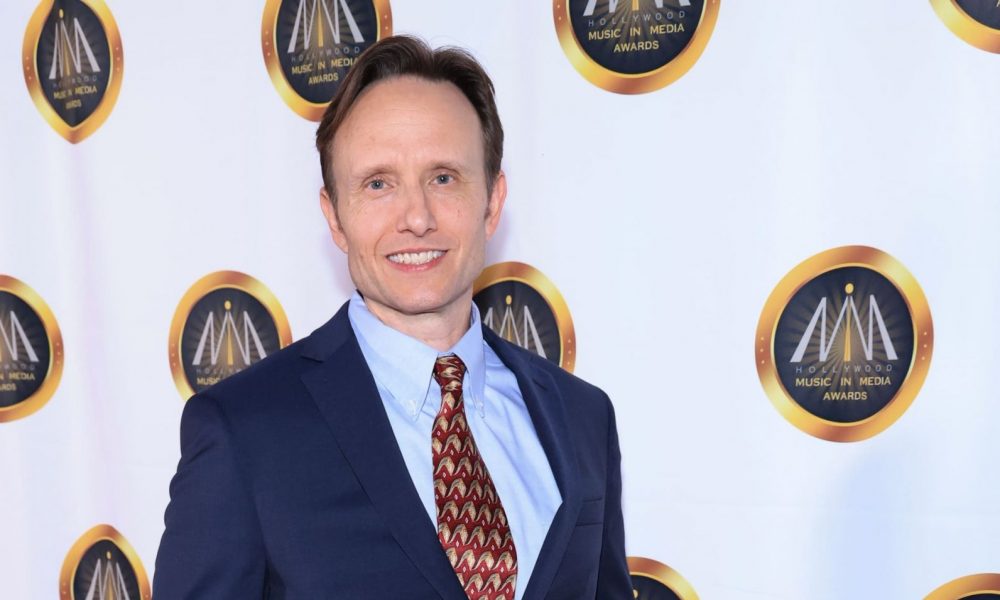
Today we’d like to introduce you to Luke Truan.
Luke, we appreciate you taking the time to share your story with us today. Where does your story begin?
Thanks for taking the time to chat with me about my journey. I hope my story inspires everyone who reads it to create boldly and pursue their dreams!
Looking back at how I started composing music for film, tv, and media has made me realize it’s an accumulation of many skills learned over time and people believing in me and giving me a chance. You’ve heard the phrase by Zig Ziglar that goes something like this, “success is when opportunity meets preparation.” There is much truth in that statement. Before working as a music composer, I learned different skills, which ultimately helped me prepare for a career as a music composer. However, I didn’t realize it while I was learning these skills. Some skills I learned over time include piano performance, accompanist, learning multiple instruments, performing in a group, audio editing, voice over acting, creative writing, technical writing, IT system & network engineering, and cybersecurity.
I want to share how I got started as a music composer, and to do so properly; we must go back in time to the beginning of my musical journey in a galaxy far away. Wait, not that far away, just back to middle and high school. I was all about music in middle and high school. I practiced piano 8+ hours per day, entered competitions for solo performances, attended Brevard Music School and Jacksonville University summer programs, and played in the school Jazz Band and Orchestra and duets. Also, I began composing music for piano at the age of 14. I wrote about ten pieces before graduating high school. After finishing high school, I began to study music in college while working part-time. I even played in an alt-rock band for a short time. All was on track until 6:00 pm, October 1st, 1997, and at the age of 23, some significant obstacles stood in the way, which I’ll share with you shortly!
Fast-forward to 2012. My love for music has been lifelong, and in 2012, I was ready to learn more about composing for films and bought my first computer for composing (composer rig). I started composing in 2012 on nights and weekends. The first film that I scored was the Portal Origins fan film. This was based on an easter egg in two video games, Portal and Dishonored. Since I’m a lifelong gamer, I was familiar with these games and jumped on the project. I worked with the student filmmaker until they graduated! We had a great time, and I’ve always felt grateful that we were able to work together over the years! In 2017 I had the privilege of scoring my first feature film, Chi-Nu Legacy. In 2018, I scored my second feature film, Swipe Club, released on Amazon Prime in 2020 after touring the film festival circuit and winning multiple awards. I also have a mind-blowing full-circle moment during the filming of Swipe Club. When I received the address the movie was filming, I learned it was filming in a neighborhood I grew up in! Since then, I have continued to work on indie films and have earned numerous awards for “Best Composer” and “Best Original Score.” This year was no exception, and two films I scored (Crisis Squad and No Words) for the amazingly talented Annette Wilson took home multiple awards at the Tokyo Film Festival!
In 2022, Hollywood began to recognize my music work when I was nominated in the prestigious HMMA (Hollywood Music in Media Awards) – for the documentary category for music! Joining the ranks of other nominees, such as Hans Zimmer, Brian Tyler, and Alan Silvestri, was a dream come true! Also, some of my friends were nominated, and I was happy to see that!
Additionally, in November of 2022, I applied to the 2023 LAFCI (LA Film Conducting & Composing Intensive) hosted by David Newman and Angel Valez and was accepted! I was over the moon with excitement! The mentors and special guests included William Ross, Conrad Pope, and Booker White! I grew up listening to the music of these industry legends, and to be in the same room with them and study with them was a life-changing experience. We worked on our original music at Blake Neely’s studio and the Eastwood recording stage at Waner Brothers Studios! I conducted the Hollywood Studio Orchestra on the last day as we recorded my original composition! Wow!
Additionally, this year I was invited to be a judge at Level Up Music Production’s songwriter camp with the super-talented LA-based engineer Chris Scott! We had an amazing time creating music and sharing information with other artists to help others succeed in their music careers! They offer songwriting camps in LA, Atlanta, and Nashville!
So, I am where I am today in the film and music world because people in LA and Atlanta believed in me. I’m immensely grateful, and I continue to work remotely with amazingly talented people in LA and Atlanta on some fantastic projects.
We all face challenges, but looking back, would you describe it as a relatively smooth road?
Unfortunately, on October 1st, 1997, my music career was halted by a head-on collision that resulted in me getting pretty banged up. At the time, I didn’t know that this would set a path for me that would be amazing! Also, the good news was that my injuries were only temporary, although they didn’t feel that way then. It took four solid years of doctors, physical therapy, and family support to recover. I’m very grateful that it wasn’t worse and that I had the love and support of my family and future wife! After lots of physical therapy and time, I was able to work again; I didn’t know what direction I wanted to go with my career because it was so painful to sit at a piano and play. So, practicing for 8+ hours was not going to happen, and I knew I would have to do something else until I could get back to music. I met my wife during this challenging time, and her brother lived with us for a while. She frequently stated that her brother kept “breaking” the computer. I was very intrigued and thought, how could someone break the computer without signs of physical damage? LOL. I decided to begin studying computers and purchased a CompTIA A+ certification book. I discovered a new talent, and technology just made sense to me. I achieved that certification and was eventually hired to work at a Gateway Country Store selling computers, training, TVs, and, ultimately, business services. I would also hang out with the technicians on the repair side of the store. I quickly learned this is what I was most interested in doing and good at it. I didn’t know how valuable this training would be when I returned to music years later.
Fast forward a few years, and I began working for a company called Technisource on the help desk. I had a great time and learned even more. Keep in mind that I was studying anything and everything about computers, networking, servers, switches, firewalls, etc., on my breaks and in the evenings. Taking my studies even further, I earned more certifications, Network +, Security +, CASP, and MCSE. After some time, I was asked to join the onsite team. This was when I learned about day-to-day maintenance, server maintenance, patch management, break-fix for hardware, building and running CAT 5 cable, and more. Eventually, Technisource was sold to another company, and I found myself looking for a new position with a local MSP (managed service provider). A local MSP, Lansystem, took a chance on me, and I was hired as a system administrator in 2008. I’m grateful to the owner and IT manager for the opportunity. After about ten years, this company was purchased by Headwaters Group and then Eclipse Networks. At this point in my career, I worked as an IT security and cyber security consultant. Looking back, I value my time with each company because I learned so much in each stage of my career. How does this all tie into music? Keep reading!
While working in the IT field, I knew I needed to get back into music. I would hear music in movies and TV and had this overwhelming feeling that I knew I could create music like I was hearing! In 2012, I bought a powerful enough computer, at the time, to run Pro Tools and some virtual instruments. I practiced and learned something every day for a couple of years. I started scoring student films in 2014, and in 2017 I had the privilege of scoring my first feature film, Chi-Nu Legacy. In 2018, I scored my second feature film, Swipe Club, released to Amazon Prime in 2020 after touring the film festival circuit. In 2018, I made it official and was ready for a change and decided to pursue my original dream of having a career in music. This was when I realized how valuable and essential my computer and technology knowledge would be as I entered a career as a composer.
After lots of research on how to gain more training and experience as a composer, I came across Guy Michelmore and ThinkSpace Education. After learning about what they taught, I knew it was an excellent way for me to get started. I took the leap and decided to enroll in their Music for Media with ThinkSpace Education, which is based in the UK and offers online study at-your-own-pace courses. In addition to the wealth of information in the course, you also have project assignments based on real-world projects. Once you finish your project and send it in, a professional working composer reviews your work and gives you feedback. The training with ThinkSpace prepared me for real-world projects and helped me develop real-world expectations of a working composer. Of course, I had to put in the hours, do the work, and apply the constructive feedback I received. I spent lots of time re-working my assignments. When I applied the suggestions to my project, was when the constructive feedback made sense. Looking back on this course, it was here when all my prior music training, plus the foundation that the course provided, helped my composition skills begin to grow.
In February 2020, I reached out to a production music library and asked if they were looking for an additional composer for their writing team, and to my surprise, I was accepted. They asked me to work on two different EP albums – a total of 10 tracks! My first thought was, “What have I done?” How am I going to write ten tracks in two months? This was faster than I had ever written this many tracks! I put myself on a writing schedule and worked quickly on one track at a time. This was my next big growth moment, and it was fun. I pushed myself, wrote and produced the two albums, and turned them in ahead of schedule!
At this point, I was still skeptical of the sync licensing business but excited and open-minded enough to give it a try. I had no idea where this adventure was going to lead! LOL. I dove headfirst and kept writing music to prepare for the next sync library opportunity. I found Michael Elsner’s Master Music Licensing: The 4 Step Plan to Licensing Success eBook. I love the organized approach to syncing licensing and thought it was amazing and that maybe it would work out! Also, I was excited that he was giving this eBook away for free! This helped me understand more about the sync business and what libraries and music supervisors look for in music. The information was very helpful, and I enrolled in his song placement workshop to learn more about how to pitch to music supervisors and exclusive music production companies. Once I understood the information, I began to apply what I had learned.
Then in December 2020, I was signed by Fliktrax music library to write and produce music as a member of their custom writing team. This is where I realized how essential my education at ThinkSpace and film scoring was. As a member of the Fliktrax custom writing team, I was now receiving music briefs just like I practiced at ThinkSpace Education! Except now, I’m writing for TV shows – sports themes, crime show themes, drama, action, and more! I’m in my third year in the sync license business. My music has been placed over 100 times on TV shows like Shark Week, TLC’s Return to Amish, Animal Planet’s Mysterious Creatures, Bondi Rescue, Sydney Harbour Force, Strong Female Lead (docuseries), Discovery ID, TV shows in Australia, UK, US, and other areas worldwide! I can say that after I started working with Fliktrax, my workflow, writing, and production speeds increased dramatically!
In the fall of 2022, I was signed to my third production music company, Level 77 Music. In addition to working on their production music side, I was also signed to work with their Film and TV scoring division, Sonic Score! I’ve come a long way since this journey began, and I’m grateful to everyone who gave me a chance. Additionally, I’m glad I put in the work to prepare when the opportunities were presented!
As you know, we’re big fans of you and your work. For our readers who might not be as familiar, what can you tell them about what you do?
For those who are not familiar with who I am, my name is Luke Truan. I’m a film, TV, and media composer and producer. I’ve scored over 15 movies, and in the last couple of years, my music has been placed over 100 times on TV shows like Shark Week, Killer Cases, TLC’s Return to Amish, Animal Planet’s Mysterious Creatures, Pig Royalty, Bondi Rescue, Sydney Harbour Force, Strong Female Lead (docuseries), Discovery ID, TV shows in Australia, UK, US, and other areas worldwide!
As a composer, it’s my job to support the visual story. So, I’m also a storyteller. A composer learns to support the visual story by identifying the emotional beats, timing, theme, energy, and pacing. Each scene is connected somehow, and as mentioned earlier, all the aspects are tied together with music! Additionally, music should also support and enhance the unspoken story. Unspoken content can include how light shines into a room, how water is moving, the wind as it moves through a scene, the feeling of the scene in general, and much more. Music helps us identify emotions and experiences that are felt and hard to identify with words alone. Music is everywhere and around us all the time. You just have to stop and listen!
I’m most proud of my family and the relationship I have built with them. Additionally, I’m incredibly proud of my son, who, without pressure from me, decided to learn and play viola in the school orchestra this last year! His decision absolutely blew me away, and I am incredibly proud at the same time. This year he is in 6th grade, his first year in the orchestra, and under the guidance of Whitney Tinley, he and his classmates sound fantastic and are doing amazing. My wife and I will be there with him as he blazes his path in life and with music!
My persistence, drive to learn new things, curiosity, and determination to create the most realistic-sounding orchestra set me apart from other composers. I take the time to connect with people, learn the director’s vision, and find ways to reflect that vision in the score, create an original sound for each project yet, maintain my signature sound, and commit to scoring and music production excellence. Anyone can figure out how to record or program strings into a DAW, but how realistic can you make the orchestra sound? This is a skill that takes practice, just like you would practice any instrument. However, the music becomes even more magical when the budget allows for a live orchestra! There is nothing like it!
So maybe we end by discussing what matters most to you and why?
What matters most to me? That’s easy; it’s family. The relationships and experiences that we have together are most valuable to me. I’ll say it again; I’m incredibly proud of my son, who, without pressure from me, decided to learn and play viola in the school orchestra this last year!
In terms of my music career, what is most important is bringing joy to millions through music. Think about your favorite movie or TV show – the characters, the visual effects, the cinematography, and the music. Now, imagine it without music. Better yet, pull it up on your computer and mute the sound and watch it. It’s good without the music, but when you add it back in, you immediately feel more connected, and the amazing visual story becomes much greater. This is not only a way to appreciate what music brings to a movie, TV show, or media production; this is one of the study techniques I have used for years and is how I approach scoring TV and film. Try this with one of the nature documentaries like Frozen Planet 2. After all, music is the universal language and communication resource!
Another important part of music to me is education and continuing education – especially if you choose the path of a music composer. Access to proper training, resources, and mentor support is essential for a successful music career. Of course, you must put in the work too. Also, it’s important to understand that the path is different for everyone. I have met many composers and watched videos of composers’ stories to gain a better understanding of how and why each person’s path is different. There are many reasons, but what was most interesting were the similarities. Yes, they have some similarities!
One of the common traits between all successful composers and an essential skill in any career is focus – a commitment to your chosen path. In other words, the way to succeed with something is to start and don’t stop, even if you take small or micro steps. Mark Twain said, “The secret of getting ahead is getting started.” I would add to that and say the secret to success is to get started and keep going! Will life throw you a few curve balls? Will some challenges try to deter your goals and throw you off course? You bet! Does each person move forward at a different speed? Yes, of course, but how you respond makes all the difference!
It is important to learn about other people’s stories, but equally important to not fall into the comparison trap. Remember, the comparison is the thief of joy!
My recommendation is to find a music mentor who can guide you as you begin and throughout your composer career! Even though finding a mentor is not easy, reach out to people who you are where you want to be in your career and business. There are several ways to find a mentor. Your mentor could be one-on-one coaching sessions, a live Q&A on IG, an eBook, an on-demand video course from a professional who is currently working in the music business, a program you apply to, a workshop your travel to (e.g., LAFCI), a Facebook group, an online workshop, etc. It’s worth the effort to find a mentor because, in the long run, a mentor can save you time and money, give you accountability, and help you stay focused on your goals.
Additionally, building time into your day for other things in life outside of your career is essential. In addition to working to achieve your dreams and goals as a music composer and producer, it is essential to add fitness, time with family, and time away from the studio into your daily routine. As a composer, I sit at the computer on and off all day – sometimes for 10 to 12 hours. In addition to breakfast, lunch, and dinner, you need to take breaks. Stand up and go outside, ride a bike, run, jog, etc. These are a couple of things that can help with your mind and body/work-life balance.
From my experience, I have found some key steps to being successful at whatever you want to achieve.
5 Essential Steps for Success
- Associations, Drive, Action, Passion, Time, and Faith Equal Success
a. Your ability to A.D.A.P.T x Faith = Your Success
b. The music business is challenging, and motivation alone is not enough. You must be driven and passionate enough to get out there and learn as much as possible. Then act on that knowledge. That action will lead to meeting new people in the music business who may offer guidance, be a collaborator, and even make new friends. When meeting new people, offer to assist with their projects; it’s not always about you and what you want. When the time is right, speak up and talk about your music. Have faith when things are not going your way and you don’t think you are moving forward. As long as you put in the work, are excellent to others, standing up for yourself when necessary, you are laying the groundwork for an amazing career as a composer. - Focus
a. Choose one area of music you want to compose for and learn it inside and out before moving on to another section. If you want to be a game composer, learn everything about being a game composer before moving on to film. These are different paths to a career as a composer. If you want to do it all, you can just not simultaneously. - Continue to Learn and be Curious
a. Be curious about everything! Learn as much as possible about how a computer works, how midi works, how the DAW (Digital Audio Workstation) works, virtual instruments, hard drives, the music business, the sync license business, contracts, networking, marketing, and more!
b. Unlock your learning potential with a book I’m enjoying – Jim Kwik’s book Limitless. It is designed for you to “Learn How to Learn” better and faster. - Mindset
a. Never give up! As you read in my story, life has thrown me some curve balls, and my path to a music career was challenging. However, the skills I learned along the way are essential to a successful transition and career. Your path will likely differ from anyone’s, but you can do it!
b. Having the proper mindset and expectations is essential to success in any career. As a composer, you are an entrepreneur, and the 80/20 rule is true. The rule goes like this “20% of your clients are responsible for 80% of your business.” The same goes for your work habits and your ability to maintain focus. Be mindful of where you put your time and energy.
c. Start your day with a mindset of beingExcellent to Others. Treat others as you would like to be treated! It goes a long way. - Time Management and Organization
a. Every day, each of us has about 1,001 things to accomplish throughout the day. I have found that keeping track (being mindful) of my time helps me accomplish more during my day.
b. Additionally, it’s easy to get overwhelmed with everything that is on “your list.” Every day is not perfect, but I have found that breaking big goals into smaller steps helps me accomplish my “Big” goal. Not only do you achieve the “Big” goal, but completing the small “bite-size” tasks, gives you a great sense of accomplishment and keeps you pushing forward.
I have accomplished many things on my dreams and goals list. However, I know I still have much to learn and a long way to go in my career! Never stop learning! Keep pushing yourself, and don’t be afraid to fail. Remember that no one saw the hundreds of missed shots Michael Jordan took every day – we mostly saw his success. Even though failure stinks and doesn’t feel good, you can either remain defeated or turn it into a learning experience! I prefer to turn it into a learning experience, write a new piece immediately, and incorporate what I just learned.
I’ll leave you with one of my favorite quotes, “If you fight for your limitations, you get to keep them!”
Contact Info:
- Website: https://luketruanmusic.com/
- Instagram: https://www.instagram.com/LukeTruanMusic/
- Facebook: http://www.facebook.com/LukeTruanMusic
- Linkedin: https://www.linkedin.com/in/luketruan/
- Twitter: http://www.twitter.com/LukeTruanMusic
- Youtube: https://www.youtube.com/LukeTruanMusic
- SoundCloud: http://www.soundcloud.com/LukeTruanMusic
- Spotify: https://open.spotify.com/artist/0sqXEUZbG1jdl2ha3y2B09


Image Credits
Images from LAFCI were taken by Joel Henderson (@mrdonteva). He is awesome!
Popular
-

Que Johnson on Building Brands That Last: From Visibility to True Market Authority
-

Christina Wren Steps Into the Director’s Chair to Tell Stories That Feel Like Home
-

Portraits of the Valley
-

LA’s Most Inspiring Stories
-
JordanL on ‘Breathe,’ Belief, and Building a Movement Beyond the Music
-

Megan Birney Rudert on How Access to Light Is Powering a More Sustainable and Equitable Future


