


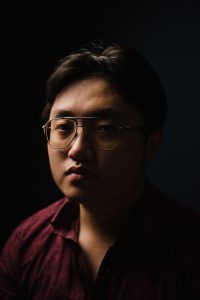
Today we’d like to introduce you to Abel Guan.
Abel, we appreciate you taking the time to share your story with us today. Where does your story begin?
It was the winter of Northern Alaska. Outside the car was a -22°F snowstorm. Inside the car were me and my partner and we just paid the price for an unplanned, audacious trip to Arctic Circle. Our rental car slipped off the main road and the tires got caught into a pile of snow. The gas was running low since we’ve been abusing the AC to keep the warmth. At first, we enjoyed this unexpected accident because it brought some spice to this tedious road trip where snow was our only scenery. We were snacking and imitating how our families and friends would react when hearing this anecdote. But after hours of waiting with no car passing by, the atmosphere inside the car was getting heavier as the sky getting darker and darker. We realized the chance of us being rescued was slim if none of us could get out of the car and actively look for help. When I stepped out of the car, the cold was almost unbearable. It hit me different when walking alone in a vicious snowstorm and I might not make it to the nearest town located 30 miles away. I started to think about life.
I grew up in a rural town in southern China. As a kid, I had a very fun and naughty childhood: exploring nature, throwing firecrackers into rivers. All those silly things a country boy could do, I have done all of them. As I was getting older, life started to get serious: a good college and a steady job. The pressure from my peer and parents forced me to keep my head down and not to take any risk in life. Until one day, I finally grew tired of it. Without telling anyone, I dropped out of college and came to the United States to pursue the thing that everyone called “dream”, even though I didn’t even have a specific “dream” in mind. I mistook my eagerness for freedom as a way to explore my potentials. But the only freedom I took advantage of was the freedom to stay in my comfort zone and not take risks in life. On the other hand, the individualism that was being portrayed in so many films tricked me into believing in the land of freedom where self-realization is the only goal, anything can be achieved by anyone. But as a minority non-citizen, I can feel the barrier and limitation within the reach of my hand. Once again, I stopped trying. Except for this time, I got no place to escape to.
When I walked in the snowstorm, I told myself this is probably the farthest place on earth I could ever be. There was no one around me, no pressure from society, no racial prejudice, no nothing. Besides facing the consequence of freezing to death, I was truly free from anything. But I wasn’t happy. I had achieved nothing and nothing will be left behind except the land that beneath my body will be more nourished than others in the upcoming spring. Right at this moment, when I was self-reflecting, a pick-up truck that came out from nowhere spotted me and asked me if I needed any help. It wasn’t like a heroic moment that I have imagined where a gigantic red helicopter finally found me and I cheered and collapsed with tears of joy. In reality, I was saved by a guy who just wanted to buy a sandwich at a nearby store.
My life surely has changed after that incident. I began to accept and appreciate whatever life has to offer and I’d make the best out of it. Watching films has always been the biggest hobby of mine and naturally, I applied to film school. After studying for a year at Emerson College, I transferred to UCSD, an amazing school that I just graduated from.
Over the four years, I have been shooting as many films as I can as a director or DP. And I never regret the decision of turning my passion into my career. The main reason isn’t simply because I love what I was doing, but because only in this way, you and your work, ideas, and passion can become oneness instead of being separate. For me, I think it’s dangerous for an artist to be separate from your work. When I say separate means what you created is not a representation of your idea. Separation can later be enlarged into rejection, and rejection will inevitably lead to abandonment. To avoid that, all of my works are based on my emotions and longings or others that I can deeply resonate with. Internal struggles, the pain of separation, the loss of self, and pure happiness there are the four themes that I always based my stories or characters on. The synchronization of my works and myself has become my purpose in life. Recently, my latest film Dear Angie won the finalist award at the Kamil Media award and I was truly happy as it was my first recognition as a filmmaker. It also makes me convinced that I’m heading in the right direction which is the one thing that I was truly happy about.
Would you say it’s been a smooth road, and if not what are some of the biggest challenges you’ve faced along the way?
I think it has never been a smooth road for any filmmaker or artist. A lot of compromises have to make. Personally, the first struggle for me was the language and cultural differences. But this can be easily overcome if you have the patience to learn and the modesty to accept other ideas. But there are also things that can’t be easily overcome, things like finding your voice and identity. In this era, everyone can be a star. How do you make yourself stands out among millions of others has become the most prominent struggle for people like me. What’s your voice? What’s your style? What kind of stories do you want to tell? Questions like these can be really difficult to answer. They are really good at creating anxiety when you are in the process of creating. In the end, I found that the best solution to this problem is to simply ignore it. The style, the uniqueness are the by-product of your ideas and dedication to your work. As long as you are really serious about what you are doing and constantly learning and crafting your work, those struggles will be resolved on their own.
Can you tell our readers more about what you do and what you think sets you apart from others?
During my junior year in college, my friend Kerisa Lin, who’s a wonderful artist and filmmaker, introduced me to Zhou Bing, a well-known Documentary director in China. I had the privilege to DP two of his projects in LA. One was about the history of the architecture in Huntington library. Another one was about a young Asian politician. The experience of making documentary inspired me greatly about how to create a sense of authenticity in both documentary and narratives. The way he taught me how to interact with interviewees and how to capture the moments of subtle emotion eventually led to my creation of Dear Angie. Although I made other bunches of film prior to this one, I felt like that was the first time I capture some true emotions on the screen other than acted emotions. The experience of making documentary also let me know so much about the city of LA, especially about those communities that haven’t been under the spotlight. As a young Asian filmmaker, I felt it became part of my responsibility to shine more light to those untold stories and people living in the shadows. After finishing with the documentaries, I started work voluntarily for many Asian organizations to make promo videos for them because before they couldn’t afford making one. Through my lens, I feel proud of myself to use my skill to give voices to those muted.
In terms of your work and the industry, what are some of the changes you are expecting to see over the next five to ten years?
There’s no doubt about the fact that the industry is completely changed since Covid or even before that. With so many film companies being purchased and integrated, all the big studios take fewer risks in the creating process. The remakes and sequels of the popular IP surely make the film less “artistic” than before. Nowadays, the cinema is not competing against streaming media like Netflix, but it’s fighting against video games and TikTok for the audience. Most importantly, I never see so many theaters closing down in such a short amount of time. All these changes inevitably bring more challenges for people like me who want to make films of original, personal, and unique stories. However, it might also be the best era if you viewing the industry from different perspectives. With the development of technologies, film cameras are getting smaller and cheaper, which gives indie filmmakers like me to make a film with lower budget. Meanwhile, Hollywood is changing. White is no more the only color at the night of Oscar. For the first time in history, minority filmmakers and their works can be respected and valued by the mainstream media. I’m seeing more opportunities in the future. But before that, I only want to focus on polishing my narrative skills because regardless of equal opportunities, a good film should always about a good story and nothing more.
Contact Info:
- Email: abelguanhaoran@gmail.com
- Instagram: https://www.instagram.com/abel_guan/
- Other: https://vimeo.com/user72408774


Popular
-

Robin Olive on Building an Inclusive Performing Arts Movement and Expanding Opportunities for Every Student
-

Portraits of the Valley
-

LA’s Most Inspiring Stories
-

Que Johnson on Building Brands That Last: From Visibility to True Market Authority
-

Christina Wren Steps Into the Director’s Chair to Tell Stories That Feel Like Home
-
JordanL on ‘Breathe,’ Belief, and Building a Movement Beyond the Music