



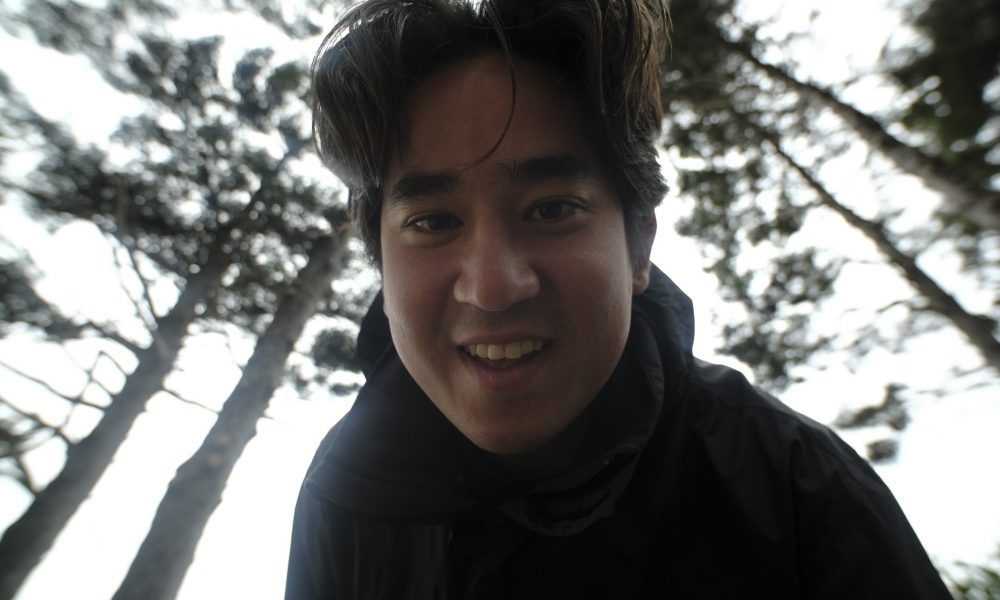
Today we’d like to introduce you to Paul Goodman.
Hi Paul, it’s an honor to have you on the platform. Thanks for taking the time to share your story with us – to start maybe you can share some of your backstory with our readers?
I graduated from UCSB in 2014 and moved to LA with some other film studies graduates. From there, we started making short films and helping each other get a footing in the film industry. We worked together sometimes and had independent gigs but it was mostly a great space of creativity and support. During that time, my roommate and I landed a gig that was pitched to us as “the experience of a lifetime.” It was an opening on a docu-series that followed the animal activist group Sea Shepherd as they sailed to Antarctica to fight off illegal fishing. Formerly the show, Whale Wars, it needed two camera ops and one sound engineer. We did well in the interviews and two weeks later, we were on a flight to Perth, Australia.
There was so much that happened on this trip but it essentially lived up to the hype. We were on a ship for over three months sailing with 30 other crew members across the Indian Ocean and South China Sea. We chased illegal fisherman on the open ocean, we had run-ins with multiple Nation Navy’s, we intervened in dangerous fishing practices which exposed a criminal organization ranked on Interpol’s most wanted list and we brought them to justice in Indonesia. I, personally, was put on missions that I felt like my safety was questionable and the legality was either unimportant or undefined. It was exciting, terrifying, exotic and pushed us all. It was some real wtf stuff. I remember our third day at sea the captain got a message stating to be on our guard for Somali pirates and to keep an eye out for debris from the downed Malaysian aircraft. As I filmed that sequence, I knew it was the beginning of some of the strangest days of my life.
That took place from the end of 2015 through to the spring of 2016 and if you really want to know how nuts it was, there was a TV show made out of it. When we got back and we started making our own films again. I traveled over the summer to Alaska and did my usual week of a camp counselor at my temple’s summer camp. I was feeling kind of off at this time and it got slowly worse until September. One night I was working out and in the middle of some push-ups, I went blind in my left eye. The next day I went to the doctor and two days after that, I was diagnosed with cancer.
From the day of my diagnosis, I spent 40 straight days in the hospital doing a medley of chemotherapy. This ship was strange, but this was a whole new thing. I was isolated, again, in a tiny bed with one window but this time, everyone was looking at me. Again, there is so much to cover here that is hard to put into words. At that time, I didn’t know I’d be doing chemotherapy for three years. I had heard it from my doctors but that type of timeframe and punishment is impossible to digest. I had to make choices about the future of my life, seemingly, out of nowhere while thinking I was going to die. I was 25. It was intense.
During that first year of chemo my day to day was a series of once in a lifetime experiences. Not just the slog of toxic chemicals making my body do weird sh*t but my relationships with every single person in my life changed. I had friends confessing to me both good and bad. Strange things like having to freeze my last (possibly) viable sperm and due to some hospital red tape, my MOM had to take it to the sperm bank. I ate shellfish one day and almost died for a month. When I was finally able to leave the hospital after those first forty days of bubble boy chemo, Trump was elected. 2016.
For the first year, I was in the hospital or as outpatient chemo for probably 10 out of 12 months. I was heavily immune-suppressed since the chemo’s job is to eradicate your white blood cells. That meant intense isolation and lack of any physical capabilities. My work was cut-off and my only creative outlet became my computer. I began diving deep into editing and writing. I was doing some of that before but now it became everything. I wrote a ton of scripts in that first year; two features and a handful of shorts. By the second year, I was doing chemo every two weeks and that allowed me to have two weeks of feeling relatively okay. So I pulled together some of the guys from our old house and I started directing some of those shorts I wrote. For the next two years, I would do chemo, rest, then get together in a tiny window and shoot films. We shot four shorts and eventually a feature.
I don’t know how much I should get into it here but the crux of this prompt, how I got here, is tied in with adventure, passion and a lot of chemotherapy. Two of the shorts helped us get funding for a feature and we shot it. A road trip script that I wrote while in the hospital that first year called, Evergreen. We had four months of pre-production where I was still intermittently doing chemo and then one month of shooting. I had to arrange with my oncologist to align my chemo treatments a little farther apart in order to accommodate the shooting schedule. My crew, I would die for. They carried me across that finish line. The most serendipitous part of it all is that two days after we wrapped on location in Northern Washington, I was back in the hospital doing chemo. My last chemo to this day. Finishing a month-long shoot and doing my last chemotherapy ever felt like the win of a lifetime. I was sick, as usual, but proud and accomplished- ready to get to the edit. It was great timing too because not even two months later COVID hit the US.
Evergreen is now finished and we’re planning the next one.
Would you say it’s been a smooth road, and if not what are some of the biggest challenges you’ve faced along the way?
Anyone who has made their first feature film will tell you how hard it is but then add Leukemia into the mix. I would say I challenge you but I really don’t. Children have a high rate of survivability with this type of cancer but adults have it harder. During that first year of chemotherapy and especially after my diagnosis, I was of the understanding that I would get really sick and then I would die. In a way, I still believe that but in the context that it won’t be anytime soon. I’m now in remission and am out here building upon a career that started from a real act of hope.
In the immunocompromised and crazy state, I was in there was no way to do anything about my film career. At that point, I had taken some good gigs and was building the network but none of that could continue. Like I mentioned, I had to adapt my creative outlets and my life to this new environment. I didn’t really see it then but writing those scripts was my first admission to myself that maybe I’d be okay.
By the end, I was shooting a feature film in between chemo treatments. And I’m not going to say that the drive to do that was some killer mentality to make films at all cost. It was symbiotic. It was three years of chemo. I know I was making films for my fight.
Can you tell our readers more about what you do and what you think sets you apart from others?
I wrote, directed and edited a film called, Evergreen. I had previously made two short films which had some moderate success at film festivals and it gave us the boost to fund and deliver a feature.
This was a road trip film that was shot on location from LA to Canada and took us on the road for 28 days straight with a core team of 10. Pulling this team of extremely talented filmmakers together into what was essentially a mobile studio took a lot of resources and versatility and, as mentioned before at length, I did it while undergoing chemotherapy. Currently sits high on my proudest achievements.
Previously, I was a camera operator and sound mixer for a docu-series called Eco-Warriors which followed the flagship vessel, The Steve Irwin, and crew of the Discovery show, Whale Wars, as they chased one of Interpol’s most wanted across three oceans.
What are your plans for the future?
Now that I’m out of chemotherapy regiments it is on. We have scripts slated for 2021 and are excited to carry the momentum from our last feature project.
In the future, I hope to make films that highlight the Japanese American and Asian American voices in the United States. The dream is to shoot a specific Internment Camp story that I’ve admired my whole life.
Contact Info:
- Email: eighteastproductions@gmail.com
- Website: eighteastproductions.com
- Instagram: Evergreen_themovie


Popular
-

Christina Wren Steps Into the Director’s Chair to Tell Stories That Feel Like Home
-

Portraits of the Valley
-

LA’s Most Inspiring Stories
-
JordanL on ‘Breathe,’ Belief, and Building a Movement Beyond the Music
-
Megan Birney Rudert on How Access to Light Is Powering a More Sustainable and Equitable Future
-
Linda Kneidinger on Building Lasting Change Through Small Steps and Self-Compassion