



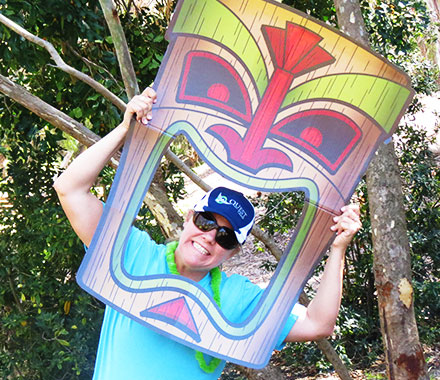
Today we’d like to introduce you to Jodie Knott, Ph.D.
Jodie, please share your story with us. How did you get to where you are today?
I have been a licensed psychologist since 2005. I first started utilizing experiential learning approaches that included team building play-based initiatives for children for their therapeutic value in graduate school at the University of Oregon when I worked with chronic youth offenders who were in youth detention. I was initially asked to create a sports based program for teens on the detention unit since I was a collegiate athlete. I researched it and the literature related to facilitating play based initiatives spoke to me as a potentially powerful way to help children grow and learn. What I have come to love about experiential learning is that it is an active way to learn that tends to engage all types of learners, despite if a child has various learning difficulties due to the richness of the experience. Since my time at the University of Oregon I have had the opportunity to work with children, families, and adults through a variety of settings including through the county, at schools, in the hospital, and in private practice. I am most passionate about my work at Quest Therapeutic Camps where I get to have an incredible staff to help me to provide opportunities for growth for children with mild to moderate social, emotional and/or behavioral difficulties. I feel blessed to direct the Quest program.
Prior to Quest, I was already facilitating rock climbing social skills groups for children. Dr. Bob Field, the Founder of Quest and Director of the Bay Area camp, called me out of the blue in 2009 since he saw my website page for the therapeutic rock climbing and was curious if I had ever thought of running a camp since there had been a previous Quest Camp in Huntington Beach that he was curious if I had any interest in restarting the camp. Since I had actually fully mapped out an entire family therapy camp in graduate school it has been a really good match. I continue to be driven to incorporate the latest empirically-validated treatment approaches for children into an experiential learning model that they will find fun and engaging. My favorite part of my job is getting to celebrate successes with our campers when they have achieved beyond what they thought was possible.
We’re always bombarded by how great it is to pursue your passion, etc. – but we’ve spoken with enough people to know that it’s not always easy. Overall, would you say things have been easy for you?
I think one of the biggest challenges for us always is to get the word out to parents about the service we offer. Another challenging area for us as a company is to try and understand as well as to help our families to better understand the complexities regarding mental health insurance in regards to the services that we provide at Quest.
We’d love to hear more about your business.
We specialize in providing therapeutic services to children 6 to 18 with mild to moderate social, emotional and/or behavioral difficulties through a 7-week summer camp and afterschool program. We offer 6 weeks of day camp and then a one week residential camp. Our campers come a minimum of at least 3 weeks to our program. We typically provide services to children with ADHD, anxiety, depression, high functioning autism (previously called Asperger’s Disorder), and learning disabilities. Some children who attend our program don’t have any official diagnosis, but would benefit from a more structured camp experience and opportunity to build skills. Quest Camps provide individualized behavior plans, group therapy, occupational therapy services, either a 6 to 1 or 4 to 1 camper to staff ratio based on age, parent meetings with home therapeutic goal development, and consistent positive interventions, while engaging in fun activities such as rock climbing, soccer, karate, arts and crafts, and field trips such as high-ropes courses, bowling, trips to a trampoline park, Boomers, and beach days. We use our Quest Therapeutic Model to develop individualized goals for our campers and provide feedback to our campers every hour of our program. We infuse aspects of cognitive behavioral therapy, social thinking, mindfulness, and the latest research regarding neuroplasticity and wellness into our Quest Model.
I am proud that we have had over 300 children go through our program and that we have had the privilege to be a part of so many transformative moments in the lives of our kids. I have seen so many kids score their first soccer goal, make their first friend, have their first sleep away from home, catch their first wave boogie boarding, and make it to the top of the rock climbing wall after working hard on this achievement for three weeks–These things are always huge celebrations and never get old. I also love hearing from parents about the huge achievements we don’t get to see since so many of the changes continue to crystalize after camp and really start to show when kids return to school.
We have three studies that demonstrate Quest’s effectiveness. During the summer of 2008, 155 families participated in an independent research study by Lisa Greenberg, a doctoral student at California School of Professional Psychology-San Francisco. Greenberg measured the effectiveness of Quest’s therapeutic program. Comparing Connors-3 scales from the beginning and end of camp, the results demonstrated treatment benefits rarely seen in psychological programs. A 2-year study of 47 Quest Therapeutic Camps of Southern California campers demonstrated significant positive gains for campers who attended Quest, consistent with previous research on the Quest Therapeutic Model including reductions in aggression and impulsivity and improvements in social awareness (ability to observe social cues), social cognition (ability to interpret social cues), social communication, social problems, and problem behaviors. Our latest program evaluation counted the frequency of reciprocal conversations between campers and found the both young (ages 5 to 7) and middle camp (ages 8 to 10) increased in reciprocal conversations from baseline.
What sets us apart is our focus on combining evidenced-based practices into therapeutic adventure. We are vigilant about the concept of play with a purpose and program our entire camp with intent. We are passionate about using mediums such as therapeutic rock climbing to help kids achieve at the highest levels.
What were you like growing up?
I was a tomboy growing up. I was always outside playing and doing something active. I played soccer from third grade through college. I believe being on team sports throughout my formative years played a huge role in my life.
Personality wise, I am a calm person who is tenacious and driven. I strive for excellence in the things I set out to accomplish. I believe in having a great team of people who make me and my program better.
Contact Info:
- Address: 5212 Katella Ave., 104, Los Alamitos CA 90720
- Website: www.questcampsofsocal.com
- Phone: 714-490-3428
- Email: jknott@questsolutionssocal.com
- Facebook: https://www.facebook.com/questcampsofsocal/
- Yelp: https://www.yelp.com/biz/quest-therapeutic-camps-of-southern-california-los-alamitos-3


Getting in touch: VoyageLA is built on recommendations from the community; it’s how we uncover hidden gems, so if you know someone who deserves recognition please let us know here.
Popular
-

Robin Olive on Building an Inclusive Performing Arts Movement and Expanding Opportunities for Every Student
-

Portraits of the Valley
-

LA’s Most Inspiring Stories
-

Que Johnson on Building Brands That Last: From Visibility to True Market Authority
-

Christina Wren Steps Into the Director’s Chair to Tell Stories That Feel Like Home
-

JordanL on ‘Breathe,’ Belief, and Building a Movement Beyond the Music