


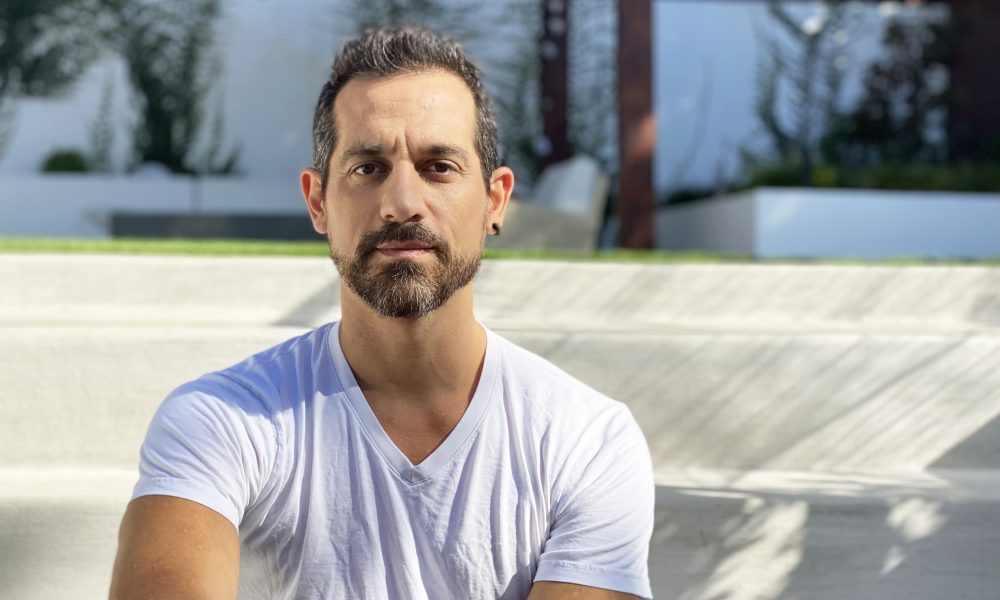
Today we’d like to introduce you to Marco Regina.
Thanks for sharing your story with us Marco. So, let’s start at the beginning and we can move on from there.
I was born and raised in a small city in Southern Italy, called Matera. I was like any other kid who really loved sports and drawing. My dream when I was young was to follow an “artistic” path but it was something not possible for me since everything around me kept reminding me that drawing was only a hobby, not a real profession. Also, the fact that I wasn’t even a good student didn’t allow me to explore my passion since traditional school was considered most important of all. After I finally managed to end high school, despite lots of difficulties, I realized that I had completely forgotten how to draw or paint so the only thing I had left, according to society, was going to college. But, clearly, the only faculty that somehow seemed doable for me to attend was architecture, the only artistic course of study that the world seemed to accept, the only one legalized. I’ve always been passionate about animated movies. I still remember when I was little, during birthdays or some other special events, my dad used to take his old 8mm projector to watch Disney movies together, from “Pinocchio” to “The Jungle Book” and so on.
I was in love with cartoons since I was young and sometimes, I dreamt about becoming an animator when I was gonna grow up, but I always stepped back because coming from my small village Matera, I had no hope whatsoever. In Italy, you learn to look at your dreams from so far away, making them seem unreachable so I thought it was a job for only the chosen ones who got lucky to have been born geniuses and I was not one of them. One day, alone in my apartment that I was sharing with other students in Florence, I turned on the tv and, while channel surfing, I stumbled upon “The Prince of Egypt making of’’ and I saw the entire animation studio of “Dreamworks”, beautiful and full of Europeans. The animators were explaining how they worked, the youngest ones were supervised by someone and everybody helped everybody so I thought…Why can’t I? If I get some help as well, I give everything I got, I work really hard and if I have geniuses like these ones to supervise me and tell me what I should do, maybe I can make it as well. And from that day, I took in serious consideration the possibility of making this become my job.
In Florence, I started learning by myself as self-taught. There were no social media at that time and the Internet was on its way so it was impossible to get any kind of notions, except through going to some sort of school, but Italy didn’t have any relevant ones. I DIDN’T have money, so buying a book, like “The Making Of…” wasn’t easy, even because they were almost impossible to find (Amazon didn’t exist at that time). I still remember when I managed to buy my first book about animation, “Mulan”, where, without knowing any English I was trying to copy the drawings and see if I could understand anything by studying them. The next step was buying a VHS player, where I had the option to fast forward and rewind, frame by frame. And so, after spending hours copying drawings frame after frame, I was trying to understand if there were some sort of tricks or method behind it. After a few months, I managed to contact some people from the Studios, first of all was Davide Benvenuti, who was working in Disney Australia and, luckily for me, was originally from Florence. He was the one who changed my life on the professional level because he started teaching me and showing me something more than what I could understand by myself, by watching a VHS or by staring at a book totally incomprehensible for me since I couldn’t understand a word that was written.
I found out about one of the most important festivals of animation of the world (Festival of Annecy), which was luckily happening in the South of France, very close to Italy, and so affordable for the little money I had available. I got hired as a 2D inbetweener, that was the first step into the animation world and after a few months, I decided to step up and become an animator. I was working day and night to improve my skills and I finally got my first job as an animator. From Florence, I moved to another studio in Turin, then to Berlin and, after that, Milan. The first couple of months in Milan were very challenging because the owner of the Studio where I worked didn’t like my work. He reminded me everyday that I wasn’t at the level of my coworkers and he set me up for failure. I was really close to giving up and figured out a plan B for my future but luckily, we received a visit in the studio from a very good animator who lived in Denmark. We were really excited about the possibility of meeting him but my boss forbade me to show my work as I wasn’t considered up to the quality of the studio.
Thanks to my wild nature, I had the courage to approach him during a coffee break and secretly showed him my stuff and his feedback was the opposite of what I was expecting. He told me that I was talented and asked me why I didn’t get a chance to show my work along with the rest of the employees. When I explained to him the reason, he pulled me aside and told me not to listen to them and recommend me leaving that place as it clearly wasn’t a healthy environment for me. And so I did, and things got better for a couple of years. The market at that time wasn’t offering much and I realized that I was starting to unlearn and the future of the animation industry was not getting any better in Italy. If I wanted to continue with this profession and save my passion, I had to leave my country and so, in 2005 I moved first to Santiago De Compostela and then to Madrid, Spagna. I was 25. I started investing in trips to the US where I was lucky enough to meet many talented and welcoming artists from Dreamworks, Disney and Pixar. I couldn’t believe that I had the opportunity to share my material with them as they were artists that I used to see on TV and books and consider them unreachable legends. They constantly provided notes in order to improve the quality of my work and the most important thing; they gave me hope to pursue my dream. Every time I came back from these trips, I tried to implement everything that they’ve taught me, non only on a technical level but also at a human one. Finally, after my Spanish experience in the feature film “Planet 51”, where I became an animation supervisor, the doors to work in the US opened for me in 2009 when Dreamworks Animation hired me to work on Shrek Forever After.
We’re always bombarded by how great it is to pursue your passion, etc – but we’ve spoken with enough people to know that it’s not always easy. Overall, would you say things have been easy for you?
The road hasn’t been easy. The first big challenge was overcoming the mentality of my country and of the tiny village where I was living. Unfortunately, it’s what it’s been taught in the school system, where any form of art is always secondary and comes after the most important things, such as scientific subjects, as math (clearly, I completely disagree with this belief). So, thanks to my rebellious nature, I managed to fight against this system and do what I wanted to do, even though in that moment, I didn’t know if I was ready or if I ever would have been. Becoming a professional without having an artistic education or diploma, even after I was able to get in the professional world, was hard because “drawing” wasn’t still considered a real job.
I knew from the first day that, in order to grow and reach my dream, I had to leave my country behind, knowing I wouldn’t be able to come back. It was very hard building a professional resume and my portfolio was never taken into consideration abroad due to the quality of the projects I had in. The industry of animation in Italy was not at the level and definitively not competitive with any other part of the world, including our fellow European countries such as Spain and France, so I had to learn everything by myself, as self-taught, making all the possible and imaginable mistakes.
Every time I moved to a new country, it wasn’t easy for me as I had to learn a new language and adapt to a new studio workflow at the same time. On top of that, I was moving further away from home, from my culture, my family and leaving many friends behind. Not having an artistic education always made me feel like a cripple and, for this reason, it was always difficult for me to be worthy of the big artists of the animation’s world, even when I became part of them. On one hand, I was truly blessed and excited for the opportunity given to me but on the other, I was incredibly scared of messing it up. Also, the European mentality thrives on always making you feel inferior or lacking in talent instead of awarding your skills and abilities. Here, in America, it was for me a big cultural shock in every matter, work and culture-wise.
We’d love to hear more about your work and what you are currently focused on. What else should we know?
I’m currently a storyboard artist and character animator at Dreamworks. I’ve animated multiple theatrical feature films such as “Shrek”, “How To Train Your Dragon”, “Kung Fu Panda” and ‘Puss in Boots’ franchises. My biggest strength is the psychological development of the characters, looking for ways to make them as coherent and believable as possible throughout the film. I specialize in the acting of the characters and in their development throughout the story.
When we think about a story, the director has a first idea of how he sees the characters, and that’s where I come in, like a Hollywood actor behind the scenes, I start studying his body language, physique, behaviors, psychology and begin to animate him (move him) as if he was a puppet but on a computer. By doing this, I can see if my ideas work and are on the same page with the director so then, when production starts, all the team who works for the same character will present a coherent and consistent work.
Has luck played a meaningful role in your life and business?
I think I would have never got to where I am today without the good luck that I’ve encountered in my path. It did play a major role. I do think that luck needs to be sought and recognized in any of its forms, even when it presents itself in subtle ways. Often people think and look for that big moment that will change their life, which would be the easiest to recognize as “the lucky moment”, but there are other small moments throughout a professional career that are not so easy to be recognized as the “lucky” ones, but if you manage to be aware of them, those are the ones that are gonna majorly turn your life upside down. I don’t wanna say that all my career has been based on luck because I worked really hard to get where I am today but what I’m saying is that I’ve been lucky in many different aspects: Being able to understand what my limits were in order to overcome or work around them as I truly believe there are personal and circumstantial limits that we should be aware of and recognize them is the first step. Finding few people that truly helped me growing; Being in the right place at the right time; Being turned down for some jobs because it allowed me to improve and being more knowledgeable in the future; Having kind of a “rebel” personality to push forward and avoid what, according to society, I was supposed to do; Truly listening to the advice I’ve been given and people’s mistakes, personalize Always having the quality of the product that I was working on as my priority; Not letting ego take over me and finding my ways to stay humble; Having understood many of these things at the right time means to me being very lucky because I’ve never had someone at school or in life who taught them to me.
Contact Info:


Suggest a story: VoyageLA is built on recommendations from the community; it’s how we uncover hidden gems, so if you or someone you know deserves recognition please let us know here.
Popular
-

Christina Wren Steps Into the Director’s Chair to Tell Stories That Feel Like Home
-

Portraits of the Valley
-

LA’s Most Inspiring Stories
-

JordanL on ‘Breathe,’ Belief, and Building a Movement Beyond the Music
-
Megan Birney Rudert on How Access to Light Is Powering a More Sustainable and Equitable Future
-

Linda Kneidinger on Building Lasting Change Through Small Steps and Self-Compassion