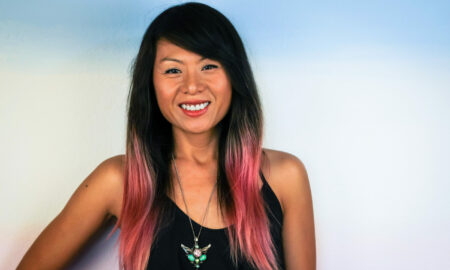



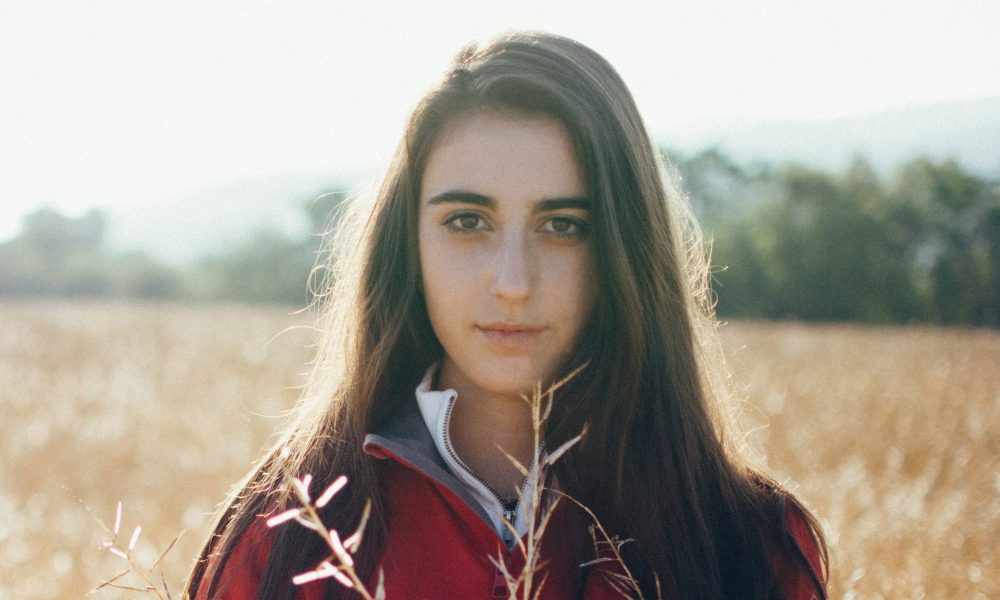
Today we’d like to introduce you to Maya Dondonyan.
Maya, please share your story with us. How did you get to where you are today?
Photography guided my life very naturally. My father was a photographer and I picked up my first camera when I was young. I started documenting my family and friends just to save the memories. In high school, I photographed my soccer teammates and show choir friends and they made me create social media accounts to share the images I took with them. When I went to FIDM, the Fashion Institute of Design and Merchandising, to study fashion marketing, a classmate saw my Instagram and asked if she can pay me to shoot her engagement photos. I was surprised at first. I didn’t consider this something I could pursue as a profession, but when she posted her engagement photos on Instagram, her friends saw and asked who the photographer was and more photo work spread through word of mouth and I kept following that flow.
I started having experiences with fashion photoshoots while I attended FIDM. I held the position of Editor-in-Chief of our student magazine, The FIDM MODE, for two years. I didn’t photograph any shoots then, but I was involved in the entire production of creating images for print. My team and I would have creative meetings planning our themes, we hosted model castings at school, found designers from our classes to feature, picked photographers to capture our vision, and had graphic designers lay out the images with our articles. After graduating FIDM, I was accepted to USC, the University of Southern California, and in my first semester I became Photo Editor of the student newspaper, the Daily Trojan. This was a pivotal moment in my journey because this was the time I chose to focus mostly on taking images and I had the opportunity to shoot multiple, high-profile projects every single day. Everyday I shot images for breaking news, concerts, athletics, campus talks with world-renowned guests like Stan Lee and Arnold Schwarzenegger and my work began being published not only in the student paper, but on Forbes.com, the Los Angeles Times, and on air on CNBC. USC’s athletic department noticed my photographs from the paper and asked if I’d like to personally join their department as an all-team photographer and video editor. Of course I accepted and I worked in-house for all their sports programs for two years. I shot games and practices from football to basketball, rowing, tennis, lacrosse, baseball, diving and beach volleyball. When we hosted competitions, I also shared my images with other schools like Stanford Athletics and I would shoot for the Pac-12.
My parents ran a tight ship when I was growing up so a lot of my first experiences of events around the world were because I had access to photograph them. I experienced my first concert and festival because I was hired to photograph it, I left America for the first time because I was hired to shoot a tour in New Zealand, and I went to my first college football game because of my photography. All these experiences made me unbelievably happy because I was being paid and offered open access to do something that didn’t feel like work to me and I had the best seat in the house for it all. I feel very lucky that my work and passion are the same and that it found me early and very organically.
Great, so let’s dig a little deeper into the story – has it been an easy path overall and if not, what were the challenges you’ve had to overcome?
Bumps along the way of your journey are how you can grow stronger in your being. You continuously show yourself how committed you are to doing your best and most importantly to not give up on something you love. Life is beautiful with this balance and I think we need it sometimes to keep us not only grounded but knowing of the things we don’t want. When I made mistakes, I learned from them and knew better for the next time. It was not always perfect and it took me a few tries but I keep going and in getting up and trying again you of course get better. I’ve missed so many shots I wanted to take, but I let it go and appreciate the fact that I got to witness these beautiful moments. I’ve also learned how to really meditate on the things I do want and be in that energy more. Once you get good at this, you’re better equipped to handle bumps when they come up because you can direct the energy elsewhere. I’ve noticed when I keep my vibrations high, beautiful people and experiences come my way a lot more.
We’d love to hear more about your work and what you are currently focused on. What else should we know?
I specialize in capturing people in their purest moments. I photograph artists practicing their craft and being in their magic. I find pleasure in documentary photography and recording the world as it is around me with the perspective of authenticity and romantic nostalgia. My photographs have this feeling of stepping into a memory and it’s very dreamlike, but rooted in nature or the essence of the human body and its power.
Currently, I’m traveling and working on projects that bring awareness to our state of well-being. I’ve been in Costa Rica, building a database sharing knowledge on sustainable food and fashion because I’ve been a lot more conscious about the things I’m putting in and wearing on my body and how that all affects the world around us.
How do you think the industry will change over the next decade?
It’s been amazing seeing the advances in technology for photography. I still shoot on 35mm and medium format analog film cameras because I think the process is incredible. I love taking my time and being intentional with every shot. Shooting film made me understand what photography is which the root word is derived from Greek meaning ‘drawing with light.’ I took a black and white film class at USC and the first week we started by making our own pinhole cameras out of a box by poking a small hole in the center, using tape as a lens cap and putting light-sensitive paper inside. After taking our one photo, we’d take our pinhole boxes back to our darkroom and one paper at a time, we’d develop our photo and that’s how I made my first print! Looking at today’s technology, we have almost no limit for the capacity of photos we can take in a small digital drive and we have 360 cameras, Instant Polaroids, compact mirrorless cameras, underwater casings, super zoom lenses, and our iPhone’s with three different lenses to just name a few.
I also love how accessible photography has now become to everyone. We are all artists in the way we live our lives and you don’t have to be a professional to capture and save beautiful memories of your life and the people or things you love. Online platforms like Instagram have made it so easy to have a permanent online gallery of your work. Before, if you wanted your photos seen you’d need to make prints, show in a gallery, and only a certain amount of people in that area for a certain amount of time can experience it. Now we can share digitally and instantly and have people from anywhere in the world at any moment in time find our work so long as they have a phone with the app or internet.
It will be interesting to see where we go from here. I think the topic of eye cameras are fascinating. I know when I’m shooting a festival or big event I want to have all my gear on me, both film and digital, multiple lenses and extra rolls of film, but the gear just gets too heavy to carry around in hot and large terrains. When shooting a festival, I have been learning how to find the balance between taking photos, but also being present in the moment and enjoying where I am. Carrying a lot of gear around doesn’t make for easy dancing and it would be cool if we can shoot film quality photos but with just our eyes.
Contact Info:
- Website: mayadondonyan.com
- Instagram: https://www.instagram.com/mayadondonyan/


 Image Credit:
Maya Dondonyan
Suggest a story: VoyageLA is built on recommendations from the community; it’s how we uncover hidden gems, so if you or someone you know deserves recognition please let us know here.
Popular
-

Linda Villines on Releasing Stored Struggle and Reclaiming Ease Through the Body
-

Candice Swanson on Honoring the Sacred Early Days of Motherhood Through Intentional Photography
-

Michael Johnson on Telling Untold Stories of Identity and Leadership Through SQUAD
-

Owning the Narrative: Drew Dusterhoff Steps Into Power with Lincoln Must Die
-

Portraits of the Valley
-

LA’s Most Inspiring Stories