


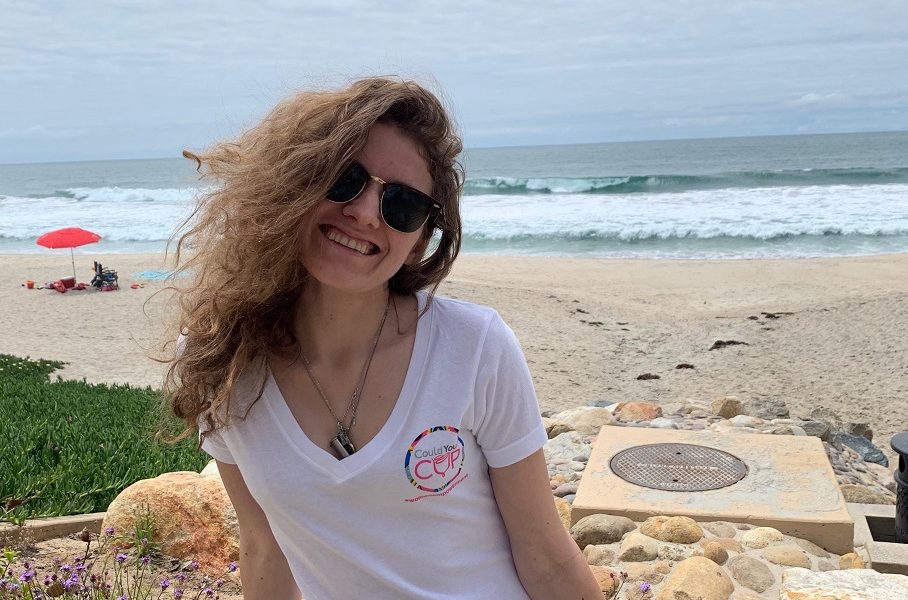
Today we’d like to introduce you to Nadja Umerkajeff.
Nadja, let’s start with your story. We’d love to hear how you got started and how the journey has been so far.
CouldYou? was founded in 2007 by Christine Garde to work with African leaders, nonprofits and communities to create holistic, sustainable solutions to some of the greatest challenges facing the continent. The idea behind the organization and the name is that no one can do everything but everyone can do something. So, for example, CouldYou changes the world, could you do something? Could you make a difference? Our main initiative and the one Kamal told you about is our menstrual health initiative. When Christine went to Mozambique in 2007, she found out that although 94% of all girls start primary school, but only 11% start secondary school and found out that one of the main barriers to girl’s education was that they could not afford menstrual hygiene products such as tampons, pads, etc. This is such a major issue that 1/10 girls are estimated to miss school in Africa every month while menstruating, in many rural areas, those numbers are significantly higher (95-100%). This, of course, is unacceptable but it’s also something she knew she could do something about. The solution? The menstrual cup. What’s so great about the cup is that it is reusable for 10 years, you can use it for 12 hours without having to empty it out, it doesn’t have any of the chemicals or pesticides that tampons and disposable pads have so they’re better for a girl’s health, you only have to boil it once a month for a few minutes, virtually eradicates the risk of Toxic Shock Syndrome (TSS) – there’s been one documented case, and the women kept it in for seven days without emptying it – and it’s more economical, and of course better for the environment. Additionally, we believe that it’s not just about having access to menstrual products, it’s about breaking the stigma and misconceptions surrounding menstruation. Therefore, we don’t just provide a product; when we bring the cup to a community we hold community meetings where we talk to the whole village about menstruation and the cup. We also provide life-skills classes using USAID’s Go Girls Curriculum. We talk to both the boys and girls, men and women because it’s not just a women’s issue and to break the stigma we have to involve everyone. We have the strongest presence in Mozambique where we will be distributing 15000 cups just this year and we are also rapidly expanding in Ghana. We also have a presence in Uganda, Nigeria, Liberia and Cape Verde and we are hoping to add Zimbabwe this year. Since we are based out of Carlsbad, CA we also do local initiatives, having worked with women’s shelters in the area, a surf-trauma therapy nonprofit, some shelters and refugee camps in Mexico, etc. The world’s leading researcher on menstrual health in rural Africa, Dr. Penelope Phillips-Howard at Liverpool School of Tropical Medicine, is an advisor to our organization, guiding our work. I’d also like to tell you about the bags that our cups come in. In each country, they are handmade, employing marginalized women. In Uganda for example, they are sown by girl prostitutes in a partnership with a local NGO that is helping to transition them out of prostitution. In Mozambique, we employ mothers with severely disabled or sick children who are not getting much assistance from the government. We also have a mosquito repellent which we’ve seen amazing results within our trials and we have literacy initiatives in Mozambique. We are a small organization but by partnering with other nonprofits, governments and for-profits, we are hoping to have a huge impact.
Great, so let’s dig a little deeper into the story – has it been an easy path overall and if not, what were the challenges you’ve had to overcome?
We’ve met some amazing people, established some great partnerships and collaborations and have been able to accomplish a lot. But of course, there has been obstacles. One of the problems we encountered was the concern about whether or not the cup breaks a girl’s hymen, so we partnered with Femme International and had them write a letter answering the concerns regarding hymen, etc. This is one of the reasons we put such an emphasis on education when introducing the cup. We have 98% acceptability rates among the girls in Mozambique, they all love the cup, but we have been told that it takes about three months to get used to it. We also make sure to include everyone in the menstrual health debate. When going into a new community, we hold community meetings where everyone is invited, military, farmers, teachers, nurses, police, etc. And in the schools, we talk to both the boys and the girls because it is so important to try to break all the stigmas and misconceptions surrounding menstruation.
Another main problem is just getting the products into the country when the products arrive at the port, some countries want to put high tariffs and taxes on the products, and when that happens, we cannot justify entering that specific country so having the support of government is hugely important. However, we have encountered instances of corruption which have made our work harder. We’ve encountered people inside certain ministries that are more concerned with getting bribes than girls getting the cups, so they would rather stop girls from getting products than not getting a bribe and when this happens, we leave that community/village/country/entity. We just can’t justify working within that kind of environment. We only go into a country where the right people are interested in our services and where we have support and where we are wanted. We don’t force our products on anyone, when we go to a school, we will make sure the girls have all the information they need to make an informed decision on whether or not they want the cup but if they after receiving all the information, are not interested in the cup, we do not force them to accept it. That is another reason why it is so important to have the support of the government, in Mozambique for example, we work closely with provincial and national government entities, and the added authority of their approval is a great way to add confidence in the cup among the community.
Although we have had these problems arise at different times, we have also had instances of great government collaboration and support and partnerships in general. We put a huge emphasis on working collaboratively. Of course, funding is always the main concern, we would love to bring the cup everywhere but it all depends on funding, of course. We’re a small nonprofit but one of the reasons we are able to be in as many countries as we are is the fact that we always try to partner with other organizations with similar objectives. We work extensively with local nonprofits that are already doing work in the countries that we are active in. So when we go into a new country, we send out a “Request for partnership” to organizations and nonprofits doing similar work/focused on similar issues in that country and they then send us information about their work. We then evaluate the organizations, pick the ones that are the best fit, and provide them with the training and equipment to not only provide the education necessary but also to monitor and evaluate the acceptability of the cup. In rural Ghana, our local representatives informed us that there was a need for consent education, so we added that to our curriculum. Introducing concepts such as if a girl says no/cries/doesn’t say yes, it means not only that she does not want to have sex, but also that they should stop. Partnering with local, already established nonprofits allows us to expand into more countries and to reach more people, and it also allows for us to be more culturally sensitive to the different customs and traditions of each country/region and just to do more.
Alright – so let’s talk business. Tell us about CouldYou? – what should we know?
Our main initiative is surrounding menstrual health and distributing our menstrual cup. What’s so great about the cup is that it is reusable for 10 years, you can use it for 12 hours without having to empty it out, it doesn’t have any of the chemicals or pesticides that tampons and disposable pads have so they’re better for a girl’s health, you only have to boil it once a month for a few minutes, virtually eradicates the risk of Toxic Shock Syndrome (TSS) – there’s been one documented case, and the women kept it in for seven days without emptying it – and it’s more economical, and of course better for the environment. Additionally, we believe that it’s not just about having access to menstrual products, it’s about breaking the stigma and misconceptions surrounding menstruation. Therefore, we don’t just provide a product; when we bring the cup to a community we hold community meetings where we talk to the whole village about menstruation and the cup. We also provide life-skills classes using USAID’s Go Girls Curriculum. We talk to both the boys and girls, men and women because it’s not just a women’s issue and to break the stigma we have to involve everyone. The world’s leading researcher on menstrual health in rural Africa, Dr. Penelope Phillips-Howard at Liverpool School of Tropical Medicine, is an advisor to our organization, guiding our work. I’d also like to tell you about the bags that our cups come in. In each country, they are handmade, employing marginalized women. In Uganda for example, they are sown by girl prostitutes in a partnership with a local NGO that is helping to transition them out of prostitution.
In Mozambique, we employ mothers with severely disabled or sick children who are not getting much assistance from the government. We also have a mosquito repellent which we’ve seen amazing results within our trials and we have literacy initiatives in Mozambique. We are a small organization but by partnering with other nonprofits, governments and for-profits, we are hoping to have a huge impact. We only go into a country where the right people are interested in our services and where we have support and where we are wanted. We don’t force our products on anyone, when we go to a school, we will make sure the girls have all the information they need to make an informed decision on whether or not they want the cup but if they after receiving all the information, are not interested in the cup, we do not force them to accept it. We put a huge emphasis on working collaboratively. Of course, funding is always the main concern, we would love to bring the cup everywhere but it all depends on funding, of course. We’re a small nonprofit but one of the reasons we are able to be in as many countries as we are is the fact that we always try to partner with other organizations with similar objectives. We work extensively with local nonprofits that are already doing work in the countries that we are active in. So when we go into a new country, we send out a “Request for partnership” to organizations and nonprofits doing similar work/focused on similar issues in that country and they then send us information about their work. We then evaluate the organizations, pick the ones that are the best fit, and provide them with the training and equipment to not only provide the education necessary but also to monitor and evaluate the acceptability of the cup. In rural Ghana, our local representatives informed us that there was a need for consent education, so we added that to our curriculum. Introducing concepts such as if a girl says no/cries/doesn’t say yes, it means not only that she does not want to have sex, but also that they should stop. Partnering with local, already established nonprofits allows us to expand into more countries and to reach more people, and it also allows for us to be more culturally sensitive to the different customs and traditions of each country/region and just to do more. That is what I love about CouldYou?, we collaborate, we incorporate the local community, we create jobs and most of all, we make sure girls get to stay in school. We allow a path for girls to be able to follow their dreams, we make that possible and that is what I am most proud of. Helping girls thrive and reach their full potential.
Is there a characteristic or quality that you feel is essential to success?
I’d say my passion is what’s most important to my success, I am so passionate about CouldYou that even if I don’t always know what I’m doing, my passion shines through. Like with the social media, I don’t have a background in graphic design or photography or anything like that but I am so passionate about CouldYou that I think that shines through in my work. I have always just wanted to make a difference and make the world better.
Pricing:
- A 10 USD donation keeps a girl in school for 10 years.
Contact Info:
- Address: 2604 Flower Fields Way
- Website: http://www.couldyou.org
- Phone: (917)7961961
- Email: info@couldyou.org
- Instagram: http://www.instagram.com/couldyoucup
- Facebook: http://www.facebook.com/couldyoucup
- Twitter: http://www.twitter.com/couldyoucup
- Other: http://www.instagram.com/couldyouchangetheworld


Image Credit:
Preechas Pixels
Suggest a story: VoyageLA is built on recommendations from the community; it’s how we uncover hidden gems, so if you or someone you know deserves recognition please let us know here.
Popular
-
Robin Olive on Building an Inclusive Performing Arts Movement and Expanding Opportunities for Every Student
-

Portraits of the Valley
-

LA’s Most Inspiring Stories
-

Que Johnson on Building Brands That Last: From Visibility to True Market Authority
-

Christina Wren Steps Into the Director’s Chair to Tell Stories That Feel Like Home
-

JordanL on ‘Breathe,’ Belief, and Building a Movement Beyond the Music