




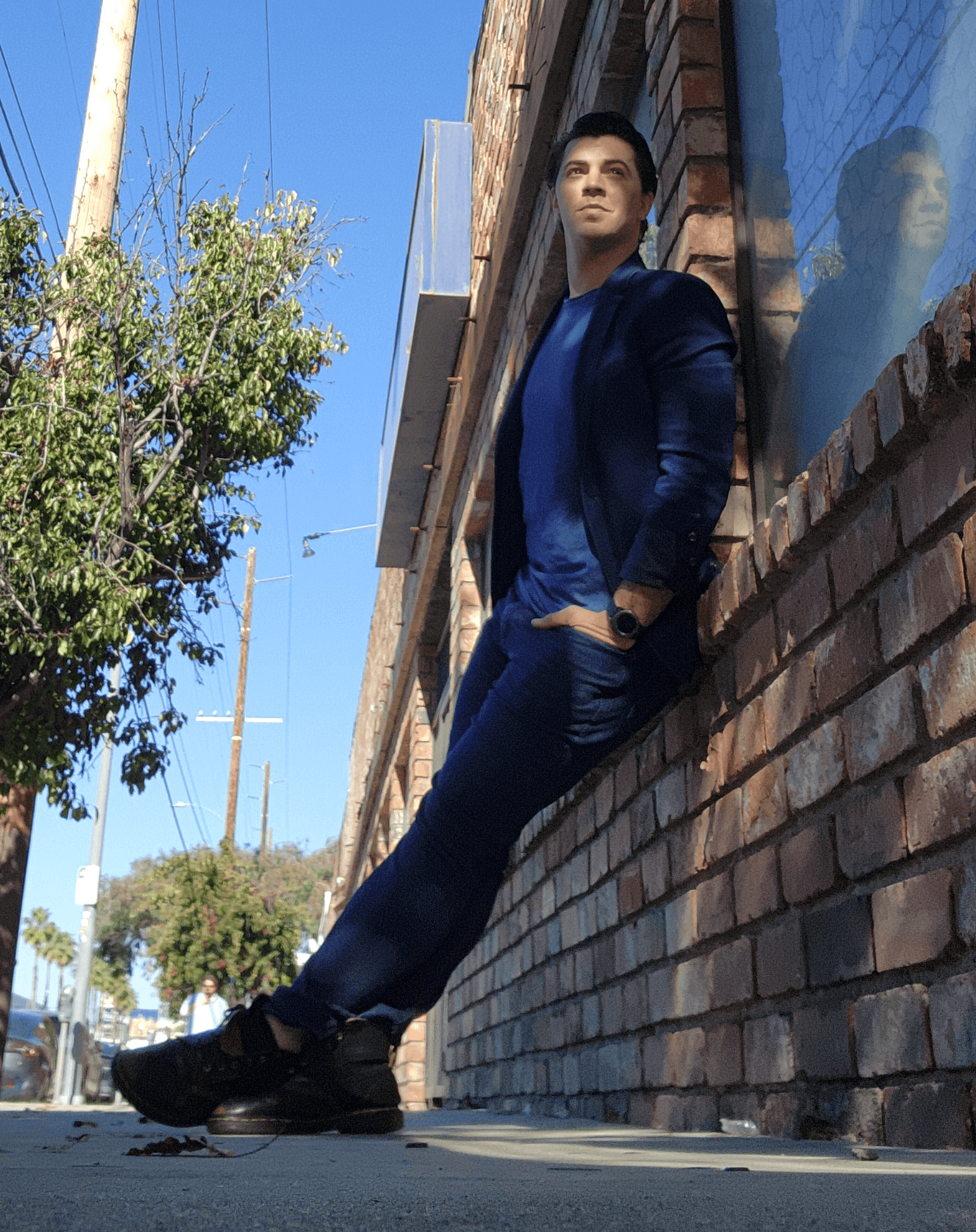
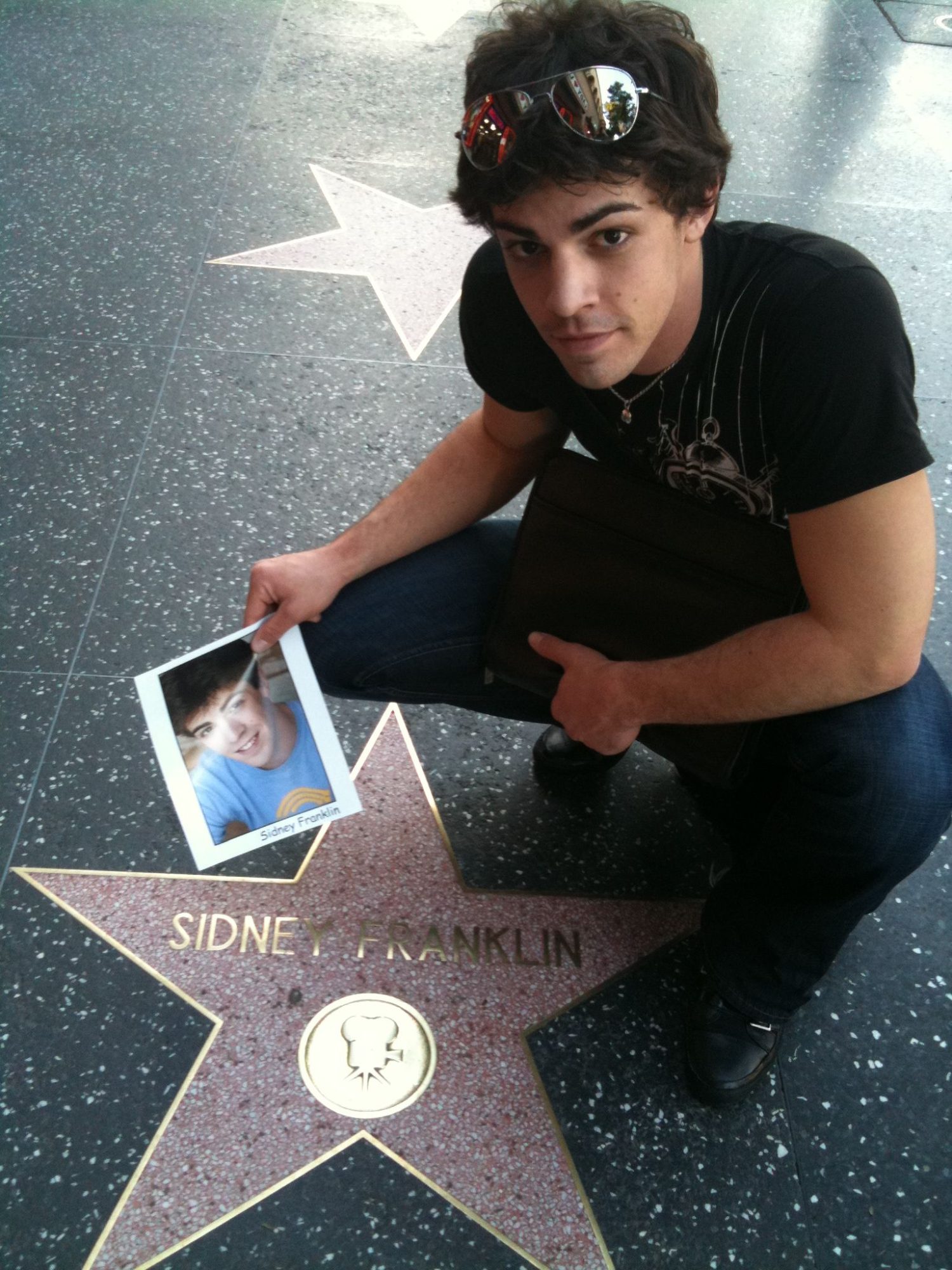
Today we’d like to introduce you to Sidney Franklin.
Hi Sidney, please kick things off for us with an introduction to yourself and your story.
I’ve been performing since before I was ever cast. My first company was a room full of stuffed animals, some as actors and some as audience, and my parents came to every single show.
At school, I used to run into poles for the laugh. The teachers eventually worked out that my falls were fake, but instead of reprimanding me, my mom found a stunt coordinator willing to let a kid into their class. Every thing grew from that moment. After class, I’d come home and wrestle my dad, selling the falls so well that he’d panic, sure I’d occasionally get hurt. He was my first scene partner, though I don’t think he ever agreed to the role.
At nine, I was cast in Peter Pan and Evita in a summer theater program, but television sometimes moves faster. Before rehearsals even started, I’d already been cast and shot Manhattan, Arizona, playing a young boxer taking a major beating. Theater hired me first, but TV got me on set first. At ten, I worked at La Jolla Playhouse on Our Town with Michael Greif.
Grown-ups would ask, what I wanted to be when I grew up, my answers always involved doing something useful while still performing. It never once occurred to me that I wouldn’t be performing. But even that young, I understood that shows don’t last forever and there would be time between them. So juggling several things has never bothered me. It’s just the shape of the work.
School and I were never a natural fit. I’m dyslexic, I have ADHD, and I’m autistic, and my teachers told my mom the system might squelch the very energy that made me a performer. So from eleven to sixteen, I was homeschooled until I could test out and start college classes. It let me learn in a way that actually worked for my brain, and it let me keep working: three hours of set school, then filming for the day. I still dictate most of my writing. I’ve picked up so many tricks for working around dyslexia that I hardly notice the issues anymore. I guess I was doing sleight of hand long before I learned magic. If your brain works differently, the thing people want to fix might be the thing that makes you.
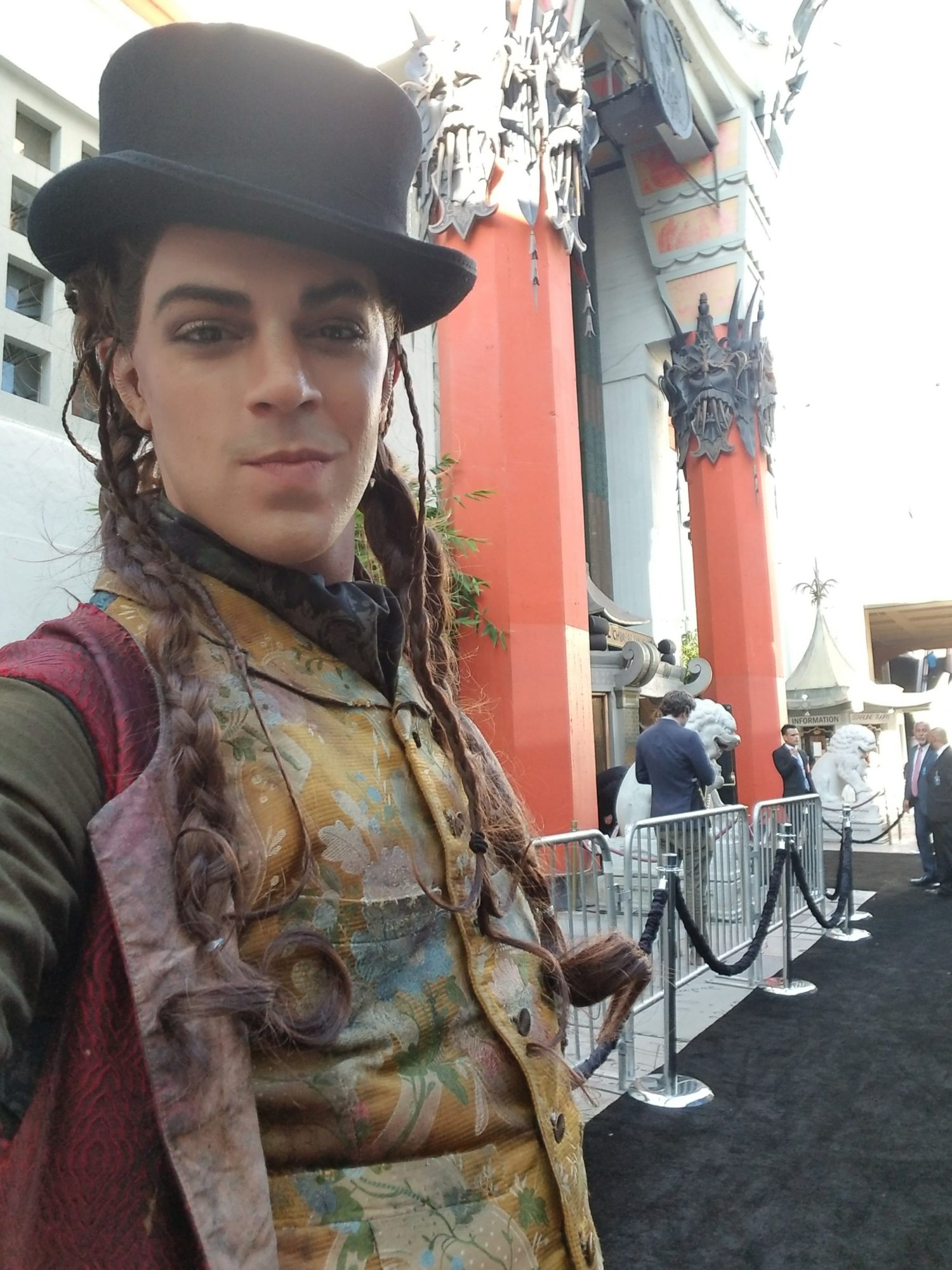
I did a lot of student films, like most young actors, and working alongside people who were just as excited to figure things out taught me how this industry really works. Other actors got restless waiting on a lighting setup. I loved watching the thing get built. That curiosity turned into real training. I studied audio and radio in college. I’m a trained audio engineer as well as an actor. Then I wanted to learn lighting, so I found a local key gaffer, came on as a PA, and worked my way onto their team. I still work as a gaffer today. And of course, I’ve built a crew character too, right down to the wardrobe. Every department dresses for the job.
Then came Stalked at 17, Sons of Anarchy, and Faking It where they brought me back every season and the costume pieces were my own. I’ve always built characters from the outside in, even when I can already feel them from the inside out.
I get cast as a lot of villains and questionable characters, and I go all the way in. It’s close to method acting, except I always know it’s a character, so the moment someone calls cut, I can drop it. I think that’s what makes those sets feel safe. My longtime friend D. Candis Paule, an intimacy coordinator and casting director, once told me she feels more comfortable on set whenever I’m there, and that meant the world to me. It’s a small industry, and I love how often I run into old friends, even crew from my days on Veronica Mars as a kid. My film family is pretty big.
The strikes and COVID kept melting the snowball, and that’s when I stopped waiting for projects to make art and started making the art myself.
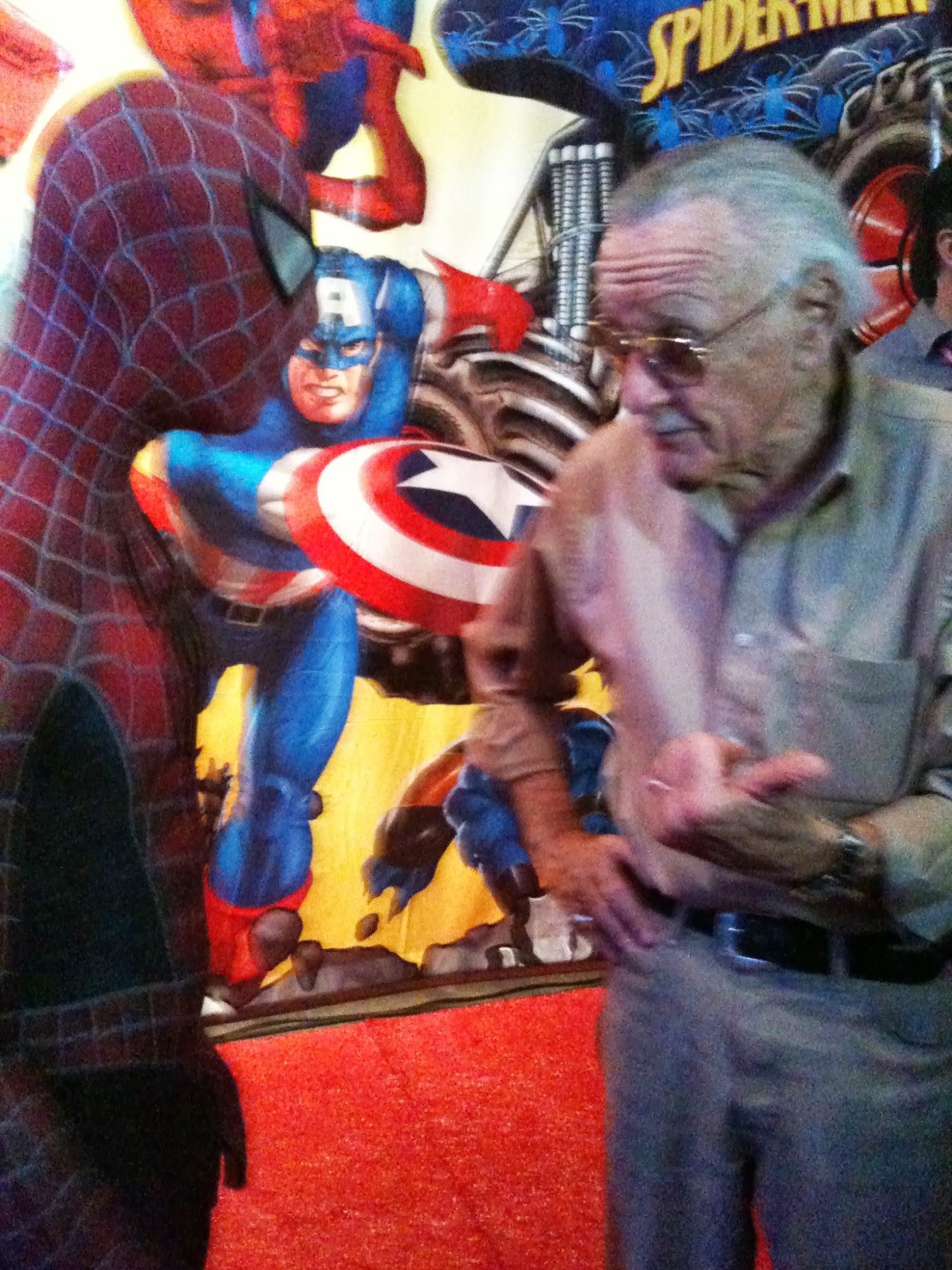
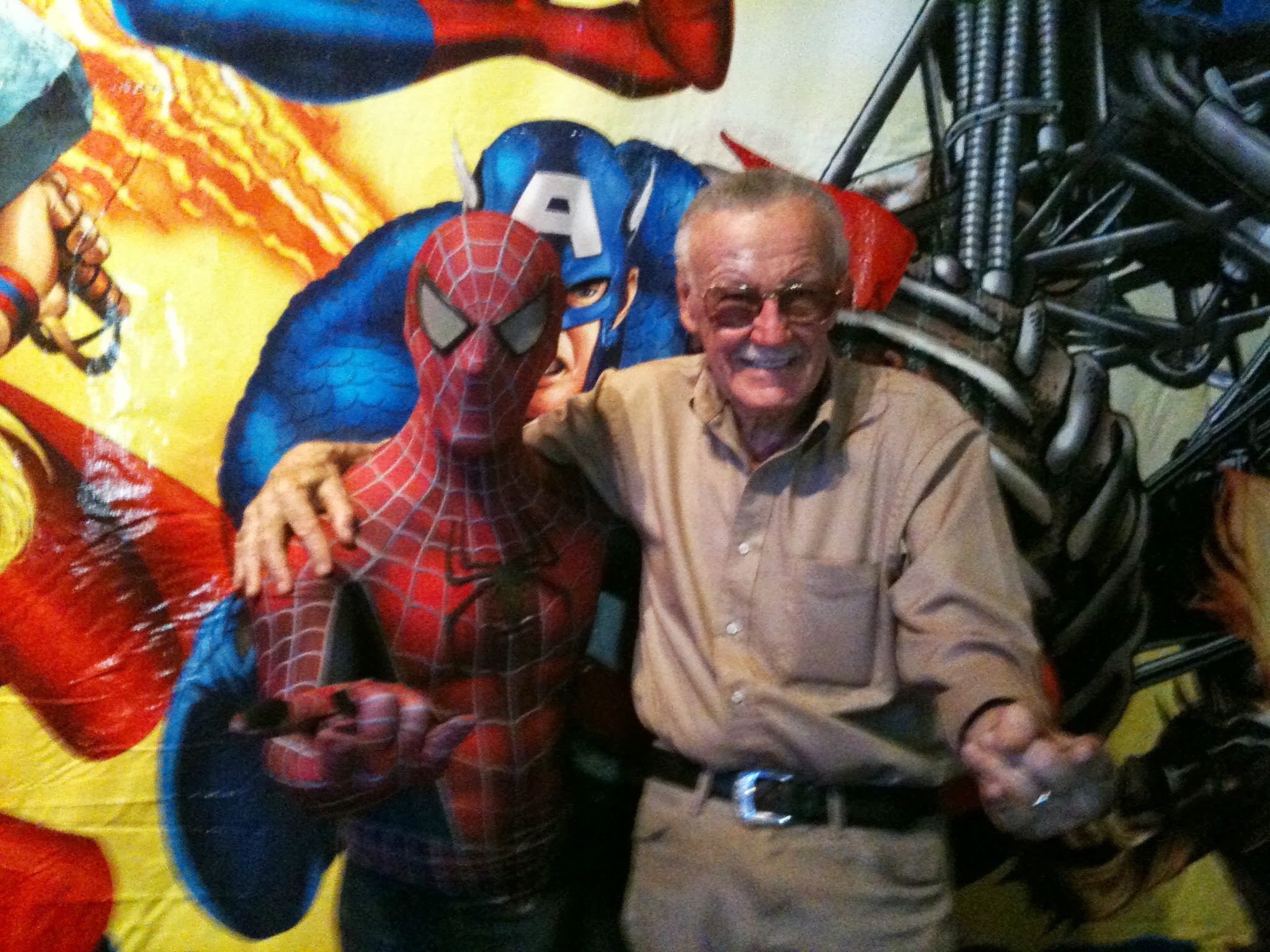
Meanwhile, I’d been doing immersive work almost by accident. My godfather Wally got me a gig as Spider-Man at a cinema opening, and Marvel later hired me to meet fans at Walmart for the DVD releases. They put me through official Spider-Man training, and I took it seriously. Upholding someone’s IP is what earns you trust as an immersive performer. People need to know you can pull the right answer out of the Rolodex on the fly, in costume, with a stranger’s kid watching.
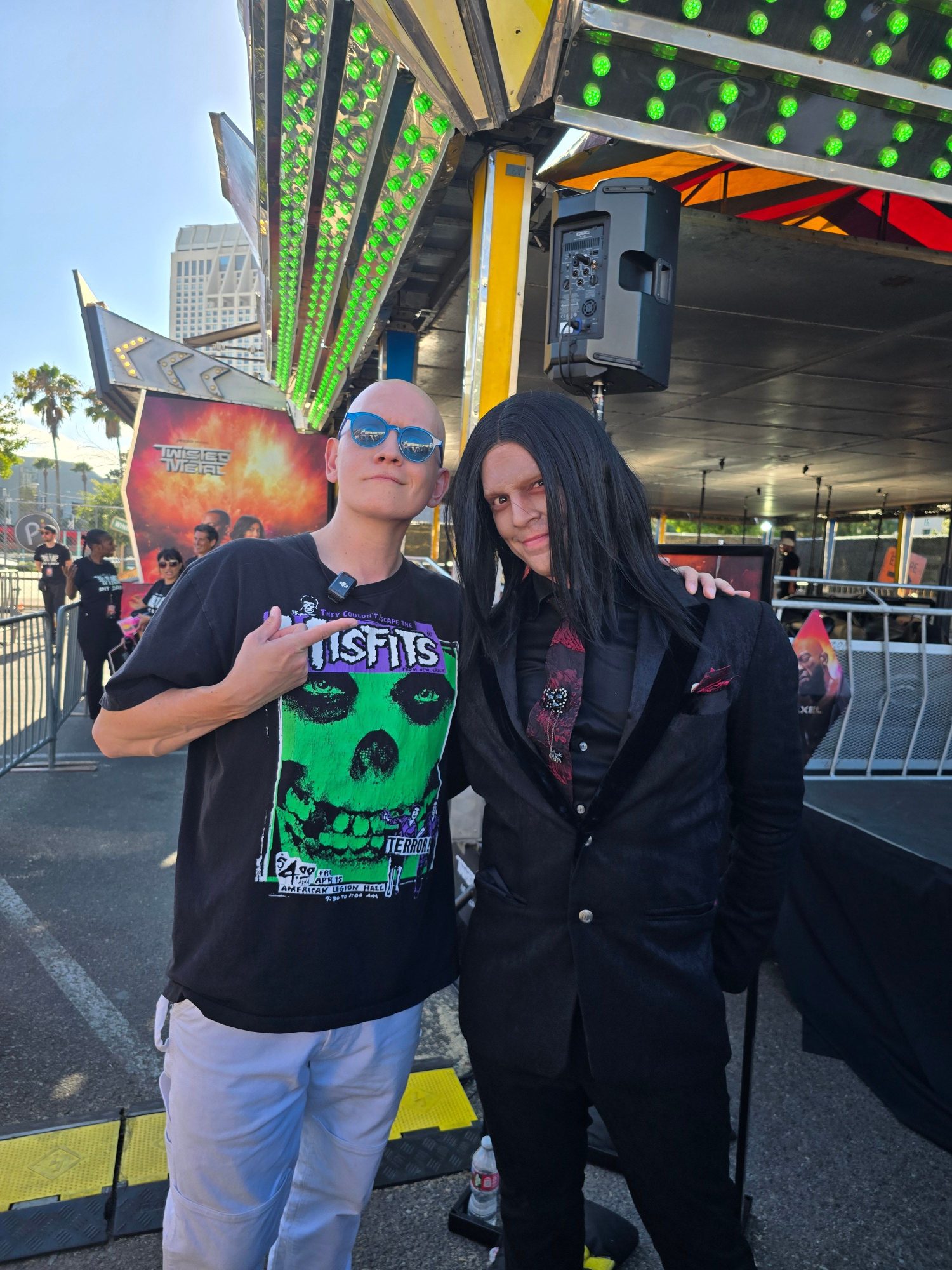
After that came years of immersive work, including Comic-Con activations for Adventure Time, Gotham, The Penguin, and the Dungeons & Dragons film, playing Calypso for a Twisted Metal activation, and immersive work with IHeartComix. I tend to get the dark ones and the magical ones. I’m not typecast, I’m just well-suited, and honestly delighted.
My favorite Comic-Con memory wasn’t a booking at all. I’d built a movie-accurate Spider-Man suit I was genuinely proud of, back before Spider-Man was on every corner downtown, and I’d stash it in my backpack and change on my breaks just to bring him to the crowd. That year, Marvel had an activation with art and vehicles, and I wandered in as a fan. Someone asked for a photo, so I stayed. I volunteered hours doing what I’d normally be paid for, purely because I loved it. People started recognizing me. They had no idea what my face looked like, but they knew I was Spiderman. So when Stan Lee came by, the crew made sure I was there. I got to meet the man himself, in the mask, and he appreciated that I wouldn’t break character, even for him. He saw straight through it and honored it. He got to meet Spider-Man too.
I also leaned into the oldest joke in the business: “Oh, you’re an actor? Which restaurant?” I decided to live the punchline and learned to bartend, it turns out, a bar is just a very small stage with better lighting. Somebody asks for a side of ranch and gets a magic trick they didn’t order.
These days I feel like I’ve finally grown into my full performer self. My relationship with film and television is healthier than it’s ever been because I stopped treating it as the only door. Now the living and the art feed each other.
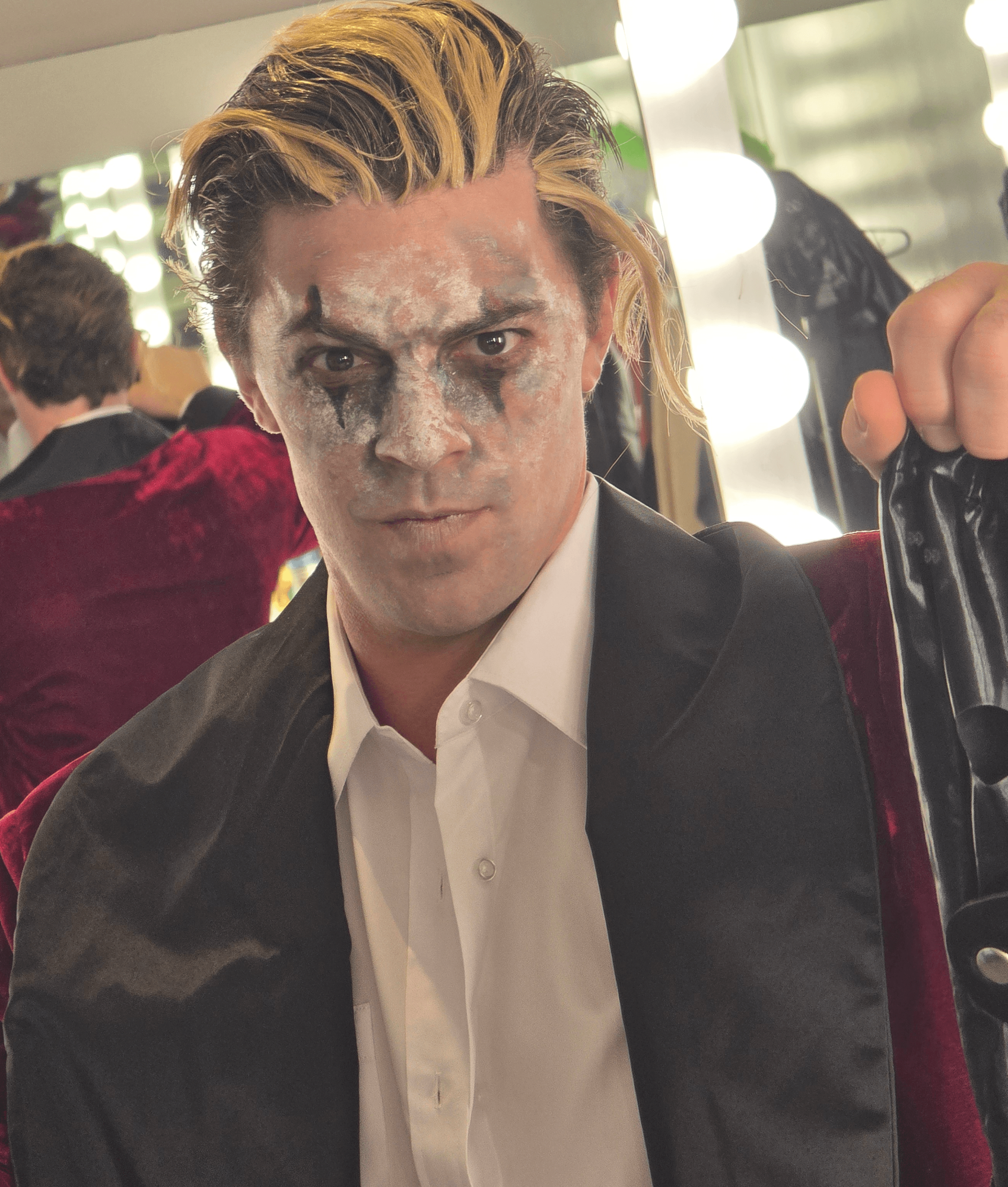
This year has been a full one. I joined the American Horror Story immersive activation as a swing covering three roles. If I wasn’t in the room with fans, I was backstage becoming someone else so I could do it all again with a different face. Very on-brand for a horror show. Right now, The San Diego Zoo team brought me in to help build a magical character piece by piece, same with San Diego’s Haunted Trail, named in CNN’s Top 5 BEST Haunted Attractions in America, where I’ve constructed most of the costume myself.
I’m also the magic consultant on an immersive show I’m creating with my fiancée, Kay. The audience is invited to a séance and uncovers every dark secret the Abbey holds. My job is to make sure the bumps in the night actually bump. I believe in magic, and I also know exactly when I’m faking it, which is precisely why I can guarantee a haunt.
I’m in early production on my own project, @TheMiddleWatchman, a character I built to bring the intimacy of a live performance to someone watching alone on a screen. If anything I’m doing points toward the future, it’s that.
I never got the one big break people imagine. I got a hundred small ones instead, and I’m grateful for every one of them and for the people who kept showing up: my parents, then my collaborators, and now Kay. I’m still the kid with the stuffed animals. The cast just got a lot more human.
Can you talk to us a bit about the challenges and lessons you’ve learned along the way. Looking back would you say it’s been easy or smooth in retrospect?
Got it, we’ll drop the car line and keep it as it was. Here’s the final answer:
Not always smooth, but I wouldn’t trade the bumps. I’m a stunt performer, after all. I know how to take a fall.
Growing up in San Diego rather than Hollywood made things harder, but not nearly as much as you’d expect. I’ve had stretches as an LA local, but I found that Hollywood didn’t need me there all the time. These days I simply go where the calls take me. Sometimes that’s LA, but most of the time it’s home.
The harder part has been momentum. A career in this industry builds like a snowball: one booking leads to a callback, which leads to a relationship, which leads to the next job. Then something like the SAG-AFTRA strikes, the writers’ strike, or COVID comes along and the snowball melts. You’re left standing in a puddle, wondering where it all went. That was frustrating, but it’s also when I started creating my own art instead of waiting for projects to bring it to me.
Then there’s the juggle. Shows don’t last forever, so I’ve always kept several things going at once: acting, immersive work, bartending, gaffing, content creation, teaching magic at camps for kids. Some weeks the calendar looks like a magic trick in its own right. But every job feeds the others. Bartending sharpens my crowd work, performing and teaching magic keeps me in touch with that kid putting on shows for stuffed animals and as a performer, juggling was always going to be part of the act.
Alright, so let’s switch gears a bit and talk business. What should we know about your work?
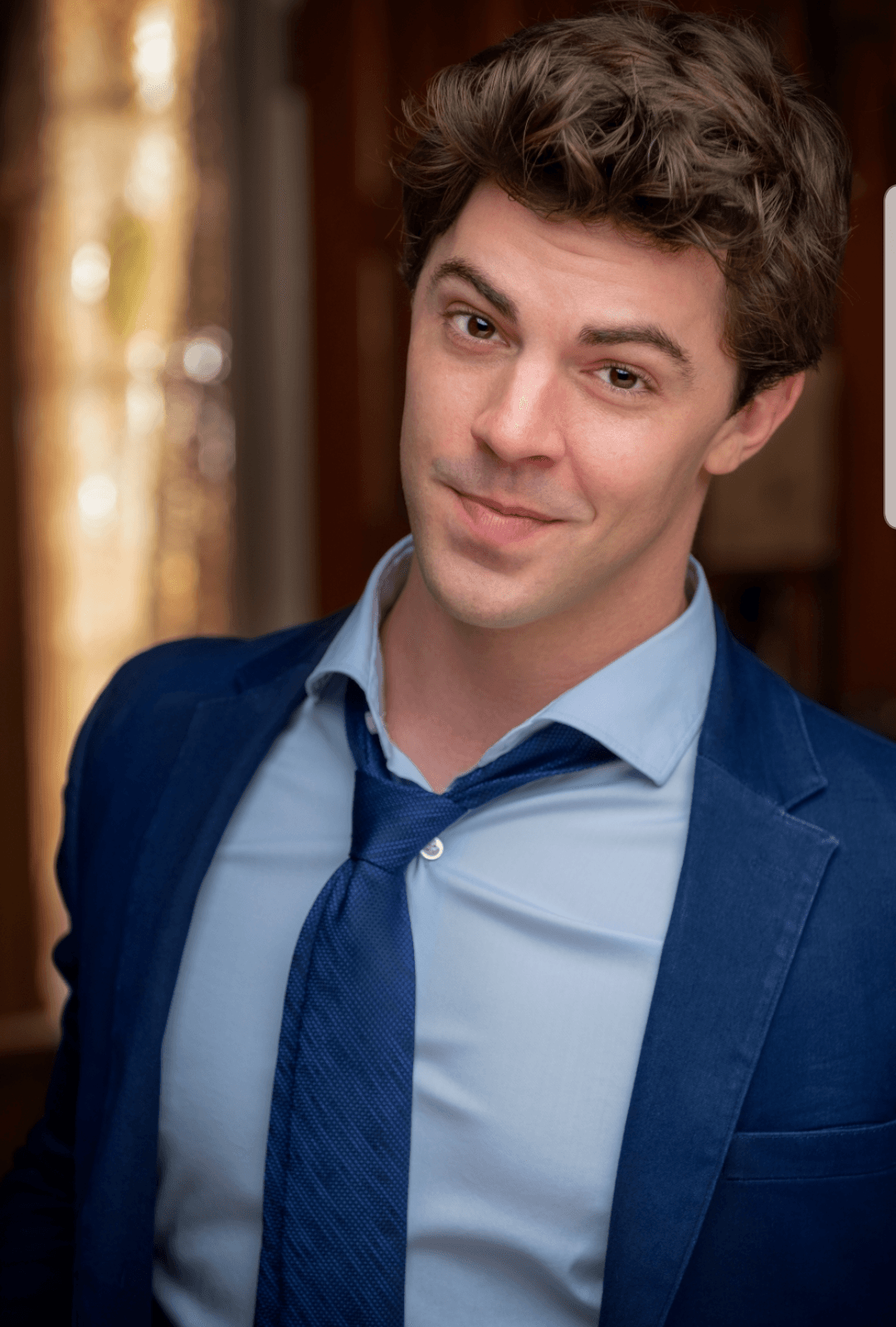
I’m an actor and immersive performer, and I specialize in character work, usually the dark ones and the magical ones. What I bring to a scene is an inner life that isn’t always on the page, but I’m sure to always have something going on behind my character’s eyes. I’m also a team player about it. If what I’m bringing doesn’t serve the story, I’ll drop it or take the note without ego. The work isn’t mine, it’s ours.
What sets me apart is that I understand the whole set. I’m stunt-trained, a trained audio engineer, moonlight as a working gaffer, and perform magic. A gaffer I work with started calling me Swiss Army Sid, because whatever a production needs, I can usually be that. Some crews have even cast me as on-camera talent, then bring me in for another department on the same job. As they say, one role often leads to the next.
Where do you see things going in the next 5-10 years?
I think the industry is heading somewhere more immersive, more human, and more spread out than ever.
Audiences don’t just want to watch a story anymore; they want to step inside it. I don’t think those stories will stay inside theater walls, or inside the frame of a phone screen, for long. Vertical content feels like the early days of film, before anyone figured out the close-up, and I believe it and immersive entertainment are about to meet. I have a secret premonition about where that leads. AI can generate the illusion of a human shell, but the moments people remember will have a live performer underneath. I’ve dreamed up a few ideas of my own, but I’m just waiting to meet the right programmers. Anyone can buy a magic trick. The magic, is in how you perform it. And I’d tell you more, but a good magician never reveals their secrets.
I also suspect the headshot of the future will look a lot more three-dimensional. Having done motion capture work, I’ve started to wonder whether someday the suit I’m wearing might be the real Spider-Man suit, at least virtually. Don’t be surprised if you spot me in a blockbuster crowd I never stood in. As long as performers stay in the driver’s seat, that’s a future I’m excited about.
The work is spreading out, too. You don’t have to live in Hollywood to work in Hollywood anymore, and productions increasingly value performers who can wear more than one hat. That’s good news for Swiss Army Sid.
Contact Info:
- Website: https://sidneyfranklin.com/
- Instagram: https://www.instagram.com/sidneyfranklin
- Facebook: https://www.facebook.com/sidney.franklin1
- LinkedIn: https://www.linkedin.com/in/sidneyfranklin
- Youtube: https://youtube.com/@sidneyfranklin
Popular
-

Portraits of the Valley
-

LA’s Most Inspiring Stories
-

Greg Hex Is Turning the Everyday Kitchen Knife Into a Modern Design Object
-

Rick Norris Learned That Building a Successful Business Means Building a Life You Actually Want to Live
-
How Olivia Rush Turned Survival Into a Mission to Help Others Keep Going
-

How Bibi Goldstein Is Helping Entrepreneurs Reclaim Their Time by Embracing the Power of Delegation


