



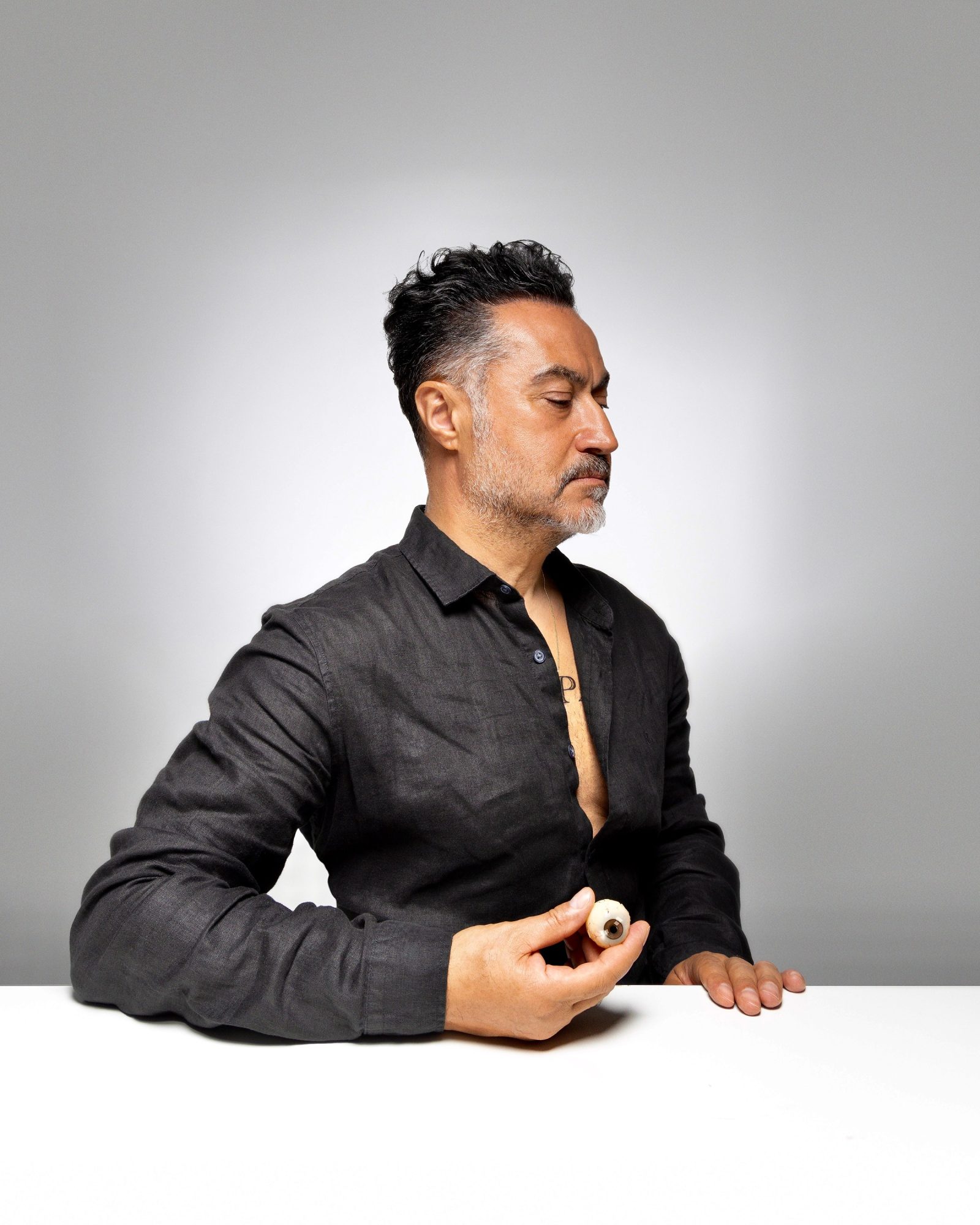
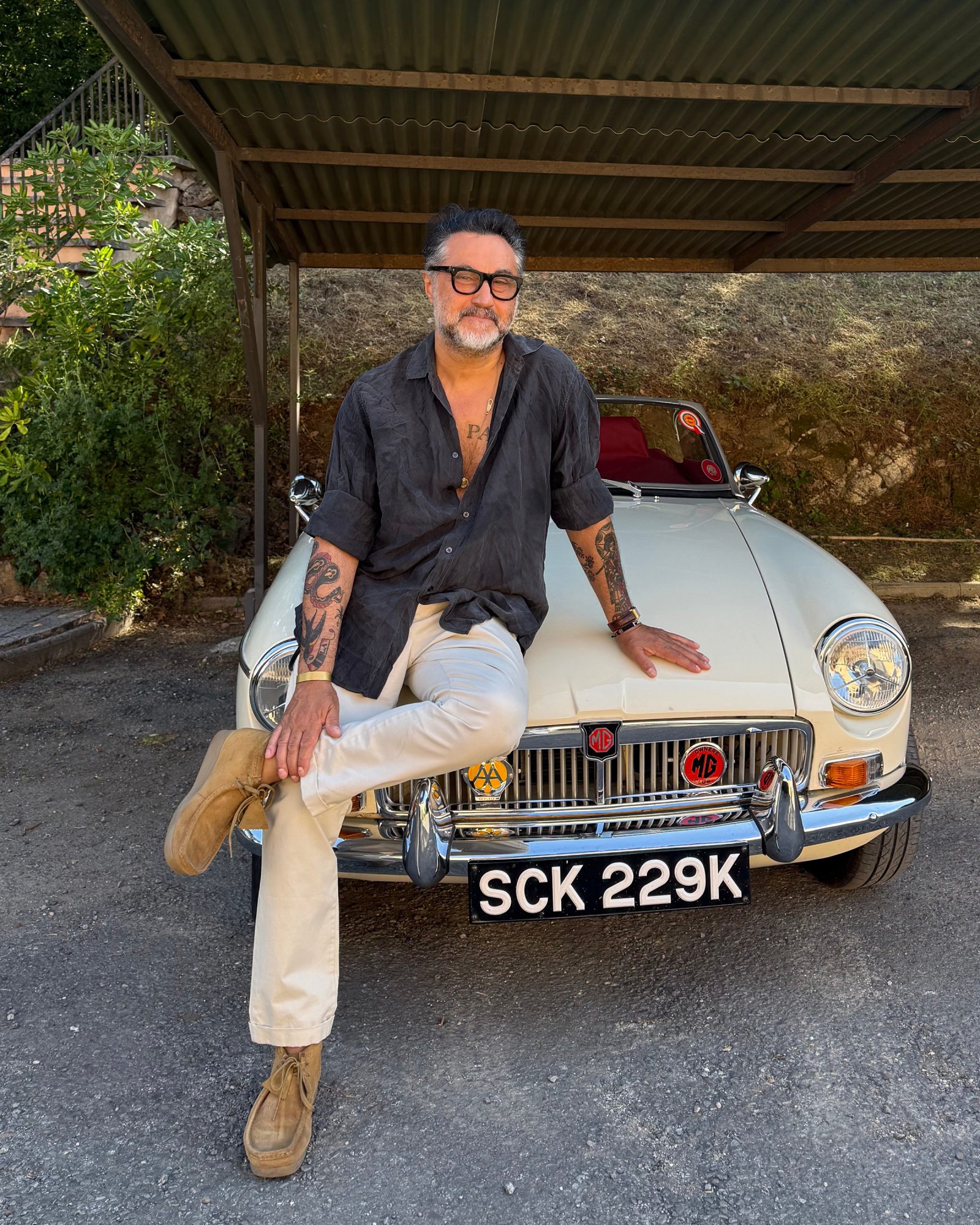
Today we’d like to introduce you to Emrah Yucel.
Hi Emrah, can you start by introducing yourself? We’d love to learn more about how you got to where you are today?
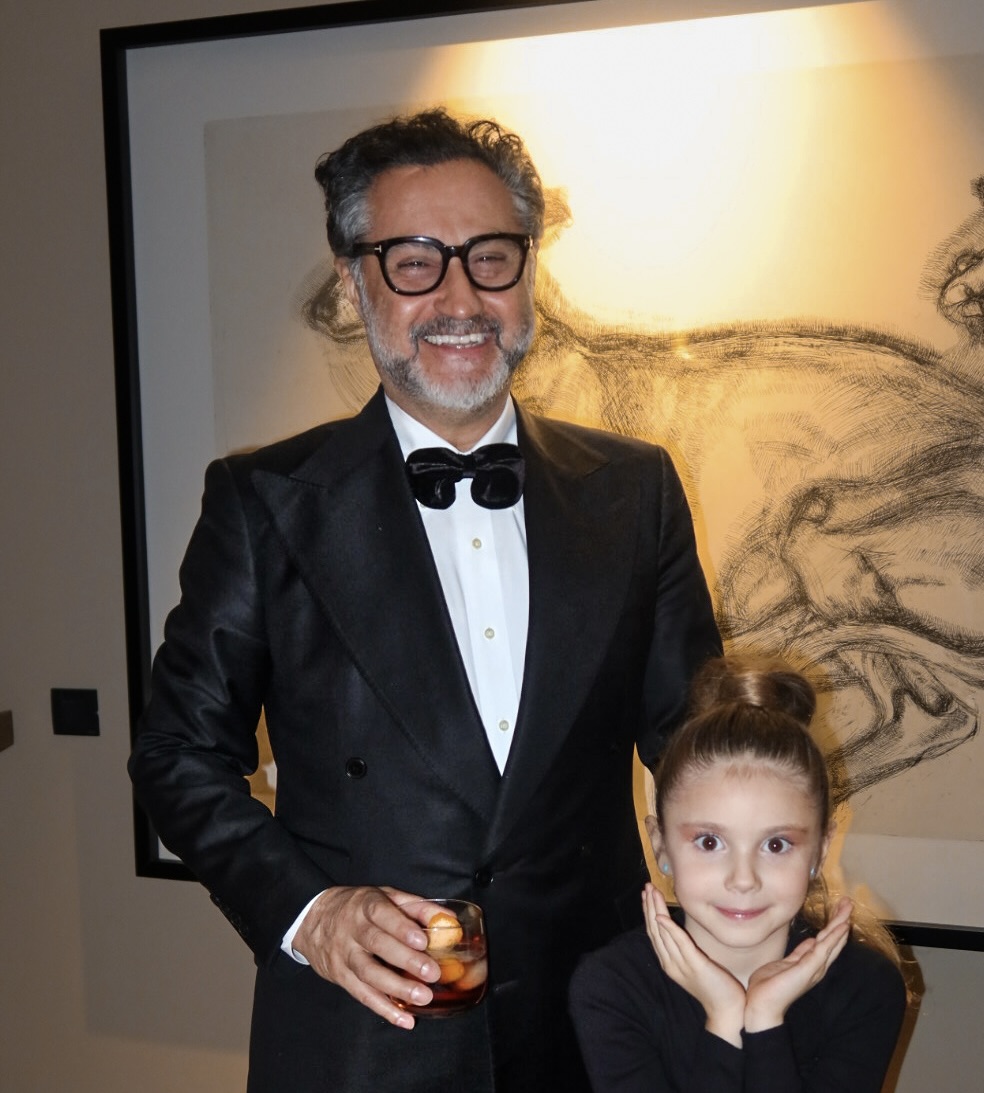
Meet Emrah Yücel of I Mean It Creative
Hi Emrah, we’re excited to have you with us today. We’d love to start from the beginning. Can you tell us a little about your story and how you got to where you are today?
I think I became a designer long before I knew there was a profession called design. I was born in Diyarbakır, Turkey, but only because my parents happened to be teaching there at the time. My mother was a literature teacher and my father was an art teacher. They belonged to a generation in Turkey that genuinely believed education, culture and the arts could transform society. Eventually, both of them joined a division of the Ministry of Education that produced educational films, radio programs and visual teaching materials. My mother’s world was words; she became a scriptwriter and radio writer. My father’s world was images; he became a filmmaker and documentary director. I grew up somewhere between the two. They were creating educational programs about art, music, agriculture, crafts and life in different parts of Turkey, but underneath all of it was the same challenge: how do you take something complicated and make another person understand it through words and images? I didn’t realize it at the time, but that is essentially what I still do today.
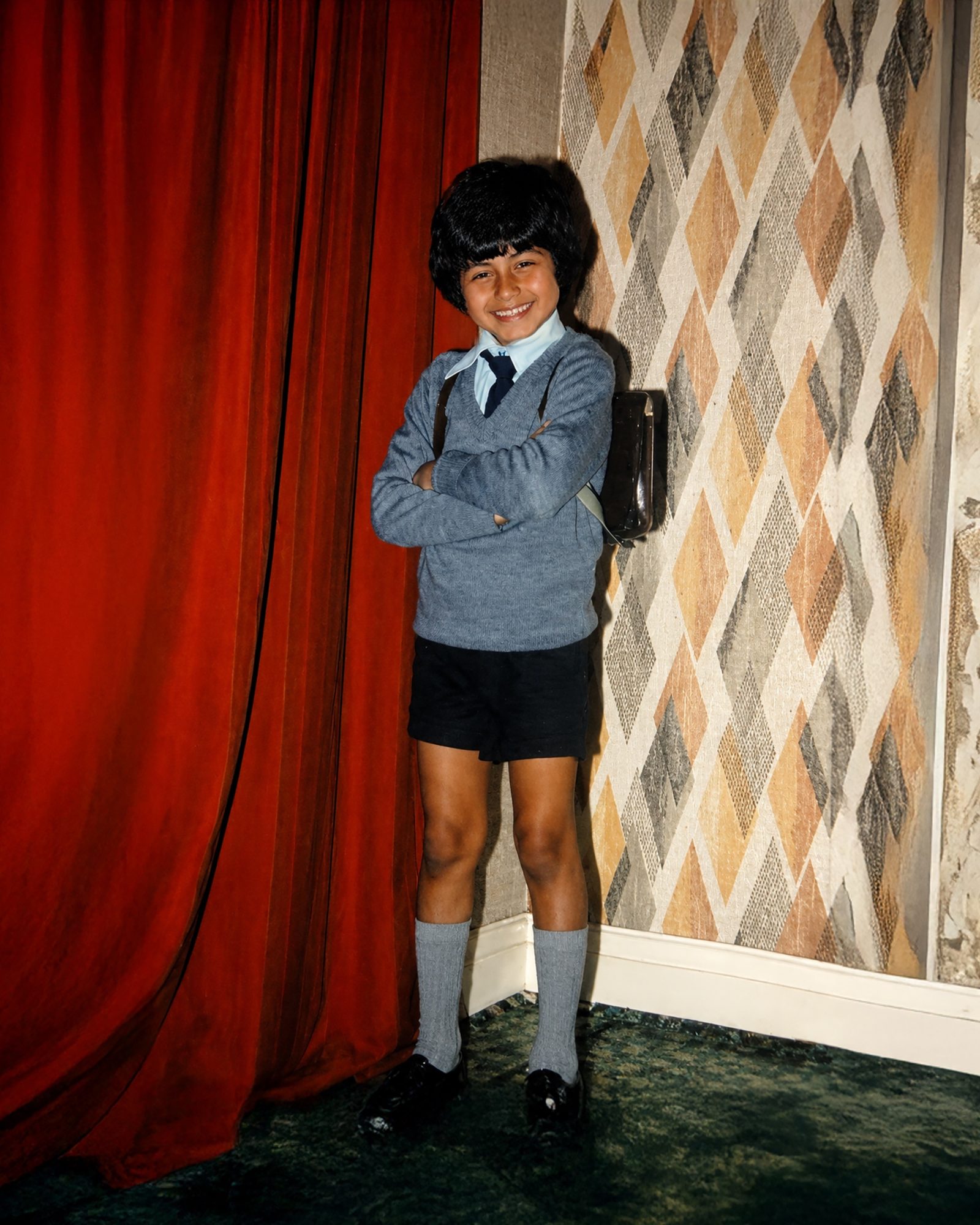
One of my father’s films received an award at the Berlin Film Festival, and I remember seeing his photograph and his name on television and feeling unbelievably proud. That recognition eventually led to an opportunity connected to the BBC in London. My mother was able to participate as well, and somehow they managed to arrange for their young son to come along. So at eight or nine years old, I suddenly found myself in London. This was the mid-1970s. There was no internet, no cell phone, no easy connection to home, and Turkey was a very different country then. London might as well have been another planet. We weren’t wealthy. We lived in Shoreditch in a house owned by a Pakistani family where people from different parts of the world occupied different rooms. There were people from Rhodesia, Hong Kong, Pakistan and Turkey all living under the same roof. My parents were spending their days learning English, going to the BBC, studying, working and trying to establish themselves in this completely unfamiliar world.
At first, I was enrolled in a Catholic school in Shoreditch. I didn’t speak English, which created its own strange set of problems, and eventually, after an incident at school, my father took me out. Suddenly I had no school to go to, but my parents still had to leave every morning. For a while, I stayed at home with Mr. Lal, a Pakistani man who lived with us. He would turn on the television for me, and that was where I discovered Fred Astaire, Frank Sinatra, Cary Grant and all these old black-and-white Hollywood films I had never seen in Turkey. When I think about it today, there is something almost cinematic about it: decades before I would end up in Hollywood creating campaigns for some of the biggest films and television series in the world, I was a Turkish child in Shoreditch, unable to speak English, discovering Hollywood through an old television in a Pakistani household.
But the more important thing happened next. My parents had to figure out what to do with me during the day, and they came up with a solution that would probably be unimaginable today: they started leaving me in museums. At that time, museums had a wonderfully simple system for children. If you were small enough to walk underneath a certain bar, they would put an identification tag on you and give the matching number to your parent. There were no phones, no GPS, nothing. My father realized that this could work. They began with the National Portrait Gallery because it was relatively small. They would leave me around ten in the morning, my mother would come back several hours later, and I loved it. So we did it again. The National Portrait Gallery led to the National Gallery, then Tate, then other museums. For roughly a year and a half, those museums became my school.
My mother would make me a sandwich, I would have maybe ten or twenty pence in my pocket to buy a soda, and I would spend hours walking through galleries alone. Imagine being eight or nine years old and having nowhere you need to be, nobody telling you what painting you are supposed to like and no exam waiting at the end. You simply look. After enough time, you start noticing things. Why is that figure standing there? Why is there a fly painted next to the portrait? Why is someone holding an apple? Why did the painter put himself in a mirror? Why is the light coming from that direction? Why is one figure larger than another? Why does one painting make me uncomfortable while another makes me feel peaceful? I didn’t know the terminology, but I was learning composition, symbolism, hierarchy, mythology, narrative, color and visual psychology. As my English improved, school groups would come through the galleries and I would quietly join them. I would listen to the teacher until they left, then another group would arrive and I would follow that one. Sometimes I would attach myself to adult tours. Little by little, the images began to have explanations: German Expressionism, French painting, Dutch realism, mythology, history, portraiture. More importantly, I began to understand that nothing in a good image is accidental. There is a reason something is there, and there is a relationship between what you see and what it makes you think or feel.
Looking back, I received plenty of formal education afterward. I studied graphic design, entered academia, taught and began doctoral studies. But I think my real education happened in those museums. Even today, when I look at a brand, a company, a film or a communication problem, I am essentially still that child walking through the National Gallery asking, “Why is that there?” And then, “What does it mean?”
What happened when you returned to Turkey?
Returning to Ankara was difficult because London had opened a window onto this enormous world and suddenly that window closed. Turkey was a relatively closed economy at the time. Access to international culture was nothing like it is today. You couldn’t search for something online or order a book overnight. If you wanted to see the world, you had to hunt for it, and I became very good at hunting. During visits to Adana, there were people selling discarded items from the American air base at İncirlik—clothes, tapes, magazines, objects that had been thrown away by Americans but felt almost like cultural artifacts to me. I became obsessed with magazines. Vanity Fair was enormously important. Through those pages I discovered people like Annie Leibovitz, Frank Stella, Julian Schnabel and Francesco Clemente. I saw photography, advertising, fashion, cinema, literature and New York culture all living together in one place.
I didn’t just flip through those magazines; I studied them. Why was this photograph cropped this way? Why did this advertisement use this typeface? Why did Calvin Klein feel like Calvin Klein? Why did Ralph Lauren create an entire world rather than simply sell a shirt? It was the same curiosity I had developed in the museums, only now the museum had become contemporary culture. By the time I eventually moved to New York, I had never lived there, but in a strange way I had been studying New York for years.
How did you eventually make the move to New York?
At a certain point, I knew I needed to leave. I had studied graphic design at Hacettepe University, was teaching, had started working professionally and had built a design practice. I even continued into doctoral studies, but I knew academia wasn’t going to be enough for me. There’s a Turkish expression that roughly translates as, “If I’m going to drown, let it be in the big sea.” That was exactly how I felt, and for me the big sea was New York.
I arrived on March 6. I remember the exact date because I told myself I should always remember the day. I didn’t have an American career waiting for me or a network that was going to open doors. I rented a small studio, bought the computer equipment I needed and paid the rent in advance. In a way, I deliberately made it difficult to go back. I knew myself well enough to understand that if returning home were too easy, I might take that option. So I created a situation in which moving forward was more logical than retreating.
I arrived with something that was fairly unusual at the time: a professionally offset-printed book of my work. Today we send someone a website link and they can see everything in seconds. At that time, you physically walked into a meeting, opened a portfolio and put your work on the table. I had invested in making mine feel substantial because I understood that I was arriving as an unknown designer from Turkey and the work had to speak before I could.
Through a series of introductions, I eventually had the opportunity to meet Rita Sue Siegel, one of the legendary figures in American design recruitment. For a young designer trying to enter the New York design world, getting into Rita Sue’s office was already significant. I arrived with my portfolio thinking, of course, that I was ready. I had been educated as a designer. I had professional experience. I knew typography, composition, photography and visual communication. I had spent years absorbing American magazines and culture from afar. I opened my portfolio and she went through the work. She could see that I knew how to design, but what she told me afterward was much more important than whether she liked the work.
The message was essentially: “You speak English, but you don’t speak American yet.”
It was a devastatingly simple observation because she was right. I had studied America from Turkey. I knew the references intellectually. I could recognize the names, the magazines, the photographers, the designers, the movies and the music. But recognizing a culture is different from instinctively understanding it. I could speak the language, but I couldn’t yet speak the cultural language. Rita Sue told me, in effect, to stay in America, work, absorb the culture and come back when the work reflected that understanding.
So I did. For the next couple of years, I took the work that came. Book covers, music projects, corporate work, smaller assignments—anything that allowed me to participate in the culture instead of observing it from the outside. I watched how Americans communicated. I learned what references required explanation and what references didn’t. I began understanding what felt expensive, what felt mainstream, what felt rebellious, what felt intellectual, what felt sentimental, what felt American. I learned that culture has an invisible vocabulary, and if you are going to communicate with people, you have to understand that vocabulary.
Then, about two years later, I printed another portfolio and went back to Rita Sue. She opened the new book and began going through the work. This time the conversation was different. I was still the same person. I hadn’t suddenly learned a new software program or discovered a new principle of typography. What had changed was the cultural intelligence behind the work. Essentially, she looked at me and said, “Now you’re ready.”
That moment stayed with me because it taught me something I still use with clients today. Design isn’t simply what you know how to make. Communication requires understanding the people on the other side of the work. You have to understand their cultural codes before you can speak to them. Rita Sue then helped open the next door, which eventually led to Tony Seiniger, one of the major figures in Hollywood entertainment advertising. Suddenly this kid who had been left alone in London museums, who later studied America through discarded magazines in Turkey and then spent two years learning the cultural language of New York, was being invited to move to Los Angeles and work inside Hollywood.
Was Los Angeles something you had always wanted?
Not at all. I actually didn’t want to move to Los Angeles. I loved New York and identified completely with being a New Yorker. I had never even been to LA. When Tony wanted me to join the company in Los Angeles, I asked whether I could stay in New York and work remotely, which was a fairly ridiculous request in those days. The answer was basically no, so I came to Los Angeles almost reluctantly.
And then everything changed very quickly. I became a senior art director at one of the major entertainment advertising companies, and suddenly I was inside the machinery of Hollywood. Over the years I had the privilege of working on an extraordinary range of prestigious film and television projects. The list became almost surreal: The Sopranos, The Chronicles of Narnia, Avatar, American Horror Story, The Americans, Carnivàle, Frida, Kill Bill, along with films such as Random Hearts, Shaft, Mission to Mars, 28 Days, Vertical Limit and Big Daddy, among many others. There were major studio films, independent films, television series and cultural phenomena. Some projects were enormous global launches; others were smaller, more sophisticated pieces where a single image had to capture the psychology of an entire story. When I look back, I realize how extraordinary that education was. I was able to work across genres, audiences and visual languages while collaborating within an industry that understood the enormous commercial power of a single idea.
The scale was unlike anything I had experienced before. You could be sitting in a room discussing one image, one word or one expression on an actor’s face, and eventually that decision could become part of a campaign seen by hundreds of millions of people around the world. You learn very quickly that communication at that level has to be both sophisticated and incredibly simple. You may have two seconds to make someone curious. The image has to carry emotion, information and promise almost instantaneously.
But the greatest thing Hollywood taught me had very little to do with how to make a beautiful poster. It taught me that the image is almost never the beginning of the problem.
A studio may have invested hundreds of millions of dollars in a movie and its global marketing. So before you make an image, you have to answer much bigger questions. What is this movie really about—not literally, but emotionally? What are we selling? Who are we talking to? What does the audience need to know? What should we deliberately not tell them? Is the promise romance, fear, spectacle, humor, a particular actor? What is the single thing somebody should remember after giving us two seconds of attention? Only after answering those questions can you begin asking what the image should be.
That changed the way I understood design. I realized I was becoming more interested in the question before the design than in the design itself. Eventually I understood that the methodology we were using to position a movie wasn’t really about movies at all. The same thinking could be applied to a company, a product, a city, a country, a destination or even a person. The output changes, but the fundamental questions remain surprisingly similar: Who are you? Why should I care? What should I remember about you?
Is that evolution what eventually became I Mean It Creative?
Exactly. And this is probably the most important part of my story today because I don’t want I Mean It Creative to be understood simply as a graphic design or advertising agency. For many years, particularly in Turkey, I was introduced as “the Turkish designer who makes Hollywood posters.” I’m grateful for that chapter, and Hollywood gave me an extraordinary education, but if you define what I do today as poster design or even graphic design, you’re looking at the final five percent of the process.
What interests us at I Mean It Creative happens much earlier. We help companies, organizations, cities and sometimes even countries understand what they mean before deciding what they should look like.
I Mean It Creative is a strategic branding and creative consultancy operating between Los Angeles and Istanbul and working internationally. Over the years our work has expanded enormously: corporate branding and rebranding, brand strategy, brand architecture, research, naming, positioning, verbal identity, messaging systems, slogans and taglines, visual identity systems, corporate identity guidelines and brand books, packaging, campaigns, key art, photography, film and commercial production, animation, digital content, websites and digital experiences, social media strategy and communication, editorial design, environmental communication and the implementation of brands across physical and digital touchpoints. We have worked with start-ups, established corporations, cultural institutions, consumer products, hospitality and real estate developments, healthcare and technology companies, food and beverage brands, entertainment properties, municipalities, destinations, cities and countries.
Place branding became a particularly important part of our work because it allowed us to apply everything I had learned about storytelling to something infinitely more complex than a product. How do you brand a city? How do you brand a country? You obviously cannot invent its story the way you might invent an advertising campaign. The story is already there. Your job is to discover it.
We have developed city and destination branding strategies for places including İzmir, Bursa, Kocaeli, Gaziantep, Bergama and Çanakkale, among others, as well as international place and destination projects. We have also worked at a country level, including Turkey’s international tourism communication. These projects go far beyond creating a logo or tourism campaign. We conduct research and stakeholder interviews, study history, culture, geography, local behaviors and perceptions, identify the strategic values of the place, develop positioning and communication architecture, create verbal and visual identities, establish photography and film languages, develop campaigns and digital systems, and create the tools that allow the destination to continue communicating consistently after our work is finished.
A city is probably one of the most difficult brands you can ever work on because millions of people already own it emotionally. The mayor doesn’t own the brand. The tourism board doesn’t own it. The agency certainly doesn’t own it. The people do. You cannot simply arrive from outside and say, “Here is what your city means.” You have to listen until you discover the story that people already recognize as true but may never have articulated. That work has had a profound influence on the way we approach corporate brands as well.
Whether we are branding a country, a city, a multinational corporation, a healthcare technology company or a bottle of olive oil, the first stage is remarkably similar: listen before you design.
Our process begins with intelligence, not aesthetics. I call the approach Integrated Brand Intelligence because I don’t believe strategy, language, design and communication should be treated as unrelated services purchased from different departments. We begin with research and discovery. We interview founders, C-level executives, employees, customers, citizens and other stakeholders depending on the project. We examine the category, competition, audience, culture, history and future ambitions of the organization or place. We try to understand not only what the client says about itself, but what it may not yet recognize about itself. Often the most important clue isn’t in the official brief at all. It appears when a founder or stakeholder says something almost accidentally in an interview and everyone else moves on, but we stop and say, “Wait a minute. Say that again.”
From there, we move into strategy. Why do you exist? What do you believe? What makes you meaningfully different? Who are you speaking to? What territory can you authentically own? What is your Why, How and What? What is the central idea capable of organizing everything that follows? For complex organizations, we may also develop brand architecture—understanding how a parent company, subsidiaries, products and services should relate to one another so the organization behaves like one coherent system rather than a collection of disconnected names.
Then we develop the verbal world: naming, positioning, messaging, tone of voice, brand narratives, slogans, taglines and message maps. Language is incredibly important because before a brand can look like something, it needs to know what it wants to say.
Only then do we move into visual identity. Depending on the project, that can include the logo and identity system, typography, color, photography, illustration, iconography, graphic language, motion principles, packaging, environmental applications and comprehensive brand books or design-principles systems. For a city or country, it may extend into destination campaigns, tourism films, photography libraries, visitor experiences, outdoor communication and digital platforms. For a corporation, it may extend into corporate communications, annual reports, internal culture, employer branding, presentations, exhibitions, offices, websites and social media. For a consumer brand, it may mean packaging, advertising, content, retail and everything that happens between the product and the person buying it.
Then we take that intelligence into communication: advertising campaigns, key visuals, commercials and films, branded content, photography, animation, social media systems, digital experiences, websites, editorial communication and sometimes sonic identity. Because of my Hollywood background, film and iconic image-making remain particularly important to us, but now those tools sit inside a much larger strategic system.
The important point is that we don’t see all of these as separate creative products. They are different expressions of the same idea. A customer doesn’t experience your strategy department on Monday, your design department on Tuesday and your digital agency on Wednesday. They experience one brand. So there should be one intelligence connecting everything.
That is what I mean by Integrated Brand Intelligence.
And that is really what I Mean It Creative has become.
So when a new client approaches you, what do you want them to understand about the way you work?
I don’t particularly want someone to walk into I Mean It Creative and say, “We need a new logo.” Maybe you do, and we’ll design one. But first I want to understand why you think you need one. Perhaps your logo is perfectly fine and your real problem is positioning. Maybe you think you need a social media campaign when what you actually need is a clearer story. Maybe you’re asking for a new website because nobody has yet articulated what the website needs to say. Maybe you’re expanding internationally and the brand that worked perfectly in one culture doesn’t translate into another. Maybe you’ve acquired several companies and suddenly nobody understands how the brands relate to each other. If we begin by accepting the requested output as the problem, we can spend months beautifully solving the wrong problem.
I often describe branding as detective work because there are clues everywhere: in the founder’s story, in an old photograph, in something a customer says, in the manufacturing process, in a piece of company history everyone has forgotten, in a competitor’s weakness, in an ingredient, a location, a cultural shift or one sentence spoken during an interview. We collect those clues and connect them until we discover the story that was already there. When the strategy is right, the final design often feels almost obvious. People look at it and say, “Of course. That’s exactly what this company should be.” They don’t see the hundreds of decisions that made it feel inevitable.
You work across very different categories. Do you think that gives you a different perspective?
Absolutely. I think specialization can be valuable, but it can also create habits. If you only work with hotels, eventually every hotel starts looking like another hotel. If you only work in healthcare, every healthcare brand starts using the same language. Technology companies begin resembling other technology companies. Skincare starts resembling skincare. Movie posters begin resembling other movie posters. I’m much more interested in asking what one category can learn from another. What can healthcare learn from luxury? What can hospitality learn from cinema? What can a technology company learn from editorial design? What can a destination learn from entertainment marketing? What can a food company learn from fashion?
Our job isn’t to know more about dentistry than a dentist or engineering than an engineer. Our job is to become intensely curious about their world, find the thing inside it that actually matters, and translate that value into something another human being can understand, remember and care about. That’s where our experience across industries becomes extremely useful.
You’ve lived and worked between very different cultures. How has that influenced your approach?
Enormously, because one of the biggest lessons of my life is that knowing about a culture and belonging to a culture are completely different things. Rita Sue taught me that in New York. I knew America intellectually, but I didn’t yet understand it instinctively. Years later, the same lesson appeared from the opposite direction when we were working on a destination project in Hawaii. We had researched Hawaiian mythology, geography, language and history extensively and developed names that we thought were intelligent, culturally meaningful and beautiful. Then we brought in a local cultural consultant from the University of Hawaii to challenge our thinking. She looked at one of our ideas involving Pele, the Hawaiian volcano deity, and explained that what sounded poetic and mythological to us could carry a completely different significance to someone who actually lived inside that culture.
We changed it. The client might never have noticed the problem, but the people who lived there would have. That distinction is incredibly important to me. Creative people sometimes fall in love with their own cleverness. You research something, discover an interesting reference and think, “Look how intelligent this is.” But the work isn’t there to demonstrate how clever you are. You have a responsibility to the people receiving it.
When I look back, there’s a straight line through all of these experiences. In London, I was a child inside a culture whose language I couldn’t speak. The museums taught me that images have cultural codes too. New York and Rita Sue taught me that being able to recognize American culture wasn’t the same as understanding it. Hollywood taught me how those cultural codes could be communicated at enormous scale. And the city and country branding work taught me perhaps the most important lesson of all: before you tell someone’s story, you have to earn the right to tell it by listening.
Today, all of those lessons come together at I Mean It Creative.
How does working between Los Angeles and Istanbul influence the agency?
Los Angeles and Istanbul couldn’t be more different, and that’s exactly why the combination is interesting. Los Angeles teaches scale, entertainment, technology, popular culture and the ability to communicate an idea very quickly. Istanbul teaches complexity. History sits on top of history. East and West overlap. Tradition and contemporary culture constantly collide. Working between those two places gives us a perspective that isn’t entirely American and isn’t entirely Turkish.
I also like building teams where people have more than one reference point: strategists who care about art, designers who read, writers who understand visual culture, filmmakers who understand brands, technologists who care about emotion. I don’t think the most interesting creative work today lives neatly inside traditional professional boundaries. That’s why I Mean It Creative is becoming less about individual creative disciplines and more about connecting intelligence across disciplines.
Where do you think AI fits into that future?
I’m in love with AI. I find it incredibly exciting. When I moved to New York, the internet was just beginning to emerge as something transformative. I built a website very early because I sensed that something fundamental was changing, even though nobody completely understood where it would lead. AI gives me that same feeling today, perhaps even more strongly. We are at the beginning of something, and we’re still trying to understand what it will become.
I think about AI in a very simple way. Words don’t belong to anyone. We all use the same words. There isn’t a private collection of magical words that belongs only to a great writer or poet. The words are available to all of us. We use them every day to talk, argue, explain ourselves, fall in love, make jokes and tell stories. But take those same ordinary words and put them in the hands of a great poet, and suddenly they become a poem. Put them in the hands of a great novelist, and they can become a world that didn’t exist before. The creativity isn’t in owning the words. The creativity is in how you put them together.
For me, AI is very similar. The tools are increasingly available to everyone. Millions of people can type into the same system, just as millions of people can pick up a pencil, a camera or sit down at a piano. Access to the instrument doesn’t automatically make the work creative. What matters is what you do with it. What do you ask? What references do you bring? What connections do you make? What do you reject? What do you recognize that someone else might overlook? How do you take hundreds of possibilities and construct something that has emotion, meaning and a point of view?
That’s why I don’t see AI as the opposite of creativity. I see it as an extraordinary new creative instrument. Everyone can use it, but how you use it is the creativity.
And I think this makes human judgment even more important. AI can generate thousands of images, sentences, ideas and possibilities, but somebody still has to know what to ask. Somebody has to recognize what is culturally wrong, what is generic, what is derivative, what is technically impressive but emotionally empty. Somebody still has to look at something beautiful and say, “Yes, but why?”
That last part is very important to me because it connects AI all the way back to those museums in London. The technology has changed completely, but my instinct hasn’t. I’m still looking at an image and asking why something is there, what it means and what it makes me feel. Only now, instead of having a fixed canvas in front of me, I have an instrument that can respond, change, regenerate and explore an idea with me.
So I’m not afraid of AI replacing creativity. I’m fascinated by what creative people will do with it. The camera didn’t eliminate painting. Film didn’t eliminate photography. Digital design didn’t eliminate graphic design. Each new tool changed the possibilities and forced creative people to reconsider what only they could bring to the process.
For me, that human contribution is still curiosity, taste, cultural understanding, emotion, judgment and the ability to connect things that don’t obviously belong together. AI can give you thousands of answers. Creativity is knowing which question to ask—and recognizing the answer that actually means something.
So yes, I’m in love with AI. Not because I think it can replace the creative process, but because I think it has dramatically expanded the size of the creative playground.
After all these years, what keeps you interested?
Curiosity. Absolutely. I’m curious about ridiculous things. I’ll be sitting in a restaurant wondering why the menu is that particular size. I’ll look at the typography on a hotel room number. I’ll notice the sound a car door makes when it closes. I’ll wonder why a bottle feels expensive before I’ve even read the label. I’ll watch a movie trailer and start thinking about the marketing strategy instead of the movie. I always want to know the formula—not because I want to copy it, but because I want to understand why it works.
And when I think about it, I’m still doing exactly what I did in those museums. I’m still the kid walking around looking at things and asking, “Why did they put that there?” Only today, the object in front of me might be a company, a product, a city or even a country rather than a painting.
What kinds of clients and projects are most interesting to you today?
The ones that are willing to ask bigger questions. We love working with founders and leadership teams at moments of transformation—launching, expanding, repositioning, entering a new market, introducing a new product or realizing that the company they’ve become is no longer represented by the brand they created years ago. Those moments are incredibly fertile because you’re not simply decorating an existing answer. You’re helping discover the answer.
That might be a healthcare company introducing a technology that could change its category, a hospitality or real estate development trying to create a genuine sense of place, a food brand with an extraordinary product but no emotional language, a cultural institution trying to become relevant to another generation, an entertainment property searching for the one image or sentence that unlocks its story, a municipality trying to discover and articulate the spirit of a city, a country trying to communicate itself to the world, or a legacy corporation asking what the next twenty years should look like.
Those are the conversations that excite me, and that’s where I think I Mean It Creative is strongest. We can sit with the leadership team and talk about business, culture and positioning in the morning, work with our strategy team to define the brand idea and verbal identity, bring that intelligence into the design studio, translate it into a visual identity system, develop the campaign and film, build the digital expression, and then look at how the entire thing behaves in the real world.
That continuity matters enormously because brands don’t experience themselves in departments, and neither do their customers.
What are you most proud of at this point in your career?
I’m proud that the work kept evolving. When I look back at projects like The Sopranos, Avatar, The Chronicles of Narnia, American Horror Story, The Americans, Carnivàle, Frida or Kill Bill, of course I’m proud to have been part of that world. Those projects became part of popular culture, and very few creative people get the opportunity to work on that level of entertainment communication.
But I would be unhappy if the most interesting sentence someone could write about me today concerned something I designed twenty-five years ago. The whole point is to keep moving.
I’m equally proud that the thinking I learned in entertainment evolved into corporate branding, cultural branding, city branding and country branding; that an education built around communicating films eventually became a methodology for understanding companies, institutions and places. To me, that evolution is much more interesting than remaining associated with one particular medium.
Maybe that’s something I inherited from my parents. They began as teachers. Then my mother became a writer. My father became a filmmaker. One thing led to another. The profession wasn’t the identity. Curiosity was the identity.
I think I inherited that.
Is there one philosophy that connects all these different chapters for you?
If I had to reduce it to one idea, it would probably be: Don’t begin with what it should look like. Begin with what it should mean. Once you know what something means, you can decide how it should speak. Then you can decide how it should look, move, sound and behave.
When I was eight or nine years old walking around those London museums with a sandwich from my mother and a few coins in my pocket, I obviously didn’t have those words. I just knew that the paintings I loved contained clues. There was a reason for the mirror. A reason for the apple. A reason for the shadow. A reason one person was looking at you while another was looking away. I wanted to know why.
Then Rita Sue Siegel essentially asked me the same question from another direction years later. She made me understand that it wasn’t enough to know how to make an image. I needed to understand the culture receiving that image. Hollywood added another layer: it taught me that before you decide what an image should be, you need to understand the promise behind it and the audience you’re making that promise to. And working with corporations, cities and countries added yet another dimension: sometimes the story you need to tell belongs not to one person or one company, but to millions of people.
All of those experiences eventually became the philosophy behind I Mean It Creative.
So in some ways, my work has changed enormously—from museums in London to graphic design in Ankara, from New York to Hollywood, from The Sopranos and Kill Bill to corporate brands, cities and countries, from analog design to AI. But in another way, I haven’t changed very much at all.
I’m still walking through the museum.
I’m still looking for the clues.
And I’m still asking the same question:
Why?
Pricing:
- Corporate Strategy $8-10K
- Visual Branding $10K
- Packaging Exploration $5-10K
- Movie Keyart $10-15K
- Book Cover $5K
Contact Info:
- Website: https://www.emrahyucel.com
- Instagram: emrah_yucel_la
- LinkedIn: https://www.linkedin.com/in/emrahyucel/
- Youtube: @imeanitcreativeagency
- Other: https://www.eyinteriors.com
Popular
-

Portraits of the Valley
-

LA’s Most Inspiring Stories
-

Greg Hex Is Turning the Everyday Kitchen Knife Into a Modern Design Object
-

Rick Norris Learned That Building a Successful Business Means Building a Life You Actually Want to Live
-

How Olivia Rush Turned Survival Into a Mission to Help Others Keep Going
-

How Bibi Goldstein Is Helping Entrepreneurs Reclaim Their Time by Embracing the Power of Delegation


