




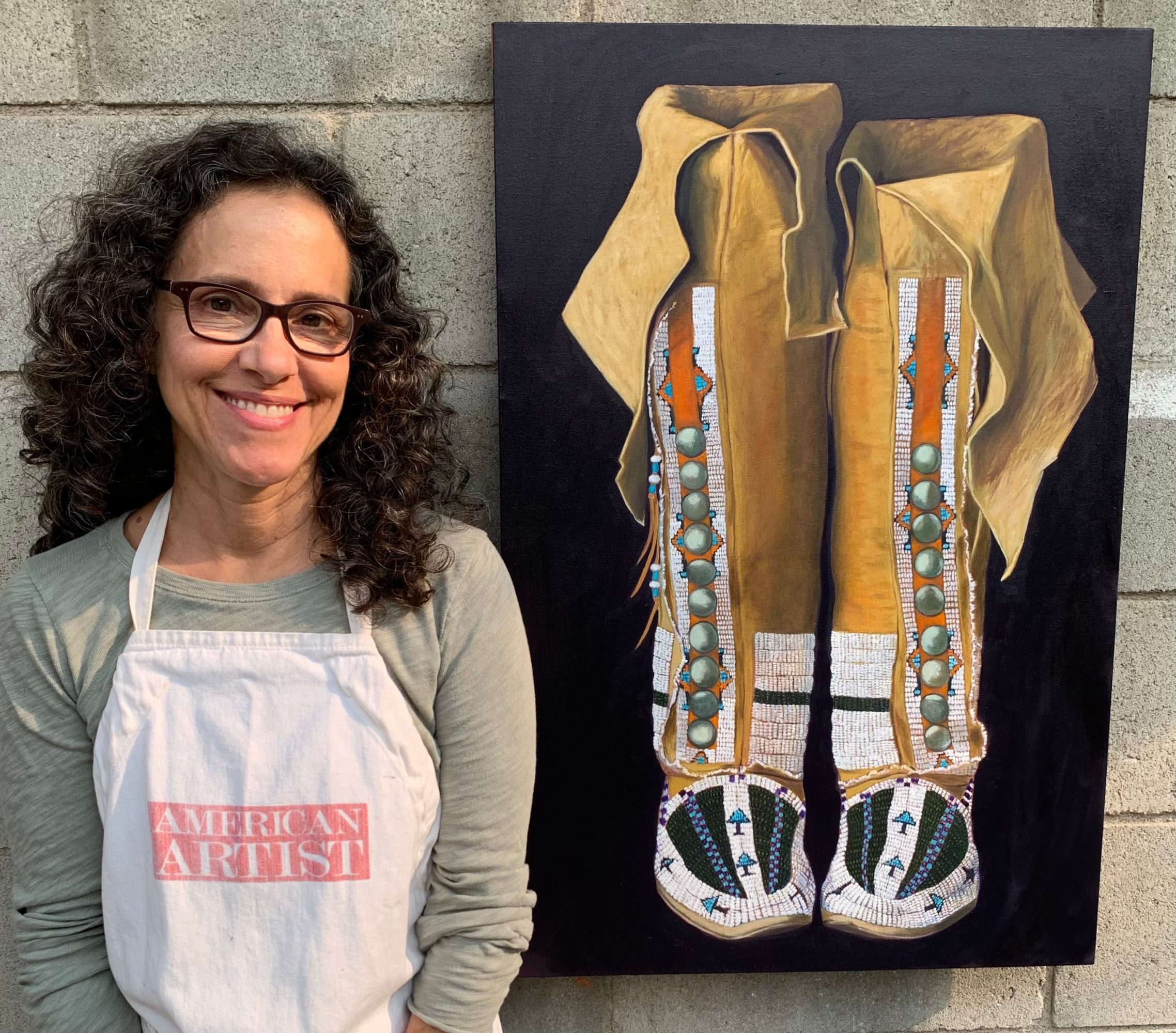
Today we’d like to introduce you to Marybeth Fama.
Hi Marybeth, we’re thrilled to have a chance to learn your story today. So, before we get into specifics, maybe you can briefly walk us through how you got to where you are today?
I grew up on the south side of Chicago, on the rough outer edges of the University of Chicago, in the 1960s and ’70s: a time and place that saw a lot of racial strife and Viet Nam war protests. I was in the minority at my school and I learned to keep my head down. My father, Eugene Fama, the first person in his family to attend college, was a grad student on scholarship who became a full professor at the age of 24 and by 27 had four children and a big reputation in new studies of Finance (for which he later won the Nobel Prize in Economics, in 2013). My mother taught piano, painted, threw gourmet dinner parties for Business School faculty and students and took care of us and the house without any help, not even a cleaning lady. My parents were the children of Italian immigrants who worked multiple manual labor jobs to survive, so they could not imagine careers in the arts, music or theater for their four creative children. These endeavors the four of us had devoted so much time to were just “hobbies.” We were encouraged to put them aside and study economics. My three younger siblings dutifully did so. I was the black sheep who studied Literature at U. Chicago while working full time in restaurants to support myself, and used summer free time to take painting and sculpture classes at the School of the Art Institute.
When I finally graduated from college in, I had no clue about how to earn a living from writing, but I had worked every job in several restaurants, so I decided to apply to the fanciest restaurant in Chicago, “Le Perroquet,” where I got a job as a cook, in spite of the owner’s lecture that it was against his better judgement, because “women caused trouble in kitchens.” Being a chef was a utilitarian way to satisfy my desire to make art – with each plate as an ephemeral, experiential piece – while earning a paycheck. In that kitchen in 1983 I met Hans Rockenwagner, a young chef visiting from Germany. We fell in love and, in 1984 after he was denied a green card and I went to Los Angeles to visit my parents who were at UCLA for a year on sabbatical, we decided to get married, pack up the car with our TV, clothes and two cats and move to L.A. in with the idea of opening our own small restaurant in paradise. We borrowed $70,000 from my parents to remodel a small storefront restaurant in Venice, on West Washington Blvd, a down and out mixed residential and commercial street which was later renamed Abbot Kinney. People advised us that it was a rough neighborhood and a senator’s niece had been shot dead for her purse right next-door, but to me it felt only pleasantly scruffy, like home.
I’m sure it wasn’t obstacle-free, but would you say the journey has been fairly smooth so far?
Tiny Rockenwagner Restaurant was about to fail a month after it opened, so I wrote a letter to Ruth Reichl, the food critic at the L.A. Times, pleading with her to come try it before we were forced to close our doors. She came several times with different people, never identifying herself. Then she called me to say I should hire more staff because she was sending a photographer and a full page review was coming. Suddenly we were so overwhelmingly busy that we were able to pay off the loan to my parents and buy a condo near the beach.
Three years later, in 1988, we had our first child, Gina. By 1989 we had rented a second space on 4th Street in Santa Monica to build a restaurant with my last name, Fama. In 1990 we were about to have our second daughter, Roxanne. We were working so hard and pregnancy and childcare demands were cutting into my evenings at the restaurants. Hans felt abandoned and secretly got involved with an employee. Meanwhile, we had opened a sandwich stand at Santa Monica Place, called Rockenroll. It was not profitable and we discovered too late that the manager had been stealing from the business. We had to close it down. Our first failure. We were getting too big too fast. I saw the assistant manager take a sip from my husband’s beer at the end of the night and I realized they were having an affair. I asked her to leave the job and asked Hans to leave our house. After a month he asked to come back. He stopped seeing the other woman. We went to counseling together. Our lives got back to normal and by late 1991 I was pregnant again.
The biggest challenge to my work and home life was when my first child, Gina, who was not quite 4 years old, became critically ill with ulcerative colitis in 1992, during my third pregnancy. A pediatric gastroenterologist tried all the drugs that were available at the time, yet Gina had to be hospitalized as many as eight weeks in one year. After seeing what other children went through when left alone in the hospital, I decided I had to be with her at all times. In 1993, about a year after Hansi was born, Gina finally had major surgery, as medical treatments were unsuccessful. A follow up surgery came in 1994. The strain of all of this on our marriage was too much. We were only in our early thirties and had different ways of coping. Our nanny divulged that Hans did not come home when I was staying at the hospital. We agreed to separate and that I would run Fama, while he ran Rockenwagner. I had the kids during the week and he had them Fridays and Saturdays.
Shortly after we made this decision the Northridge earthquake struck and a large swath of Santa Monica was radically affected. The earthquake revealed an unknown fault line ran below Santa Monica Blvd. Many 4th Street buildings were boarded up indefinitely and Fama, hidden by scaffolding, appeared to be closed. The parking structures around the restaurant were filled by people going to movie theaters on the Promenade. Our business had slowed down and, after 3 years on my own there, I was exhausted, so Hans and I agreed to sell Fama. He would buy me out of Rockenwagner, I would become a full-time mother to our three children and he would pay child support. We planned to divorce, but then remained married for 7 years, until he decided to marry Patti Shin.
Thanks – so what else should our readers know about your work and what you’re currently focused on?
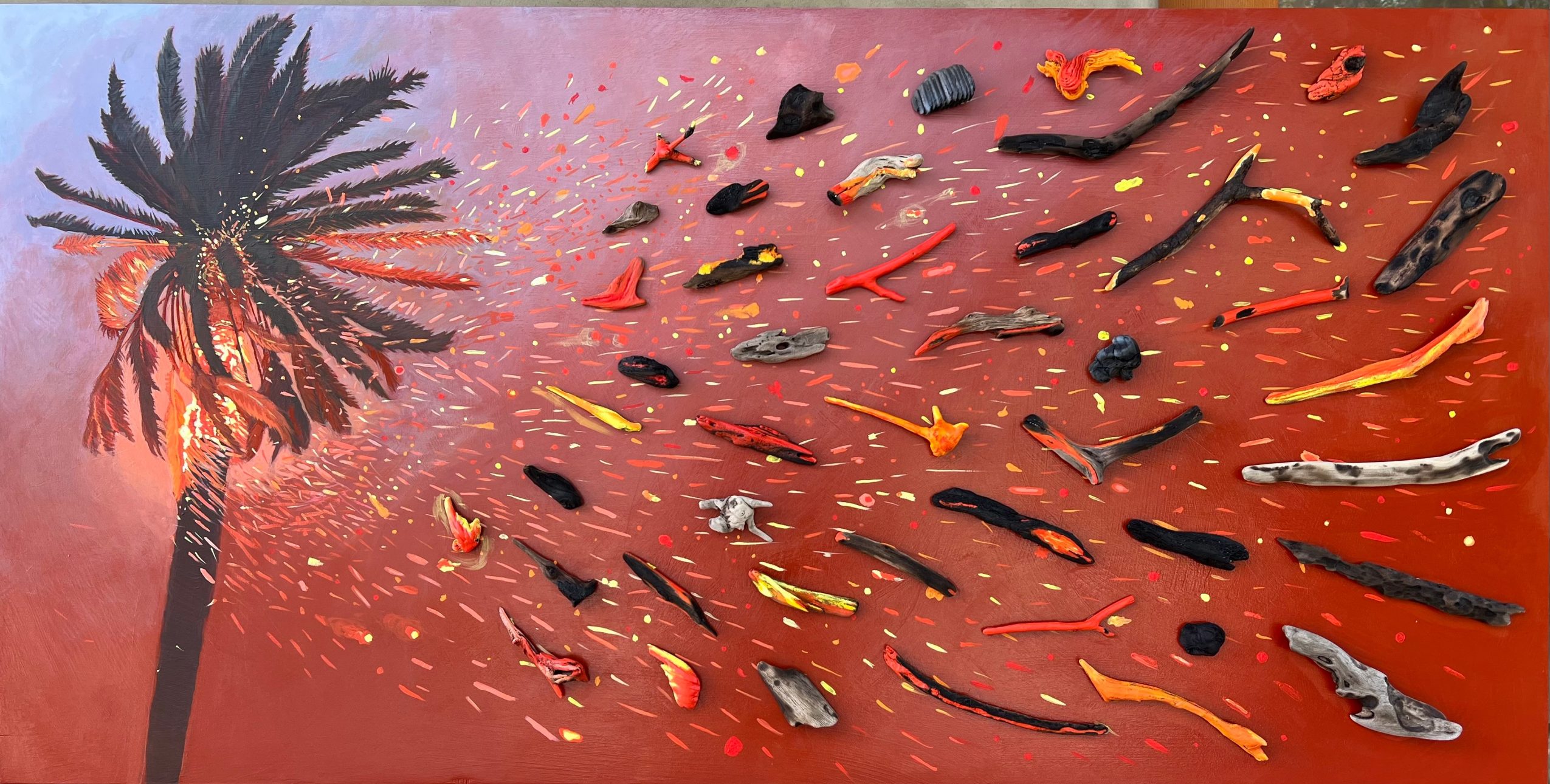
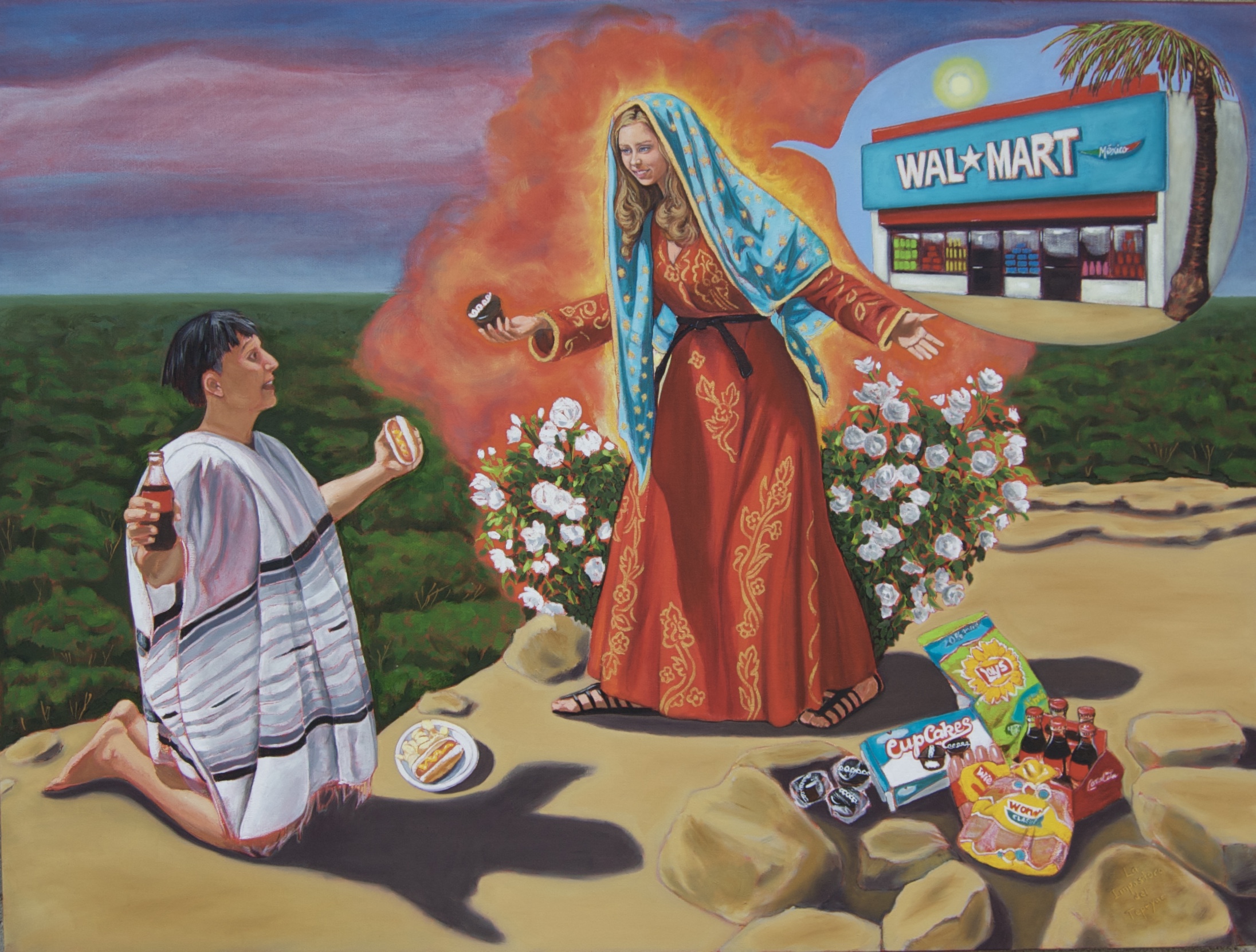
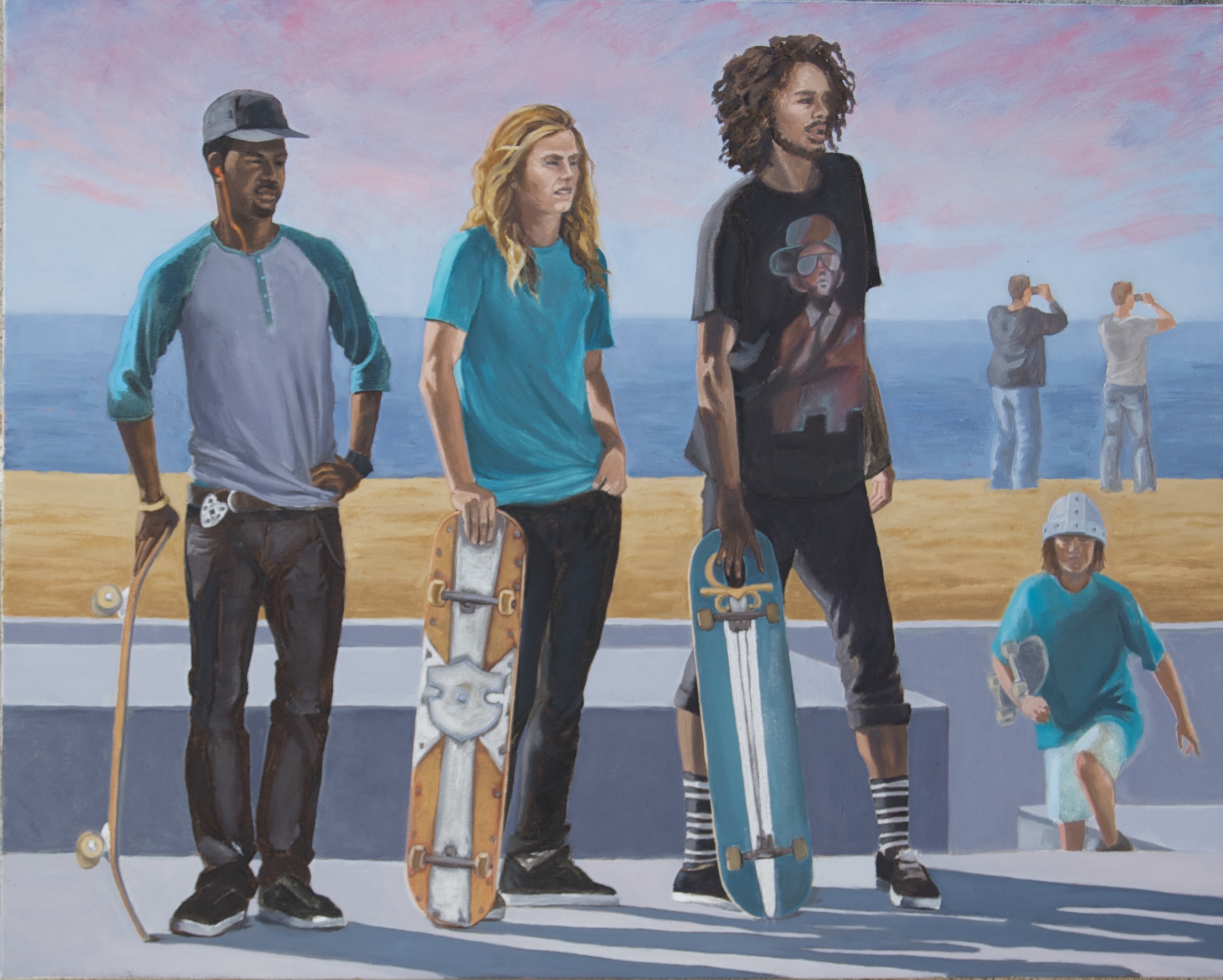
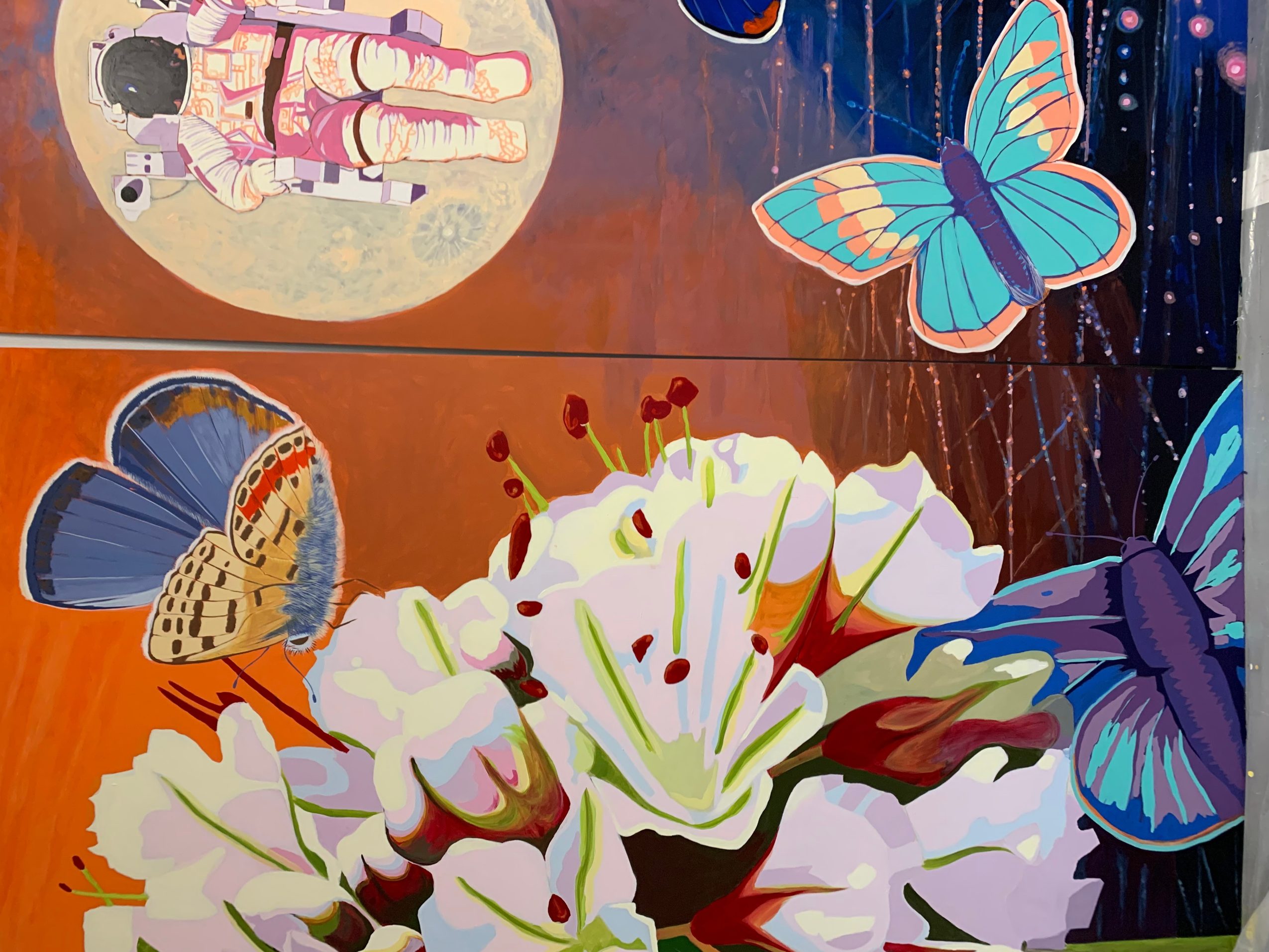
For twenty years I worked in restaurants, starting as a waitress, but moving quickly from customer service and management to more creative jobs in cooking and making pastry, to going into business for myself. When that ended I was able to devote myself to drawing and painting, culminating, after many years and several mentors, in the two studios I have today: one here in Venice on Palms Blvd and a larger space in Joshua Tree. I am mainly a realist oil painter, although recently I’ve been experimenting with more abstract themes, mostly hard-edged geometric, but some more free form. My ideas come from various directions and run in series: a series of views from below various piers at the beach, farm equipment on the beach, people watching each other on the beach, close up views of flowers, portraits of friends. I’ve done a series of religious paintings dealing with my very Catholic upbringing. During covid I read a book about the Lewis and Clark expedition and realized I knew little about Native American history, so I read books and looked at images and made a series of portraits of objects made by Native women, most of whom are unknown. I’ve done two recent paintings about the Palisades fire and plan to do more.
Going back to art and becoming an artist with help from my mentors:
Exiting the restaurant business and focusing on my kids was a relief. After I dropped them off at their schools in Santa Monica, I would drive to the 4th street stairs and run up and down them ten times to stay in shape and flush my excess energy. On the way back to Venice on Ocean Avenue I would see a man standing outside in Palisades Park, painting on huge canvases. His paintings looked realistic, yet radical and exciting. I stopped to talk to him and we became friendly. He looked clean, but he had a broken tooth and parked a run down van nearby. I thought he might be homeless. He was a marvelous, funny, gay, well-spoken talent, who towered over me at 6 feet 4 inches, had an upright shock of white hair and a slight New Orleans accent. He was painting the work site of a building called “El Tovar,” that had been damaged by the earthquake and was being demolished and replaced by a modern replica. He said his name was Tom X. He invited me to come to join him in the park to paint. He became my first mentor.
Tom was painting a series of the El Tovar, partially destroyed, then being demolished by men driving heavy machinery, then being excavated and framed, with workers climbing the iron beams, then being rebuilt. I started to paint a series of shadows cast by trees in the park, with people walking dogs there, men playing cards at tables in the shade, women knitting and talking in lawn chairs, or Saint Monica rising over head, or another saint selling ice cream from a truck to people waiting in line. When it was time to pick up my kids I felt tired, fulfilled and happy. Tom was encouraging me to be loose, colorful and expressive in my work. On weekends we experimented with oil sticks and pastels. I started going to life drawing workshops at UCLA. It was 1997 and I was a full time mother and a full time artist. I moved my family out of the condo to an old wreck of a house with a big yard on the other side of Lincoln. I made jewelry and painted in a covered patio off of the living room while my kids did their homework. By 2000 I had converted the garage to a studio. By 2001 TomX had died of a brain tumor.
Do you have any advice for those looking to network or find a mentor?
In 2003 I befriended a single father at my kids’ elementary school, PS #1, whose wife had died of cancer. He was the painter, Bruce Cohen, who showed at Kohn Gallery in L.A. (and now at Leslie Sacks) and at Berggruen Gallery In San Francisco. He made his living solely from painting and did not teach or have a side job. His wife, the famous ceramic artist, Roseline Delisle, who had pieces in the collection at LACMA, had lived behind my first restaurant and I remembered when they had gotten engaged and celebrated at the restaurant. Bruce became my boyfriend, and also my mentor, for eight years.
Unlike TomX, Bruce was not trying to fight his tendency to be very precise about his painting style. Instead, he was going with it. His work was hard-edged and realistic, yet he tended to bend perspective in a way that made it feel surreal. He painted mainly interiors that looked very perfect. They suggested that someone had been there and done something, but now they were gone, leaving only their mysterious essence. As his 10 year old daughter put it at the time, “My dad’s paintings are a vacation from reality.” Aside from process – making sketches or pastel drawings of an idea, then converting that to an underpainting on top of layers of polished gesso on canvas, then creating a finished painting on top of that – I learned about looking for the light and painting the light from Bruce. I still believe this is the most important thing about good painting, whether it is abstract or realistic: creating the light that makes a sense of space, layers, background and foreground, leading the viewer’s eye and conveying feeling or meaning.
In 2011, when all my kids were in college, I went to Otis College for foundation year because I wanted the formal mentoring and training of art school that I felt I was missing. I spent hours doing figure drawing, studying two-dimensional and three-dimensional design, color theory and writing art history papers. This helped me to hone skills I already had. When that year was over I began painting murals as well, with Francisco Letelier.
Francisco has been another kind of mentor: one who believes that anyone can and should make art as a form of self-expression, that it should not be judged and that it can serve an important social function by lending meaning to public spaces or allowing people to speak to injustices in their lives, as when Chilean women began to make arpillbera tapestries as a form of protest during the Pinochet dictatorship in Chile to address the violence and disappearance of loved ones. Our largest collaboration is the giant mural on the LAX Police Station, outside of the airport at 9160 Loyola Blvd., Los Angeles (Westchester), 90045. We spent the summer of 2021 painting this 10 feet high by 105 feet long piece of art onto 10′ x 5′ aluminum panels in our Joshua Tree studio..
Contact Info:
- Instagram: @famapaloverde

Popular
-

Portraits of the Valley
-

LA’s Most Inspiring Stories
-

Greg Hex Is Turning the Everyday Kitchen Knife Into a Modern Design Object
-

Rick Norris Learned That Building a Successful Business Means Building a Life You Actually Want to Live
-
How Olivia Rush Turned Survival Into a Mission to Help Others Keep Going
-

How Bibi Goldstein Is Helping Entrepreneurs Reclaim Their Time by Embracing the Power of Delegation


