




Today we’d like to introduce you to Douglas Einar Olsen.
Hi Douglas Einar, please kick things off for us with an introduction to yourself and your story.
I pin my artist origin story to a moment in third grade when my friend Dan Schmitt asked me to draw the Ninja Turtles villain Shredder for his book report. When I asked why, he said it was because he thought my drawings were always the best in the class! It was the first time anyone had recognized me as an artist (outside of my family, of course), and I was happy to oblige, making him the best drawing of Shredder I could. That led to a series of TMNT-inspired drawings and eventually my own original characters. I’ve centered my identity around being an artist ever since.
My childhood artistic explorations also included claymation experiments and short films with friends using my dad’s Hi-8 camcorder. Across many cassettes, it became clear these inane shorts always turned out best when my funny friends were in front of the camera and I was behind it. I credit that chapter with developing my early instincts as a director.
My specific aspirations as a creative professional were ambiguous at first. I knew I loved drawing and the power of storytelling, and early on I thought that meant becoming a comic strip artist, making things like Garfield or maybe X-Men. Becoming a real movie director was also appealing but seemed daunting from the perspective of a grade school student.
Eventually I met a series of mentors and teachers who helped me discover my path. It led me to some unusual places, but it has added up to a unique blend of experiences that makes me the creative I am today.
Jeffrey K. Fisher was an impactful teacher I met early on, a local illustrator (and mad man) in my hometown who taught private drawing classes. His enthusiasm and perspectives on art, exploration, and experimentation remain a cornerstone of my process to this day. As an Illustration major at the Rhode Island School of Design, I studied with instructors passionate about storytelling, like David Macaulay and David Mazzucchelli. Macaulay also encouraged me to spend my senior year living in Rome as part of RISD’s European Honors Program.
My time in Rome stoked a period of wanderlust and a break from the commercial forms of art I’d been studying up to that point. After graduating, I followed two friends to Berlin, where we formed the artist collective Wunderkrafthaus. This became a permission structure for me to explore art beyond the confines of commercial work-for-hire, delving into music, video, performance, sculpture, and interactive works. During this period in Europe, I also worked on a farm in Tuscany, Tenuta di Spannocchia, and for the gallery Perez Projects in Kreuzberg, making further inroads into the fine art world and gaining a broad range of cultural and creative perspectives.
Wunderkrafthaus eventually settled in New York City in 2006, taking over a storefront in Bushwick, Brooklyn, that we dubbed Master Kontrol. I jokingly refer to the years we lived and worked there as my ‘graduate work’. It was a period of intense creative exploration, and our work foregrounded play and subversion across a range of mixed media. To supplement my income, I worked as an art handler, which put me in regular contact with the New York gallery scene and kept expanding my understanding of what art could be.
Independently, I continued fostering my interest in storytelling and how my abilities as a draftsman could serve it, hoping to eventually turn that into a career. Storyboarding was an obvious direction, but I wasn’t finding much of that work in New York, just small jobs boarding commercials or the occasional music video. I was only vaguely aware the animation industry existed back then. No RISD professors had told me about the career opportunities it offered, and its presence in NYC was minimal. I didn’t come into direct contact with it until after Wunderkrafthaus dissolved, and I rented a desk in a shared work space in Gowanus called Drawbridge. Several freelance comic book artists worked there, including Mike Cavallaro. Mike was a veteran of the ’90s MTV Animation scene and knew many people in the industry. We kept similar evening hours at the studio, and after he got to know me, my work, and my ambitions, he offered to put me in touch with his friend Christopher McCulloch, who was staffing up for an upcoming season of his animated series The Venture Bros.
After meetings with Chris and his team (along with a harrowing art test), I was hired onto Season 5 of The Venture Bros. as a Background Designer. My storyboard portfolio at the time didn’t show enough experience to handle a show like Venture, but based on a series of interior and landscape studies I’d done as a farmhand in Tuscany, they thought I’d be a good fit for the backgrounds team. It was my first job as an animation professional working at Titmouse Studios and I made the most of it. Storyboards remained my target department, so I spent a lot of time looking over the board artists’ shoulders, soaking in all I could. When the backgrounds team wrapped for the season, the show gave me a shot as a Storyboard Revisionist, and I began pulling in more work from there.
I quickly learned that doing good work and being genuinely good to work with were the keys to moving through this industry. After Venture Bros., I was recommended to a newly formed LA studio, FOX/ADHD, which was hiring board artists for a new show called Axe Cop. After testing, I was hired for my first project as a full-time storyboard artist on an episode called “Avocado Soldier.” That led to continued work with ADHD and eventually a move to Los Angeles to be more directly involved with the studio. After proving myself as a reliable and inventive storyboard artist, I was promoted to director, leading episodes of shows including Major Lazer and Golan the Insatiable. I believe it was my combination of drawing and storytelling skills, along with a persistent willingness to experiment, that set me apart and brought me to the attention of the showrunners and producers.
As ADHD was winding down, the positive relationships I’d built paid off again, and people made recommendations for me. Around that time, I was discovering Rick and Morty, which was airing its second season. It had an appealing blend of boundary-pushing irreverence, unique sci-fi antics, and dark humor. Two showrunners I’d recently worked with, Matt Silverstein and Dave Jeser, were friends with Rick and Morty producer Mike Mendel and were happy to pitch me as a candidate for the show. It apparently went so far as Matt running into Mike at a Trader Joe’s and insisting that he give me a look!
I joined the Rick and Morty crew on Season 3 as a Storyboard Artist, and my very first episode was “Pickle Rick.” The show has been my home for much of the past decade, with occasional breaks to work on other projects: storyboarding on all of the Sonic the Hedgehog films, supervising their Knuckles spinoff series, directing and storyboarding on a number of Titmouse projects, and independently producing the music video for Lil Dicky’s “Professional Rapper” featuring Snoop Dogg with my collaborator Al LeVine. At Rick and Morty, I was promoted to Director on Season 5, and the Season 9 premiere I directed, “There’s Something About Morty,” was recently nominated for an Emmy for Outstanding Animated Program. I’m currently directing on the show’s 11th season and grateful to be part of such an amazing program, but I also hope to keep exploring opportunities in feature films and maybe one day fulfill that childhood dream of directing some of my own.
Would you say it’s been a smooth road, and if not what are some of the biggest challenges you’ve faced along the way?
Definitely not a smooth road. The first stretch after college was the hardest. I spent my senior year of RISD in Rome, which was an amazing experience, but it meant missing most of the professional preparation classes. I graduated with very little portfolio and spent the next year back on Long Island working my old construction job and trying to write a children’s book. Meanwhile, my college relationship and another close friendship were both falling apart. It was a lonely, directionless time, and moving to Berlin was really a much-needed rebirth.
New York was also a struggle. While in many ways it was fun, I spent about five or six years there scraping by between art handling, freelance storyboarding, and making work with Wunderkrafthaus. We had a great creative run, but tensions built up within the group. I wanted to use our combined talents for commercial design and video work, and the others were less interested wanting to focus mainly on fine art pursuits. By the time the collective broke up, I still didn’t have a clear sense of a career path.
One big obstacle was simply not knowing a career path for a skill set like mine even existed. I didn’t know animation was a viable career, I had no industry connections, and New York’s scene was tiny. Years earlier I’d answered a listing for storyboard work on The Venture Bros. and never heard back. What I learned is that this industry runs on people advocating for you, and it took meeting Mike Cavallaro to open that door.
Even once I was in, there were humbling moments. I was told I wasn’t ready to storyboard for Venture Bros., and they were right. When I first directed a team on Golan the Insatiable, I was in over my head, and after all that work, the show was cancelled when leadership at Fox changed. Joining Rick and Morty on Season 3, I was surrounded by serious talent, and it was hard to keep up at first. There have also been long waits between jobs at times.
These days the challenge is different. It’s an uncertain time in the animation industry, and a steady job like mine is rare, which makes it tempting to stay comfortable. Figuring out how to keep growing, and when to take the next leap, is the challenge I’m working through now.
Appreciate you sharing that. What else should we know about what you do?
I’m an Animation Director and Storyboard Artist, working mostly in adult animated television and feature films. As a director on Rick and Morty, I lead a team of storyboard artists and help guide each episode from script to screen, shaping how the story is staged, paced, and performed visually. I also work as a storyboard artist on features, most notably all of the Sonic the Hedgehog films.
My specialty is visual storytelling, especially action, musical, and cinematic sequences. Storyboarding is essentially directing on paper: deciding where the camera goes, how a joke lands, how a scene builds tension. It brings many of my interests together into a single discipline.
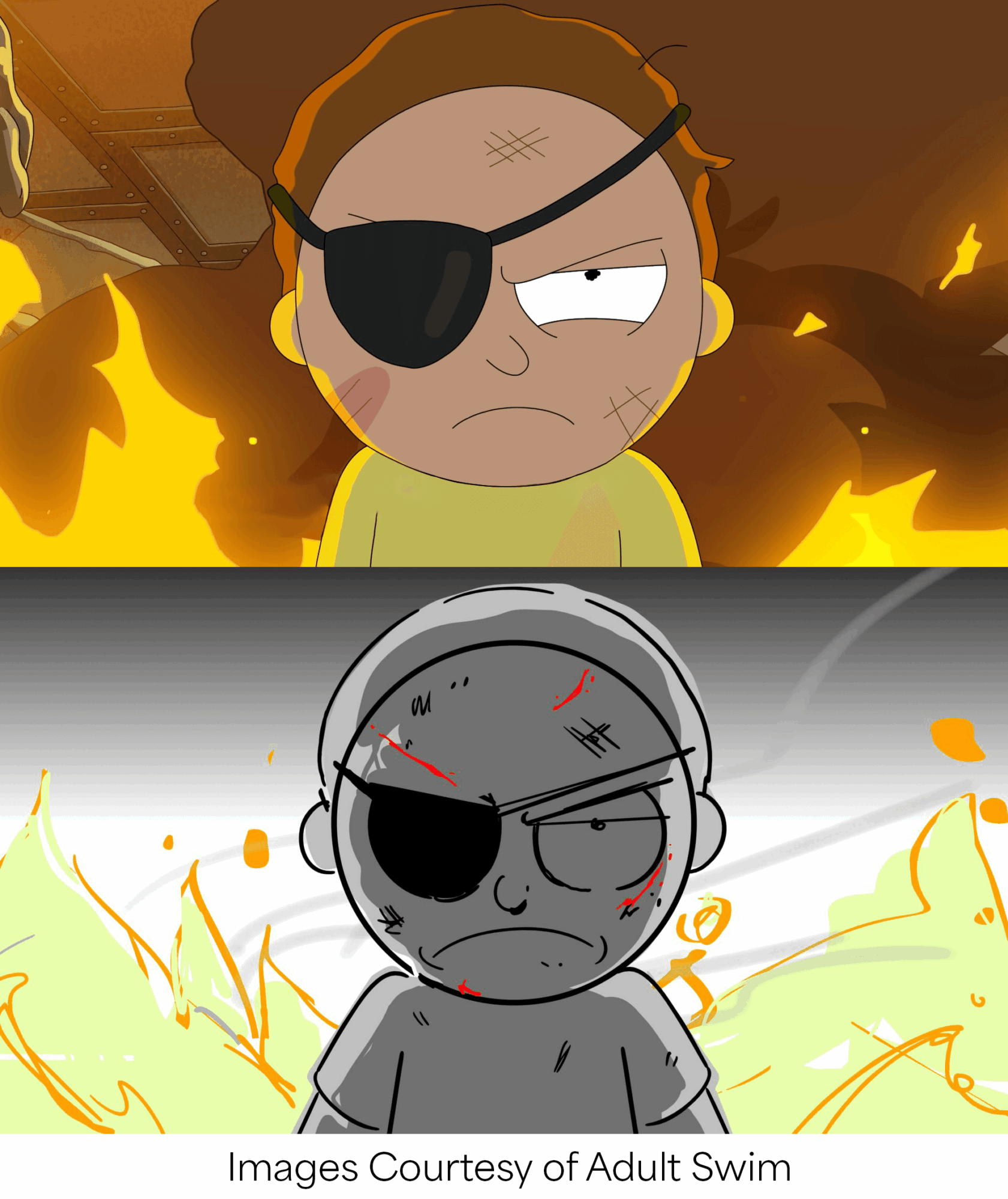
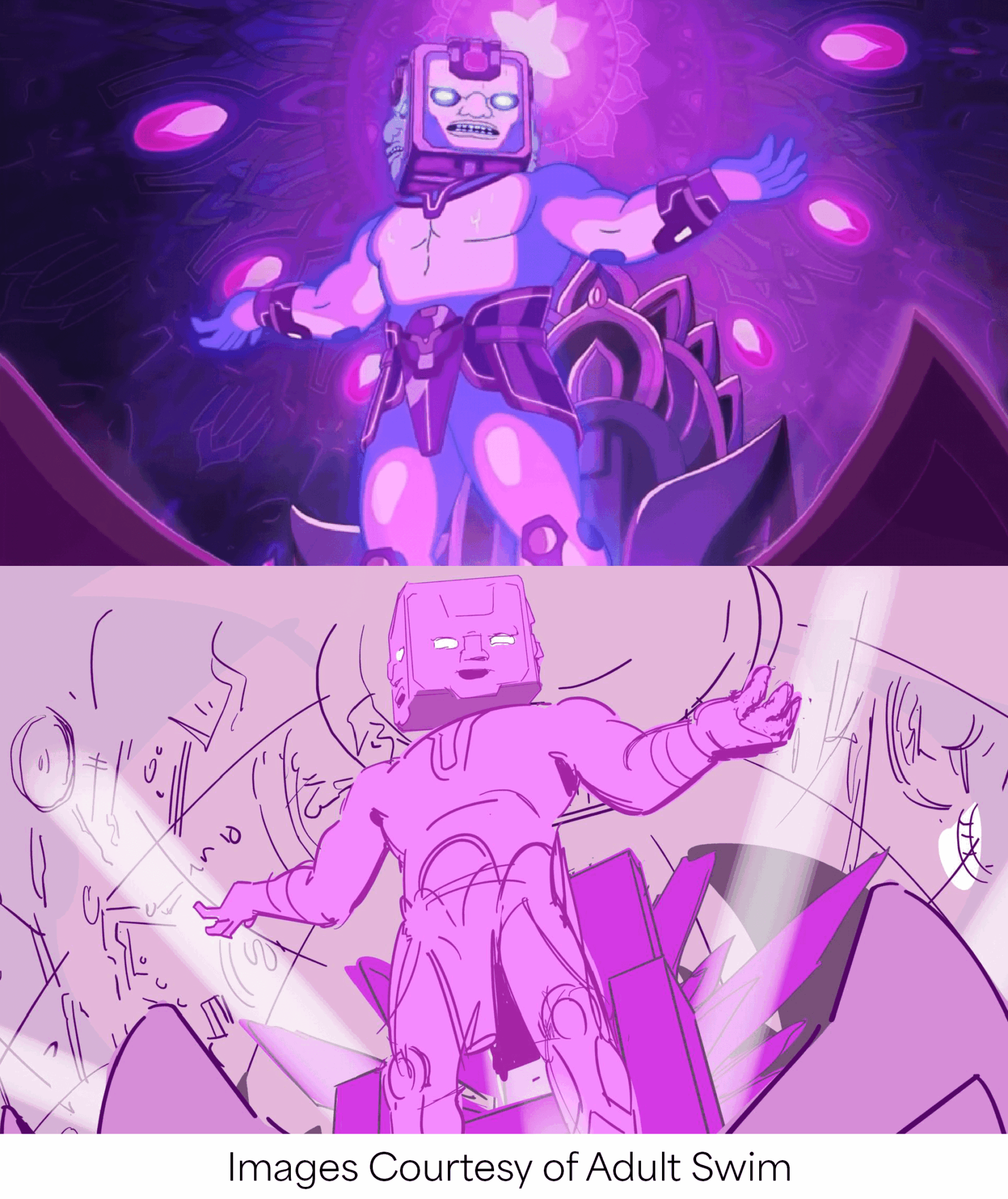
I’m probably best known for my work on Rick and Morty, beginning with “Pickle Rick,” the first episode I storyboarded on the show. I’m most proud of “There’s Something About Morty,” the Season 9 premiere I directed, which was nominated for an Emmy for Outstanding Animated Program. Albro Lundy, the episode’s writer, and I had a great time conjuring its epic battle sequences into existence. He’d been a fan of my work on prior episodes, so we let a lot of the action be board-driven, meaning the beats of a sequence emerged through visual exploration. At our request, our producers also approved a special budget to have parts of the episode traditionally hand-animated, giving it an extra level of fluidity. Many fans have told me they really noticed the elevated feel of the animation in that episode.
What sets me apart is probably my unusual path. I often describe myself as an animation/fine art hybrid. Most people in animation come up through animation schools. I came up through illustration, forming a fine art collective abroad, years as an art handler going in and out of New York galleries, and a lot of experimenting with video, music, and performance. That background gives me a wide range of references and a willingness to try unconventional ideas, which is a good fit for a show like Rick and Morty. I think that mix of solid drawing and storytelling fundamentals with a broad range of visual taste is what first got me noticed and what keeps me growing as a director.
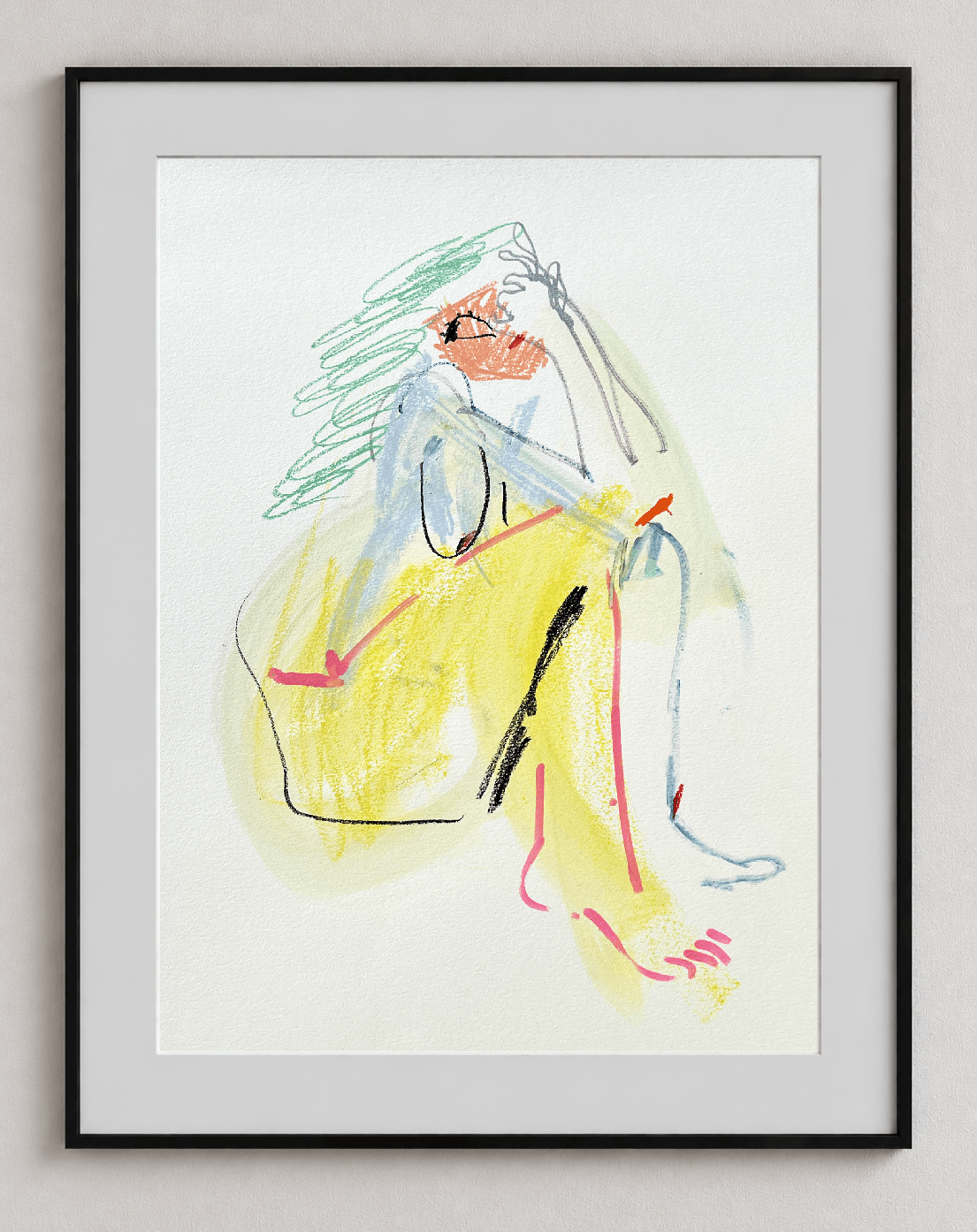
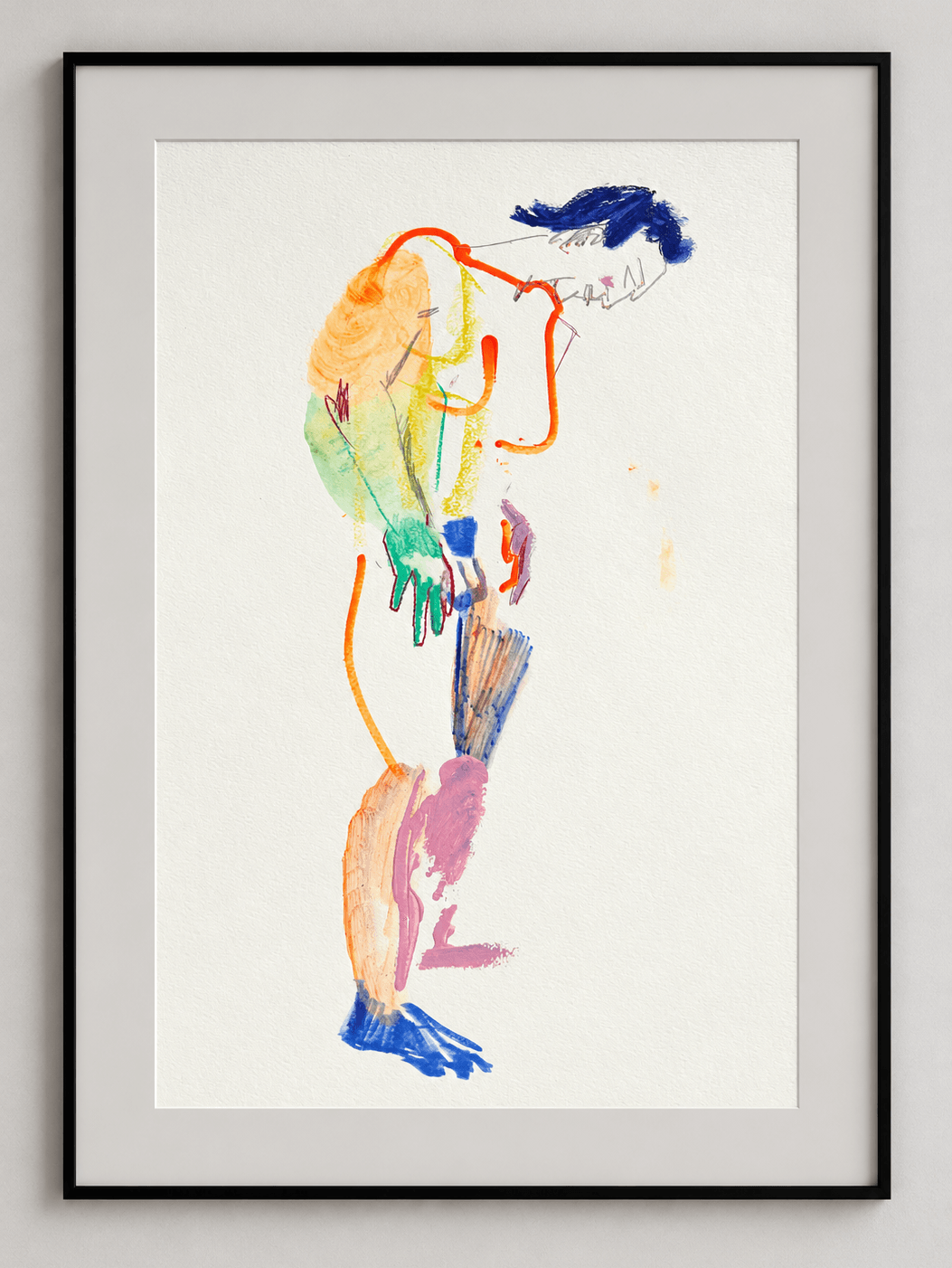
Outside of production work, I keep up a personal figure drawing and painting practice, which allows me to venture into more formally experimental territory.
Before we let you go, we’ve got to ask if you have any advice for those who are just starting out?
The advice I give most often is to just “make stuff.” Try making the thing you want to be doing, and most importantly, finish it. You learn the most by bringing something all the way to completion. If you do that consistently, you start to build a documented catalog of your interests, and maybe even see the direction you’re heading. It takes time, but it helps you develop your voice, which is one of the real assets you have as a creative professional. And when someone eventually wants to hire you, you’ll have a body of work to show them. Luck favors the prepared.
What I wish I’d known starting out is that animation had a real industry and culture of people making a living doing it. I spent years drawing, storyboarding commercials, and making video art without realizing there was an entire industry built around exactly what I loved to do. You often hear about parents steering promising young creatives away from making a career of it, but I remind them that whenever they watch a TV show or film and that long list of names rolls at the end, almost all of those people are artists with jobs.
Always learn from the experienced people around you. I’ve been lucky to have incredible mentors, from Jeff Fisher and Mike Cavallaro to Wes Archer and Peter Chung. If you don’t have mentors around you, take classes.
I also often tell people to “be cool to work with.” This industry runs on people advocating for you. Nearly every door that opened for me came through someone vouching for me, and I continue to do the same for others when I think it will help a production.
Contact Info:
- Website: https://dougolsen.com/
- Instagram: https://www.instagram.com/mysteriousdeo/
Popular
-

Portraits of the Valley
-

LA’s Most Inspiring Stories
-

Greg Hex Is Turning the Everyday Kitchen Knife Into a Modern Design Object
-

Rick Norris Learned That Building a Successful Business Means Building a Life You Actually Want to Live
-

How Olivia Rush Turned Survival Into a Mission to Help Others Keep Going
-

How Bibi Goldstein Is Helping Entrepreneurs Reclaim Their Time by Embracing the Power of Delegation


