



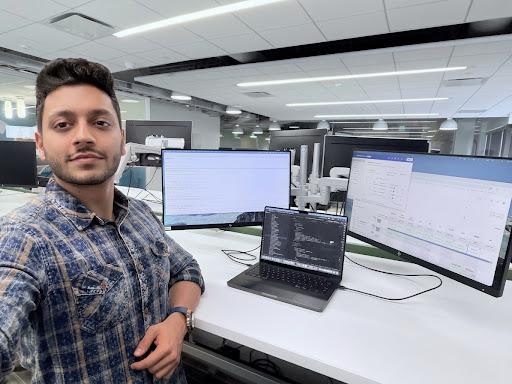
Today we’d like to introduce you to Aayush Bharat Mandavia.
Alright, so thank you so much for sharing your story and insight with our readers. To kick things off, can you tell us a bit about how you got started?
My journey into technology started long before I ever thought of it as a career.
I was born in Mumbai, India, and as a child, one of the first pieces of technology I was fascinated by was the mobile phone. When I was in sixth or seventh grade, I became obsessed with computer games. But what interested me even more than playing them was understanding how they worked.
I remember trying to install a piece of software on an old family computer around 2005 or 2006. The computer had almost no free space, so I went online and started figuring out which files could be removed, what hidden files were, and which files were essential to the operating system. I managed to free up more than a gigabyte of space, which felt enormous at the time.
Then the software still would not run. I spent several more hours trying to understand what was wrong. I searched for solutions, tried different things, fixed one issue after another, and eventually got it working.
Looking back, that experience was probably one of my earliest lessons in engineering. Something was not working, I did not know the answer immediately, and I had to understand the problem and keep working at it until I found a solution. The scale of the problems I work on today is very different, but that way of thinking has stayed with me.
My parents also played a big role in shaping my interest in technology. I was always excited about new gadgets and wanted to try every new piece of technology I came across. They were not always willing to buy them for me. Instead, they would tell me to learn how the technology worked and eventually build something myself. At the time, I did not realize how much that advice would influence my career.
I studied computer engineering in Mumbai. Initially, I struggled academically. Many of the concepts did not make sense to me, and my scores were only slightly above the passing level. I eventually reached out to professors and friends, started focusing more on understanding the concepts rather than just studying for exams, and slowly improved. That experience gave me a lot of confidence because I realized I could overcome things that initially seemed difficult.
By my fourth year of engineering, I knew I wanted to pursue a master’s degree and build a career in software and technology. At the same time, I felt that I needed some real-world experience first. I decided to work in India for about two years, where I gained experience building enterprise applications and working in professional software teams.
After that, I applied to universities in the United States and eventually chose California State University, Long Beach, for my master’s degree in computer science. That was a major turning point for me. I was surrounded by talented students, exposed to different areas of computer science, and had the opportunity to learn more about software engineering, distributed systems, security and artificial intelligence.
During that period, I also had the opportunity to intern at Amazon and work on Prime Video. I worked on improving a client identification system used by two important services. That experience gave me a much better understanding of how software is designed and maintained at a large technology company.
After graduate school, I continued building my career around software engineering and cloud technologies. At Office Depot, I worked on marketplace services and built APIs used by pricing, inventory and catalog systems. I also worked with Kubernetes and cloud services and helped improve the efficiency and scalability of the applications.
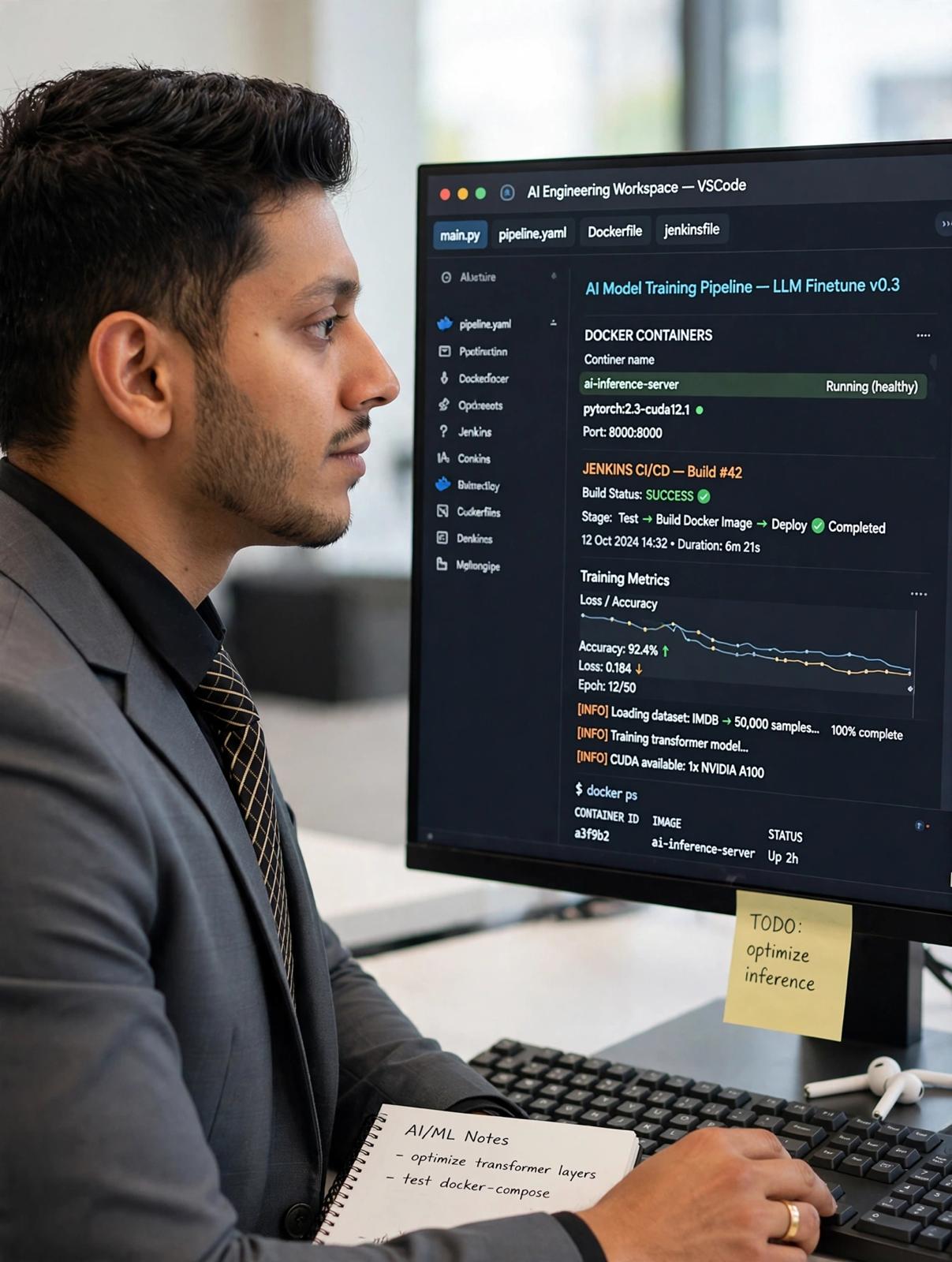
Today, I work as a Senior Application Developer at ADP, where my work has increasingly involved both large-scale cloud engineering and artificial intelligence.
One of the projects I am particularly proud of involved using an AI-powered multi-agent framework to automate tax filing configurations. I helped develop and enhance agents that generate structured configurations for a modernized tax filing system. The work helped automate 228 local tax filing configurations and enabled filing for more than 400,000 employees. It also reduced manual effort by about 60% and reduced delivery time from months to days.
Because AI-generated output needs to be reliable, I also worked on a validation tool that evaluates those configurations before they are used. The tool checks data across more than 22,000 employers and 400,000 employees and has achieved more than 92% accuracy. This was an important part of making AI useful in a real production environment because generating something with AI is only one part of the problem. You also need a way to validate it and know when it can be trusted.
Alongside the AI work, I have continued working on large-scale distributed systems. At ADP, I helped build an event-driven processing system that replaced legacy technology and can process more than 1,400 packages per hour, or roughly 900 gigabytes of data. During peak processing, the system can complete the workload in under 15 minutes.
Over time, my interest in AI started moving beyond using AI in my day-to-day engineering work. I became interested in understanding how AI systems themselves could be designed, evaluated and made more reliable.
That led me, along with my colleague Vivek, to write a book called *Design Patterns for AI Agents*. We wanted to create something that would make AI agent concepts easier for students and developers to understand. It has been especially rewarding to see engineering colleges use the book as part of their curriculum.
I have also started exploring the intersection of AI, privacy and security, particularly in financial systems. One of my recent research projects focuses on protecting personally identifiable information in financial documents while also measuring how certain an AI system is about its decisions.
In simple terms, the research looks at what should happen when an AI system is not completely sure whether a piece of information is sensitive. Instead of simply making a yes or no decision and hiding that uncertainty, the system provides a measurable indication of how confident it is. This is particularly important in areas like finance where an incorrect decision can have serious consequences.
Outside of my day-to-day engineering work, I have also become more involved in the broader technology community. I am an IEEE Senior Member, I review research papers, and I recently started mentoring students through the IEEE Computer Society’s scholarship and engagement program.
I enjoy that part of my career because I have gone through the same cycle myself. I was once the student who was curious about how technology worked and needed others to help me understand it. Today, I have the opportunity to build technology and also help other students and engineers develop their own careers.
When I look back, the technology has changed dramatically. I went from trying to free up space on an old computer so I could install a game or software to building cloud systems, working with AI agents and researching how AI can be made more reliable.
But the question that started everything for me is still the same: how does this work, why does it fail, and how can I make it better?
That curiosity is what brought me into software engineering, and it is what continues to drive my interest in AI, research and building technology that can solve real-world problems.
Alright, so let’s dig a little deeper into the story – has it been an easy path overall and if not, what were the challenges you’ve had to overcome?
It definitely has not been a completely smooth road. I have had several moments where things did not go the way I expected, and those experiences have probably shaped me as much as the successes.
One experience that stands out was during my internship at Amazon. It was a fast-paced environment with strict timelines, and I was working toward the end of my internship with the hope of eventually receiving a full-time opportunity. Near the end of the internship, I was affected by COVID and was sick for about two to three weeks.
Because the internship was relatively short, missing that amount of time had a bigger impact than I initially realized. By the time I returned, there were only a few weeks left, and there were not enough performance data points for the team to make a full-time hiring decision. They were actually willing to offer me another internship the following semester so they could evaluate me over a longer period, but that would have been my final semester before graduation. I needed to graduate and find a full-time position, so that option did not really fit my timeline.
At the time, it was disappointing because I knew I had the ability to contribute, and the timing of the situation was something I could not control. But it taught me an important lesson about handling uncertainty. Sometimes you can do everything right and still not get the outcome you were hoping for.
Instead of letting that experience discourage me, I focused on what I could control. I continued building my skills, completed my degree, and kept looking for opportunities until I found my next role. Looking back, that experience taught me resilience and also helped me understand that one setback does not define your career.
I have had smaller struggles along the way as well. Early in college, I struggled academically and had to learn how to ask for help and change the way I approached learning. Those experiences taught me to be persistent, but also to recognize when I need to adapt rather than simply work harder in the same direction.
Can you tell our readers more about what you do and what you think sets you apart from others?
Today, I work as a Senior Application Developer at ADP, where my work sits at the intersection of software engineering, cloud systems and artificial intelligence.
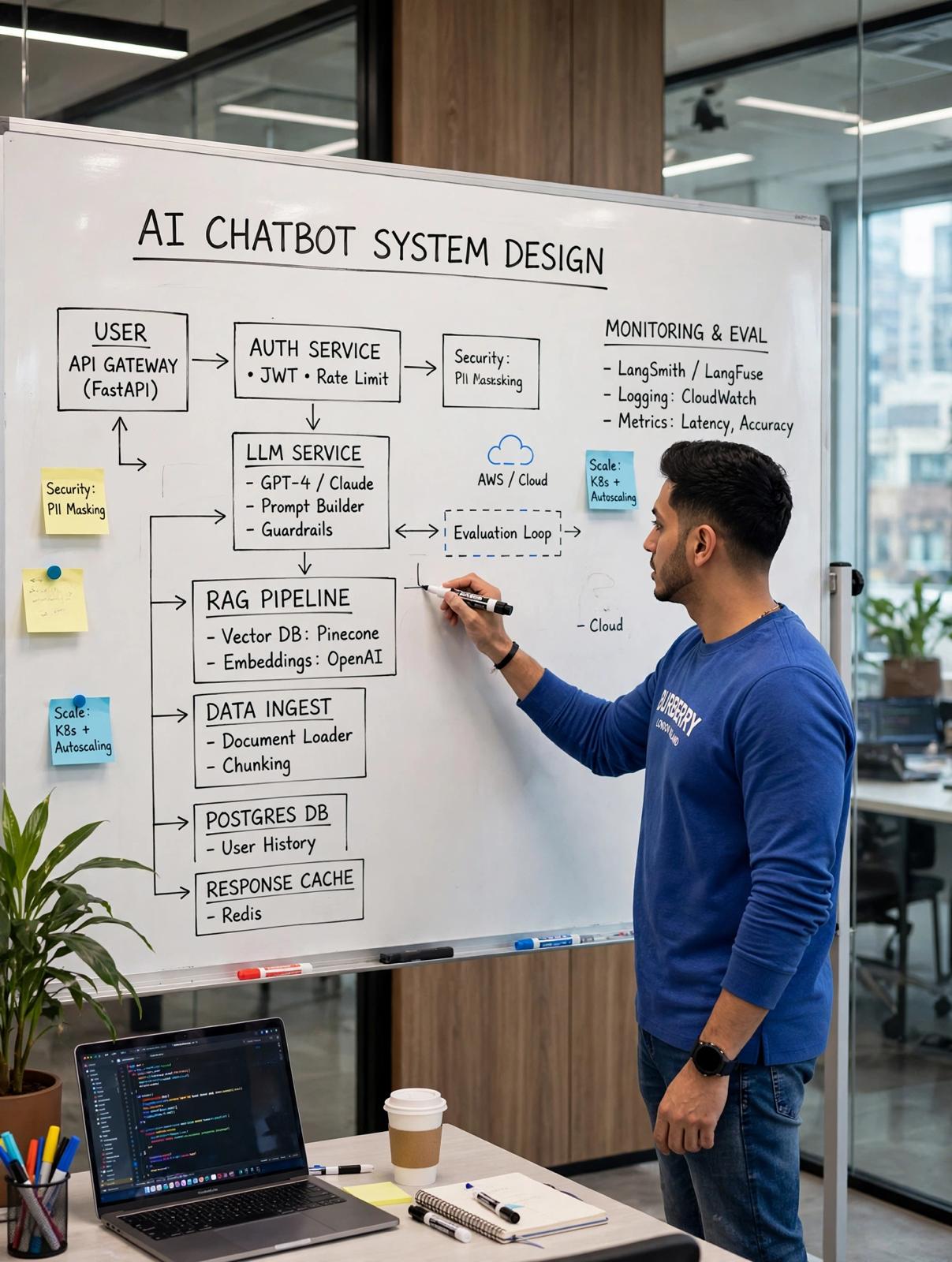
My core background is in building distributed and cloud-based applications using technologies such as Java, Python, AWS, Kubernetes and event-driven architectures. Over the years, I have worked on systems that need to be scalable, reliable and able to handle large volumes of data and transactions. At the same time, my work has increasingly moved toward applying AI to real engineering and business problems.
One area I have been particularly focused on is using AI agents in complex enterprise workflows. At ADP, I have worked on an AI-powered multi-agent framework that helps generate tax filing configurations. We expanded the framework to automate 228 local tax configurations supporting more than 400,000 employees, while reducing manual effort by about 60% and reducing delivery time from months to days. I also built a validation tool to evaluate AI-generated configurations across more than 22,000 employers and 400,000 employees. For me, that validation aspect is especially important because I believe using AI in production is not just about generating an answer. It is also about knowing whether the answer can be trusted.
I also continue to work on large-scale cloud systems. One of the systems I helped build at ADP can process more than 1,400 packages per hour, or roughly 900 gigabytes of data, with peak workloads completing in under 15 minutes. I enjoy solving these kinds of problems because they require looking beyond the code and thinking about architecture, reliability, concurrency, recovery and how systems behave under real production workloads.
What I am most proud of is that my interest in AI has grown beyond my day job. Along with my friend and fellow master student from CSULB, Vivek, I co-authored a book on Design Patterns for AI Agents to make AI agent concepts easier for students and developers to understand. Seeing engineering colleges adopt the book as part of their curriculum has been very meaningful to me.
I have also been exploring AI from a research perspective, particularly around privacy and security in financial systems. My recent work looks at how AI systems can identify sensitive information in financial documents while also providing a measurable indication of uncertainty. I am interested in questions like what happens when an AI system is not completely confident, how we communicate that uncertainty, and how we make AI systems more trustworthy in areas where mistakes can have serious consequences.
I think what sets me apart is the combination of these different perspectives. I enjoy building production systems, but I also want to understand the underlying technology deeply enough to research it, explain it and help other people learn it. I can move from designing a cloud architecture to thinking about how an AI model or agent should be evaluated, and then take those ideas and explain them in a way that students and engineers can actually use.
At this stage of my career, I am especially interested in the intersection of AI and software engineering. I do not see AI as something separate from engineering. I see it as another layer of engineering that needs good architecture, testing, security, reliability and thoughtful design. That is the space I want to continue exploring and contributing to.
How do you think about happiness?
What makes me happy is learning something new, solving a problem that initially seemed difficult, and seeing that work create a real impact.
I have always enjoyed understanding how things work, especially in technology. Even today, whether I am debugging a complex system, exploring a new area in AI, or working on research, I enjoy the process of figuring things out. There is a different kind of satisfaction when you spend time with a problem, understand it deeply, and finally arrive at a solution.
I also enjoy sharing what I learn. Writing about AI, mentoring students, reviewing research, or simply helping someone understand a difficult concept gives me a lot of satisfaction. I think learning becomes more meaningful when you can use it to help someone else grow.
Outside of work, I also value simple things like spending time with family and friends, traveling, and having time to step away from technology. For me, happiness is really a balance of curiosity, meaningful work, and the people around me.
Contact Info:
- Website: https://www.linkedin.com/in/aayushmandavia/
- LinkedIn: https://www.linkedin.com/in/aayushmandavia/
- Other: https://github.com/Aayush-code751


Popular
-

Portraits of the Valley
-

LA’s Most Inspiring Stories
-

Greg Hex Is Turning the Everyday Kitchen Knife Into a Modern Design Object
-

Rick Norris Learned That Building a Successful Business Means Building a Life You Actually Want to Live
-

How Olivia Rush Turned Survival Into a Mission to Help Others Keep Going
-

How Bibi Goldstein Is Helping Entrepreneurs Reclaim Their Time by Embracing the Power of Delegation


