



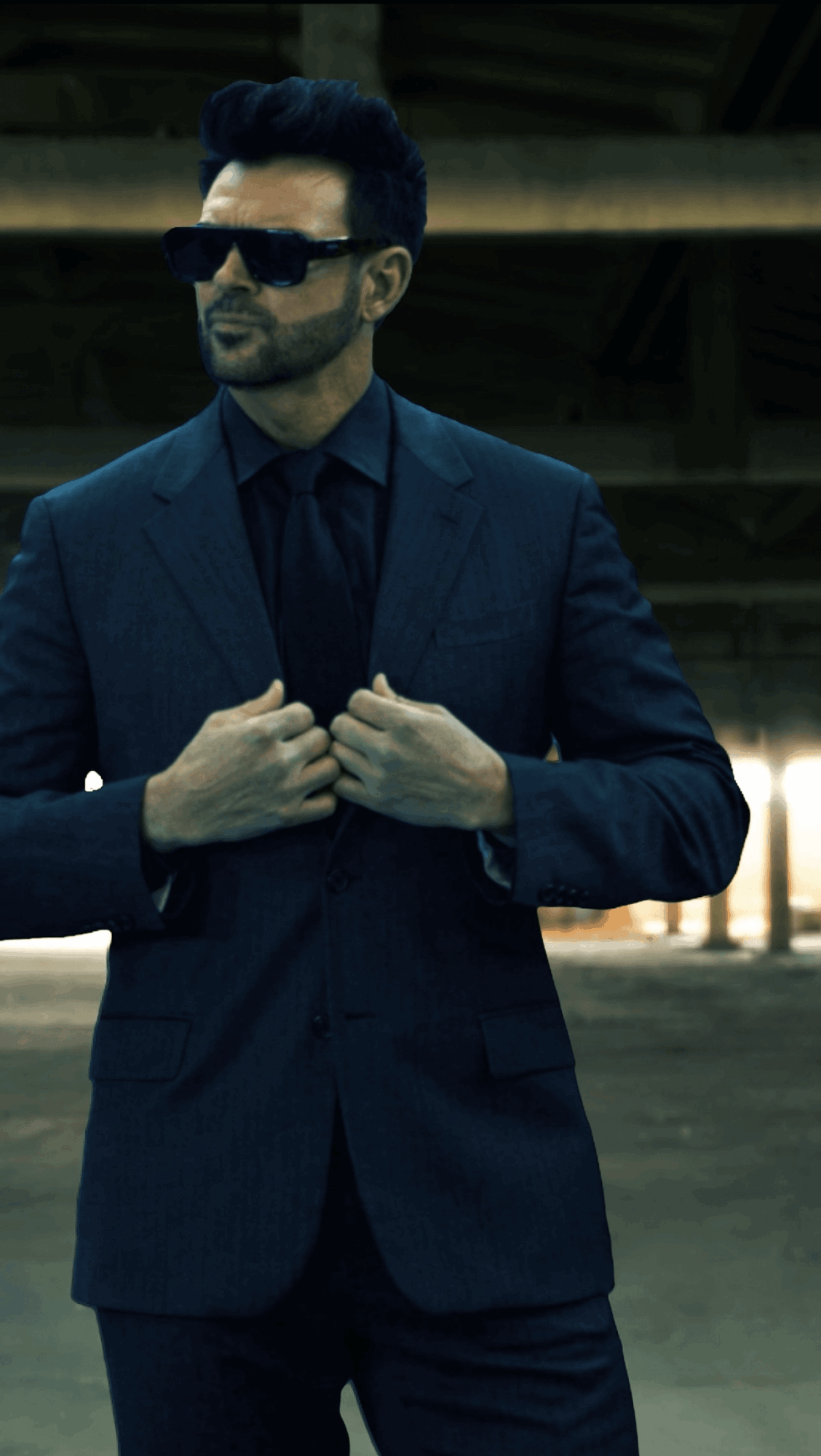
Today we’d like to introduce you to Eric St. John.
Hi Eric, can you start by introducing yourself? We’d love to learn more about how you got to where you are today?
I actually came to acting through a pretty life-changing experience. I was in college at the time and, like a lot of young people, I hadn’t really figured out what I wanted to do with my life or even what I wanted to major in.
Then I was a passenger in a devastating car accident. I was riding in a convertible Corvette when the car crashed at extremely high speed, and my head struck the windshield frame on impact. I was rushed to the hospital and underwent surgery. The first responders told me afterward that, looking at the wreckage, they couldn’t believe anyone had walked away from it.
When I came to, something had changed for me. I felt very strongly that I had been given a second chance, and suddenly there was clarity where there hadn’t been before. The only thing I wanted to do was act. My face was cut up, my right eye was completely swollen shut, and my jaw had been displaced in the accident — but I remember thinking, “There must be roles for a boxer or a fighter or something.” I didn’t care what I looked like at that moment. I just cared that I could think clearly, and I knew I wanted to act.
I auditioned for the American Academy of Dramatic Arts in New York, was accepted, and flew to New York to begin studying acting. I was still physically recovering from the accident. For about eight months, I had to wear a full mouthguard designed to gradually coax my lower jaw back into position. So in a very literal sense, I began pursuing this new life while I was still recovering from the event that had caused me to rethink my old one.
I graduated from the Academy and began building a career in film, television and theater. It wasn’t a straight or easy road. There have been successes, setbacks, projects that came together and others that disappeared overnight, but the conviction I had after that accident never really left me.
One of the most meaningful experiences of my career was portraying Marine legend John Ripley in Ride the Thunder. Playing a real man whose courage and service meant so much to so many people carried an enormous responsibility. My performance ultimately received first-round Best Actor consideration for the Academy Awards, which was an incredible honor.
As my career evolved, I became increasingly interested not only in acting in films, but in helping create them. That led me into producing and developing my own projects. Today, as an actor and producer, I’m developing and packaging a slate of feature films through ESJ Ventures, with a particular focus on elevated action, thrillers and character-driven stories.
Looking back, there’s a pretty clear line connecting everything. That accident forced me, at a very young age, to ask myself what I wanted to do with the second chance I felt I’d been given. Acting was my answer then, and all these years later, it still is. The difference now is that I’m not only pursuing the roles and stories that inspire me — I’m helping create them.
Alright, so let’s dig a little deeper into the story – has it been an easy path overall and if not, what were the challenges you’ve had to overcome?
It definitely hasn’t been a smooth road, but then again, a life in the arts rarely is.
One of the biggest challenges of being an actor is the uncertainty that comes with the profession. There have been periods in my career when things were moving incredibly well and others when I wondered when the next real opportunity was going to come. I think the time between jobs can be one of the most challenging parts of being an actor, and it’s something nearly every actor deals with at some point. You can finish a project and have absolutely no idea what the next job will be, when it will come, or where it will come from.
Rejection is part of the business, of course, but in some ways the uncertainty can be even harder. There isn’t necessarily a predictable relationship between how hard you work and when the next opportunity arrives. You learn that the things you can control are how prepared you are, how seriously you take the work, and whether you keep moving forward when things are slow.
Over the years, that uncertainty has also pushed me to become more proactive. Rather than waiting for someone else to give me an opportunity, I’ve increasingly become involved in developing and producing projects and helping put the pieces together myself. That has given me another creative outlet and a greater sense of agency over my career.
I’m grateful to be working on a film right now. It’s moments like this that remind me why I’ve stayed with it through all of the uncertainty. When I’m actually on set doing what I love, everything else falls away for a while, and I remember exactly why I chose this work.
There have certainly been difficult periods, but I think they’ve given me perspective, resilience, and a much deeper appreciation for every opportunity I get. I’ve always had a kind of internal barometer: Do I still love the craft and the work as much as I did when I first started? After all these years, the answer is still yes. And as long as that remains true, I know I’m exactly where I’m supposed to be.
Can you tell our readers more about what you do and what you think sets you apart from others?
I’m an actor and producer, and acting is still the foundation of everything I do creatively. I’ve always been interested in characters who are capable — men who can handle themselves and function under pressure — but I’m much less interested in strength for the sake of strength. What interests me is what’s happening underneath it. What does this person fear? What does he regret? What does he love? What happens when the thing he has always relied on stops working? That’s usually where a character becomes interesting to me.
I graduated from The American Academy of Dramatic Arts in New York, and alongside acting, martial arts has been a major part of my life. I’m a Taekwondo black belt and won a gold medal in the Junior Olympics, and over the years I’ve continued training across multiple disciplines. One of the things martial arts teaches you, if you stay with it long enough, is that real ability usually makes you less interested in proving how tough you are. I think that has influenced the way I approach characters as well. The strongest person in the room doesn’t necessarily need to announce it.
One of the roles I’m most proud of was portraying Marine Colonel John Ripley in Ride the Thunder. When you play a real person, particularly someone whose life and courage mean so much to other people, you become very aware that the role isn’t really about you. My responsibility was to try to understand the man rather than manufacture a “hero”. I wanted to bring as much humanity and truth to him as I could, because I think the humanity is ultimately what allows the heroism to mean something.
More recently, producing and developing projects has become an increasingly important part of my professional life. I’ve always had a good head for business, and for me the foundation of any successful business relationship is actually pretty simple: be truthful, honest and direct with people. If I know something, I’ll tell you what I know. If I don’t know, I’m perfectly comfortable saying, “I don’t know, but I’ll find out.” I would much rather say that than pretend to have an answer because I think I’m supposed to.
I’ve found that people tend to appreciate that. There can be a temptation in the entertainment business — probably in most businesses — to always appear as though you have everything figured out. I don’t think anybody does. I think good collaboration requires enough confidence to bring something to the table and enough humility to recognize when somebody else has a better idea.
I also really enjoy the creative side of producing — finding material I believe in, developing characters and stories, bringing people with different strengths together and helping move something from an idea toward a film that can actually be made. Producing has broadened the way I understand filmmaking, and it’s also given me greater agency over the direction of my career.
As for what sets me apart, I think it’s probably less any single credential than the combination of experiences I bring with me. I’m an actor, a martial artist and a producer, and each discipline has taught me something different — but I’ve also discovered that they have a lot in common.
Acting has taught me to be present and to really listen — to remain open and allow myself to be genuinely affected by the person and circumstances in front of me. Martial arts has taught me discipline and composure, but much like acting, it has also taught me the importance of being fully alive and completely present in the moment. You can’t be thinking about what just happened or anticipating what comes next. You have to be right there, responding truthfully to what is actually happening.
Producing has taught me something different. There’s an old saying that has come to resonate with me: “If you want to go fast, go alone. If you want to go far, go together.” That has certainly been my experience. Producing really is teamwork. Every person brings a different set of strengths, experiences and perspectives to the table, and when the collaboration is working, each contribution adds something to the greater whole.
And maybe the common thread through all three is that you never really arrive. There’s always something you don’t know, something you can do better, and someone you can learn from. I try to always keep these things in mind, it’s helpful and It also keeps the work interesting.
Networking and finding a mentor can have such a positive impact on one’s life and career. Any advice?
My first and most important mentor has always been my father. From him I learned many of the values that became foundational in my life — integrity, personal responsibility, perseverance, and the importance of how you treat people. As I’ve gotten older, I’ve also come to appreciate his influence in ways I probably couldn’t fully understand when I was younger. Sometimes the lessons a mentor gives you take years before you recognize their significance.
But I’ve also come to believe that mentorship can take many different forms. Mentors can be friends. They can be teachers, colleagues or people you encounter for only a relatively short period of your life. And I think mentorship can also come through books, great philosophers, literature or even poetry. To me, any source that helps connect your individual experience to a greater level of universal understanding can be a form of mentorship.
Bruce Lee has been an important example of that in my own life. Of course I was influenced by him as a martial artist and through his films, but perhaps even more importantly, I’ve been influenced by his philosophy. One book I repeatedly return to is Bruce Lee: Artist of Life. What I find remarkable about his thinking is how much of it transcends martial arts. There are lessons and philosophical perspectives there about adaptability, self-knowledge, discipline, expression and remaining open to experience that can apply to almost anyone, regardless of their vocation or particular path in life.
I think that’s also why I’ve never felt mentorship necessarily has to be formal. Some of the most meaningful mentorship happens organically. You meet people who know something you don’t, or who see something from a perspective you haven’t considered, and if you’re paying attention, you learn from them. Sometimes a single conversation can stay with you for years.
I think the same openness applies to networking. Some of the most important relationships in my life and career began without any professional objective at all. You meet someone, discover that you have something in common, enjoy the conversation, and sometimes a friendship or collaboration grows out of it. I’ve found that when the relationship itself has value, whatever professional opportunities may eventually come from it tend to have a much stronger foundation.
I’ve also learned through professional collaborations that my greatest contribution isn’t always bringing my own idea into the room. Sometimes it’s creating enough trust and openness for someone else to fully explore theirs. When people feel comfortable enough to think out loud — without worrying that every thought has to arrive perfectly formed — you can follow an idea somewhere neither of you anticipated.
I love that part of the creative process. One person says something, it sparks something in the other person, that comes back slightly transformed, and eventually an idea emerges that neither person could really claim as entirely their own. It almost feels as though it came out of the ether. But really, it was the conversation — and the trust within that conversation — that allowed you both to discover it.
I think there’s a lesson about mentorship and networking in that as well. The value of a relationship isn’t simply what someone can teach you, what you can teach them, or what either person can do for the other. Sometimes the value is what becomes possible between two people when they genuinely listen to one another.
So my advice would be not to look for mentorship too narrowly. Stay curious and receptive. There are teachers everywhere if you’re willing to recognize them. And when it comes to networking, I think it’s better to build relationships than to build a network. The network becomes a byproduct of the relationships.
Contact Info:
- Website: https://www.imdb.me/ericstjohn
- Instagram: https://www.instagram.com/ericstjohnofficial
- Other: https://www.esjventures.com
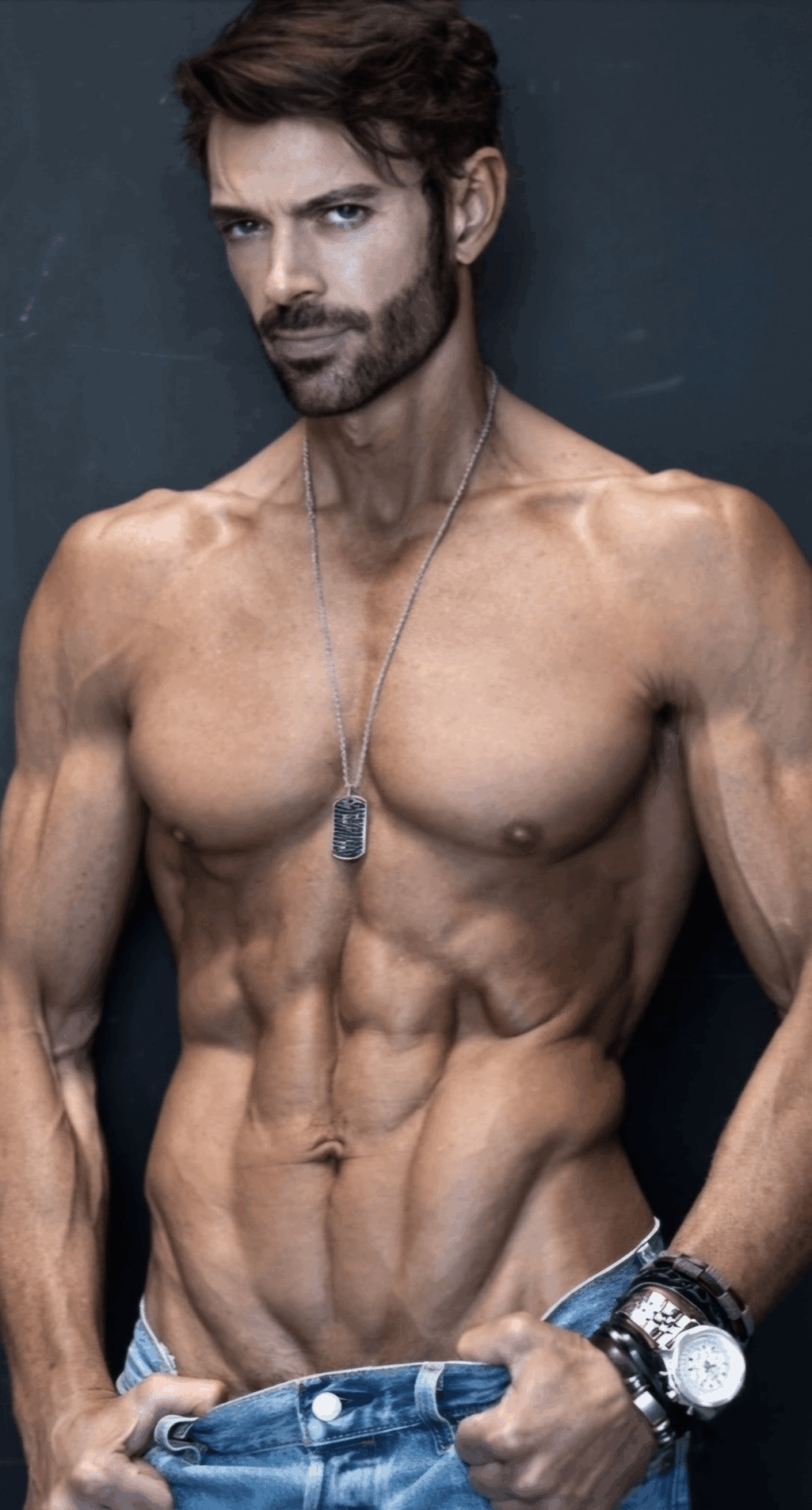
Image Credits
Kobi Gulianni
Ari Friedman
Popular
-

Portraits of the Valley
-

LA’s Most Inspiring Stories
-

Greg Hex Is Turning the Everyday Kitchen Knife Into a Modern Design Object
-

Rick Norris Learned That Building a Successful Business Means Building a Life You Actually Want to Live
-

How Olivia Rush Turned Survival Into a Mission to Help Others Keep Going
-

How Bibi Goldstein Is Helping Entrepreneurs Reclaim Their Time by Embracing the Power of Delegation


