



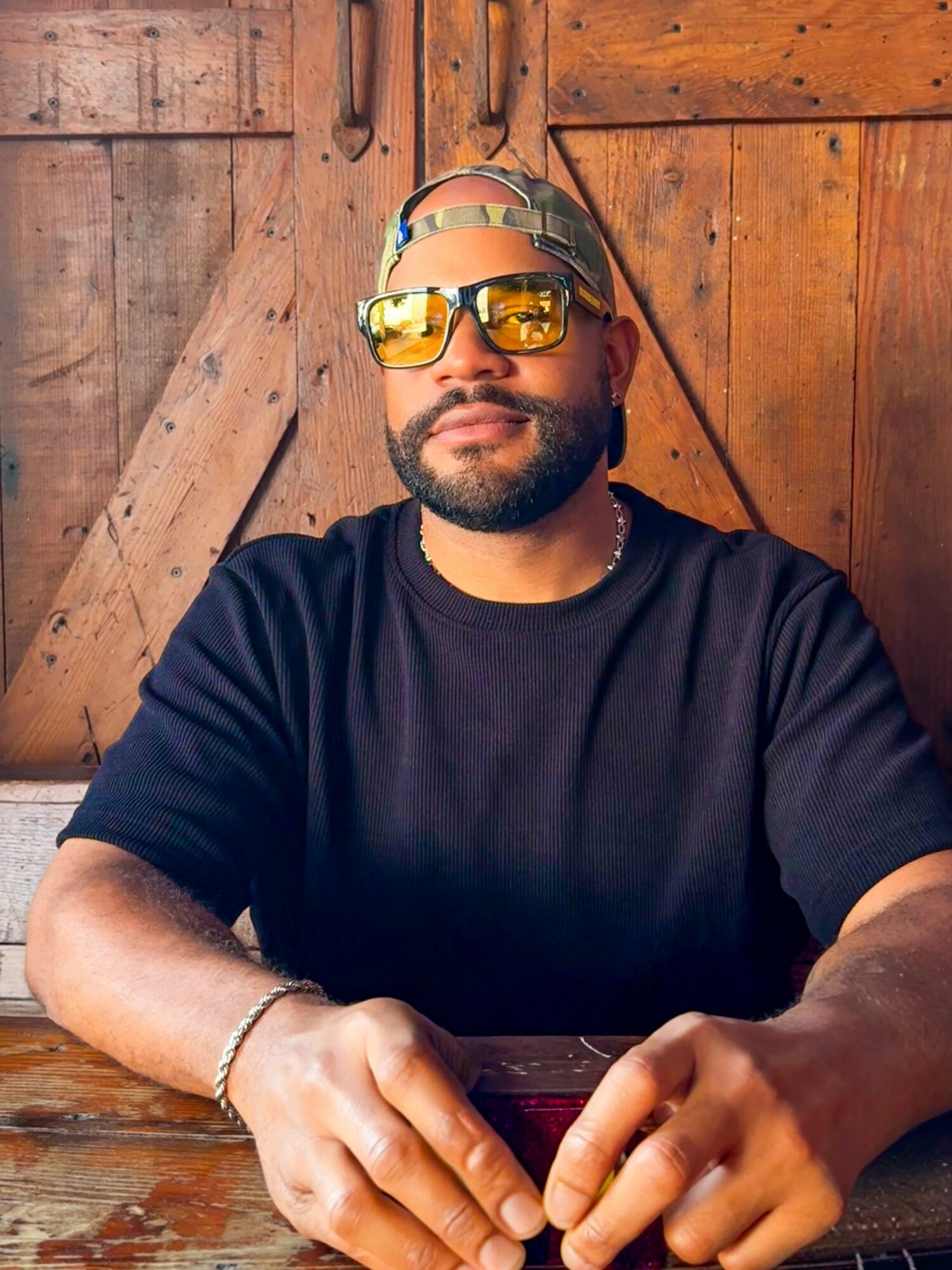
Today we’d like to introduce you to Stephen Love.
Hi Stephen, we’re thrilled to have a chance to learn your story today. So, before we get into specifics, maybe you can briefly walk us through how you got to where you are today?
My journey has always been rooted in storytelling. I grew up drawn to theater and performance, and during college I spent a lot of time acting in plays and exploring what it meant to tell a story from the stage. Eventually, I realized my creative interests extended beyond performing; I became fascinated with filmmaking and all the artistry behind the camera.
That realization led me to shift directions and study filmmaking more intensively at a trade school. Early in my career, I gravitated toward the art department, particularly working as a property master. I loved the idea that objects, environments, textures, and small visual details could communicate something about a character or a world before a single word was spoken.
Eventually, my creative career took an unexpected turn toward education. I became a CTE teacher, and this is now my 14th year teaching. In many ways, teaching has become another extension of my creative practice. I get to introduce young people to filmmaking, help them discover their own artistic voices, and create spaces where they can experiment, make things, take risks, and begin seeing themselves as working creatives.
I still consider myself an artist and filmmaker first, and I think that perspective shapes the way I teach. My path hasn’t been a straight line, but storytelling has been the thread connecting every chapter.
I’m sure it wasn’t obstacle-free, but would you say the journey has been fairly smooth so far?
It definitely hasn’t been a completely smooth road. Storytelling and creativity have always come relatively naturally to me. When I was acting, I could instinctively dive into a character and, for a long time, I thought that would be my path. Leadership has also always been a natural part of who I am, so directing eventually felt like a natural extension of my creativity.
The challenge was learning how to build a sustainable life around those instincts. Entertainment is not an easy field to stay in. I sometimes joke that filmmaking can be a very expensive hobby until it finally starts paying you. I was fortunate to find some early success, which gave me the confidence and opportunity to keep going, keep creating, and eventually produce my own plays and films. But there were still plenty of moments when pursuing a creative career required persistence, sacrifice, and a willingness to keep creating without knowing exactly where it would lead.
Surprisingly, one of my greatest challenges came when I entered the classroom. Knowing how to do something and knowing how to teach someone else to do it are two completely different skills. Those first few years, I felt like I was barely surviving. I had all of this knowledge and experience in my head, but I had to learn how to translate it in ways that made sense to young people with different experiences, abilities, interests, and ways of learning.
Now, in my 14th year of teaching, that struggle has become one of my greatest strengths. I have a much deeper understanding of pedagogy, differentiation, and how to meet students where they are while still challenging them creatively. I’m still learning, but I’ve come to appreciate that teaching, much like filmmaking, is a craft. You get better by doing the work, reflecting on what didn’t work, adjusting, and trying again.
Thanks – so what else should our readers know about your work and what you’re currently focused on?
I’m a director, educator, and producer who has spent nearly two decades creating across different areas of film and storytelling. I’m most proud that, after all these years, I still have the ability and the freedom to create at will. I’ve worked hard to build a life that gives me the stability to continue developing original ideas, directing projects, producing, and helping cultivate the next generation of filmmakers.
What sets me apart is probably my creative output. Ideas come to me constantly, and I’m comfortable moving from an initial concept into character, structure, visual language, and the practical process of actually making something. I don’t feel tied to one genre or one way of working. For me, filmmaking has always been about staying curious, experimenting, and keeping on creating.
What was your favorite childhood memory?
One of my favorite childhood memories is playing with LEGOs. I’m an only child, so there was a lot of solitude in my world, but LEGOs gave my imagination somewhere to go. I would create entire worlds, characters, and stories and spend hours interacting with them.
I remember being about 11 years old, taking the bus to the mall with $100, and spending almost all of it on one big LEGO set. I don’t remember the exact set anymore, but I remember the whirlwind of creativity it sparked. Looking back, I think that’s where a lot of my storytelling began. If I could imagine a world, I could build one.
Contact Info:
Popular
-

Portraits of the Valley
-

LA’s Most Inspiring Stories
-

Greg Hex Is Turning the Everyday Kitchen Knife Into a Modern Design Object
-

Rick Norris Learned That Building a Successful Business Means Building a Life You Actually Want to Live
-

How Olivia Rush Turned Survival Into a Mission to Help Others Keep Going
-

How Bibi Goldstein Is Helping Entrepreneurs Reclaim Their Time by Embracing the Power of Delegation


