




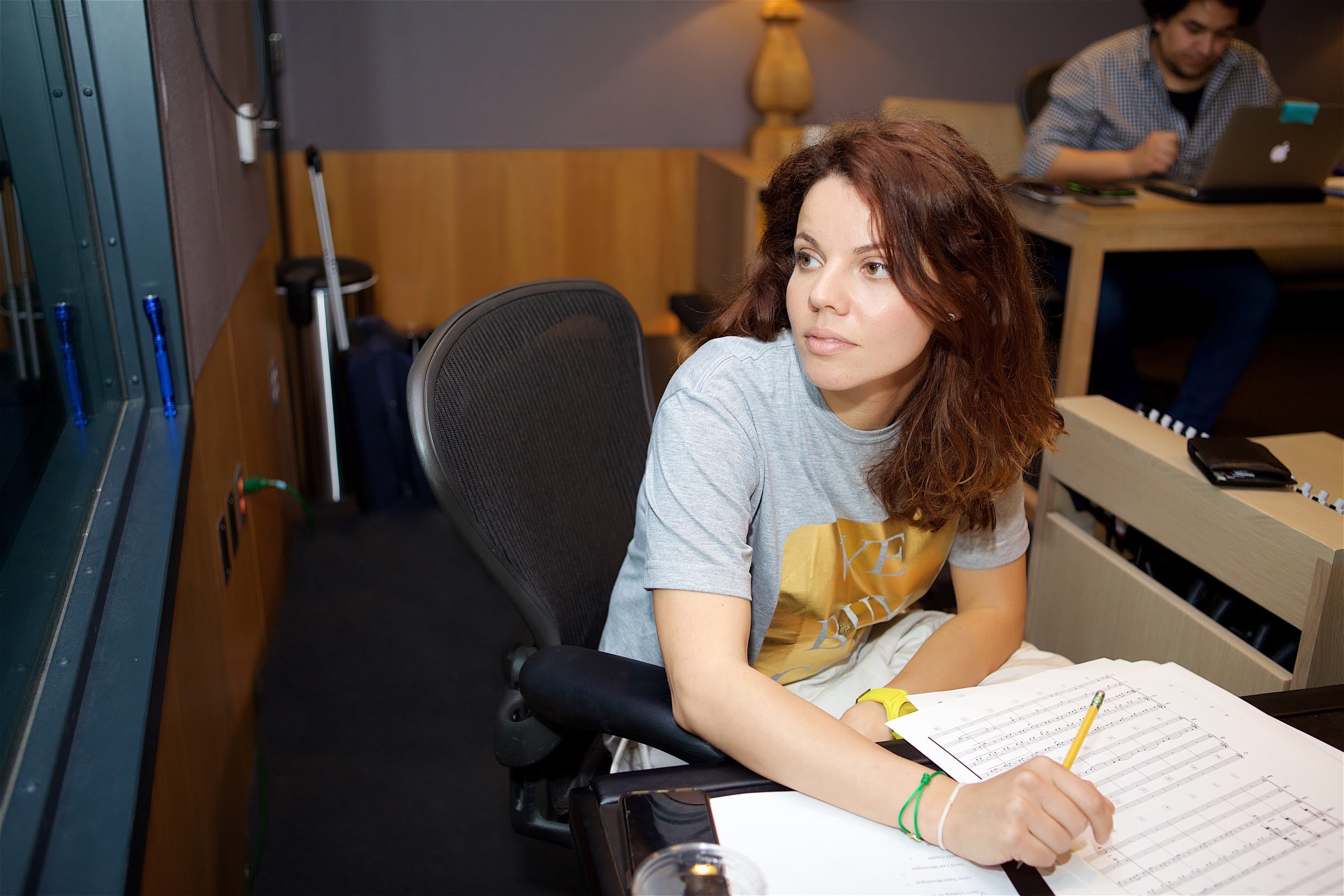
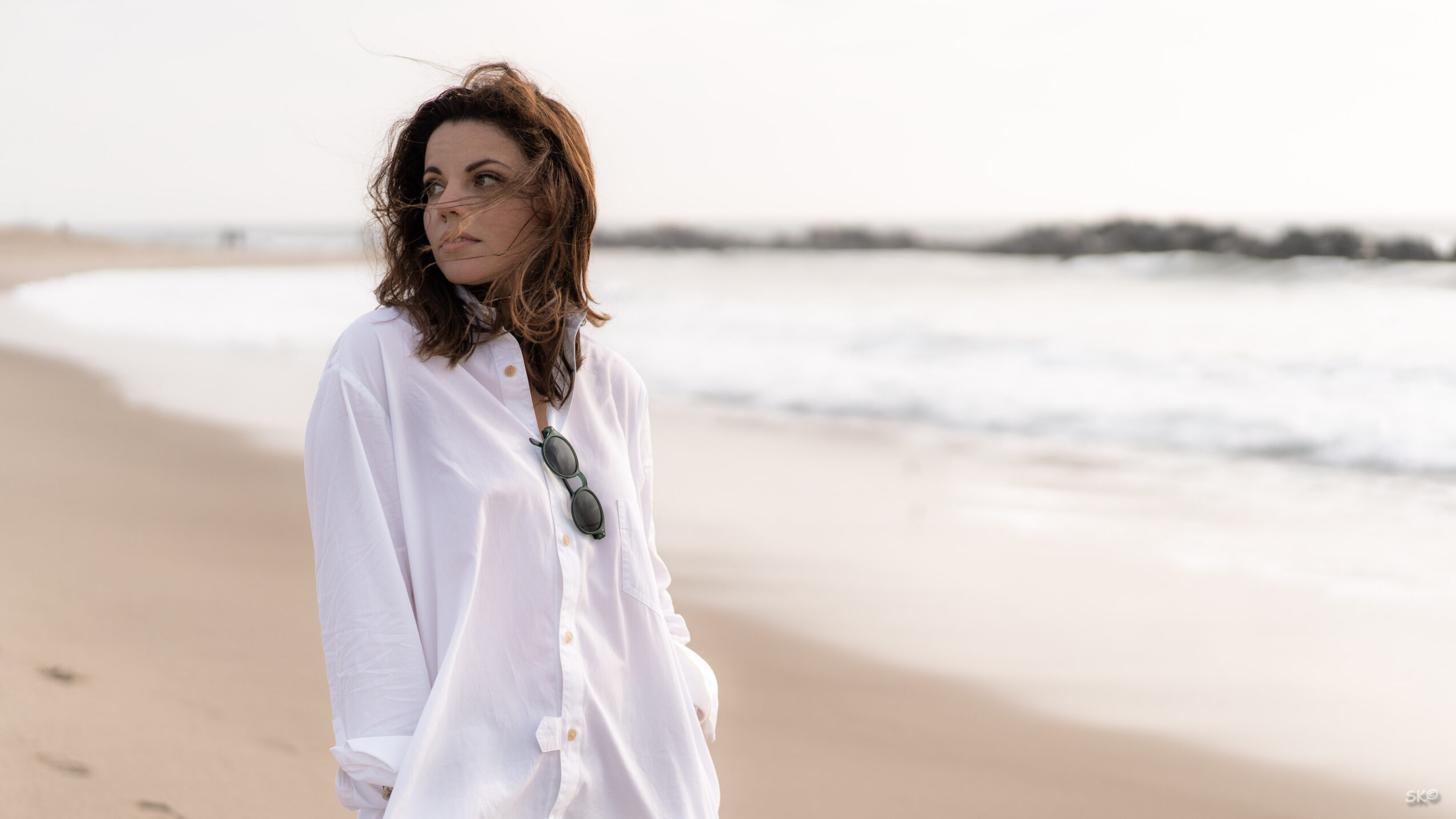
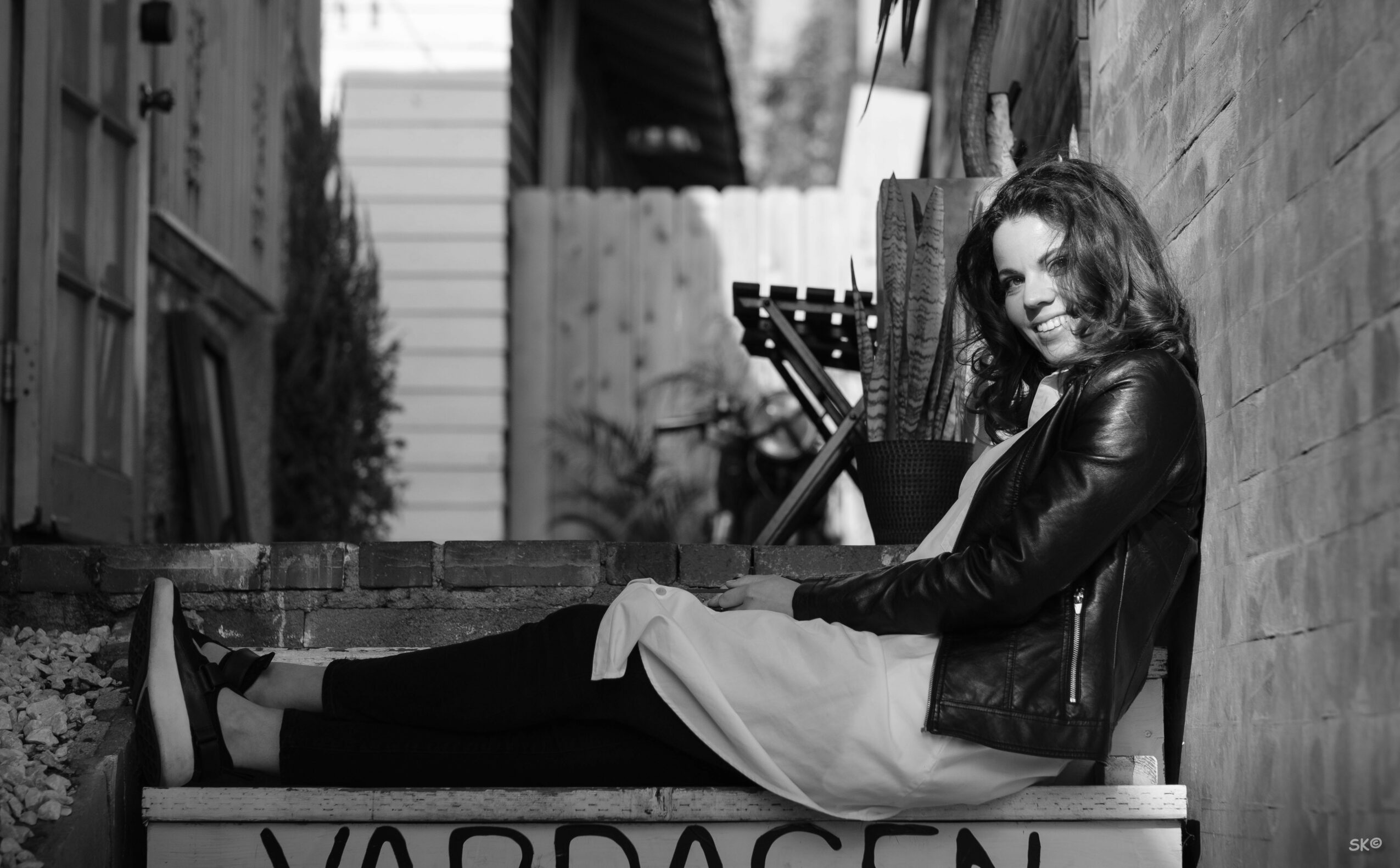
Today we’d like to introduce you to Anna Drubich.
Hi Anna, we’re thrilled to have a chance to learn your story today. So, before we get into specifics, maybe you can briefly walk us through how you got to where you are today?
I grew up in Moscow (Russia) in a family that was deeply connected to cinema. My father, Sergey Solovyov, was a film director, and my mother, Tatyana Drubich, is an actress, so movies, scripts, actors, rehearsals and conversations about art were simply part of the atmosphere of my childhood. Music, however, became my own world very early. I started playing piano as a little kid and had a very traditional classical education. For many years I thought I was going to be a concert pianist.
At some point my father noticed that I was constantly writing little pieces of music.
My first experience with film music came almost accidentally. My father was making *Anna Karenina* and asked me to write a waltz for the film. I was still a teenager and certainly didn’t think, “Now I am going to become a film composer.” I just wrote the music. But something clicked. I discovered this completely different way of composing, where music has a relationship with an image, a character, a rhythm, a story. That first waltz eventually led to another film, and then another.
There was another side to growing up in a well-known artistic family. As a teenager, I was very conscious that people knew who my parents were, and I had this almost stubborn need to find out what I could do on my own. So at seventeen I left Moscow and moved to Munich (Germany) to study piano and composition. I loved being somewhere where my family name meant absolutely nothing. I could start from zero, make mistakes, and figure out who I was as a musician.
While I was studying in Germany, composition gradually took over completely. I was still writing concert music, but I was also becoming more and more interested in film. And, rather ambitiously for a young student in Munich, I decided that I wanted to understand how movies were scored in Hollywood.
That curiosity eventually brought me to Los Angeles to study in the Screen Scoring program at USC. During that year I met Marco Beltrami, who became a very important person in my life and career. He invited me to work with him as an additional writer, and suddenly Los Angeles stopped being this abstract place where movies were made and became a place where I could actually imagine building a life.
Of course, building that life took time. I had already been working professionally in Europe, but coming to LA meant starting over in many ways — learning a different industry, developing relationships, and finding my own voice within it. Looking back, I realize that starting over has actually been a recurring theme in my life: Moscow to Munich, Europe to Los Angeles, concert music to film and back again. I think I’ve always been attracted to situations where I have to discover something new.
Over the years, I’ve been fortunate to work on an incredibly wide range of projects. I co-scored *Scary Stories to Tell in the Dark* with Marco Beltrami and later scored films including *Werewolves Within* and *Barbarian*. I wrote music for the documentary *Navalny*, which went on to win the BAFTA and Academy Award for Best Documentary Feature, and I composed the score for *The Master and Margarita*, a project that was particularly meaningful to me because of my own cultural connection to Bulgakov and the world he was writing about.
At the same time, I’ve never wanted to be only a film composer. I continue to write concert music and love working in theater and ballet. I wrote music for Igor Golyak’s New York production of *Our Class* and, more recently, the ballet *The Great Gatsby* for World Ballet Company. Moving between these different worlds keeps me curious. Concert music gives me a kind of freedom that film doesn’t, while film gives me collaboration, storytelling, deadlines, great musicians and the wonderful experience of actually hearing what you’ve written come alive very quickly.
The older I get, the more I also care about what the project itself has to say. Of course, I love experimenting with sound and finding unusual musical solutions — that is probably my favorite part of being a composer — but I’m increasingly drawn to projects that have something meaningful at their center.
When I look back, there was never really a master plan. A waltz I wrote as a teenager led to film scoring. Wanting to prove to myself that I could do something independently took me to Germany. Curiosity about Hollywood brought me to Los Angeles. One collaboration led to another. Somehow all of those detours became the career.
And I think I still approach each new project in a similar way: I don’t want to know the answer before I begin. The interesting part is searching for it.
I’m sure it wasn’t obstacle-free, but would you say the journey has been fairly smooth so far?
There have been many challenges, and they’ve changed dramatically at different stages of my life. Some were personal or creative, but some came from changes in the world that were completely outside of my control.
I’ve had to start over more than once. I left Moscow for Germany when I was very young, and later moved to Los Angeles after I had already built a career as a composer in Europe and Russia. Coming to LA was exciting, but also humbling. In many ways, you start from zero again — you have to build new relationships, earn trust and find your place in a completely different industry.
Then, just when I felt that I had built a life and career that could exist between different countries and cultures, the world changed.
The war in Ukraine had an enormous impact on me, both personally and professionally. For many years, I had been able to work internationally while still maintaining a very active career in Russia. After the war began, that part of my professional life essentially closed. It wasn’t something I had planned or chosen; an entire world that had been part of my life and career for many years suddenly became inaccessible to me. There were relationships, collaborators and a whole creative community connected to that world, so losing it was much more complicated than simply losing a market for work.
At the same time, Los Angeles was going through its own enormous transformation. The Hollywood strikes, followed by the contraction of the industry, changed the rhythm of the city very dramatically. Projects stopped, others disappeared or were postponed, budgets changed, and many people I knew — composers, filmmakers, musicians, crew members — suddenly found themselves in a much more uncertain environment. Los Angeles has always been a city built around the energy of people making things, so when production slowed down, you could really feel it everywhere.
For me, that combination was particularly strange. Within a relatively short period of time, one part of my professional world had closed because of the war, while the industry I had built my American career around was also going through one of its most difficult periods. It made me realize how little control we actually have over the circumstances surrounding a creative career.
Of course, there are also the more familiar challenges of being a composer. Rejection is part of the profession. You can spend days creating something for a project you desperately want and not get the job. You can write music you love and be asked to completely rethink it. There are long hours, impossible deadlines and the constant pressure to find something new rather than repeat yourself.
But perhaps the biggest lesson for me has been learning how to keep moving when the landscape around you changes. A creative career is never as stable as you imagine it is going to be. You build something, circumstances change, and then you have to find another way forward.
I’m hopeful, though. I believe these periods are cyclical, and I already feel a desire among people here to make things again, to take risks and to tell interesting stories. Los Angeles has an extraordinary concentration of creative people, and that hasn’t disappeared. The industry may look different from what it was a few years ago, but perhaps something new can grow out of this moment.
I’m looking forward to the energy coming back — to filmmakers taking chances again, to unusual stories being made, and to those unexpected projects that arrive and remind you why you chose this profession in the first place. I’m ready for them.
Appreciate you sharing that. What else should we know about what you do?
My work is quite eclectic, and I think my recent projects are a good example of that. I’m always attracted to films that have a very particular world and give me an opportunity to find a musical language I haven’t used before.
One of my recent projects is *Forbidden Fruits*, directed by Meredith Alloway. It’s a dark comedy/horror film about a group of young women working at a mall store who have created their own secret, witchy world. What attracted me to the project was its combination of darkness, humor, femininity and a kind of rebellious energy. Musically, it gave me an opportunity to be playful and experimental and to create something that could move between the sinister and the fun. I’m especially happy that the score also had a life beyond the film — Waxwork Records released it on vinyl, which is always exciting for a composer because the music gets to exist as its own object outside of the movie.
Another project that I’m very excited about right now is *Eurotrash*, directed by Frauke Finsterwalder and based on Christian Kracht’s novel. It will have its world premiere at the Zurich Film Festival this fall. It’s a very unusual road movie about a complicated relationship between a mother and son, played by Barbara Sukowa and Alexander Fehling. The film can be funny, cruel, absurd and incredibly tender, sometimes almost at the same moment. I loved working inside those contradictions. The score needed to find its own emotional path without explaining the characters too much or telling the audience how to feel. I’ll also be presenting a case study about the music for *Eurotrash* at SoundTrack_Zurich during the festival, which I’m really looking forward to.
And then there is *The Master and Margarita*, directed by Michael Lockshin, which is finally coming to theaters in the United States. This project is especially close to me. Bulgakov’s novel is such an enormous part of Russian culture, and it was a book I grew up with, so writing music for this world felt both very personal and slightly terrifying. The story moves between 1930s Moscow, the biblical world of Pontius Pilate, a love story, political satire, fantasy and the supernatural, so the musical universe had to somehow hold all of those realities together.
The film has already had an extraordinary journey, so seeing it finally reach American audiences is very meaningful to me. There is also something almost surreal about a story written nearly a century ago — about an artist, censorship, fear, power and the freedom of imagination — arriving in the United States at this particular moment.
At the same time I’m working on my first Concert Music album where I’m gonna present some of my chamber music works. This is probably the most important project for me right now. Recording at Capital Studios with some of the best best musicians of LA.
Stay tuned!.
Contact Info:
- Instagram: @annadrubich
Popular
-

Greg Hex Is Turning the Everyday Kitchen Knife Into a Modern Design Object
-

Portraits of the Valley
-

LA’s Most Inspiring Stories
-

Rick Norris Learned That Building a Successful Business Means Building a Life You Actually Want to Live
-
How Olivia Rush Turned Survival Into a Mission to Help Others Keep Going
-

How Bibi Goldstein Is Helping Entrepreneurs Reclaim Their Time by Embracing the Power of Delegation


