




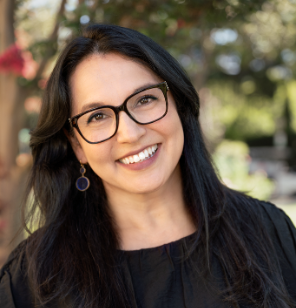
Today we’d like to introduce you to Veronica Alvarez.
Hi Veronica, so excited to have you on the platform. So before we get into questions about your work-life, maybe you can bring our readers up to speed on your story and how you got to where you are today?
My journey into arts education began with a painful rejection that would ultimately fuel my lifelong mission. As an elementary school student, a teacher told me I was not talented, effectively closing the door to my own artistic pursuits. Yet this early rejection transformed into a powerful catalyst—though I would not create art myself, I developed a deep passion for reading, discussing, and writing about art. For over two decades, I championed the use of visual arts as a transformative tool for teaching and learning, ensuring that no child experiences the dismissal I once faced.
Born in Mexico and arriving in the United States at age four, my educational path through the Los Angeles Unified School District profoundly shaped my commitment to equity. As an immigrant and English learner during an era of “sink or swim” policies with no support systems, I experienced firsthand the precariousness facing marginalized students. My survival and eventual success illuminated the stark reality that educational outcomes for these communities often hinge on factors beyond their control—school quality, teacher experience, and resource access frequently determined by geography, income, and systemic inequities. These formative experiences crystallized my resolve to dedicate my career to addressing these fundamental injustices.
My entry into arts education came unexpectedly. Originally aspiring to be an elementary school teacher, my career took a turn when I began working at the Getty Museum. There, I discovered my true calling—teaching history through the arts while tackling the perception of museums as exclusionary spaces. During my fifteen-year tenure at the Getty, I made it my mission to ensure that people like myself and my family felt welcomed and seen in these cultural institutions.
Throughout my career, I have worked extensively with diverse communities across Los Angeles and beyond. My early role as coordinator of Getty Getaway Days allowed me to work with Title I schools and first-time museum visitors, work I continued at LACMA. A career highlight was my collaboration with Charles White Elementary in MacArthur Park—one of LA’s most densely populated, under-resourced, and diverse neighborhoods—where I worked with the principal, teachers, and community to transform the school into an LAUSD arts magnet. As Executive Director of the Community Arts Partnership at CalArts, I extended my reach to communities in Watts, Boyle Heights, and Pacoima. Another impactful event was an international collaboration with English language teachers in Novi Sad, Serbia.
Currently serving as Executive Director of Create CA, I lead a policy and advocacy organization committed to bringing comprehensive arts education to all six million students in California. My work continues to be inspired by the committed and passionate staff, individual students and teachers I encounter, particularly those whose lives come full circle—like the CAP program student who earned a full scholarship to CalArts for animation, then returned to teach the next generation of CAP students. These stories of transformation and empowerment fuel my unwavering dedication to ensuring arts access for all.
My own educational journey reflects my commitment to culturally responsive teaching. Inspired by Dr. Julian Nava at CSUN, who rekindled pride in my Mexican heritage through art and primary sources, I pursued a master’s in ancient history. Later, I earned a doctorate at Loyola Marymount University’s Educational Leadership for Social Justice program, where I researched how arts support English language acquisition under Dr. Magaly Lavadenz at the Center for Equity for English Learners. This experience further solidified my expertise in serving multilingual communities. Through my leadership, advocacy, and deep personal understanding of educational inequity, I strive to continue to open doors that were once closed to me, ensuring that every child has access to the transformative power of arts education.
Can you talk to us a bit about the challenges and lessons you’ve learned along the way. Looking back would you say it’s been easy or smooth in retrospect?
It was definitely not smooth.
I had a teacher say I was not talented.
I had a counselor tell me I was lying when I indicated I needed AP classes during the summer. He thought I had to repeat required classes instead of believing that I was trying to proactively take on a more challenging workload.
I also had challenges as an undocumented English Learner who came from poverty. My parents only had a third grade education. My dad worked as a carpentar and my mom as a housekeeper. But through their hard work and perseverance, they brought up my eight siblings and I. And they were able to attain the “American Dream” of buying a home for us.
Thanks – so what else should our readers know about your work and what you’re currently focused on?
As I noted in my first statement. I am proud of the work I did with Charles White Elementary School.
I am proud of the work I did with the Teaching Channel while at the Getty. We created videos highlighting the incredible work of teachers that were successfully bringing the arts into their classrooms.
I also worked with teachers and students in Novi Sad, Serbia through the US Department of State. They googled “English Learners” “Museums” and my name popped up! They found me through colleagues and tracked me down. They then submitted an application through the US Embassy and invited me to see the work they were doing in using art to help their students learn English. It was a fulfilling experience and I was able to work with them to publish a chapter on the topic.
I am also proud of working with 70 school districts in the LA County on arts integration.
I am also proud of fulfilling a dream I almost never imagined, getting a doctorate. Due to various circumstances, none of my siblings were able to graduate high school. So I feel very lucky and proud of that accomplishment.
I especially am proud of the students I got to teach and learn from while teaching at CalArts. They are truly inspirational.
Networking and finding a mentor can have such a positive impact on one’s life and career. Any advice?
I firmly believe in the importance of being accessible, generous, and transparent with folks in the field or young professionals interested in the field.
Contact Info:
- Website: https://createca.org/
- Instagram: https://www.instagram.com/create_ca/?hl=en
Popular
-

Greg Hex Is Turning the Everyday Kitchen Knife Into a Modern Design Object
-

Portraits of the Valley
-

LA’s Most Inspiring Stories
-

Rick Norris Learned That Building a Successful Business Means Building a Life You Actually Want to Live
-
How Olivia Rush Turned Survival Into a Mission to Help Others Keep Going
-

How Bibi Goldstein Is Helping Entrepreneurs Reclaim Their Time by Embracing the Power of Delegation


