




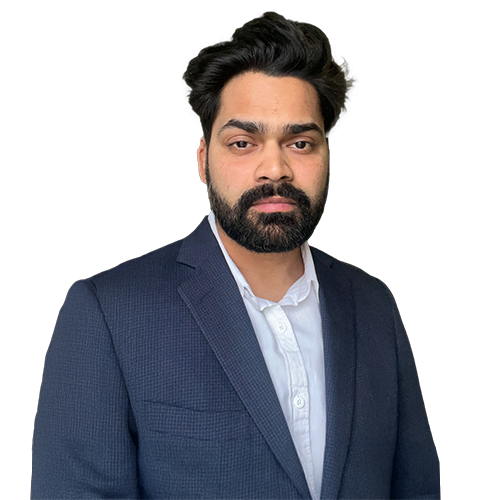
Today we’d like to introduce you to Vivek Mishra.
Hi Vivek, we’d love for you to start by introducing yourself.
My journey started with a move to the U.S. to pursue my Master’s in Computer Science at CSULB (California State University, Long Beach). That experience was a turning point for me because it wasn’t just about attending classes.
During my time at CSULB, I had the opportunity to dive into serious research using Artificial Intelligence and Machine Learning. I worked on projects specifically for Caltrans and LA Metro, using AI to solve complex infrastructure problems. Seeing my code being used by major agencies to improve real-world systems was the moment I realized I wanted to build technology that impacts millions of people.
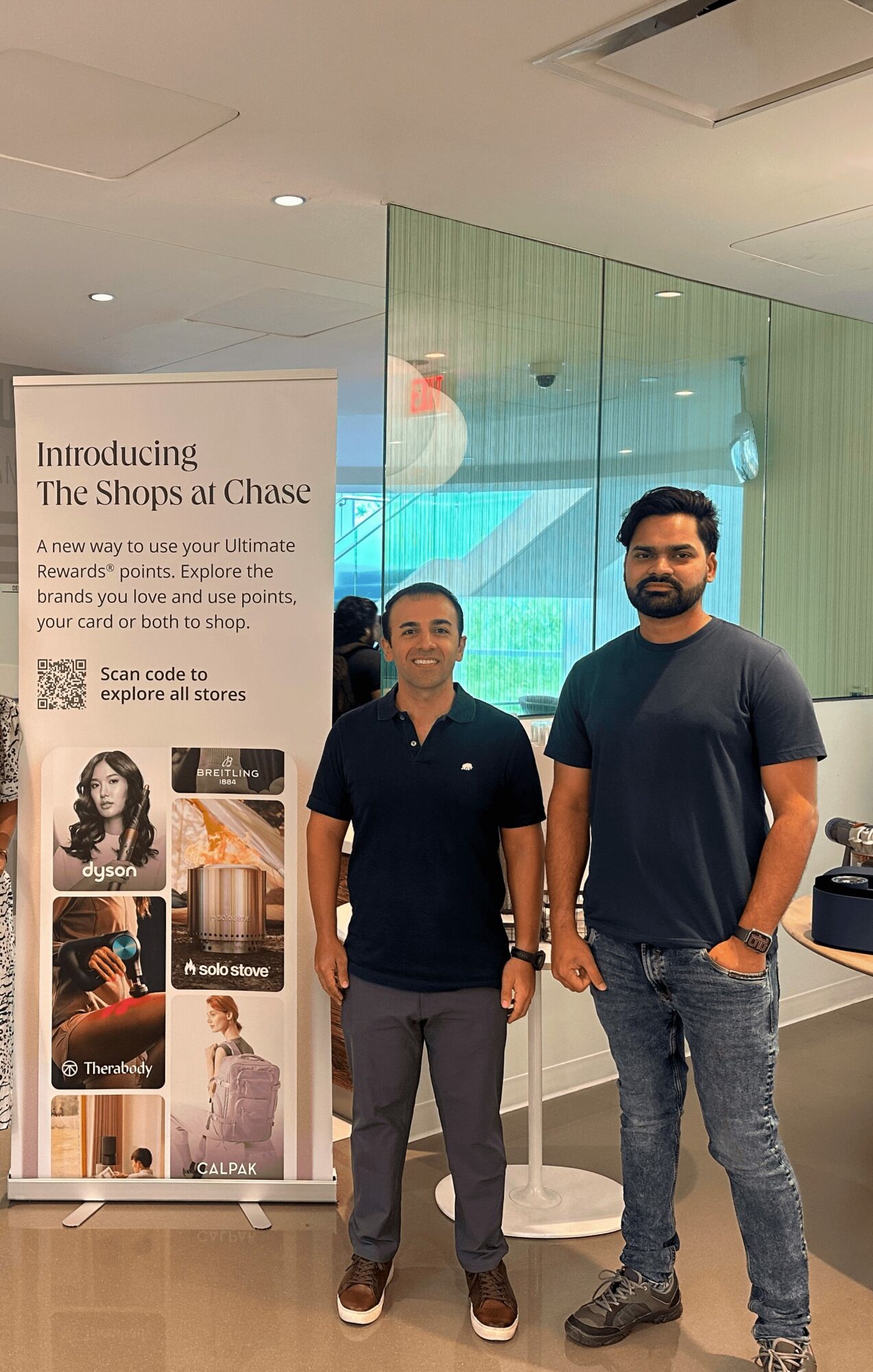
After graduating I took that mindset into the corporate world at JPMorgan Chase. I joined Jp Morgan Chase and I worked as a founding engineer for “The Shops at Chase,” in 2024 where we had to build a platform from scratch to support over 80 millions active users.
Beyond my day job I try to give back to the tech community. I recently wrote a book, Design Patterns for AI Agents, to help students and developers understand complex AI concepts. It has been amazing to see engineering colleges adopt it for their curriculum. I also serve as a judge for major industry conferences, helping to review new research and decide which innovations are ready for the spotlight.
For me, the story has always been about using AI to solve hard problems, whether that is for government agencies like Caltrans or for millions of banking customers.
Would you say it’s been a smooth road, and if not what are some of the biggest challenges you’ve faced along the way?
It definitely has not been a smooth road. One of the biggest struggles was the transition from academic research to high-stakes engineering. When I was working on AI projects for Caltrans and LA Metro at CSULB, I had the freedom to experiment. But moving to a founding engineer role at a major bank was a culture shock.
The pressure shifted from “does this work in theory” to “will this crash if 80 million people use it.” Dealing with that scale was incredibly stressful at first. There were many sleepless nights debugging complex backend issues because in that environment failure is not an option.
Can you tell our readers more about what you do and what you think sets you apart from others?
I specialize in building software systems that do not crash. My work focuses on making sure banking and transportation systems work perfectly even when millions of people use them at once. I focus on speed and reliability.
I am known for making complex AI concepts easy to understand. I take hard topics from research labs and write guides that help everyday engineers use them. I try to teach the patterns behind the code.
I am most proud of my role as a mentor and judge. Serving as a Senior Member of IEEE allows me to review new research. It feels good to give feedback that helps improve the quality of technology for everyone.
What sets me apart is that I treat engineering like a science. I do not just guess what will work. I use data and proof to build systems. This scientific approach helps me build software that is very stable and efficient.
Before we let you go, we’ve got to ask if you have any advice for those who are just starting out?
My advice is to share your work. Do not just solve problems in silence. Early in my career I thought writing good code was enough. I learned later that real leaders share their knowledge with others. Whether it is writing an article or speaking at an event, putting your work out there is important.
I also wish I knew earlier that technology is just a tool. The best software is the one that actually solves the user’s problem. Impact is measured by how useful your work is and not by how complicated the code is.
Contact Info:
- Website: https://vivekmishra02.github.io/
- Other: https://scholar.google.com/citations?user=BvG76iMAAAAJ&hl=en
Popular
-

JordanL on ‘Breathe,’ Belief, and Building a Movement Beyond the Music
-
Megan Birney Rudert on How Access to Light Is Powering a More Sustainable and Equitable Future
-

Linda Kneidinger on Building Lasting Change Through Small Steps and Self-Compassion
-

Jolana Nika on Redefining Modern Connection Through Intentional, Real-Life Experiences
-

What did suffering teach you that success never could?
-

Who saw you clearly before you could see yourself?


