




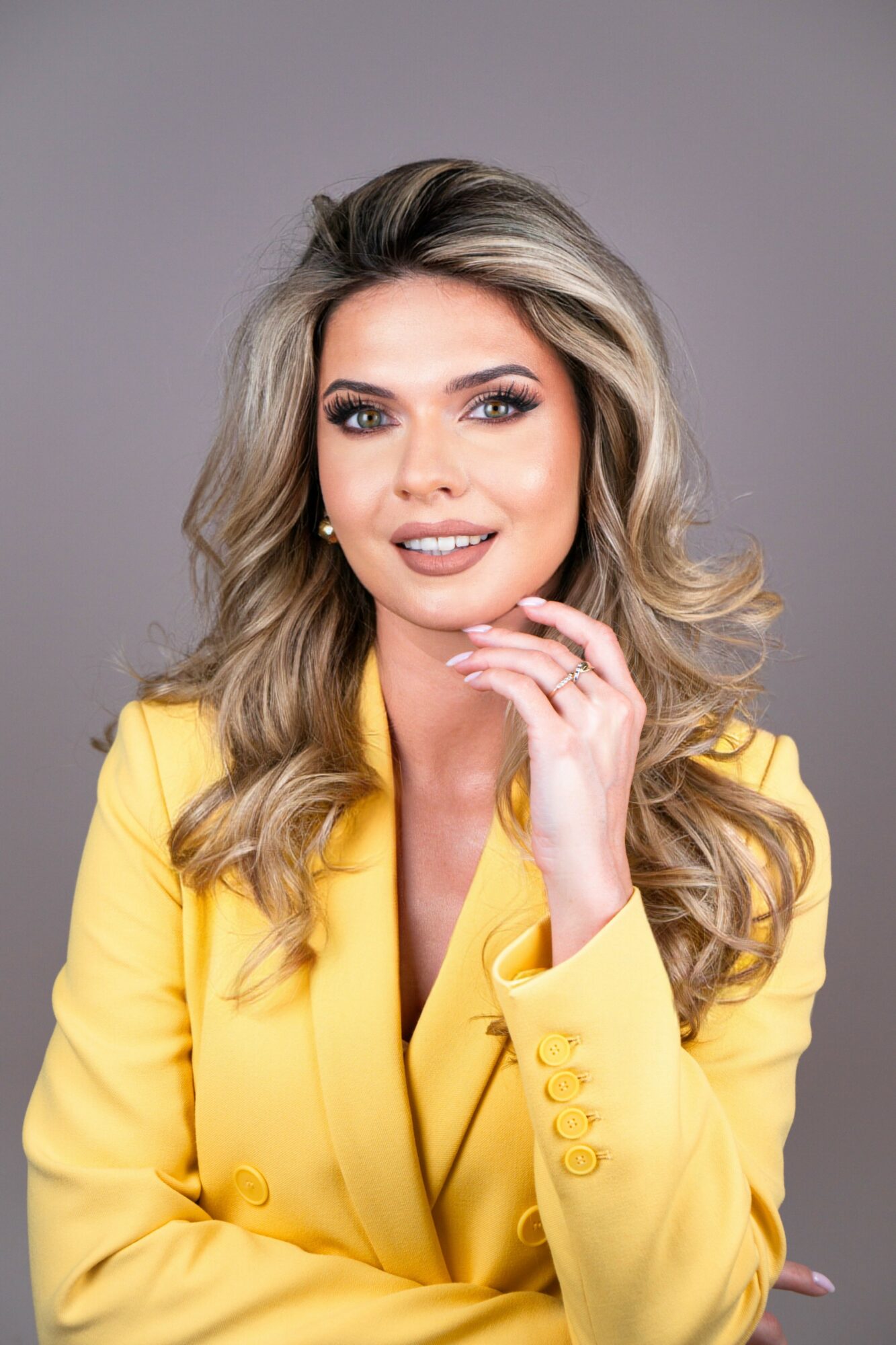
We recently had the chance to connect with Kate Ziuz and have shared our conversation below.
Kate, really appreciate you sharing your stories and insights with us. The world would have so much more understanding and empathy if we all were a bit more open about our stories and how they have helped shaped our journey and worldview. Let’s jump in with a fun one: Have any recent moments made you laugh or feel proud?
I’m terrible at celebrating wins. I move fast, check the box, and immediately ask “what’s next?” Small wins, big wins — they’re all just supposed to happen, so why celebrate?
But 2025 gave me a moment I couldn’t skip past.
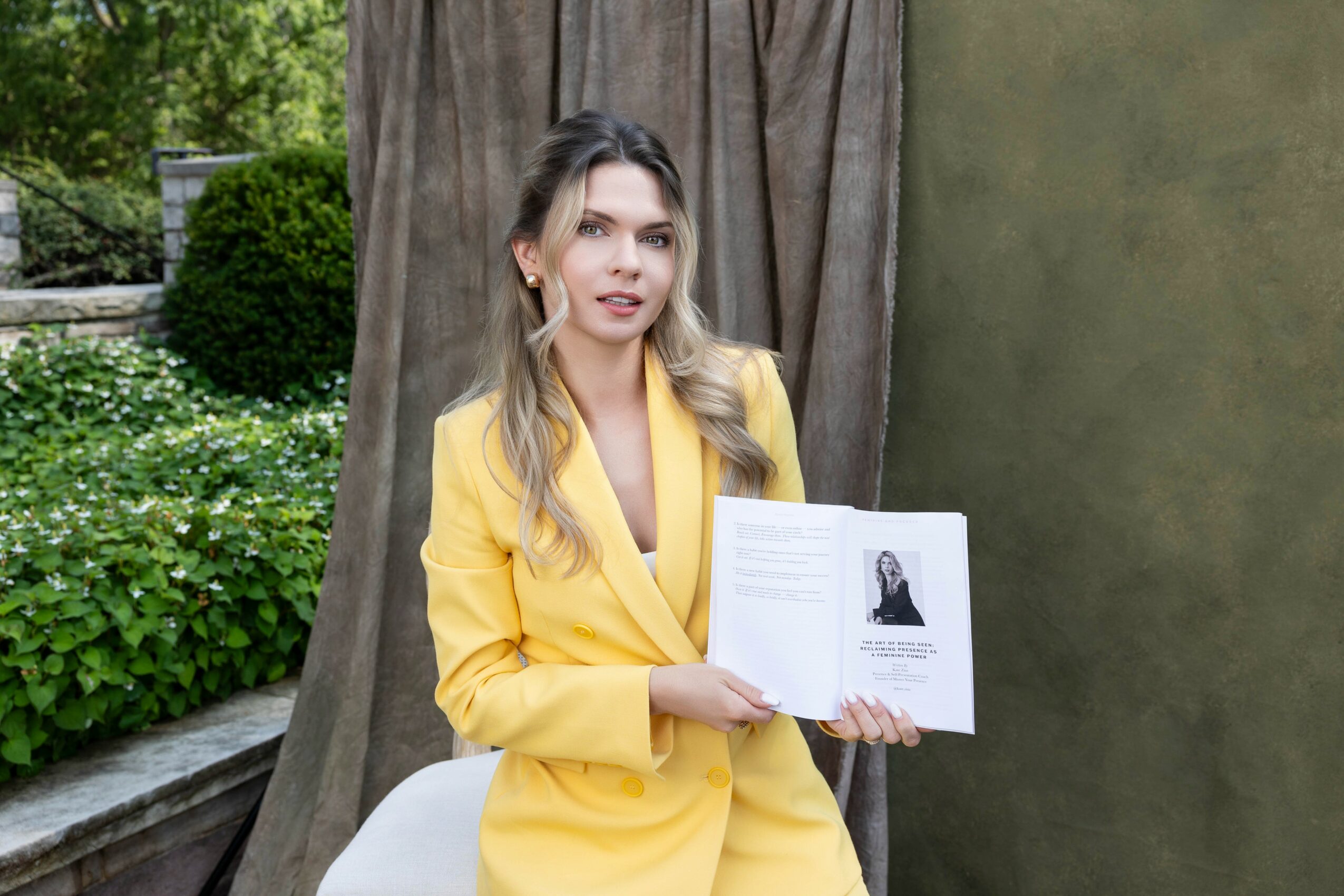
I became a published co-author in Feminine and Focused, contributing a chapter called “The Art of Being Seen: Reclaiming Presence as a Feminine Power.” And for the first time, I had to sign books for people.
It was surreal. Someone handed me a book with my name in it, and I froze for a second. Because this wasn’t just another milestone to rush past — it was proof that the work I do, the mechanics I teach, the frameworks I’ve built, actually matter beyond my one-on-one sessions.
I signed each book with a personal message, the way someone once did for me years ago. That moment stayed with me. So I made sure to leave something personal for each person — a reminder, a spark.
And for once, I let myself feel proud. Not just of the achievement, but of the fact that I actually stopped long enough to recognize it.
Can you briefly introduce yourself and share what makes you or your brand unique?
I’m Kate Ziuz, founder of Master Your Presence — a coaching practice built on one provocative truth: confidence isn’t enough if no one can see it.
I work with women executives, speakers, and entrepreneurs who are brilliant at what they do but frustrated by how they’re perceived. They’re tired of being the most prepared person in the room and still being interrupted. Of nailing the presentation but not getting remembered. Of leading teams but not being taken seriously in leadership conversations.
What makes my work different is that I don’t teach confidence — I teach the body language mechanics that make confidence visible. After 10+ years in Big 4 consulting and tech, I watched accomplished women get overlooked not because they lacked expertise, but because their presence patterns didn’t match their authority. The way they stood, paused, made eye contact, or held space told a different story than their résumé.
So I left corporate to focus on what actually moves the needle: the specific, trainable adjustments to posture, vocal pacing, spatial awareness, and energetic grounding that make people take you seriously before you’ve said a word.
My approach strips out the fluff. No affirmations. No “fake it till you make it.” Just tactical coaching on the mechanics of presence — because presence isn’t a personality trait you’re born with. It’s a muscle you build.
Right now, I’m scaling Master Your Presence to reach more women through corporate workshops, my Presence Mastery program, and strategic media partnerships. Because when a woman’s presence finally matches her power, she doesn’t just get noticed — she becomes impossible to overlook.
And that shift? That’s what changes everything.
Thanks for sharing that. Would love to go back in time and hear about how your past might have impacted who you are today. What was your earliest memory of feeling powerful?
My earliest memory of feeling powerful was dancing on stage, starting at age four. It wasn’t about the audience watching — it was about discovering that my body could command attention without me saying a word.
I don’t remember the exact age or performance, but I remember the feeling. You finish the routine, you’re standing there on stage catching your breath, and then the audience erupts. The applause was so loud I thought it was hail hitting the roof. That sound — that visceral proof that you moved people — that’s power.
And here’s what I learned even then: presence isn’t about being loud or taking up space. It’s about owning the space you’re in so completely that people can’t look away.
That’s the same power I help women access now. Not through dance, but through the body language, spatial awareness, and energetic grounding that makes them unforgettable in boardrooms, on stages, and in high-stakes moments. Because when you know how to command a room with your presence, you don’t need to perform confidence — you embody it.
If you could say one kind thing to your younger self, what would it be?
You’re doing everything right. Never doubt yourself.
I always loved being the center of attention — leading on stages, in classrooms, in every room I entered. That light was natural to me. But when I entered corporate at a young age, I started dimming it. Corporate culture doesn’t reward women who stand out too much. There’s an unspoken rule: be confident, but not too confident. Be visible, but don’t take up too much space. Lead, but don’t outshine.
So I adjusted. I softened. I made myself smaller to fit the mold. And in doing that, I lost some of my power.
But here’s what I would tell my younger self: that dimming wasn’t failure — it was research. Those years taught me how to navigate rooms that don’t want women to fully own their presence. They taught me the mechanics of showing up powerfully without triggering bias. They taught me how to command attention strategically, not just instinctively.
And now? That’s exactly what I teach. I help women learn what I had to figure out the hard way: how to bring your full presence into corporate settings, high-stakes moments, and leadership spaces without shrinking who you are. How to be powerful and strategic at the same time.
So to my younger self: trust the process. The moments when you’re learning to dim your light are actually teaching you how to control it. And control is more powerful than brightness alone.
Next, maybe we can discuss some of your foundational philosophies and views? What are the biggest lies your industry tells itself?
The biggest lie the coaching industry tells itself is that confidence is the goal. It’s not. Presence is.
You can feel confident internally and still be overlooked. You can be the most prepared person in the room, have the best ideas, know your material inside and out — and still watch someone less qualified get the promotion, the speaking slot, or the investor meeting.
Why? Because confidence lives inside you. Presence is what people see.
The coaching world loves to sell confidence. “Believe in yourself!” “You are enough!” “Step into your power!” But affirmations don’t change how people perceive you. They don’t fix the body language patterns that make you seem uncertain. They don’t teach you how to pause for impact, hold eye contact without apology, or ground your energy so people feel your authority before you speak.
My clients are already confident. Chances are, if you’re reading this, you are too. You’re likely an expert in your field. You know your value. The problem isn’t what’s inside — it’s how you’re being perceived.
That’s the gap I close. Because when your presence finally matches your expertise, everything changes. People listen differently. They remember you. They take you seriously from the moment you walk in.
And that’s not about confidence. That’s about mastering the mechanics of how you show up.
Thank you so much for all of your openness so far. Maybe we can close with a future oriented question. What do you understand deeply that most people don’t?
I understand deeply that presence isn’t about personality — it’s about mechanics.
Most people think you’re either born confident or you’re not. That commanding a room is a gift some women have and others don’t. That charisma is innate, not learned.
But I know exactly which body language cues make you look uncertain even when you’re prepared. I know which pauses make you sound authoritative versus hesitant. I know which movements ground your energy and which ones leak power. I know how eye contact duration changes perception, how vocal pacing builds trust, how spatial positioning affects who gets listened to in a meeting.
This is what most people miss: presence isn’t magic. It’s mechanics.
The woman who “naturally” commands attention? She’s doing specific things with her posture, her pace, her eye contact. The speaker who holds a room effortlessly? She’s trained her body to signal authority. The executive who gets taken seriously immediately? She’s mastered the micro-adjustments that make confidence visible.
And here’s what changes everything: if it’s mechanics, it’s trainable.
You don’t have to be born with it. You don’t have to wait for confidence to magically appear. You can learn the exact adjustments that make people take you seriously from the moment you walk in. You can practice the pauses that make your words land with weight. You can train your body to project the authority you already have inside.
Presence is a skill, not a gift. And once you understand that, you stop waiting to feel ready — and you start building the presence that makes you unforgettable.
Contact Info:
- Website: https://www.masteryourpresence.com/
- Instagram: https://www.instagram.com/kate.ziuz/
- Linkedin: https://www.linkedin.com/in/kateryna-ziuz/
- Youtube: https://www.youtube.com/@MasterYourPresence
Popular
-

Portraits of the Valley
-

LA’s Most Inspiring Stories
-

Rick Norris Learned That Building a Successful Business Means Building a Life You Actually Want to Live
-

How Olivia Rush Turned Survival Into a Mission to Help Others Keep Going
-

How Bibi Goldstein Is Helping Entrepreneurs Reclaim Their Time by Embracing the Power of Delegation
-

Victoria Hasson is Redefining Voice Coaching Through Community and Collaboration


