
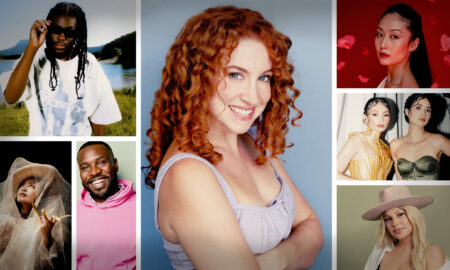




Today we’d like to introduce you to Ingrid Solano.
Hi Ingrid, it’s an honor to have you on the platform. Thanks for taking the time to share your story with us – to start maybe you can share some of your backstory with our readers?
I think I’d have to define myself, first and foremost, as a clinical psychologist—but a close second is “creative.”
That creative thread runs deep. My mother was an artist, and that influence has always been a constant in my life. In high school, my IB art show was themed “Illustration”—each piece paired with a short story I had written, and rendered in different mediums. My favorite? India ink washes with vibrant acrylic highlights.
To this day, my home is filled with evolving projects: paint, easels, printed-out short stories (I still edit by hand, so my drafting desk is usually a beautiful mess), and half-finished coffee mugs beside mostly-finished novels. I’ve always been immersed in artist communities—painting and drawing alongside them, writing together, attending shows, talking about process. Whether it’s a board game night focused on communication and collaboration, or one of my more elaborate cocktail gatherings, my social life has always been a creative space.
And speaking of cocktails—yes, I love them. Not just the taste, but the ritual. I think of it as its own kind of art form. I’ve always been fascinated by the history of alcohol and drinking practices across cultures. Libations and ritual are an interesting thread in human society, from religion to etiquette. I even tried to love absinthe.
Oh—and did I mention I was a goth kid?
I spent most of my teens and twenties also in clubs, following bands like Nine Inch Nails and Tool across the country, and collecting and brokering antique absinthe paraphernalia from the 1800s to the local goth community—back when the internet was new and full of beautiful museum worthy things you can barely find in antique stores. I was devastated when I realized I didn’t like anise. My entire goth identity was nearly shattered… until I discovered Chartreuse my freshman year of college. (Yes, that timeline is correct — it was the 90s.) My mom used to bring me a few bottles whenever she visited Bryn Mawr– I have always been that girl. (My favorite cocktail? The Last Word.)
But I digress.
My world has always centered around creativity, concerts, and long conversations. That hasn’t changed. In a few weeks, I’m heading out to follow a band I love along the East Coast with a close friend I’ve been doing that with since we were 14. And while I’m away, an artist friend will be staying in my home to begin a piece I commissioned for my professional office.
It’s all connected. My personal life, professional space, and clinical work are all deeply infused with creativity, community, and meaning.
It actually took the pandemic for me to get more serious about completing work for potential public consumption. Since then, I’ve finished writing a play (which my acting friends have done a reading of), and developed a tarot card system to go along with my long time work in progress (a fantasy novel) —among other things.
My path as a clinical psychologist began in college—although, amusingly enough, I originally intended to become a spy.
My father was a private contractor in the ’70s and ’80s… or at least, I think he was. There are plenty of strange artifacts in my parents’ house that support this theory, alongside my parents’ individual (and often divergent) narratives.
So I started college as an International Relations major, inspired by that sense of global intrigue. But by junior year, I had shifted to Psychology—much to the dismay of my dean at the time. Eventually, she admitted that I had been preparing for it all along: studying neuroscience, loading up on psych courses, learning languages, and completing all the pre-reqs.
I would’ve had a Classics minor, too, if my father hadn’t forbidden me from taking Latin. He claimed there was no merit in learning a “dead language.” Ironically, I’ve probably used my piecemeal Latin knowledge more often in both my academic and creative life than the French or Italian I studied—languages I mostly use while traveling.
(That Latin ban was one of several pieces of advice I probably should have ignored. Another? That I shouldn’t pierce my eyebrow.)
When it comes to travel, I’m definitely the person who seeks out every rare piece of art, architecture, cathedral, temple, and ancient site I can find. The art-travel focus was inspired by accidentally being in Rome (on a family trip) during a celebration of Caravaggio’s works. My second personal (non-familial) trip to Europe was for Hieronymus Bosch’s 500th birthday—to see the full collection of his works gathered in his hometown in the Netherlands. Architecturally focused adoration probably began in New Orleans for me (or maybe the Chrysler building), but I once visited all 13 Roman Catholic churches in Köln in a single day, just for the architecture and to imagine what it would be like to live in that place and time. Most recently, I went to Greece and dragged my partner and friends across Ancient Corinth, Mycenae, and Meteora—enthusiastically narrating what it must have been like to walk through those sites 2,000 to 3,000 years ago. I was, admittedly, that nerd the whole time.
And honestly? I wouldn’t have it any other way.
In regards to refining my focus on psychology, I earned my Bachelor of Arts in Psychology with a concentration in Neuroscience from Bryn Mawr College in 2002 (5 years before absinthe would be legal in the US (victim of a smear campaign but again, I digress)). While figuring out whether I wanted to go to med-school for psychiatry or grad school for psychology, I worked in several hospitals doing medical research and animal husbandry. (That’s a journey in and of itself.) My clinical journey began with a Master’s in Marriage and Family Therapy from Hofstra University, earning my MFT in 2013. I then went on to pursue my PhD in Clinical Psychology at Stony Brook University (SBU)—a longstanding pillar in the development of modern clinical science, particularly cognitive behavioral therapy (CBT). There, I received extensive training in evidence-based treatments across a wide range of disorders and relational issues, working closely with my mentor, Dr. K. Daniel O’Leary. (Dan just retired this year, after founding an academic family tree of 54 graduate students.)
My work at Stony Brook included therapeutic visitation, custody case evaluations, and individual, couples, family, and group therapy modalities. My research touched on complex relational topics: pornography consumption, sexual coercion, intimate partner violence, relationship distress, and aggression.
During my PhD program, I also completed a two-year externship working with the LGBTQIA+ community in New York City with Dr. John Pachankis at the Yale School of Public Health. I was a therapist in the first (and still only, to my knowledge) randomized clinical trial of LGBTQIA+-affirmative therapy using the Unified Protocol for emotional disorders. That experience—and those mentors—brought incredible depth to my clinical formulations and cemented my passion for understanding how we exist in our relationships: the healthy, the strained, and everything in between. I remain a strong advocate for LGBTQIA+ mental health and believe deeply in the importance of authentic, satisfying relationships across the lifespan.
For both my doctoral internship and post-doctoral fellowship, I chose to specialize in trauma-focused therapy and couples work within the VA system, focusing on military sexual trauma—including sexual assault, intimate partner violence, and relationship trauma. The training offered through the VA in trauma-focused modalities is exceptional. I found this work incredibly meaningful, especially in providing affirming care for LGBTQIA+ and relationship-diverse Veterans, including sex therapy and identity-affirming support. During this time, I also continued to contribute to academic research on mental health in LGBTQIA+ communities.
Over time, I began to realize that my trajectory—intentional or not—had equipped me with a very specific and deeply relevant blend of expertise: one that allows me to support individuals in expanded or nontraditional relationships, particularly those affected by interpersonal trauma. Unfortunately, that kind of trauma is not uncommon among the creatives, LGBTQIA+ individuals, and marginalized communities I work with. These are people who often carry complex stories—about identity, intimacy, survival, joy, and self-expression—and I aim to help them build holistically supportive lives and relationships. Lives where they feel inspired, safe, and unashamed of how they love, what they enjoy, and the truths of their lived experiences.
What makes my work a bit unique is how seamlessly these areas of expertise intersect. My clinical foundation is in evidence-based, individual and couples therapy, but my specialized focus on the LGBTQIA+ community, relationship diversity, trauma-focused treatment, and sexual health naturally overlap. The LGBTQIA+ community experiences higher rates of sexual trauma, systemic stigma, and identity-based stress, and often navigates complex relational terrain—whether that’s chosen family, polyamorous constellations, or kink-based dynamics.
In that context, sex therapy and relationship work aren’t extras—they’re essentials. They are key tools for healing, empowerment, and deep connection. I approach this work with fluency, nuance, and cultural humility, always honoring the individual within their larger system. My goal is to support people as whole, complex beings: in their emotional lives, their relationships, and the spaces in between. One area of unique expertise I’ve developed is working with couples in which one partner is undergoing or has chosen to transition. This work draws on the full depth of my skill set—integrating identity-affirming therapy, sex and relationship dynamics, and systemic insight. It’s an incredibly nuanced process that requires empathy, precision, and a deep understanding of how identity, intimacy, and partnership evolve together.
Eventually, I opened my private practice—first in California, and then in my beloved New York City. Transitioning back to a smaller, more intimate practice allowed me to return to working with the creatives, professionals, and personalities who align with my therapeutic strengths and values. That personal fit is crucial for good therapy. In both my home and office, you’ll find original art—pieces commissioned from friends or communities I’ve connected with over the years. Many of them are deeply inspiring, some transformative. Lately, I’ve noticed that several pieces I commissioned and homed on a wall in my office could be interpreted as grappling with themes of overwhelm—and perhaps that’s reflective of what many of my clients are carrying right now.
Through it all, my work is rooted in the same ethos: I bring the depth of clinical training to relationships and individuals who value creativity, connection, individuality, joy, openness, and authenticity—in life, in art, and in the human experience.
Would you say it’s been a smooth road, and if not what are some of the biggest challenges you’ve faced along the way?
I come from a family that didn’t have money to spare, so my undergraduate degree was funded through scholarships, and grad school was financed entirely through student loans. During my PhD program, I was also navigating something much heavier: my father was slowly dying from cancer caused by his exposure at Ground Zero after the World Trade Center attacks. He had volunteered his company to assist with recovery efforts, working on-site every day for a month. Years later, multiple cancers—linked to that exposure—took his life in 2023. He had a number of medical emergencies during my time in graduate school, which made everything more emotionally complex. The World Trade Center accounts have still not fully followed through, though I’m grateful they covered his medical costs. The rest—closure, stability, accountability—remains elusive.
I didn’t take the academic path lightly. I worked in the medical field and research for several years to figure out if I wanted to pursue an MD in psychiatry or a PhD in psychology. I even went on a few med school interviews before realizing—with that particular gut clarity we only get a few times in life—that it wasn’t the path for me. I didn’t want to treat the symptoms and walk away. I wanted to be in the room with people for the messy, profound, nonlinear work of healing and transformation. I remember sitting back and thinking—sure, I can mentally rotate organic chemistry based stereoisomer models in my mind’s eye, but…is that what I want to use as the foundation for work the rest of my life? (I’m well aware that’s not what psychiatrists due every day, but I’m still not entirely sure why taking organic chemistry and physics is the gold standard for discerning medical field aptitude.) But I had to ask myself: what’s my actual, natural gift? What might have I been put here for? What would make me happy to do, every day, in this capitalist work-based society?
It took me until 44 to realize that my true gift was a profound empathy that boarded on sensitivity. (Which my family misdiagnosed as avoidance for most of my life, but I digress.) But even by 25, I knew that my love of communication, connection, and genuine curiosity about the human experience wasn’t just a personality trait—it was a strength. A calling, even.
By the time I entered my doctoral program, I was already an older applicant—and that awareness stayed with me. Sometimes it felt like a chip on my shoulder, other times like a well-earned badge of perspective.
I’ve always lived slightly to the left of the mainstream. (Goth kid, remember? With a goth radio show in college and everything.) That sense of otherness—of being told, implicitly or explicitly, that weirdness or wildness is something to hide—has been a throughline in my life. I moved nine times by the time I hit fifth grade and moved to New York, and it was in 5th grade, curled up in the library reading Hamlet, that l remember the moment I realized I didn’t need everyone to like me. That kind of clarity, especially young, is a gift. But grad school tested it all over again.
My Master’s program in Marriage and Family Therapy had a broader range of ages and backgrounds, so I wasn’t the anomaly. But entering a highly competitive, prestigious PhD program—where many students came straight from undergrad—brought a fresh wave of ageism, sexism, and quiet (sometimes not-so-quiet) othering. It didn’t help that I also entered having already seen clients for 2 years, which othered me in different ways. So, I had to navigate that all over again, though this time with a more sophisticated toolkit: lived experience, therapeutic insight, and a deep commitment to staying true to the kind of clinician—and person—I knew I wanted to be.
So no, it hasn’t been smooth. But it’s been mine. And I’ve tried to meet it with integrity, humor, and a willingness to choose the long road if it gets me where I actually want to go. I love what I do. We work most of our days, so I wanted to love most of mine.
Thanks – so what else should our readers know about Relational Alchemy?
My private practice is called Relational Alchemy, and I think that name speaks volumes about what I do. I’m a licensed Clinical Psychologist in both New York and California, and I specialize in work that sits at the intersection of science, intuition, identity, and relationships. At heart, I help people navigate the messy, meaningful terrain of being human—especially when they’re trying to balance ambition, relationships, identity, trauma, creativity, and mental health.
Most of my clients are high-functioning creatives and professionals—often bi-coastal, often brilliant, and frequently dealing with emotional complexity that doesn’t fit neatly into diagnostic boxes. I’ve worked with people in entertainment, music, art, medicine, tech, writing, law, academia—you name it. What they often share is the need for a therapist who is both highly trained and deeply attuned to nuance. I’m not a blank slate therapist. I’m present. I’m active. I ask big questions, offer clear insights, and bring both evidence-based tools and lived experience to the work.
My practice is especially affirming of those who’ve felt “othered” for who they are or how they love. I specialize in LGBTQIA+ mental health, kink and BDSM-affirming care, polyamory and CNM relationships, sex therapy, and trauma-focused treatment. I bring a strong background in clinical science—CBT, the Unified Protocol, systemic therapy, trauma-informed care—but I also bring a lot of creativity, humor, cultural humility, and lived perspective. Therapy with me is curious, engaged, and tailored. It’s a space where weird is welcome, and authenticity is expected.
What am I most proud of, brand-wise? That people find me—and choose me as their psychologist—because they feel seen. They feel I align with their values, support who they are, and understand their complexity. They come to me when they’re ready to do the work. When they want a collaborator who respects their intelligence, their contradictions, and the full depth of their experience.
I built Relational Alchemy to be a space where you don’t have to shrink to fit in. You can show up fully—messy, ambitious, wild, thoughtful—and we’ll do the work together. Therapy is a context for change, yes—but I believe it should also be a space of radical honesty, creativity, and transformation.
Also: there’s probably some antique absinthe glassware and moody art somewhere in the room. Just to set the tone.
How can people work with you, collaborate with you or support you?
There are actually several ways people can work with me, depending on their needs and interests.
Clinically, I accept referrals for individual therapy, relationship work (including couples, polycules, and CNM constellations), and trauma-focused care—especially for clients navigating identity, intimacy, creativity concerns, or non-traditional relationship structures. I often collaborate with psychiatrists, individual therapists, and other providers to support shared clients from a systems-informed, affirming lens. I’m based in New York and California (licensed in both), and can also offer consultation and coaching internationally in specific contexts.
For professionals and clinicians, I offer training and consultation in my four areas of expertise:
1) LGBTQIA+ affirmative therapy
2) Trauma-focused treatment (including sexual and relational trauma)
3) Kink and CNM-affirming therapy
4) Systemic, Individual, and Relational therapy with creatives and identity-diverse clients
I provide individual consultation, group supervision, and occasional intensives or training series. Whether you’re refining your clinical skills, building cultural competence, or just looking for a sharp, collaborative mind to bounce ideas off—I’m happy to be part of that conversation.
For non-clinicians, like writers, showrunners, and creators, I also work as an intimacy consultant and psychological advisor. If your story involves identity, LGBTQIA themes, intimate partner violence, sexual assault, trauma, therapy, or complex relationships, I can help ground it in real human experience—while preserving the creative integrity of your vision. I love collaborating on character development, relational dynamics, and building psychologically rich arcs that resonate.
And lastly, if you’re a coach, artist, or leader anywhere in the world looking for psychologically-informed coaching with a focus on identity, creativity, emotional resilience, and transformation—I offer select international coaching work that blends depth, systems thinking, and intuition.
So whether it’s as a therapist, collaborator, trainer, consultant, or creative, I love working with people who are asking good questions and building interesting things. You can reach out via my website or email to start a conversation.
Pricing:
- Individual therapy $300-350
- Couples: $350+
Contact Info:
- Website: https://ingridsolano.com
- Instagram: https://www.instagram.com/ingrid_phd/
- LinkedIn: https://www.linkedin.com/in/ingrid-solano-phd/
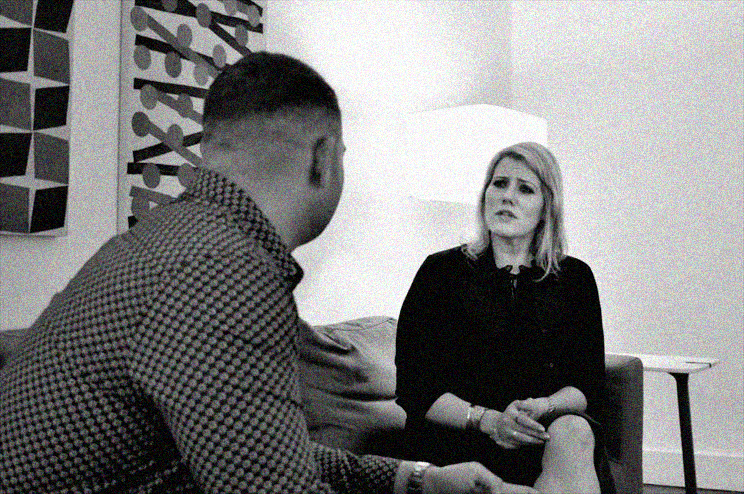
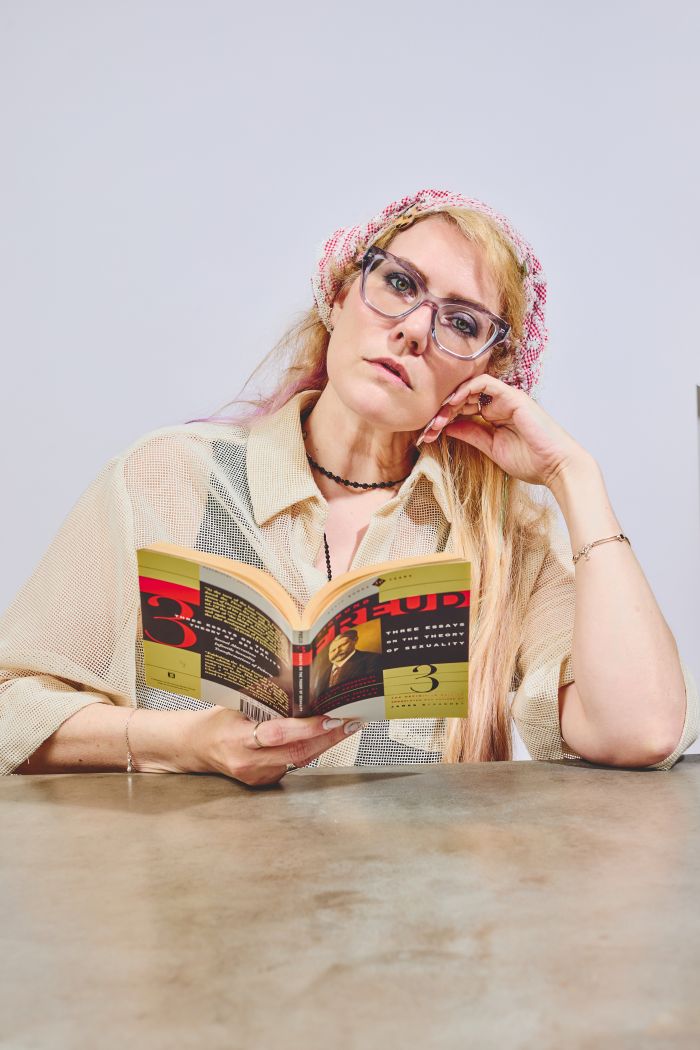
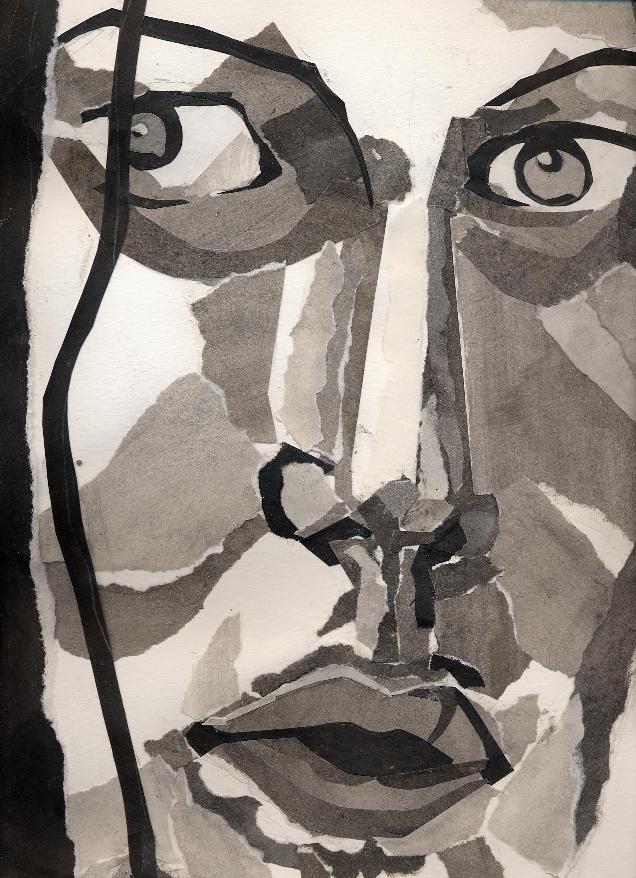
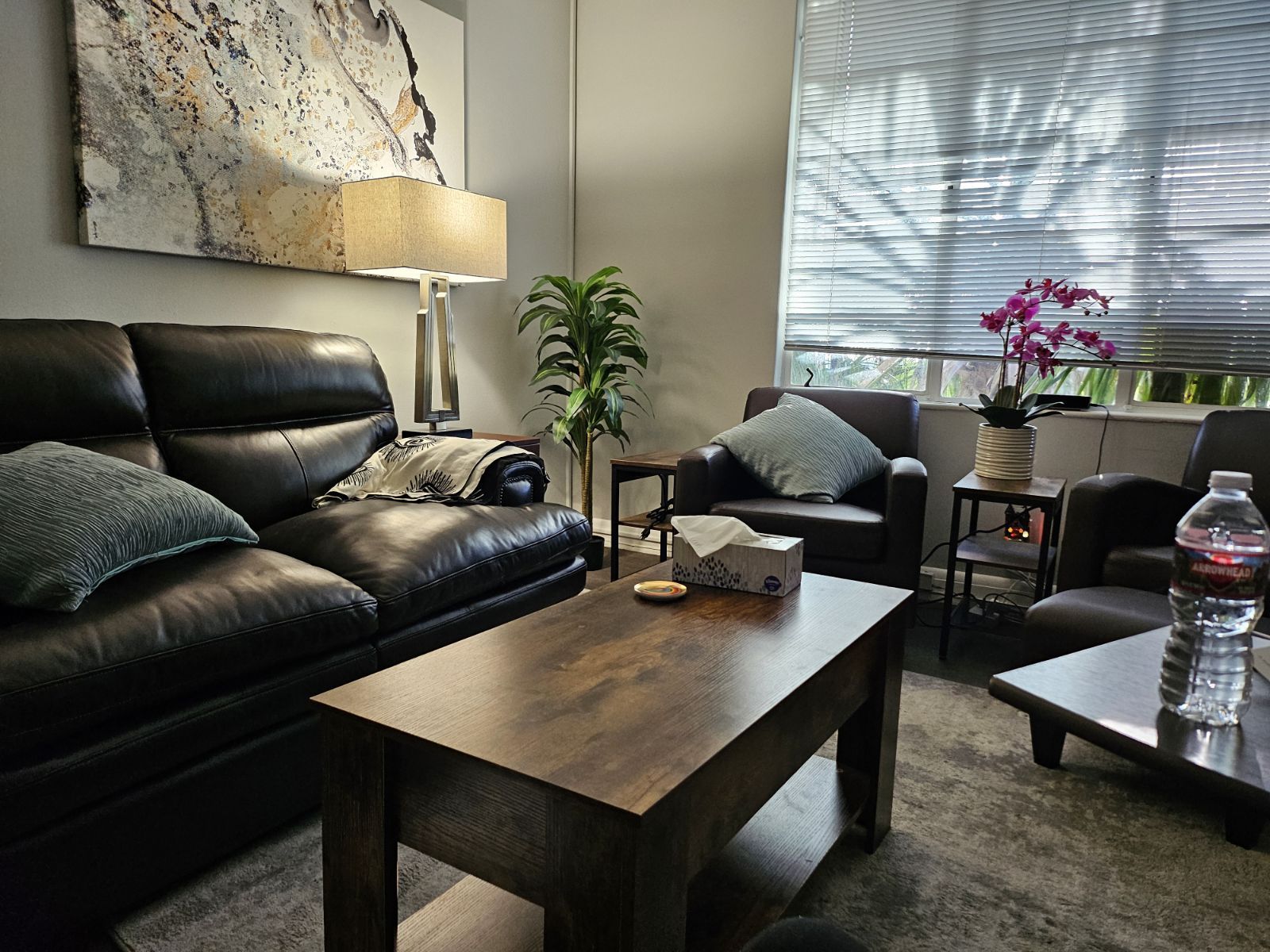
Image Credits
All mine. The collage was one I did in college, of myself.
Popular
-
LA’s Most Inspiring Stories
-
JordanL on ‘Breathe,’ Belief, and Building a Movement Beyond the Music
-
Megan Birney Rudert on How Access to Light Is Powering a More Sustainable and Equitable Future
-
Linda Kneidinger on Building Lasting Change Through Small Steps and Self-Compassion
-

Jolana Nika on Redefining Modern Connection Through Intentional, Real-Life Experiences
-
What did suffering teach you that success never could?


