




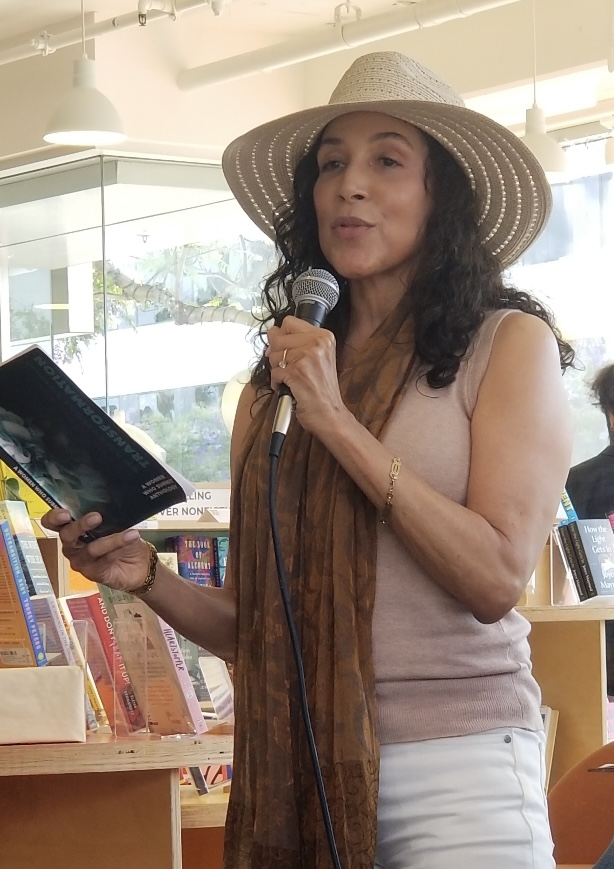
Today we’d like to introduce you to Toni Ann Johnson.
Alright, so thank you so much for sharing your story and insight with our readers. To kick things off, can you tell us a bit about how you got started?
I began my career as an actress based in New York City. I started training as a teenager, studying at the Lee Strasberg Theatre Institute. I skipped a grade of high school and enrolled in Tisch School of the Arts at NYU, where I continued studying acting at The Lee Strasberg Theatre Institute. I’d met Spike Lee when I was in high school and had a part in a graduate student film by David Greenwald on which Lee was a crew member. After graduating from NYU, one of my first professional acting jobs was as an understudy in the play Jonin’ at The Public Theatre. Shortly thereafter, I was cast in Spike Lee’s School Daze. I had roles on a few soap operas, All My Children and Loving, and around that time, I began writing plays. I produced my first play, Mommy Loves You, at the William Redfield Theatre in Hell’s Kitchen. It was about colorism within the Black community, a theme also explored in Spike Lee’s School Daze. A couple of years after that, I finished writing another play, Gramercy Park is Closed to the Public, about a well-to-do, mixed-race, young woman from Gramercy Park (a wealthy New York City neighborhood) who tries to live as if race doesn’t matter. Her journey, in racially tense New York City, disabuses her of that idea. I played the role in a few high-profile staged readings in New York. The first was at the Ensemble Studio Theatre, and then at the Tribeca Film Center. I soon moved to Los Angeles, and the play was also performed at the Ensemble Studio Theatre West. In 1994, the Fountainhead Theatre Company produced the play at the Hudson Theatre in Hollywood. I played the lead role.
The play garnered significant attention. With it, I was accepted to the Sundance Screenwriters Lab as a fellow. I was also signed by a literary agent in Hollywood, Dave Wirtschafter, who was then at ICM and who, at the time, also represented Spike Lee and the Hudlin Brothers. The quick career shift was a whirlwind experience where I went from struggling financially as an actor and playwright to doing well as a working screenwriter.
I was hired to write movies for studios and Networks. I did that for over a decade. During that time, the play Gramercy Park… was produced by the New York Stage and Film Company at their summer PowerHouse festival at Vassar College as a mainstage production. It starred Nicole Ari Parker in the role I’d previously played. I had numerous screenwriting assignments, and from those, three television films were produced: Ruby Bridges, for Disney/ABC (in which I also played the role of Alma Broyard), Crown Heights (for Showtime), and The Courage to Love (Lifetime), which starred Vanessa L. Williams and Diahann Carroll. I won two Humanitas Prizes and a Christopher Award for my television writing. I also wrote the produced television pilot for Save The Last Dance based on the feature film, on which I was a participating writer who did not receive credit, despite writing six drafts, including the draft that went to directors and was greenlit by the studio. After not receiving credit, the producers came back to me to write the TV pilot. Cheryl Edwards, who did receive well-deserved credit for the feature, was busy writing another film for the same producers (Cort/Madden). The pilot was made but never aired. A few years later, I wrote the feature film Step Up 2: The Streets, the second installment of the Step Up franchise. The first film, Step Up, was written by Duane Adler, who also wrote the original draft of Save the Last Dance, which I rewrote. I owe a lot of work to the lovely and kind Duane Adler, whom I finally met during the 2007 WGA strike when we found ourselves picketing together.
By the time I was hired to write Step Up 2, in late 2006, I was tired of doing assignments. Despite how lucrative it was, I was also tired of writing dance projects. I wanted to get back to my own work and my authentic voice. I decided to get an MFA in Creative Writing at Antioch University Los Angeles. While there, I began writing short stories about my experience growing up in a predominantly white town in Upstate NY. My thesis project, completed in late 2008, was called Light Skin Gone to Waste. This later became a longer linked story collection that eventually won the Flannery O’Connor Award in 2021. It was selected for the prize and edited by Roxane Gay. The book also garnered a 2023 NAACP Image Award nomination for Outstanding Literary Work and was shortlisted for the 2024 Saroyan Prize.
Years before the story collection was published, my first novel, Remedy for a Broken Angel, was released in 2014 and received a nomination for a 2015 NAACP Image Award for Outstanding Literary Work by a Debut Author. My second book was Homegoing (2021), a novella linked to Light Skin Gone to Waste. Homegoing won Accents Publishing’s inaugural novella contest.
My newest book, But Where’s Home? is forthcoming in February 2026 from Screen Door Press, an imprint of the University Press of Kentucky. It’s another linked collection, and also linked to Homegoing and Light Skin Gone to Waste. All three books follow members of the Arrington family, upper-middle-class African-Americans who live or have lived in Monroe, NY, a predominantly white, mostly working-class town. I’m excited about this quirky book and grateful to have worked with renowned writer of fiction, nonfiction, and poetry, Crystal Wilkinson, its editor.
We all face challenges, but looking back would you describe it as a relatively smooth road?
One of the biggest challenges was having the courage to pivot from screenwriting to writing fiction. My greatest financial success came from working in the movie business. For some writers, publishing books can be financially rewarding. For most writers of literary fiction, it’s not something one pursues for the money. It wasn’t an easy transition. I had to let go of status and material things and any tendency to keep up appearances. But what I’ve gained has been immeasurably more meaningful. Step Up 2 made more money, and I’m deeply grateful for the ways it benefited me financially, but I’m prouder of the writing in Light Skin Gone to Waste and my other books than I am of the writing produced for the screen thus far.
Another struggle was setting acting aside. I’ve always loved acting and began very young. At age twelve, I was studying improv. By age fourteen, I was in a professional acting school. I stopped pursuing acting as a career when my screenwriting career took off. I was busy and under so much pressure, I could not go to auditions and meet my contractual deadlines. I continued to act when opportunities arose, but I didn’t pursue the craft with my full effort because there wasn’t enough time. These days, the way I’ve allowed myself the fun and satisfaction of performing is making my public readings more like one-woman shows. I’ve also done the audiobook narration for three of my books so far. In 2021, I won the Missouri Review’s Miller Audio Prize for my reading of “Time Travel,” the last story in Light Skin Gone to Waste. Reading and performing my writing is a great pleasure.
What does success mean to you?
Success, for me, is being able to do the things I want to do rather than the things I have to do. I’m grateful to be able to write about what interests me and to explore ways to make that work entertaining for others.
Contact Info:
- Website: www.toniannjohnson.com
- Instagram: https://www.instagram.com/treeladytoniann/
- Linkedin: https://www.linkedin.com/in/toni-ann-johnson-b7662b9/
- soundcloud: https://soundcloud.com/the-missouri-review/miller-aud-cast-38-toni-ann-johnson
- Other: https://www.amazon.com/But-Wheres-Home-Novella-Stories/dp/1967165033
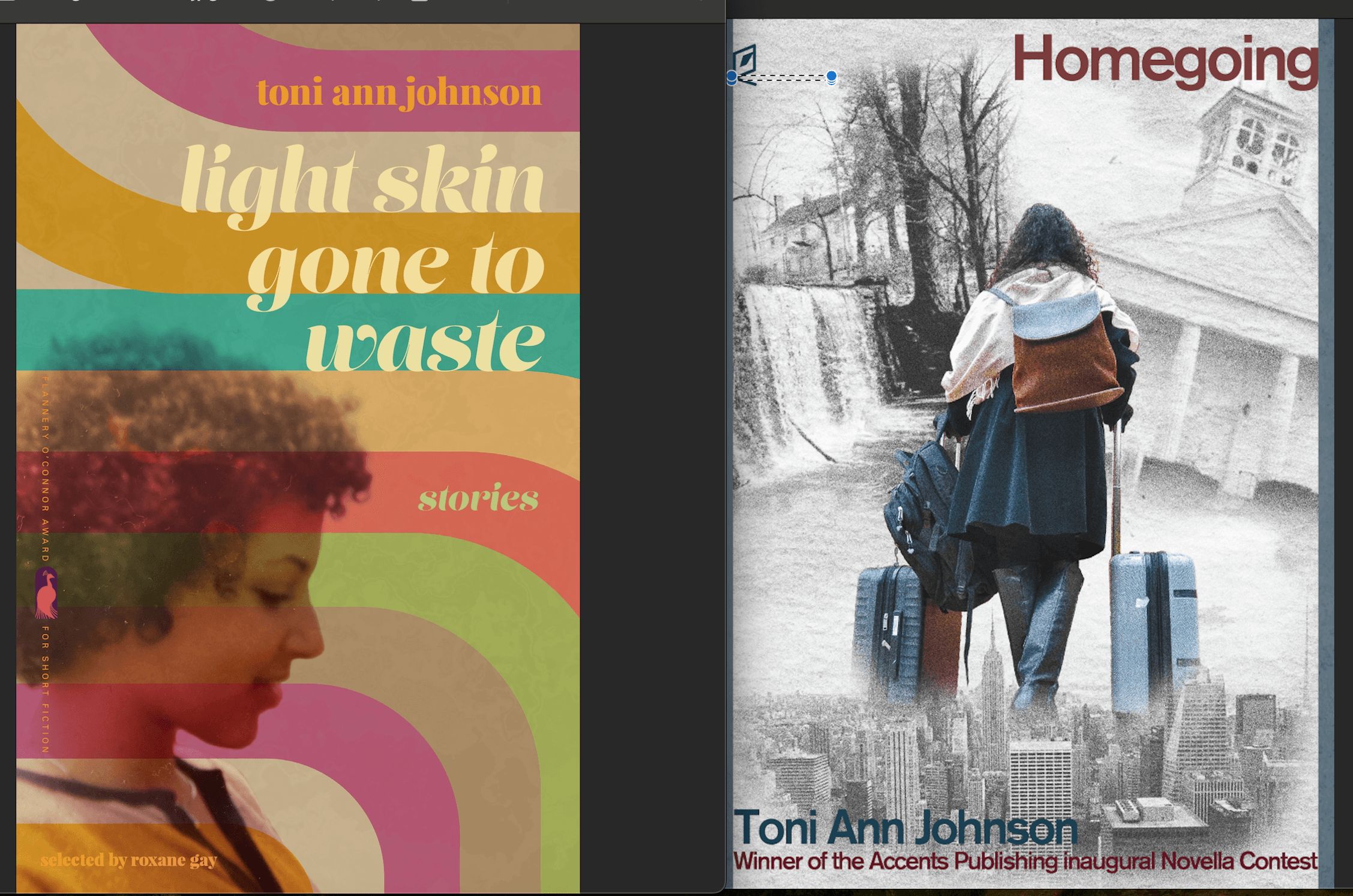
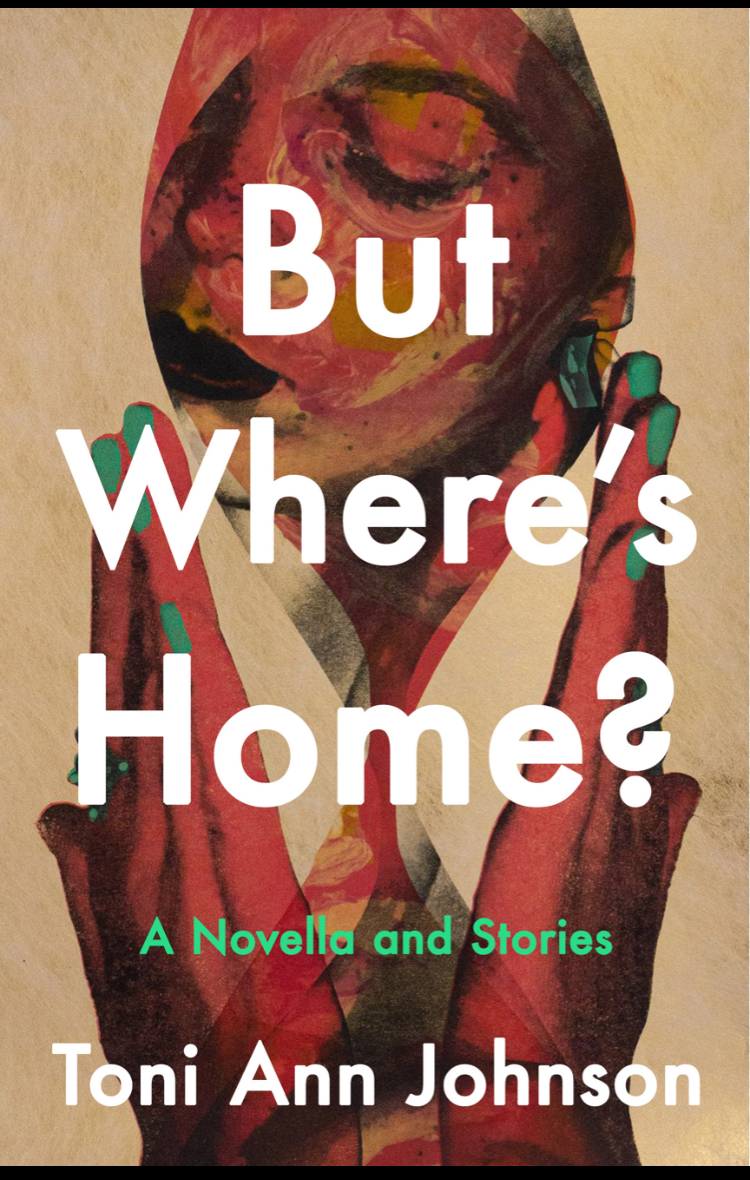
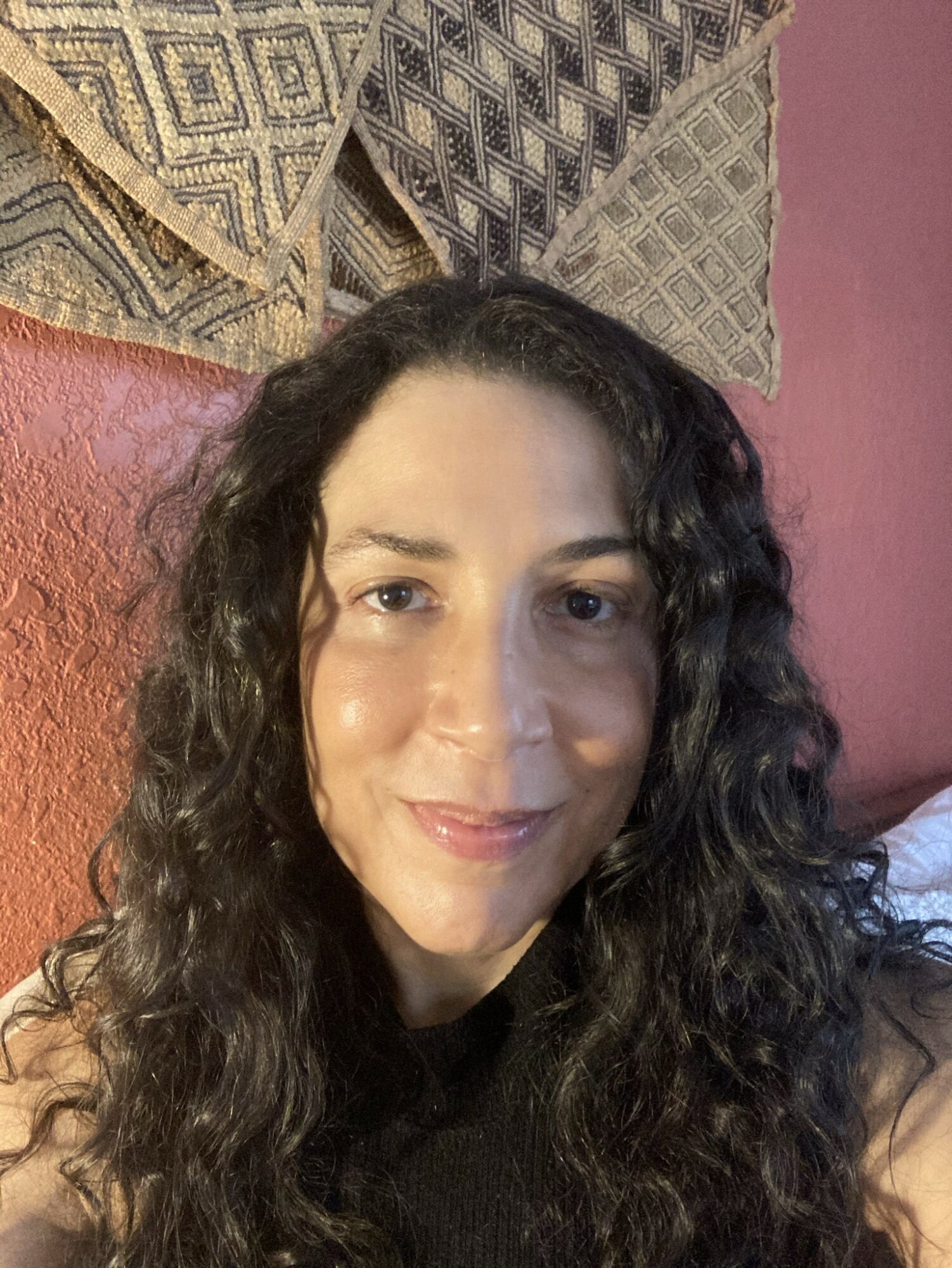
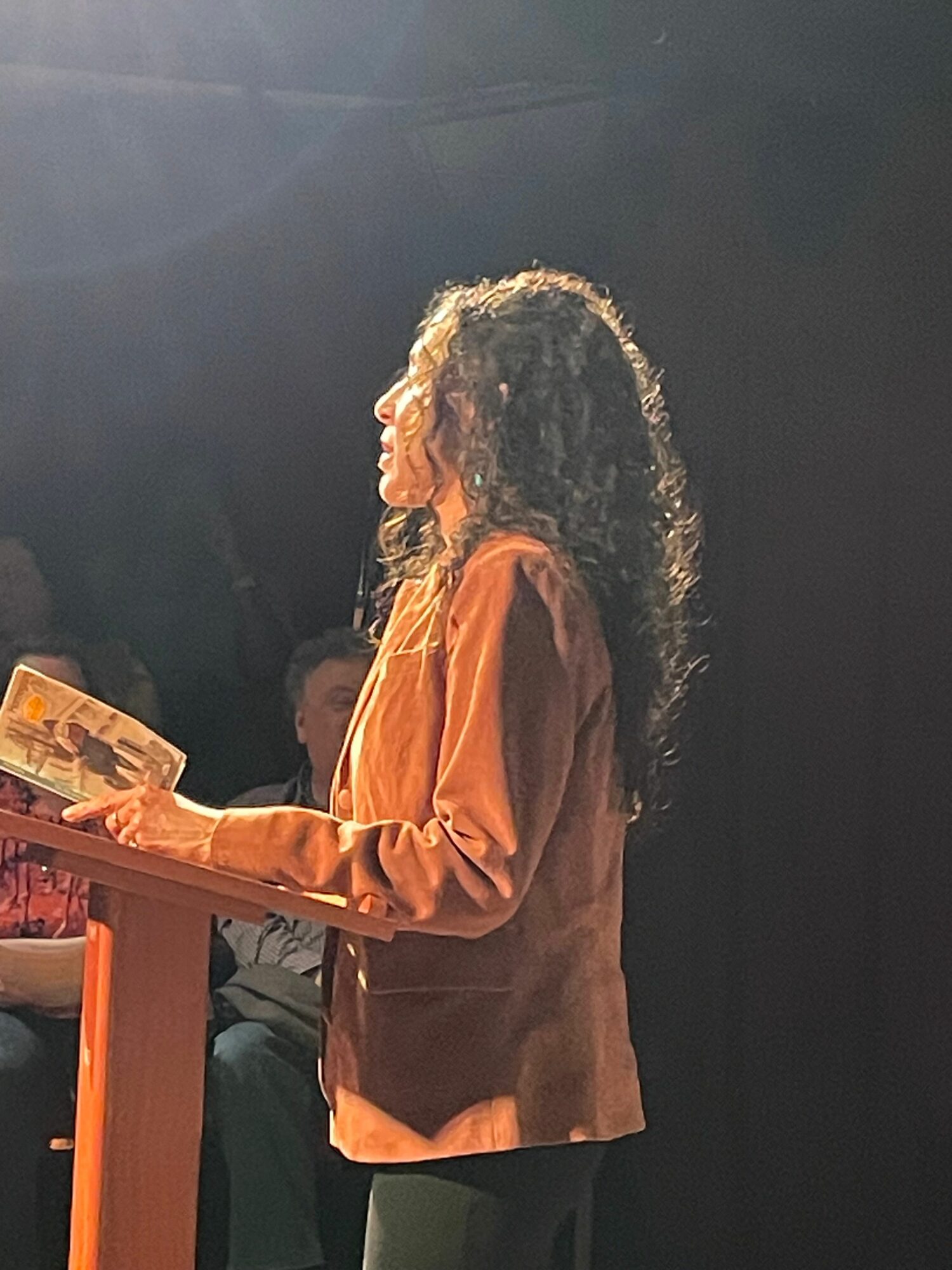
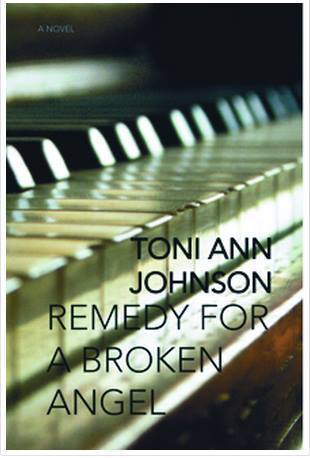
Image Credits
But Where’s Home? Book cover artwork by Christian Noelle Charles Light Skin Gone to Waste cover designed by Erin Kirk Homegoing cover designed by Kevin Rock and TA Johnson Images of Toni Ann Johnson reading #1 Angela Franklin #2 Kate Maruyama
Popular
-

Christina Wren Steps Into the Director’s Chair to Tell Stories That Feel Like Home
-

Portraits of the Valley
-

LA’s Most Inspiring Stories
-
JordanL on ‘Breathe,’ Belief, and Building a Movement Beyond the Music
-
Megan Birney Rudert on How Access to Light Is Powering a More Sustainable and Equitable Future
-

Linda Kneidinger on Building Lasting Change Through Small Steps and Self-Compassion


