





Today we’d like to introduce you to Veronica Viesca.
Hi Veronica, can you start by introducing yourself? We’d love to learn more about how you got to where you are today?
My academic journey didn’t start in the typical way. I began as a business major with a minor in coding, working in banking and sales. However, the learning felt disconnected from what I was actually hungry for, namely, connection and purpose. I eventually failed out of college, not because I lacked drive, but because I couldn’t find a sense of belonging in the spaces I was in.
Everything changed when I began volunteering at a domestic violence shelter in South San Diego. That experience exposed me to the raw, human complexity of family systems, and something in me clicked. I became deeply curious about how relationships shape health, behavior, and identity. That curiosity took shape through a master’s degree in Marriage and Family Therapy, and later, a PhD focused on family systems and health outcomes.
For over a decade, I remained on the academic side of therapist development. I taught, trained, supervised, and researched at the graduate and doctoral level. In 2018, I returned to Los Angeles to join the faculty at Pepperdine University. And it was there, back home, and inside a university system I deeply respected, that I started to see something clearly. Despite the clinical rigor of our programs, a gap remained. We were training therapists to care deeply for others, but not always teaching them how to care for themselves. We weren’t building systems that supported longevity, economic justice, or relational sustainability for the providers themselves.
That insight led me to build what I felt was missing. I founded the Center for Mental Health Excellence, a nonprofit that trains early-career professionals with both the clinical tools and the structural support they need to thrive. Around the same time, I launched the Institute for Relational Well-being. This private practice models what sustainable, high-quality care can look like, not only for clients, but for therapists.
This work is grounded in research, community, and the belief that therapists deserve lives that are as whole and vibrant as the ones they help others build. My journey has been nonlinear, but every chapter has pointed to the same truth: the systems we build for care must also care for the providers.
Can you talk to us a bit about the challenges and lessons you’ve learned along the way. Looking back would you say it’s been easy or smooth in retrospect?
Like most things worth building, the road has been anything but smooth. The early years of launching a practice, especially one designed to challenge industry norms, demanded a steep learning curve. In the field of therapy, we are trained to care deeply, to attune, to hold space. However, very few graduate programs prepare us for the business side of care, the infrastructure, financial decisions, and operational strategies required to build something that can actually sustain providers in the long term.
With the Center for Mental Health Excellence, we’ve intentionally chosen to do things differently. Our nonprofit model is rooted in the belief that therapists deserve to be well-paid and well-supported. That has meant experimenting with development strategies, some of which have worked beautifully, and others we’ve had to release and rethink. Growth has required sacrifice, creativity, and considerable courage, both in what we build and how we lead.
At the same time, I’m a single mother raising two daughters. Balancing the grit of entrepreneurship with the tenderness of being present for their lives is one of the most complex and most important things I do. Much of my work is remote, which can blur boundaries and demand more discipline than people realize. I try to model for my daughters not just ambition, but also alignment, showing them how to build something meaningful without abandoning themselves in the process.
What keeps me going is the team around me. I’m not doing this alone. I have the privilege of working alongside clinicians who are not just showing up; they’re actively co-creating a practice that reflects our shared values. Even in the moments of uncertainty or fatigue, I can see that we are building something real. Something that can last.
As you know, we’re big fans of Center for Mental Health Excellence. For our readers who might not be as familiar what can you tell them about the brand?
The Center for Mental Health Excellence (CFMHE) is a nonprofit therapy collective and training institute dedicated to raising the standard for what early-career mental health care can look like for clients, providers, and communities. We believe that the quality of our lives is directly shaped by the quality of our relationships. Everything we do is rooted in that truth.
We offer high-quality, research-informed therapy for individuals, couples, and families, while also training the next generation of relational therapists to serve with depth, clarity, and cultural humility. Our work specializes in relationships, not just romantic, but across the full spectrum of human connection. What we are known for is our ability to integrate clinical excellence with human sustainability. We’re not just training therapists to know what to do in a session we’re helping them build careers and lives that are deeply aligned.
What sets us apart is our belief that therapy should not be a lifelong appointment. At CFMHE, we often say that our job is to work ourselves out of a job. The therapeutic process should empower people to build richer, more connected, more meaningful lives, not keep them dependent on our expertise. We view therapy as a temporary collaboration that enhances a person’s ability to thrive on their own terms.
What I’m most proud of, brand-wise, is that we’ve created a model where both clients and clinicians are deeply valued. Our therapists receive mentorship, strong supervision, and above-average compensation in a field that often undervalues early-career professionals. At the same time, our clients receive care that is relationally grounded, socially aware, and genuinely transformative.
CFMHE isn’t just a training site. It’s a community built on the idea that healing happens in relationships, and that when we invest in the people who provide care, we multiply the impact of that healing tenfold.
What matters most to you? Why?
What matters most to me is integrity in relationships, in leadership, and in the systems we build. I believe that how we show up for one another, especially when no one is watching, defines both our personal character and the communities we create.
As a therapist, professor, and mother, I often return to this simple truth: the quality of our lives is shaped by the quality of our relationships. That means the work we do in therapy is not just about symptom relief, it’s about helping people reconnect with themselves and others in ways that are authentic, safe, and life-giving. I care deeply about building systems where that kind of connection is possible, not just for clients, but for the therapists who walk with them.
Ethically, I believe we have a responsibility to care for the caregivers. We cannot ask people to hold space for others while ignoring the structural conditions that lead to burnout, inequity, and disconnection. That’s why, at CFMHE, we build everything with relationships at the center, between therapist and client, between supervisor and trainee, and within the community we serve.
And at a personal level, I’m raising two daughters who are watching how I lead, how I love, and how I hold responsibility. My hope is that they see not just grit, but also grace, and that they grow up understanding that success means nothing if it’s not rooted in care for others and aligned with our values.
What matters to me is creating spaces in therapy, in business, in life where people feel safe to be fully human. Because when people feel that kind of belonging, they’re more likely to offer it to others. And that, I believe, is how real change begins.
Pricing:
- Therapist in Training $50 per session (sliding scale available)
- Associate Therapist $100-150 per session
- Licensed Therapists $250 per session
- Group Therapy $25-75 per group
Contact Info:
- Website: www.cfmhe.org and www.irwbgroup.com
- Instagram: @cfmhe and @irwbgroup
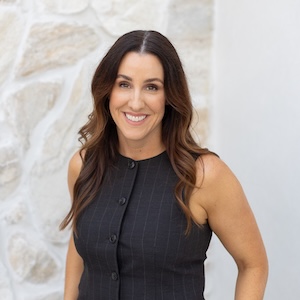




Image Credits
Bryan Miller
Michael Weiner
Popular
-

Christina Wren Steps Into the Director’s Chair to Tell Stories That Feel Like Home
-

Portraits of the Valley
-

LA’s Most Inspiring Stories
-

JordanL on ‘Breathe,’ Belief, and Building a Movement Beyond the Music
-

Megan Birney Rudert on How Access to Light Is Powering a More Sustainable and Equitable Future
-

Linda Kneidinger on Building Lasting Change Through Small Steps and Self-Compassion


