




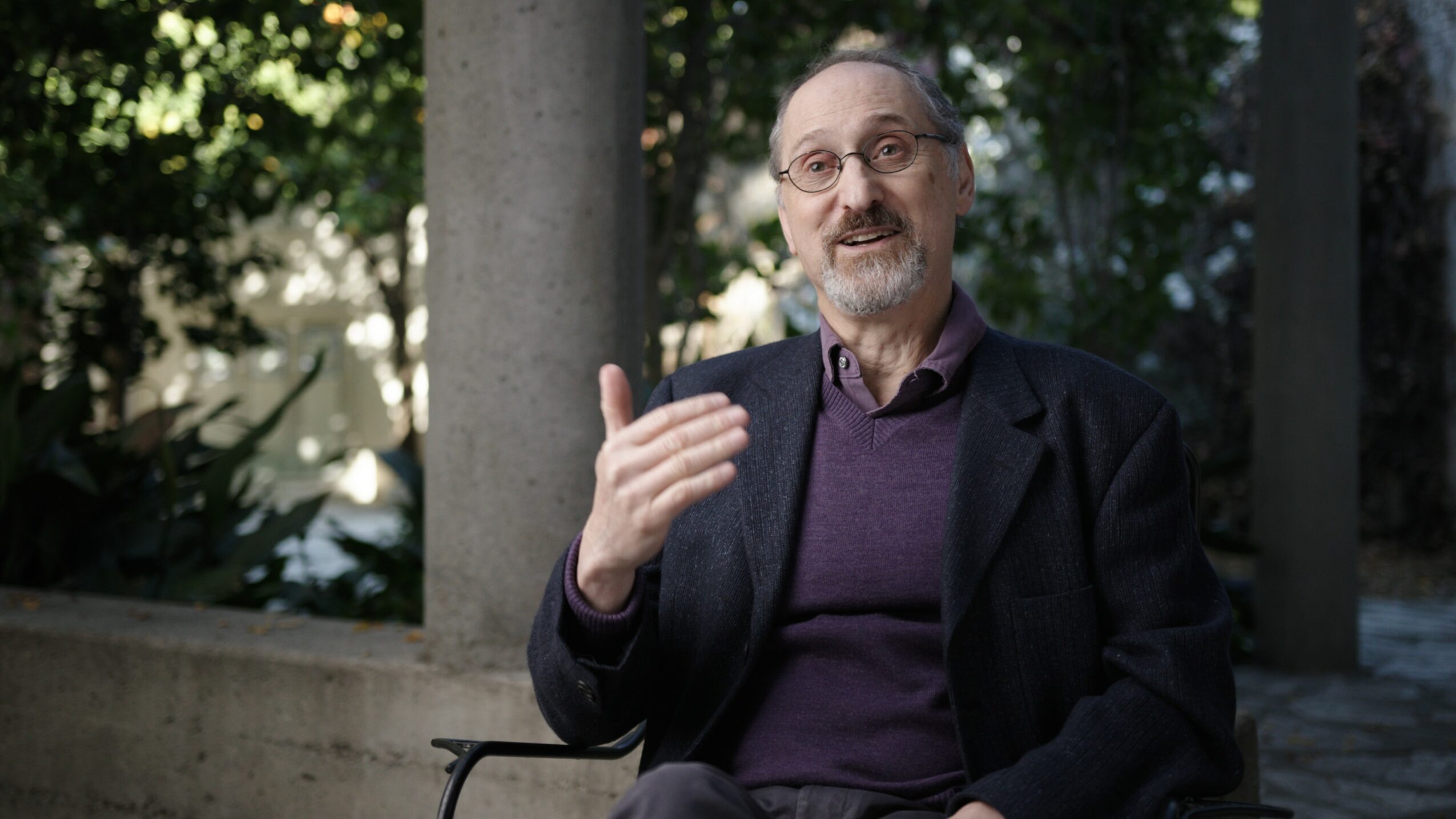
Today we’d like to introduce you to Alan Goodson.
Hi Alan, we’re thrilled to have a chance to learn your story today. So, before we get into specifics, maybe you can walk us through how you got to where you are today?
I’m a native Angeleno. And because I was born and partly grew up in Hollywood, I’ve often been asked if my family had some connection to the film industry. Well, sort of—in 1919 my grandfather came to Hollywood as a “Rattlesnake Hunter to the Stars.” That wasn’t really his job title, but that’s what he did. After being kicked off his navy ship in San Francisco at the end of the First World War and not knowing what he was going to do with his life, he saw an ad in the paper for rattlesnake hunters down here, hurried to L.A., and got the job. He spent his days walking the perimeters of the new houses built in the Hollywood Hills for movie people streaming into town, wearing thigh-high leather boots and a gun strapped to his hip, ensuring their kids playing in their yards wouldn’t be bitten by snakes. But that’s not what he was doing when I was a kid. He managed the liquor department at Carl’s Market in West Hollywood and ran a bookie joint out of a room in the back.
My mother, who became a political activist and union organizer and was already active in the Civil Rights movement in the 1930’s, was born here a few years later. My father was a clinical psychologist from Chicago who had gotten his degree at USC. But my parents divorced when I was young and I grew up in various places in the area: a working-class neighborhood in the flatlands of Hollywood; the Jewish hood near La Brea and Melrose, around the corner from Pink’s (and I knew Mr. Pink, one of the many entertaining characters in the neighborhood); and off and on in Topanga, where my mother was a co-founder of Elysium Fields, a center for humanistic psychology and nudist resort; and in my teenage years in Laguna Beach, which was still a hippie beach town at the time. So I grew up as a flower child in the 60’s and 70’s, surrounded by family friends who were musicians, writers, and artists, which is what I think set me on my path.
I was deeply involved in performing arts in high school—instrumental and vocal music, dance, drama—and was one of a group of passionate theater rats. When I was 15, I heard of an opportunity to go to New York and see some shows through the student Thespian Society. And here began a theme that’s continued throughout my life: If you want something, work for it! I worked all summer making hand-dipped candles and selling them at local art festivals to raise the funds for the trip. And what a Broadway season it was—the original productions of A Chorus Line, Chicago, The Wiz, Pippin, Equus, and more! I remember the exact moment I decided to devote my life to the theater—I was standing in Shubert Alley in a daze, my feet sinking into freshly fallen snow, having just seen that original production of A Chorus Line, which had opened a few months earlier. My mind was set.
Upon graduation, I got a scholarship to study for the summer at the Royal Academy of Dramatic Art in London. I loved the training there, the city, the theater life, and vowed to go back someday. My next stop was Lone Mountain College in San Francisco, which I chose because they had a unique acting program in which students trained together as an ensemble, rather than in separate classes. But alas, after my first year, it was bought out by another college and the theater program discontinued. I was on full scholarships from the State of California, but it was too late to audition for acting programs for the following year, so I looked for a school back in London that would accept my scholarships. Instead, I found one in a city that would become my second home—Vienna.
Why Vienna? Yes, I had studied classical music and the city’s place in that field beckoned, and yes, my grandparents were immigrants from Central Europe so I felt an affinity to that part of the world, but mostly—love. That previous summer in London I had met a young woman visiting from Budapest and fell in love. Vienna’s proximity to Budapest, despite having to traverse the Iron Curtain to get there, made up my mind. Well, I got there, and we’ve been married for 46 years now.
I originally went to Vienna to study music history and art history, but within a few months I was also apprenticed to one of Europe’s leading mime artists at the time, Samy Molcho. I studied with him for two years, became a street performer, and was a founding member of the city’s first mime ensemble. But eventually, I found I longed to speak onstage again, and to walk from point A to point B and actually get there, and my California scholarships would wait no longer. So we decamped to San Diego, to U.S. International University, which had a respected musical theater program where I earned my Bachelor’s Degree.
My first professional job after graduating was a production of Shakespeare’s Titus Andronicus at San Diego Repertory Theater, followed by a year with a political theater group, the San Diego Public Theater, doing plays by Bertolt Brecht, Dario Fo, Athol Fugard. But I hadn’t forgotten my vow to return to London. While working in the theater in the evenings, I worked in restaurants during the day and saved money for my graduate work. We were soon back in Europe and I returned to my classical theater studies, this time at the Webber Douglas Academy of Dramatic Art.
After completing the program in London, I was hired by the Café Theater in Frankfurt, Germany, the English-language stage in that city, for a season that included playing the leading role of Cocky in the musical, The Roar of the Greasepaint, the Smell of the Crowd at the Old Opera House. And then finally back to Vienna, where we would stay for close to 10 years. There I was acting in both English and German on stage and in film, as well as directing in various genres, from clown theater to chamber opera. I also had my own educational theater group that toured to high schools throughout Austria and Eastern Europe, for which a colleague of mine and I wrote a play about environmental awareness that was already warning about the dangers of global warming in the mid-80’s! But I wasn’t doing much classical theater, which had been the main thrust of my training, so in the early 90’s I felt it was time to return to the U.S., and we landed in L.A., where we’ve been ever since.
I spent 20 years as a denizen of the small theater scene in L.A. and at local regional theaters, performing in the kinds of plays I had originally set out to do: Shakespeare, Goldoni, Chekhov, etc., as well as continuing in musical theater. For 12 years I also worked with the East L.A. Classic Theater, a group that in the late 90’s and early 2000’s was already dedicated to creating productions of classical plays with multi-ethnic casts and bringing those performances to middle school and high school students in underserved parts of the city, so they could see people who look like them involved in a high level of artistic achievement and be encouraged to participate in the arts themselves.
It was during this time that a good friend of mine, a Hungarian actor and director, was in town and wanting to direct a show that had been a big hit for him in Budapest—a stage adaptation of Jules Verne’s Around the World in 80 Days by the Finnish playwright, Bengt Ahlfors. So what did that have to do with me? The play had been performed all over Europe to great acclaim and translated into many languages, including German, but not English. I was asked to write that first English version, working from both the German and Hungarian scripts. It quickly got picked up for production at several regional theaters, and thus began my other career as a translator of plays and lyrics. In Finland they never hear of their plays being performed in the U.S., so the Ministry of Culture brought me to Helsinki to see the premiere of Bengt Ahlfors’ latest play that they also wanted me to translate. And so I became Ahlfors’ official English translator, creating the English versions of five of his plays and a musical. I went on to translate plays by other authors, as well, mostly from German, as well as pop song lyrics and operetta libretti.
For much of this time in L.A, my wife, Zsuzsa, had worked for Stephen Spielberg’s Survivors of the Shoah Visual History Foundation, cataloguing videotaped testimonies of Holocaust survivors. When that project ended, she decided to return to her original profession. In her native Hungary she had been a high school math teacher. So she began teaching for LAUSD in high schools in some of the tougher parts of town where her skills were needed most. You may think you’ve had some difficult jobs in your life, but if you’ve never lived with a public school teacher, you probably have no idea of the time commitment and energy the job requires! Zsuzsa had traipsed around the world with me for years, moving from city to city and adapting to my pursuits. Now it was time for me to give back. I decided to temporarily take a break from acting to take care of the household and support her any way I could while she adjusted to her new work.
Looking back, this was the first time in my life I hadn’t been involved in some kind of artistic creativity for an extended period, and after a few months, something unexpected happened to fill that void. Late one night while I was cleaning up in the kitchen, a short scene of a play—just a half page, a fragment—suddenly appeared in my head. I wrote it down before going to bed. The same thing happened a couple nights later, and then the next, the next, and the next. Before I knew it, I was writing a play. I didn’t know yet what it was about or who would show up in it, I just knew I had to capture whatever this was bubbling up from my subconscious, and that it was tremendously satisfying to do so. Eventually, I had a play.
It’s strange how you can go through life for decades following what you think will always be your path and thinking you know yourself, until a wind comes out of the blue, fills your sails, and wafts you onto a different course. Perceptions change. The paradigm shift is a real phenomenon. I never thought I’d find anything as satisfying as acting or that I’d ever want to do anything else. But now I was playing all the roles, building castles in my own sandbox whenever I wanted, and without even having to ask anyone’s permission! There’s a certain liberation in that.
In January of 2012, the play, called Morgenstern in Vienna (write what you know, after all), was enthusiastically received in its first public reading at the Ensemble Studio Theater/L.A., and I became a playwright.
Morgenstern—which addresses issues of cultural belonging in multi-generational immigrant families in the face of assimilation—went on to be a finalist for the Stanley Drama Award in New York, which led me to my agent at a Broadway literary agency, and was then presented at several new play festivals around the country, as have all my subsequent plays.
My plays tend to combine absurd or farcical elements with an exploration of inter-generational family dynamics. For example, The Missing Three is a madcap adventure from 18th-century Munich to 21st-century Hollywood revolving around the search for a missing Mozart manuscript, a search that improbably leads a broken family to find each other. Another one, On A Raw Moose Day, is an absurdist comedy about an eccentric family that may or may not be real, a meta-theatrical farce that, with its plot twists and turns and multiple levels of perspective (including a play within a play within a play), challenges our perceptions of reality, as well as the concept of truth itself.
As a book writer and lyricist, I’ve worked on a number of musicals, as well as songs for the children’s animated TV series, Danni’s Tales. Currently, I’m book writer for a new musical in development, Shanghai Sonatas. About the unifying power of music, it focuses on refugee musicians in exile in the Jewish Ghetto of Shanghai in the 1930’s and 40’s who taught classical music to and developed close bonds with their Chinese neighbors, creating ripples that carry through to this day. Shanghai Sonatas was performed in a concert version at the Wallis Annenberg Center for the Performing Arts in Beverly Hills in 2023.
And the journey continues…
We all face challenges, but looking back would you describe it as a relatively smooth road?
I don’t think any life in the theater, whether as an actor or a playwright, is without a good deal of struggle. It’s not for the thin-skinned or faint of heart. The constant rejection; the recurring moments of self-doubt; the criticism, constructive and otherwise; the clash of personalities in a collaborative artform; the financial ups and downs; the successes tempered by the failures—these are challenges we’ve all dealt with over and over again throughout our careers. But we do it because we have a passion for and a need to participate in that most basic of human endeavors: the telling of stories.
Thanks for sharing that. So, maybe next you can tell us a bit more about your work?
I’m an actor turned playwright.
Another area of specialty is I translate plays and lyrics from German, Hungarian, and Swedish.
I think what I’m most proud of in my acting career is that of the directors I’ve worked with, there are very few with whom I worked only once.
What does success mean to you?
I define success as achieving those ephemeral moments of artistic fulfillment—when subconscious creativity and conscious skill are in perfect balance and result in something original, surprising, and moving. They may be fleeting, you may not know if and when they will happen again, but they are moments to live for.
Contact Info:
- Website: https://www.robertfreedmanagency.com
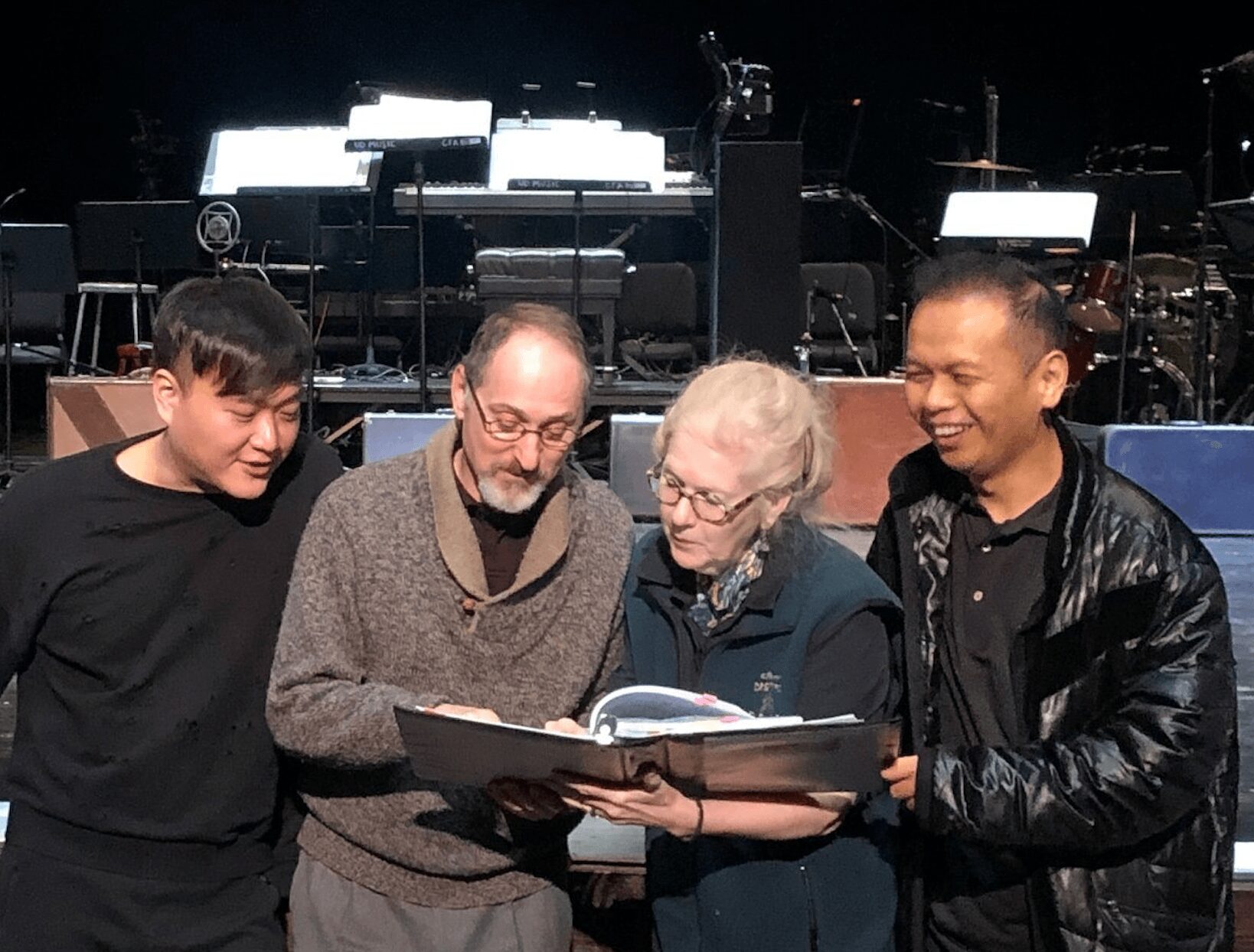
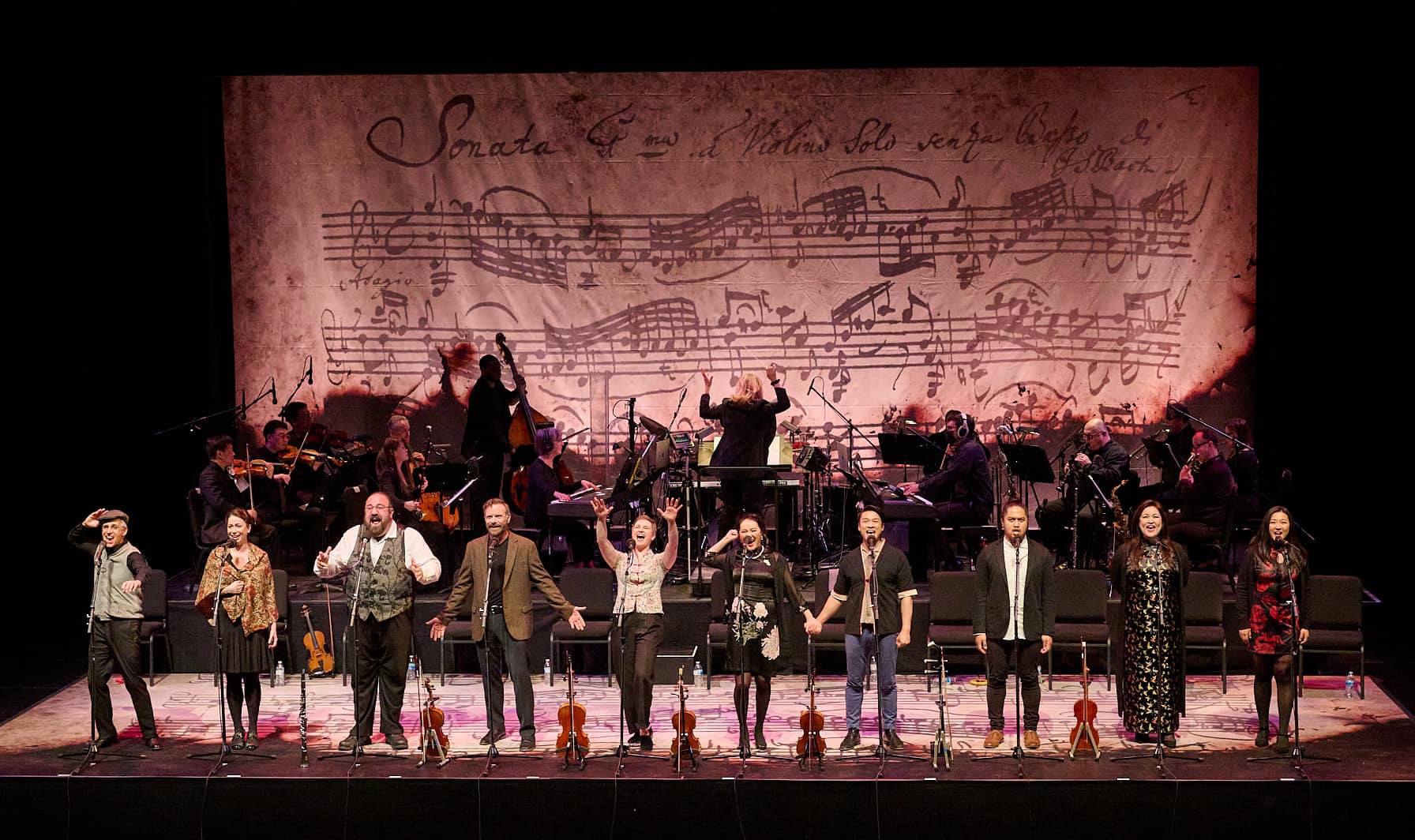
Image Credits
Shanghai Sonatas rehearsal photo: Chongren Fan, director; Alan Goodson, book writer; Joyce Hill Stoner, lyricist; Xiang Gao, composer.
Shanghai Sonatas performance photo: Neal Mayer, Stephanie Lynne Mason, Adam B. Shapiro, Drew McVety, Juliet Petrus, Xiaoqing Zhang, Ethan Le Phong, Julian Remulla, Caítlín
Burke, Sara LaFlamme / Rob Latour/Shutterstock.
Popular
-

Que Johnson on Building Brands That Last: From Visibility to True Market Authority
-

Christina Wren Steps Into the Director’s Chair to Tell Stories That Feel Like Home
-

Portraits of the Valley
-

LA’s Most Inspiring Stories
-
JordanL on ‘Breathe,’ Belief, and Building a Movement Beyond the Music
-
Megan Birney Rudert on How Access to Light Is Powering a More Sustainable and Equitable Future


