



Today we’d like to introduce you to Grant Tyler.
Hi Grant, thanks for sharing your story with us. To start, maybe you can tell our readers some of your backstory.
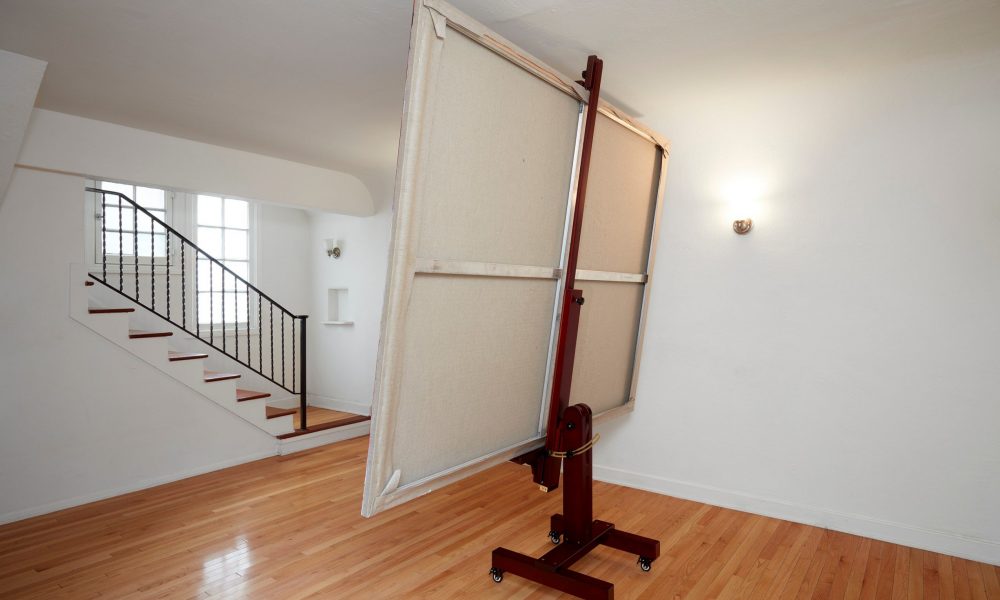
Imperial Gallery is run by myself and Robert DeMangus in Beachwood Canyon. Robert and I have a personal history that goes back a decade. We began the gallery together in December of 2022. Robert is a recent graduate of the MFA program at CalArts. He sees his curatorial role as a line of inquiry parallel to his artistic interests in image-making and image ecologies. I am a writer, previously serving as web editor at Caesura Magazine. For Robert, the desire to open a gallery was driven by the opportunity to approach his practice from the perspective of the curator rather than that of the artist. I recognized during art school that I’m not much of an artist myself and began to cultivate a writing practice. My core motivation since that time has been providing artists with feedback in the studio to help develop their work over time. While there is theoretical room for that in my capacity as a critic, there is unique practical potential when I approach artists’ studios as a curator.
Would you say it’s been a smooth road, and if not what are some of the biggest challenges you’ve faced along the way?
So far, the experience has been very smooth. Operating out of a home lightens the overhead pressure of a typical gallery, which enables us to be freer in curation. There is practically nothing to lose running a gallery in this way. It really allows us to learn what we want to curate in the gallery. Like in anything else, there is an inevitable gap between the ideal show or program and what’s possible, given the circumstances. Even just seven months into operating, I feel we’ve developed some capacity to narrow or navigate that gap.
Thanks for sharing that. So, maybe next you can tell us a bit more about your work?
Imperial Gallery is a small and young art gallery operated out of our Beachwood apartment. We are such a new operation it’d be dishonest to claim that we have a specialty we are known for. We recognize that the quality of a work of art primarily exists aesthetically, not intellectually. We don’t privilege any particular school of thought regarding the purpose or function of art so long as the work retains its aesthetic persuasiveness.
We all have a different way of looking at and defining success. How do you define success?
The ultimate goal is to create a practical system by which the artists we work with can learn to become better artists. Success would mean that we could provide the resources and feedback necessary for artists to achieve the full potential of their work. For artists to get better, they need to spend a lot of time making art. To be able to spend that kind of necessary time making art, it’s important to be able to sell art. I think there’s often some naivité about that point, but it’s true. With that in mind, there is a real practical necessity for a gallery to be able to sell art that should not go ignored, even in the context of a humble operation like our own. But those material resources need to be met with a steadfast critical commitment by the gallery. The gallery should not only support the artist financially but adequately coach them on their work. You need both parts for a gallery to be able to help its artists achieve their best work.
Contact Info:
- Website: imperial.gallery
- Instagram: https://www.instagram.com/grantedwardtyler/ & https://www.instagram.com/robertdemangus/


Image Credits
Artwork by Ivan Ríos-Fetchko. Photo by Johann Mun. Works by (left to right) Ezra Miller, Parker Ito, and AJ Kahn. Artworks by P. Koo Ito. Photo by Evan Walsh. Artwork by P. Koo Ito. Photo by Evan Walsh. Artworks by Johann Mun. Artworks by Johann Mun. Artwork by Ivan Ríos-Fetchko. Photo by Johann Mun
Popular
-

A New Chapter in Orange County: Paul Madahan Elevates the PaulDavid Salon Experience
-

Portraits of the Valley
-

LA’s Most Inspiring Stories
-
Inside the Future of Search: Robb Fahrion on Building a Global Team and Leading the Rise of GEO
-

From Supporting Local Boutiques to Building Brand Partnerships: Cinthia Jensen’s Creative Marketing Journey
-

Building Community Through Curiosity: Nathanial and Samantha Rowe on the Vision Behind UNEARTHED


