



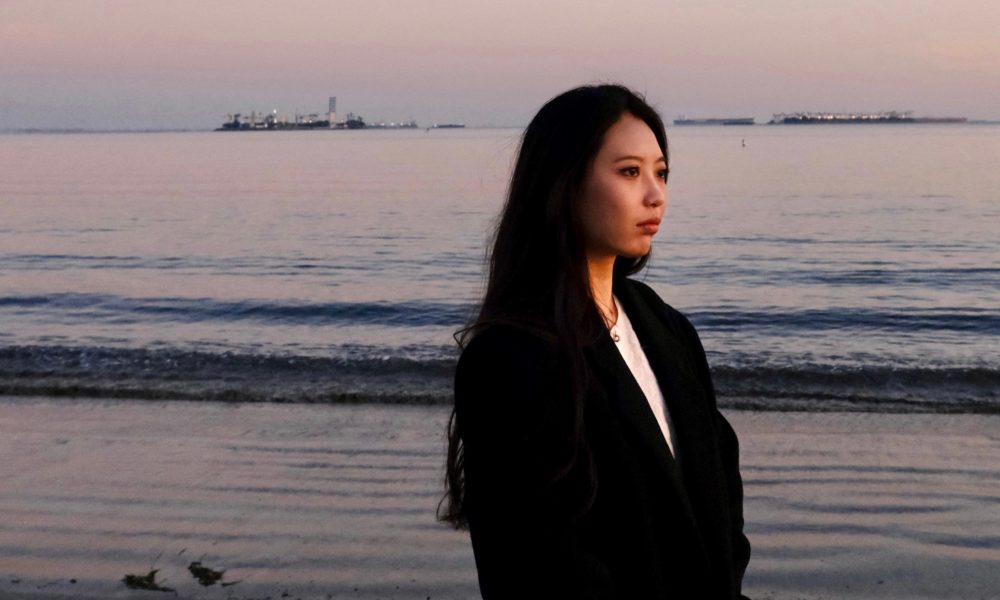
Today we’d like to introduce you to Yu Sun.
Hi Yu, so excited to have you on the platform. So before we get into questions about your work-life, maybe you can bring our readers up to speed on your story and how you got to where you are today?
I decided to become a filmmaker because of my passion for storytelling. I had limited communication with my parents due to their busy work. This led me to pour my emotions into writing. As a child, I was obsessed with novel writing. I loved creating stories about an idealized life, almost as if the characters were who I wanted to be. I wrote stories across various genres, such as adventure, family, and romance. Reading my own work provided a release for my repressed emotions. Also, I enjoyed reading novels to find thoughts that resonated with me. Over time, I became curious about how these written words would translate into visual imagery.
I tried to learn the basics of filmmaking during my collage. I interned at China Central Television in the documentary section, marking my first foray into the media industry. Even though it differed from cinema, I was amazed by how a narrative could be conveyed to viewers in a limited timeframe, which introducing me to the magic of editing. Years later, I filmed my own story. I almost translated my experiences into the script. As a director, I had a clear vision of the completed film with the precise shot sequences. However, my technical skills were limited at the time, so I decided to work with an editor. I believed that the deep emotions I put into the story would lead to the outcome I expected. However, the result was disappointing. When I showed the film to my friends, they even misinterpreted the emotions I was trying to convey. This experience made me reflect on whether I had been too focused on the story itself but ignored the wise use of editing.
I came to AFI in the editing discipline for an in-depth study. I learned about the professional workflows of editors and picked up some good editing habits here. I also learned various editing perspectives from other people’s work. During my first year, I edited three short films, absorbing creative ideas from different directors I worked with and improving my collaborative skills. The experience at AFI was incredibly valuable to me.
Alright, so let’s dig a little deeper into the story – has it been an easy path overall and if not, what were the challenges you’ve had to overcome?
I don’t think it was smooth. My parents were initially unsupportive of my decision in filmmaking, especially given the industry’s downturn during the pandemic, which made us reconsider the future economic viability of this profession. In China, the film industry is heavily restricted by content policies, limiting the freedom of filmmakers to create freely. As a result, during my undergraduate years, I wasn’t fully committed to this field and constantly torn between my dreams and reality.
After joining AFI, I witnessed the achievements and abilities of my peers, which made me feel quite unconfident, given my own lack of experience. I also faced challenges in communicating creative disagreements with directors when collaborating. However, through multiple collaborations, I learned to open my mind and constantly reflect on myself. I believe that there’s always a middle ground in every situation, and it’s important to find a consensus of ideas rather than perceiving our subjective views as absolute truths.
Appreciate you sharing that. What else should we know about what you do?
I am currently a film editor based in Los Angeles. In my creative career, I have edited films across various genres, including family drama, fantasy comedy, social realism, romance, and documentary, and I am passionate about creating different tones. This experience has honed my flexible, creative thinking, which is also reflected in my collaborative communication. I can easily understand different creative perspectives and provide directors with helpful solutions. As an editor, I focus on the emotions that the story conveys to the audience, which guides my editing style and rhythm control. I believe I have a strong sense of empathy, making me particularly sensitive to scenes with intense emotional performances by actors.
For my personal taste, I like films that explore social realities presented in a dramatized form. Based on my own experiences, I feel a deep connection to and have much to express about stories in themes of family and education. A project that I’m particularly proud of named “Hide and Seek,” a film for which I worked as director, screenwriter, producer, and editor. It tells the story of a toxic relationship between two girls from different social classes. They like each other, but the disparity in their social backgrounds leads to the friendship’s breakdown. I believe that the most impactful emotions in a narrative aren’t those imposed by the writer but are the result of natural occurrences guided by character setup in a social context. Therefore, in both filming and editing, I emphasized the ending, using appropriate music to give the story its punchline.
Let’s talk about our city – what do you love? What do you not love?
I love the sunny vibe in LA, enjoying the beach and palm trees, but dislike the traffic jams around 5pm.
Contact Info:
- Instagram: https://www.instagram.com/kojunkim/
- Youtube: https://www.youtube.com/channel/UCQ_wFKjz_lJefjiZAyzbDnQ


 Image Credits
Christine Chen, Lu li, Oanh-Nhi Nguyen
Popular
-

A New Chapter in Orange County: Paul Madahan Elevates the PaulDavid Salon Experience
-

Portraits of the Valley
-

LA’s Most Inspiring Stories
-
Inside the Future of Search: Robb Fahrion on Building a Global Team and Leading the Rise of GEO
-

From Supporting Local Boutiques to Building Brand Partnerships: Cinthia Jensen’s Creative Marketing Journey
-
Building Community Through Curiosity: Nathanial and Samantha Rowe on the Vision Behind UNEARTHED


