





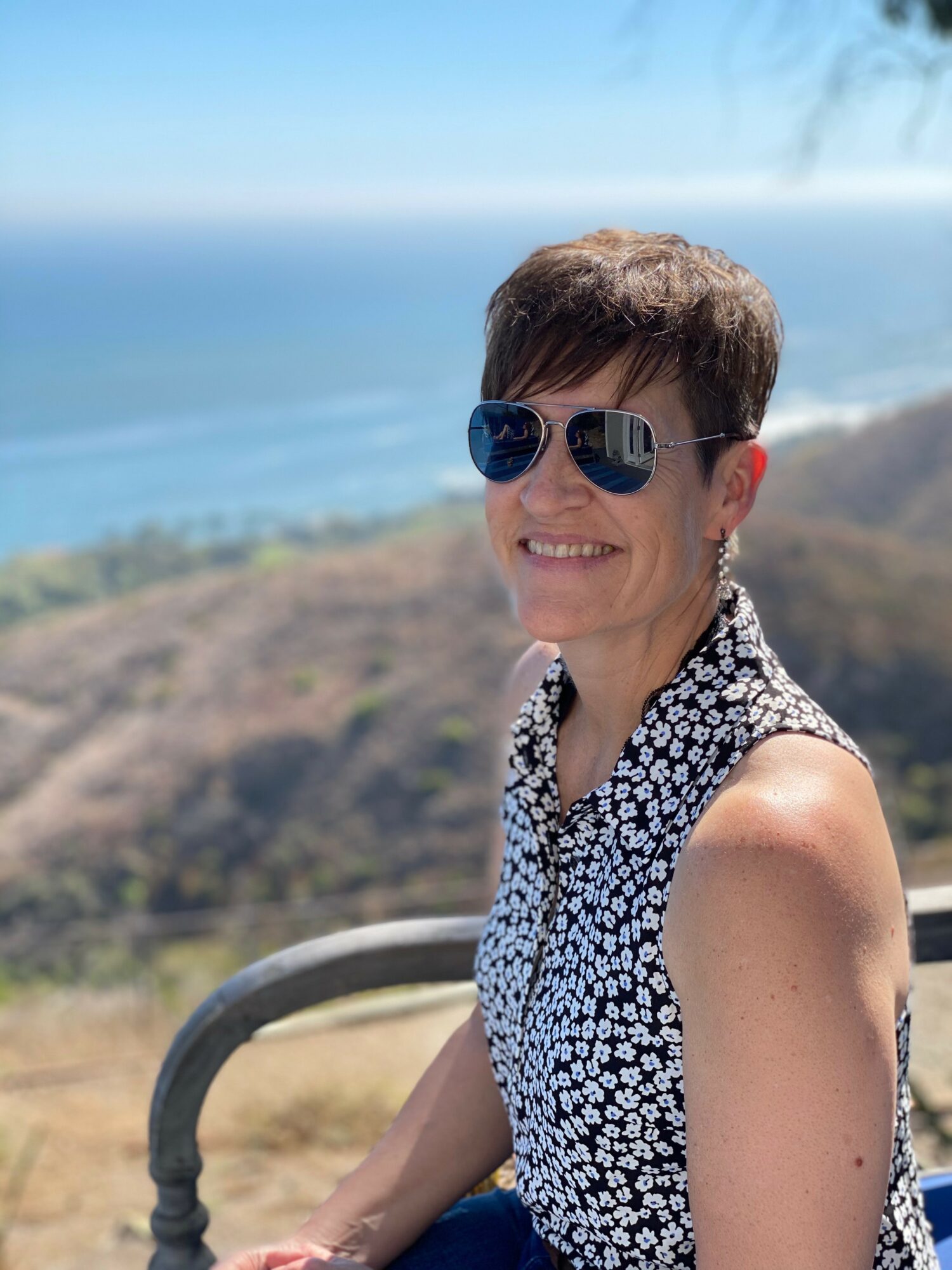
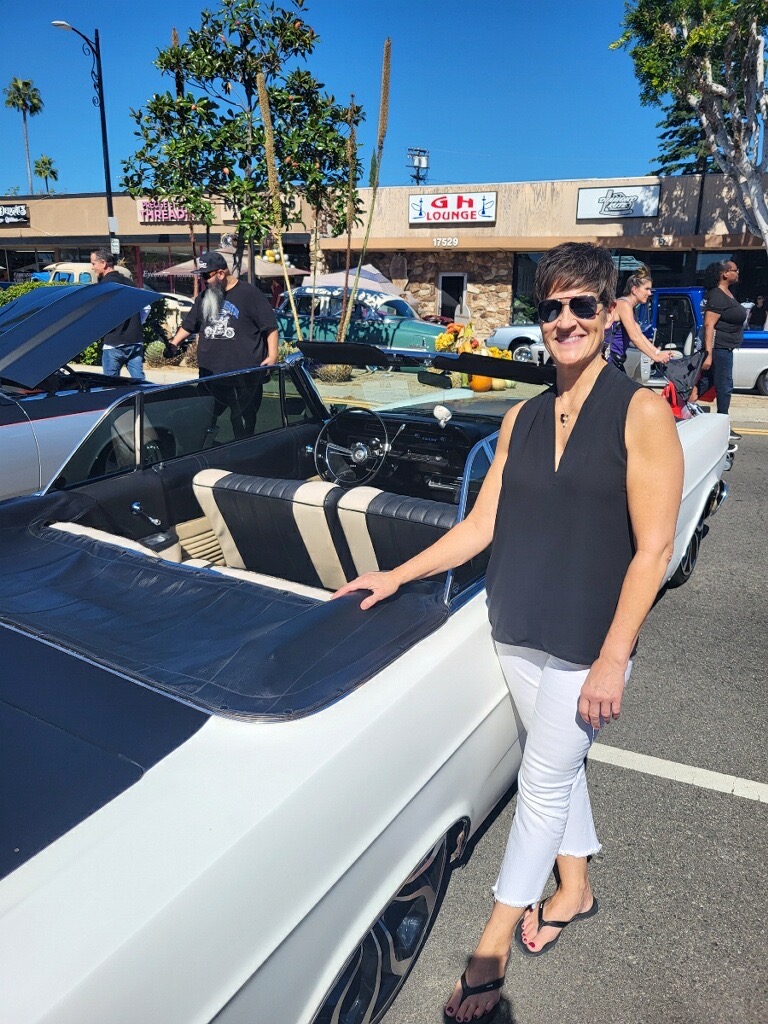
Today we’d like to introduce you to Michelle Runge.
Hi Michelle, please kick things off for us with an introduction to yourself and your story.
You know, if someone had told me a year or so ago that getting rejected by my former employer would be the best thing that ever happened to my career, I would have thought they were crazy. But that’s exactly how my journey into AI consulting began.
My background is deeply rooted in sales, customer success, and revenue growth. I spent years helping SaaS companies scale, leading teams that achieved a 99.7% renewal rate, driving $19.2M in revenue, and building customer-centric cultures that consistently exceeded targets. I was the person who thrived on making customers genuinely successful, not just selling to them. I helped grow another SaaS company from $6M to over $30M in revenue. I thought I had the golden resume – proven track record, strong relationships, strong people-focused leadership, and measurable results.
Then February 2024 happened. I was laid off from my position as an Account Manager at a criminal appeals law firm. Now, historically, it never took me more than 90 days to land a new role, so I was actually excited about the opportunity to move back into the tech and SaaS world where my heart really belonged.
But four months into what I thought would be a straightforward job search, I’d only had interviews with two companies, including one where I’d previously worked and had great relationships. Both ended in rejection, but that second one really hit me hard. Here I was, someone who had consistently delivered results, being told “no thank you” by people who knew of my work firsthand.
That’s when the reality check hit: my background and experience weren’t holding the same value they had pre-pandemic. The job market had fundamentally shifted, and I was competing against hundreds of other qualified candidates for every position.
It was during this frustrating period that I discovered JobScan, an AI tool designed to help job seekers navigate Applicant Tracking Systems. As I learned how to optimize my resume for these automated systems, something clicked. I was seeing firsthand how AI was making businesses more efficient – every job posting was getting 250 to 800+ applications, and companies were using AI to filter through them.
Then, almost like the universe was sending me a sign, I received an email about a CPD-accredited AI Consultant Certification program that was just launching. Instead of continuing to bang my head against the wall trying to fit into the old paradigm, I decided it was time to pivot entirely. This wasn’t the first time I’ve pivoted in my career, but it turned out to be one of the best pivots I’ve ever made.
I threw myself into that certification program with the same intensity I’d brought to scaling customer success teams. Within 90 days, I transitioned from someone struggling to find relevance in the traditional job market to a certified AI consultant launching my own practice, AI Edge Consulting.
The irony is beautiful – all that experience I thought was becoming obsolete? It’s actually become my biggest competitive advantage as an AI consultant. I’ve lived and worked all over the US, Europe, and Asia for small start-ups and for large $100M+ businesses. This multicultural experience, combined with understanding customer success and how to scale teams, gives me insights that pure tech consultants often miss. I know how to implement AI in ways that enhance human capabilities rather than replace them, because I’ve lived through managing the people side of business transformation.
Within just a few months of starting my practice, I was invited to speak at AI Summits, and organizations like Singapore Airlines and the U.S. Department of Veterans Affairs (OSDBU) have trusted me to train their teams. What I’ve discovered is that businesses need someone who understands how to make the technology work within existing team dynamics and business processes.
Today, I help companies build what I call the “Human-AI Alliance” – a strategic AI implementation that amplifies human capabilities rather than replacing them. It’s about enhancement, not elimination. And ironically, that painful job search rejection taught me the most valuable lesson of all: sometimes the path forward isn’t about fitting into existing opportunities, but about creating entirely new ones.
Can you talk to us a bit about the challenges and lessons you’ve learned along the way. Looking back would you say it’s been easy or smooth in retrospect?
That job search rejection period was about finding work, at least, on the surface, but I quickly realized it also led me to start questioning everything I thought I knew about my professional value. When your former employer, people who knew your track record, tell you “thanks, but no thanks,” it really makes you wonder if you’ve been fooling yourself about your capabilities.
But the pivot to AI consulting brought its own unique set of challenges. The biggest one? Imposter syndrome of a completely different kind. I wasn’t doubting my business experience – I was questioning whether I truly understood AI tools and workflows well enough to help businesses succeed with AI integrations.
Here I was, competing with programmers and academics who could explain every technical acronym you could imagine. However, what I realized, thanks to the incredible mentorship of Alicia and Lorette Lyttle, the founders of my AI certification program, is that most businesses don’t need to understand the technical details. They need someone who can translate AI capabilities into practical, everyday business solutions.
The real impostor syndrome kicked in because I was literally doing things I’d never done before – creating custom AI workflows, implementing solutions I was learning about in real-time, and depending on AI itself to help me tailor solutions for each unique business. Every client engagement felt like I was figuring it out as I went, even though that’s exactly what made my approach so effective.
What I discovered was that the credibility gap worked in a way that was opposite to what I expected. Clients weren’t skeptical of my business background – they were hungry for someone who could speak their language. The Cargo Manager at Singapore Airlines told me she learned more from my 30-minute session and that of her former client from Cisco, who also presented to her team, than from any other AI speaker the company had brought in, precisely because we focused on practical applications rather than technical theory.
But that realization came with its own pressure: I was succeeding by doing something completely different from the more well-known AI consultants, which meant I was constantly in uncharted territory, building the plane while flying it. But when I got to thinking about it, everyone goes through these moments at some time in their life. If you embrace the challenge, that is when true growth begins.
Then there was the learning curve. AI is evolving so rapidly that what you learned three months ago might be outdated today. How I trained on ChatGPT two months ago is different from how I train today because of all the new features and capabilities that are continually being added to the platform. Now multiply that by every major AI tool out there. Lol. I had to develop a system for staying current with new tools, platforms, and best practices while simultaneously building a client base and establishing myself as a thought leader. Some nights, I felt like I was drinking from a fire hose while trying to teach others how to use a garden sprinkler.
Financial pressure was another reality check. Going from a steady paycheck to entrepreneurship is terrifying, especially when you’re learning an entirely new field. Those first few months, I was reinvesting everything back into certifications, tools, and training. I also wrote a book and then expanded it into an online course, which I just recently launched. I had to get comfortable with the uncertainty of not knowing when the next client would come or how much revenue I’d generate month to month.
And let’s talk about the people side of challenges – this became the most critical and emotionally demanding part of my work. What I do involves AI implementation, of course, but it’s often change management at its core. When you’re helping businesses implement AI, you’re often dealing with teams who are genuinely terrified they’re going to lose their jobs.
Learning how to navigate those conversations, build trust, and show people that AI can enhance their roles rather than eliminate them – that’s been both heartbreaking and incredibly rewarding. People have to see and understand how AI can benefit them personally when their biggest fear is that it will replace them. It requires a completely different skill set than technical implementation – you need psychology, empathy, and the ability to help people reimagine their value in an AI-enhanced workplace. Nothing gives me greater joy than seeing the lightbulbs go off for people I train.
But here’s what I’ve learned through all of this: every obstacle has taught me something that makes me better at what I do now. The road definitely hasn’t been smooth, but I wouldn’t change it. The challenges have made me a stronger entrepreneur and a more effective consultant.
Thanks – so what else should our readers know about AI Edge Consulting LLC?
AI Edge Consulting is my way of helping businesses navigate what I believe is the most significant workplace transformation of our lifetime—and doing it without losing their humanity in the process.
Here’s the thing that drives everything I do: I keep seeing companies make the same expensive mistake over and over again. They hear “AI” and immediately think “replacement” – how can we cut costs, eliminate positions, automate everything? Then they wonder why their AI implementations fail spectacularly, and they scramble to rehire the people they have just laid off.
I take a completely different approach. Instead of asking “What can we replace?” I ask “How can we amplify human capabilities?” It’s what I call the Human-AI Alliance, and it’s built on a simple premise: the magic doesn’t happen when you replace humans with AI, it happens when you combine human creativity with AI capability.
Think of it like having the world’s most capable sous chef. You’re still the chef – you create the vision, set the standards, make the strategic decisions. But now you have this incredibly skilled assistant handling all the prep work, following your recipes perfectly, and freeing you up to focus on what only you can do.
I’ve seen this approach transform businesses in ways that still give me chills. I can tell you about a publishing company where an employee, let’s call her Sarah, was spending 35 hours a week just creating author bios and book descriptions. She was drowning in email chains, revisions, and frustration. Instead of replacing her, the company chose to enhance her process with AI. The result? She went from 35 hours to 3 hours per week while actually improving quality. And Sarah became more valuable, focusing on strategic author relationships instead of administrative chaos.
That’s what gets me excited about this work. Don’t get me wrong, the technology is phenomenal. For me, it’s about the moment when someone realizes that AI isn’t their enemy, but rather their secret weapon.
My approach is practical above all else. I don’t overwhelm people with technical jargon they don’t need. Most businesses don’t care about LLMs or RAG or any of the acronyms. They want to know: “Will this help me get my time back? Will this make my team more successful? Will this grow my business?”
The answer is yes, but only if you implement it strategically.
I work with everyone from solopreneurs to global enterprises because they want someone who understands both the technology and the human side of business transformation. Organizations like Singapore Airlines and the U.S. Department of Veterans Affairs have trusted me to train their teams because I focus on making AI accessible and immediately actionable.
What sets me apart is that I’ve lived the business challenges my clients face. I’ve managed teams, exceeded revenue targets, dealt with demanding customers, and navigated corporate politics. When I help a business implement AI, I think beyond the technology and consider how it affects team dynamics, customer experience, and the bottom line.
I’ve trained over 500 professionals, and 99% rate the sessions as “highly valuable.” But the metric I’m most proud of? The lightbulb moments. Nothing gives me greater joy than watching someone go from being terrified of AI to realizing it can make them more effective at what they already do well.
Today, I spend my time speaking at conferences, training teams, and working one-on-one with businesses to build what I call their Custom AI Toolkit. I’ve written a book called “The Human-AI Alliance” and created the Human-AI Business Acceleration Blueprint course because I believe every business deserves to thrive in this AI-enhanced world, not just survive it.
The future I want to help create is one where humans and AI work together to create extraordinary results. As far as I’m concerned, that future is already here for the businesses savvy enough to embrace it.
Can you talk to us a bit about the role of luck?
I’m one of those people who believe everything happens for a reason and that timing is meant to be. So when people ask about luck, I tell them that what looked like terrible luck was actually the universe redirecting me toward my purpose.
Getting laid off from the law firm in February 2024? At the time, it felt like awful timing and a major setback. However, that “bad luck” forced me into a job search that would completely change the trajectory of my life.
Then came what seemed like even worse luck. All those early rejections were tough, but they pushed me to discover AI tools like JobScan. But getting rejected by a company where I had strong relationships and a proven track record was crushing at the time. That said, if I had landed one of those traditional roles, I never would have experienced firsthand how AI could transform business processes.
The “luckiest” moment? That email about the AI certification program arrived right when I was questioning everything about my professional value. Some people might call that coincidence, but I call it perfect timing. I was finally ready to listen to what the universe was trying to tell me.
But here’s the thing about luck – it only works if you’re prepared to act on it. My 25+ years of international business experience, from managing teams in London and Hong Kong to scaling SaaS companies from $6M to over $100M, wasn’t random. It was preparation. When AI consulting emerged as this new field, I realized I had been unknowingly building the exact skill set it required – understanding diverse business cultures, managing change, translating complex concepts into practical solutions, and helping teams adapt to new technologies.
What appeared to be “bad luck” – the layoff, the rejections, the career uncertainty – was actually clearing the path for me to discover work that feels more aligned with my purpose than anything I’ve ever done. I get to help businesses navigate transformation while preserving their humanity. I get to show people that AI isn’t their enemy but their secret weapon for success.
The real luck isn’t in what happened to me – it’s in recognizing that sometimes the universe has to close doors to get you to walk through the right one. Those rejections didn’t happen because I wasn’t good enough for those companies. They happened because I was meant for something bigger.
Now, when I talk to entrepreneurs who are facing what feels like terrible luck, I tell them to pay attention. Sometimes your biggest setbacks are just setups for your greatest comebacks. That might sound a bit cliché, but it sums things up pretty well. The key is staying open to possibilities you never considered and being brave enough to pivot when life presents you with the opportunity.
Looking back, I wouldn’t change a single “unlucky” moment. Every rejection, every closed door, every moment of uncertainty led me to exactly where I’m supposed to be. I think that’s the most beautiful kind of luck there is.
Contact Info:
- Website: https://aiedgeconsult.com/
- LinkedIn: https://www.linkedin.com/in/michelle-runge/
Popular
-

LA’s Most Inspiring Stories
-

Maagic Collins on Building a Fearless Publishing Platform for Truth, Advocacy, and Underrepresented Voices
-

Los Angeles Barea on Turning Green Superheroes into a Global Movement for Youth-Led Change
-

Trisha DuVivier on Bridging the Franchisor–Franchisee Divide with Workhero and “Franulate”
-

Portraits of the Valley
-
Cedar Boschan on Elevating Black Music Rights and Driving Urgent Conversations Around Credit, Equity, and Artist Protection


