


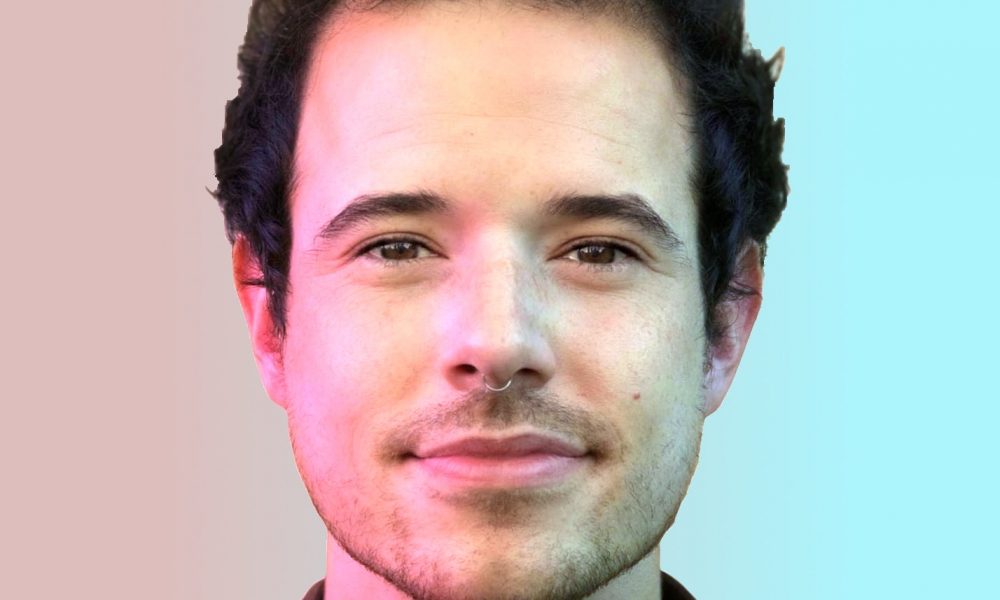
Today we’d like to introduce you to David Turner.
Alright, so thank you so much for sharing your story and insight with our readers. To kick things off, can you tell us a bit about how you got started?
Draftivist started in Summer 2020, during a time where many of us were looking for ways to sustainably support causes that mattered to us most. In between structured advocacy events around LA, like protests and mutual aid drives, I was looking for other ways to meaningfully engage with issues on my own time — especially ways that could leverage my specific skill set.
I kept seeing these “copy-and-paste” email templates pop up on my Instagram and Twitter feeds where someone would write 10 detailed paragraphs about an issue, and all you had to do was sign your name and hit send. The idea was to overwhelm a politician’s inbox and to amplify your voice with a button press.
Having a background as a writer, designer, and environmental lobbyist, I thought that creating email templates like these could be a pretty perfect pet project!
We all face challenges, but looking back would you describe it as a relatively smooth road?
Of course not! Few things worth doing are.
We had to completely rethink the concept from scratch a few times along the way (which can consecutively get kind of deflating). Also, with everyone involved gracefully volunteering their time and talents, naturally life and obligations will sometimes get in the way and slow things down.
On a personal level, this is just totally different from any kind of project I’ve worked on before. Most of the time, I sign on for something that I’ll obsess for 2 weeks and then never think about again. Pushing this project and leading this team has required a lot more considered, consistent dedication for over a full year now.
It’s a completely different relationship with a project, and one that’s kind of required a completely different rewiring of my brain and serotonin centers. That said, I’ve learned so much while building Draftivist, and it’s been so uniquely rewarding because of it.
Appreciate you sharing that. What else should we know about what you do?
What am I known for? Depends who you ask!
Professionally on the east coast? Maybe working the Obama administration’s Clean Car Bill (which got passed! Then cut by the Trump administration…)
Professionally on the west coast? Maybe working with Snapchat to build out campaigns to politically mobilize its Gen Z community (leading to over 600,000 new registered voters).
Around LA? Maybe throwing a chaotic backyard variety show for a few years called Come/union, which starred some amazing comedians, incredible musicians, masochistic magicians, and a surprise live opossum or two.
At my elementary school? Probably sobbing onstage while playing saxophone during the winter recital. (I was nervous about my solo, okay?!)
Contact Info:
- Email: [email protected]
- Website: draftivist.com
- Instagram: https://www.instagram.com/draftivist/

As I started looking more deeply at them, though, I discovered a bunch of issues with this approach. After doing some research and talking with folks who work in political offices, some big problems really stood out: Many of these emails are never even read by politicians or their offices, because they’re automatically filtered out for having the exact same text over and over — or because they’re all coming from the same sender. Many of these emails are sent to the wrong people. A lot of them are targeted to people who are too “high up” and who don’t take them very seriously, like governors and congresspeople who historically aren’t swayed by constituents’ emails. Many people who *send* these emails don’t even read them before they send them. Because they’re so easy to copy-and-paste, people will just click without engaging with the message they’re putting out there, so they aren’t very effective for mobilizing a community. I was wondering if there was a way to make something that could solve these issues. Something that could shake up language between emails so they could get past politicians’ inbox filters. Something that would focus on local politics, where individual outreach can make the biggest impact. Something that engages everyday people with the message they’re sending. But also something that’s quick and easy. Something that made advocacy a little less intimidating. The idea was pretty lofty. Maybe too lofty. I concepted and scrapped 3-4 designs, worried that I may be trying to do too much with one tool. However, while stress-unpacking after a recent move, inspiration struck from an old Goosebumps “Choose Your Own Adventure” book (#19: Escape from Camp Run-For-Your-Life, for all you Stine-heads).

Keith Newman, Backend Engineer (Los Angeles, CA) Nikole Gramm, UX & Visual Designer (Seattle, WA) Alex Cope, Frontend Developer (Los Angeles, CA) Monica Barboza, Frontend Developer (Chicago, IL) Zachary Schulte, User Research Lead (Houston, TX) Oh! And I’m David Clifford Turner, Product Designer (Los Angeles, CA) Over the last year, we’ve been developing this tool during our free time and testing it with dozens of users across our communities. After several iterations, we’re getting ready to launch our beta build, and are looking for a local LA advocacy group to partner with to help build the future of progressive online outreach. Here’s an idea of what our prototype looks like (with a little sample campaign to defund a group of supervillains — wonder what all that’s about?)

I flipped through it, remembering how much I loved them: they were so quick and fun to read, and some key moments stuck with me so strongly because I remembered the decisions that I made along the way. And then it all kind of clicked. I started working on a design — a model that I called “Choose Your Own Advocacy” (admittedly, a mouthful) based off the way those books worked, with branching pathways that told a different story every time (or, in this case, wrote a different email every time). I realized that you could create something like this with a social issue, so one email campaign could create tens of thousands of unique emails!
Popular
-

Finding Balance Through Art: Theresa Croft on Blending Music, Wellness, and Visual Storytelling into a Holistic Creative Identity
-

From Street Corners to City Tours: Chef Chuck Glaster on Building SOULD Out Into a Culture-Driven Culinary Movement
-

Portraits of the Valley
-

LA’s Most Inspiring Stories
-

From Rock Bottom to Calling: How Hasani McLean-Davis Found Purpose Through Faith and Music
-

Building a Scalable, Soulful Travel Brand: How Abboud Khallouf Turned Morocco Into a Global Experience