




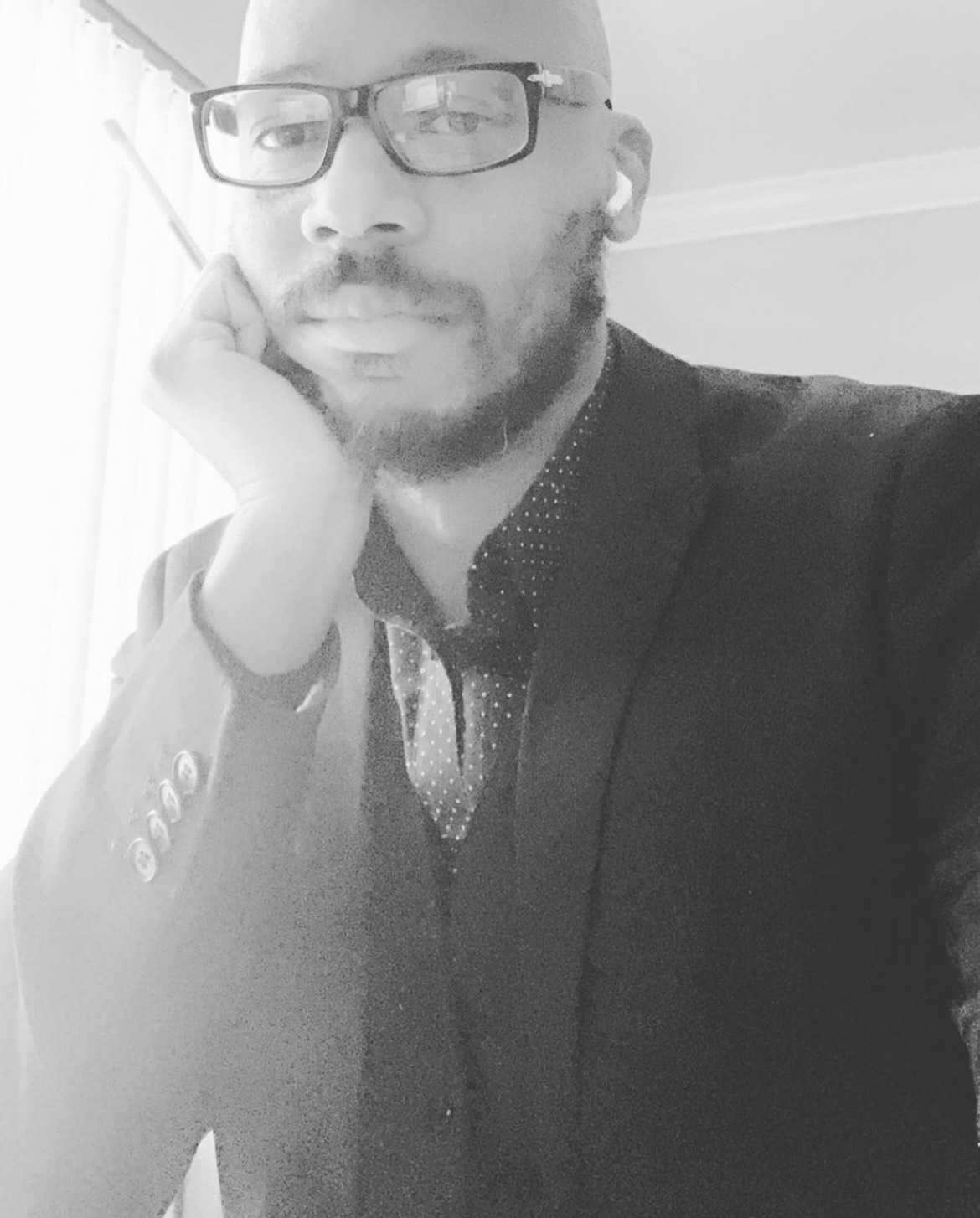
Today we’d like to introduce you to Chavonny Tillotson.
Hi Chavonny, can you start by introducing yourself? We’d love to learn more about how you got to where you are today?
I think the biggest thing that interests me in storytelling is the fact that I am so deeply impacted by my own inescapable, internal conflict. It’s probably the most exhausting thing about being me. For instance, I have this weird internal conflict with myself where I want to identify as both a Southerner and a MidWesterner. But I never know which one to lead with because whatever you lead with is the thing you prefer, right?. I have major critiques of both regions, if I’m being honest. But I do have a slightly stronger fondness for the South.
I was only 2 years old when my parents moved me down to Jacksonville, North Carolina from East Chicago, Indiana. I had a southern accent for a while, and used words like “soda pop.” I learned to read and write and ride a bike in that small military town where my father was a marine. I was the only black child that I knew. And I knew I was different, but- for me- different didn’t equate to “something’s wrong” back then.
The first time I equated being different to “something’s wrong” was after my fully self-expressed, 4-year old self, without consent, kissed my Kindergarten-crush. His name was Jeremy. Picture me wearing sandy brown sandals with white socks. It was the 80’s. We’re sitting next to one another in class, our desks side by side. The teacher has her back to us, writing something on the chalkboard. And with stealth precision, I lean in, and kiss him on the cheek. And he gives me this look of shock and disgust, and wipes his cheek off with his hand. And then goes back to ignoring me like it never happened.
Now, I’m super conflicted. Part of me wanting to try again; part of me wanting to pretend like it never happened. But I’ve already been seen by the other kids. And I spend the rest of my childhood making myself as small and as invisible as possible.
After that, self-expression was only for people on television. I remember watching daytime soap operas with my mother as a kid and wanting Erica Kane’s life. I loved Saturday morning cartoons as well, but drama was everything. Fast forward to middle school, and I can still remember the first time I saw Wilson Cruz playing Enrique “Rickie” Vasquez in My So-Called Life. I was stunned that this person was even allowed to exist. A gay teen who wore mascara, and hung out in the girls bathroom. And he was a person of color! I was instantly obsessed with the show, and completely wrapped up in the lives of those characters. I wanted to be them. At the same time, I had completely bought into the idea that everyone else was so much more interesting than I was. I loved seeing the world through the eyes of another. But at the same time, it gave me a nice little inferiority complex to manage. The more I lost myself in other people’s stories, the less interesting I found my own.
So when my Creative Writing professor in college told me that in order to write compelling stories about interesting characters, I needed to be interesting myself, I almost dropped the class. For a while, I thought I would tell compelling stories about real people as opposed to fictional ones. As an intern for the local ABC 7 affiliate in San Francisco, I worked in public affairs, producing segments for their local news magazine show. Myself and a camera crew would go all over the Bay Area, bringing awareness to regular people doing remarkable things like, for example, starting a nonprofit to raise money for disenfranchised youth to take free ballet classes. Eventually, I started producing entire shows, and I really enjoyed it. I even started feeling like I was actually worthy. In addition to my studies, I was making a name for myself in local news, all under the age of 21. But it wasn’t my absolute passion. My internal conflict was in full effect once again as I was still called forth by creative writing. So I gave up any career opportunities in the San Francisco local news business, and moved to Los Angeles after college.
My first series of jobs in Los Angeles included working as a CBS Page, interning for a small production company, and working in women’s shoes at Nordstroms. How I managed to do all three of those things at once is beyond me. The small production company was my favorite, though, because I got to read lots of scripts, and that’s when I knew that I had made the right move relocating. I wanted to write my own stories again.
Soon after, I enrolled into UCLA Extension’s TV Writing program, where I studied screenwriting for television. And I think being around so many other extremely talented and extremely insecure writers made me feel more normal. Knowing I wasn’t alone in my self deprecation made said deprecation less significant.
It was in my writing program that I wrote and submitted an episode spec script of Desperate Housewives to several writing fellowships. And I actually made it to the final round of interviews with the people who ran the Warner Bros. Television Writers’ Workshop. I didn’t make it past the final interview process, but that experience was still very powerful because I had to write a bio as a part of the interview process, and it forced me to stop and look at some of the things I had accomplished. And I actually walked away from the experience feeling fairly confident.
After that experience, a close friend of mine suggested that I tap back into some of the work I did in college. And I realized that due to the courses I had taken at UCLA Extension, I now belonged to a community of creatives. So I used the skills I picked up as a news producer in San Francisco, and started tapping into my community at my friend’s urging. And for several years, I interviewed and wrote articles about writers, filmmakers, actors, directors and entrepreneurs for the NoHo Arts District’s online publication. I covered film festivals and press junkets. I worked the red carpets at several awards shows. It was a way for me to highlight some of my peers while also making valuable contacts.
And it was one of those contacts who suggested I try my hand at playwriting seeing as he owned his own theatre. I didn’t want to, which is why I knew I had to. And with more encouragement and support than I probably deserved, I wrote and directed my first play for the Sherry Theatre in North Hollywood. I got such great feedback from those who saw the play that I decided I needed to turn it into a television show. And I was working on writing the pilot until things in American politics changed once again earlier this year. And for the first time- I thought very critically about leaving the United States.
I had always considered living abroad to be a nice fantasy, but nothing more than that. But Covid really opened my eyes to the possibility of relocating when I saw so many of my peers leaving Los Angeles, and moving to cheaper cities while still maintaining their same employment. Working from home took the country by storm for those of us who had the ability to do so. In general, more and more people started waking up to the fact that we as tax paying, working-class citizens deserve so much more given our overall high levels of productivity. Inflation, mass layoffs, income and wealth inequality at levels worse than the Gilded Age combined with the rapid erosion of trust in our institutions is squarely unsustainable. I told myself I needed to pivot once again, and started looking at what it would actually take to leave America and immigrate to France. I chose France because I needed to pick a place, or I’d never take any real action according to the move-abroad experts. And I had met someone from France who really inspired me, so I figured France was as good a place as any. And the more research I did, the more it sounded like the place for me. I even landed a job teaching English as a Foreign Language to Japanese business professionals for an international school based in Tokyo to supplement my income while abroad.
But what happens to my TV writing aspirations if I leave the entertainment capital known as Los Angeles? Well, after doing some soul searching, I discovered that I’m actually not attached to my storytelling journey looking a certain way. As long as I’m telling the stories I want to tell, does it really matter the platform? So my TV pilot became a novel. And I’m incredibly excited and proud for trusting and believing in myself enough to attempt to write a book, which, admittedly I do not know how to do at this current moment. But I’m taking courses, and finishing up my 3rd chapter now.
I’m also planning to go back to school to pursue a graduate degree at a university in Paris. And I just started my Business English coaching program for French & Japanese creative professionals who are looking to crossover into the American film market.
Alright, so let’s dig a little deeper into the story – has it been an easy path overall and if not, what were the challenges you’ve had to overcome?
If I’m being honest, I think the biggest challenges I faced were perceived threats rather than actual threats. Even just being candid and open about my own story on a public platform is a challenge for me. Yes, there were definitely times where I worried about money. But for the most part, my basic needs were always met.
I always struggled with my own internal conflict and limiting beliefs about what was possible. I would tell myself that there’s no way someone like me would ever make it in Hollywood. Yet, I couldn’t walk away. I didn’t want to. I wanted to be like the characters I fell in love with on television. I wanted to be compelling like the filmmakers I interviewed and wrote articles about. I wanted to be interesting too.
And, of course, no one likes rejection. And I was met with tons of rejection, which was and is challenging, but mostly because it supported and reinforced the limiting beliefs I showed up with. Again, I recognize that this was more a perceived threat than a real one.
Also, I’m very much guilty of being a perfectionist as well. I would always write more material than necessary, then agonize over what to cut. Then I would spend way too much time trying to get everything just perfect. I was addicted to taking classes, doing research and pouring over other people’s scripts- all in an effort to avoid actually writing because if it wasn’t perfect, it would be a waste of time anyway.
I think the thing that makes the difference, though, is creating a prosperous future to live into. Not one based on the past and what you did or didn’t do, or what did or didn’t work. But a created future from nothing. And then taking actions consistent with the future you’re envisioning for yourself. For me, it was very challenging to consistently engage in an empowering conversation for my life and for what was possible. I still haven’t mastered this.
Thanks – so what else should our readers know about your work and what you’re currently focused on?
I think the thing I’m most proud of is taking on one thing after another with no evidence that I could do any one of them successfully. At the time, I felt the challenges of writing a play, then a book, then putting together a plan to move to a foreign country to further pursue my education, and now starting a coaching business, I felt it was all so much bigger than me.
But that’s the lie we tell ourselves. Nothing we want to accomplish is bigger than we are. In terms of my play, I had never written that genre before, and I think part of me was okay with it potentially not being good because I could always say that I wasn’t traditionally trained, or it was just a writing exercise. It wouldn’t mean anything about me as a person, or my value. I had unintentionally given myself the freedom and ease to create without having to immediately think about a possible outcome. And this is how I approached everything else that followed.
Now that I’m turning it into a book, I’ve been really diving into the process of world building since my story takes place in a world very similar to our own- with our natural resources dwindling in the face of many different social and political movements on the rise. And I think one of the things that makes me uniquely qualified to write this story is the fact that it’s from the perspective of three individuals who also feel powerless to impact the way their society is evolving, but find their voices in unexpected and consequential ways.
In terms of my Business English coaching program, I’m using my education and training in teaching English as a foreign language, combined with my entertainment background and experience connecting with and interviewing filmmakers to build up the English skills of my students- leaving them empowered to engage with confidence and clarity with American creative professionals.
Do you have recommendations for books, apps, blogs, etc?
Books:
America the Farewell Tour
The Midnight Kingdom: A History of Power, Paranoia, and the Coming Crisis
Technofeudalism: What Killed Capitalism
The Anxious Generation: How the Great Rewiring of Childhood Is Causing an Epidemic of Mental Illness
We The Poisoned: Exposing the Flint Water Crisis Cover-Up and the Poisoning of 100,000 Americans
The Tipping Point: How Little Things Can Make a Big Difference
The Handmaids Tale
Understanding Power
All About Love
Corruptible
The Message
Contact Info:
Popular
-
Inside the Future of Search: Robb Fahrion on Building a Global Team and Leading the Rise of GEO
-

From Supporting Local Boutiques to Building Brand Partnerships: Cinthia Jensen’s Creative Marketing Journey
-
Building Community Through Curiosity: Nathanial and Samantha Rowe on the Vision Behind UNEARTHED
-

Portraits of the Valley
-

LA’s Most Inspiring Stories
-
Building Creative Bridges: Torrey Tayenaka on Community, Collaboration, and the Future of Sparkhouse


