




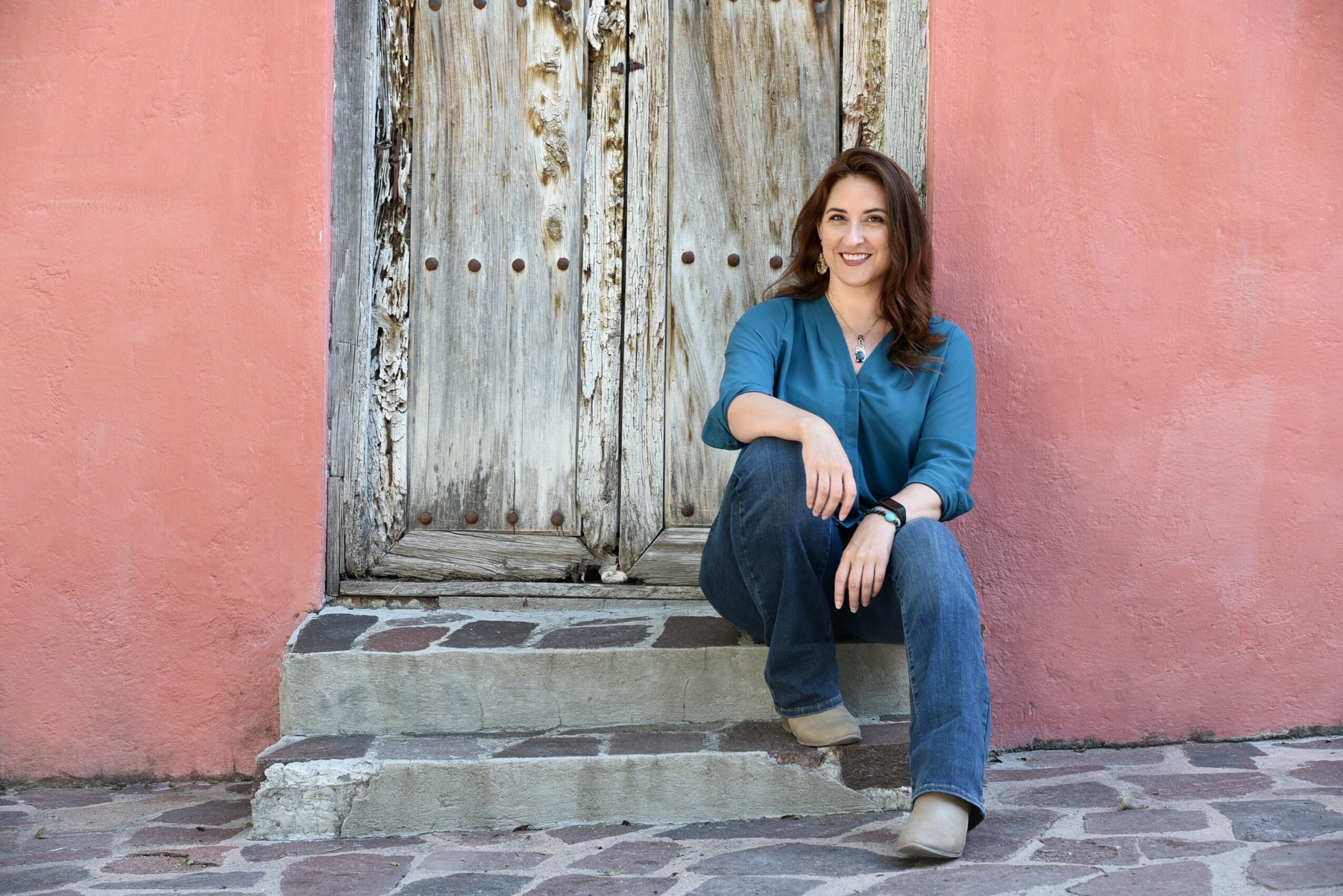
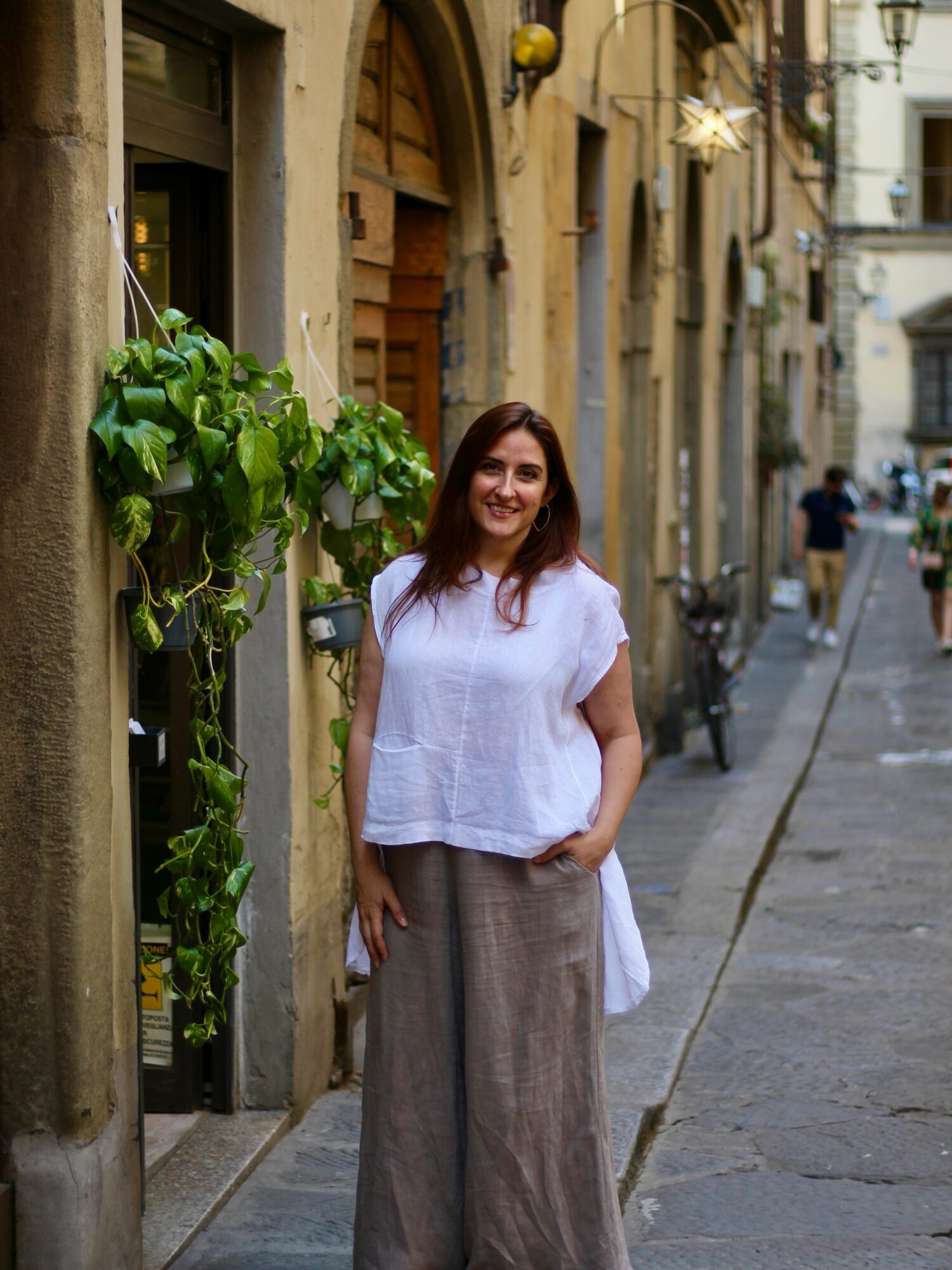
Today we’d like to introduce you to Katrina Cobb.
Hi Katrina, please kick things off for us with an introduction to yourself and your story.
I studied architecture, and not because I knew what I wanted to do with it, but because it was the first discipline that asked me to think in a way that felt true to how my mind actually worked. You cannot design a building from a single angle. You have to understand the geology underneath it, the climate around it, the way people will move through it, the engineering that has to hold it together, as well as the artistic and human experience of being inside it. Architecture trained me to hold all of those layers simultaneously and arrive at one integrated solution. I did not know yet that I was going to spend the next two decades applying that exact approach to businesses.
My path into entrepreneurship was not linear. I was a military kid, grew up moving around, studied abroad, fell in love with languages and other cultures. After gaining my degrees and some work experience in sustainable architecture, I landed in Charleston, South Carolina and eventually opened two private personal training studios. That chapter taught me more about operations, team dynamics, client relationships, and the real cost of a business that depends entirely on your physical presence than any business course ever could. I also learned, the hard way, what it feels like to build something that consumes your life while delivering results that look impressive from the outside. I was earning well, the work was recognized, and I had not taken a real vacation in five or six years.
In 2017 a close friend essentially told me I needed to get on a plane with her. They knew I was running on empty in a way I had not yet found language for. We went to Guatemala, and something cracked open in me that week. I remembered who I was before I became a person who was only building things. I made a promise to myself on the flight home: I was going to redesign how I worked so that my business supported my life rather than replacing it.
Keeping that promise required dismantling almost everything I had built. I sold the studios. Left the United States in 2018. Spent three years moving through eleven countries while rebuilding, with a completely different model, one that could go wherever I went. That period was not glamorous. At one point I was earning three to four thousand dollars a month while paying down over a hundred thousand dollars in debt. But it was also the period where I finally stopped operating from someone else’s definition of success and started designing something that was genuinely mine.
It was in that rebuilding process that I understood what I was actually doing with clients, and why calling it coaching or consulting never quite fit. When I look at a business, I see it the way I was trained to see a building. The structure underneath everything. The load-bearing walls versus the decorative ones. The places where the design is fighting against the environment it exists in. The gap between how the founder intended it to work and how it is actually being experienced by the people inside it. I kept noticing that most business advice treats problems in isolation: fix the marketing, hire for the role, improve the process. Nobody was looking at the whole system and asking how the architecture itself needed to change. That is the work I had been doing without a name for it.
I settled in San Miguel de Allende, Mexico in 2022. I rent an art studio in a historic building and have shown work internationally. I have a fiancé and an unexpected family that arrived with him. The life looks nothing like anything I planned, which turns out to be the best thing I can say about it.
Today I work with women founders running established businesses, typically in the $300K to $800K range, who liek me have built something ‘successful’ and are now trapped inside it. They have teams, revenue, clients who love them, and they still cannot take an uninterrupted week off. The problem is almost never what it looks like on the surface. It is almost always the architecture underneath: how decisions are flowing, where information lives, what the business was designed to produce and whether that still matches what the founder actually wants. I sit inside those problems with them the way a good architect sits inside a brief, not to tell them what worked for someone else, but to help them design something that is genuinely built for them.
We all face challenges, but looking back would you describe it as a relatively smooth road?
No. And I think the honest answer to that question is more useful than the version people usually tell.
The first struggle was one I did not recognize as a struggle for a long time. I had been operating inside a framework I absorbed from the loudest voices in the business world at the time — more, bigger, faster — without ever stopping to ask whether any of it was pointing toward a life I actually wanted. The cost of that was not visible on a spreadsheet. It showed up as creativity gone, relationships thin, a persistent sense that I was winning a game I had not consciously chosen to play.
When I finally decided to change course, sold the businesses, and left the US in 2018, I discovered a different kind of hard. There was a specific loneliness to choosing differently that nobody warns you about. The people who loved me mostly assumed it was a phase. When are you coming back? Are you going to rebuild your business in the US eventually? They were not being unkind. They simply did not have a frame for what I was doing, and people tend to try to talk you back from what they cannot picture not failing. I lost friendships during that period. Not dramatically. They just quietly faded because the lives we were building became too different to sustain the connection.
And then there was the financial reality of starting over. At one point I was rebuilding from essentially zero, earning three to four thousand dollars a month, and paying down more than a hundred thousand dollars in debt. That season required a level of patience with myself that did not come naturally. I had been a person who produced visible results. Sitting in the middle of a slow rebuild with no clear end date, in countries where I knew very few people, with most of my previous identity dismantled, was genuinely uncomfortable in ways I had not anticipated.
The hardest struggle of all, though, was not financial or logistical. It was trying to locate my own authentic voice underneath everything I had built on top of it. When I sat down during that period and tried to answer the question of what I actually wanted, the first things that came up were borrowed. I could not immediately find myself under all the external frameworks I had adopted as my own inner compass. That was disorienting in a way that was difficult to explain to people who had not experienced it. The externally successful version of me had been so coherent, so legible to others. The version that was trying to find out what she actually believed was uncertain and quiet and not yet making sense to anyone, including herself. Getting to a place where I could hear my own voice was made easier when I finally paused and gave energy to my artistic and creative side, but it took years to get there.
I would not trade any of it. Not because struggle is romantic, but because each of those seasons taught me something I could not have learned any other way, and because I work now with women who are navigating their own versions of these exact things. The founder who has built something impressive and feels vaguely hollow inside it. The woman who has decided to choose differently and is weathering the confusion of people who love her but do not understand. The person sitting in the middle of a rebuild, impatient with the pace of it, needing someone to reflect back that this is what it actually looks like and that it does not mean she is failing.
The road was not smooth. It was also the only road that led here.
Alright, so let’s switch gears a bit and talk business. What should we know?
I am a Business Architect and private strategic partner for women founders. That is the simplest version. Here is what it actually means in practice.
Most business support works on one thing at a time. Fix the marketing. Improve the team. Build the systems. Those things matter, but they are treated as separate problems to solve in sequence, and that is where the advice tends to break down. A business is not a collection of separate problems. It is one interconnected system, and it exists inside a person’s life, which is also a system with its own demands, its own history, its own nervous system behind it. When you ignore that context, the strategy is technically correct and practically useless.
My architecture training is where this view comes from. Architecture school taught me that there is no universal building. What works in one climate, with one set of materials, on one specific site, fails somewhere else, not because the design is bad, but because the context is completely different. I kept waiting for someone in the business world to make that point. Eventually I started making it myself.
What I do is hold the whole picture at once: the business, the team, the decision-making patterns, the financial reality, the life the founder is trying to live inside all of it. A client comes to me because her business is doing well and she is exhausted. That sounds like an operations problem. Sometimes it is. But often what I find underneath is a values problem, a trust problem, or an identity problem that no process improvement is going to touch. I ask the questions the other advisors were not asking, usually because they were outside their defined scope. Nothing is outside mine.
I work specifically with women, not exclusively, but intentionally. The research on this is clear and I find it genuinely motivating: when women build financially powerful businesses, the impact extends far beyond them. The decisions they make for their families, communities, and the other women they employ and mentor compound in ways that most business metrics never capture. Helping a woman build something profitable and sustainable is not just personal. It has a longer reach than any single income statement.
What I am most proud of is the depth of the work and the length of the relationships it produces. I keep a deliberately small roster (many of whom have been with me for 4+ years) because what I am describing requires real presence and real continuity. It is not scalable in the way most coaching businesses are built to scale, and I have made peace with that. I would rather work closely with a small number of women and watch something genuinely change than be technically correct from a distance.
The thing that sets this apart, if I had to name it simply, is that the strategy and the life are the same conversation here. Not sequentially. Simultaneously. Because growth is not the goal. Growth is a tool. The question is always what it is in service of.
Are there any important lessons you’ve learned that you can share with us?
The most important lesson I have learned is that strategy without context is just someone else’s blueprint applied to your life.
I learned this the hard way. Early in my entrepreneurial career I did everything right. I followed the frameworks, executed the plans, hit the numbers. I opened a second studio location because the growth model said that was the next step. By every external measure I was succeeding. What I was also doing was quietly losing my health, my relationships, and any genuine sense of what I actually wanted. I had been so focused on executing the plan that I had never stopped to ask whose plan it was.
That experience did not make me distrust strategy. It made me distrust strategy that ignores context.
The version of this lesson I carry now is this: you cannot design a life by borrowing someone else’s definition of winning and simply executing harder. At some point, and usually that point is when the external results are solid and something still feels wrong, you have to do the harder work of finding out what you actually want. Not what you have been told to want. Not what the successful people around you appear to want. What is genuinely, specifically yours.
For me that process required dismantling almost everything I had built and starting again with a different question: what do I want my life to actually feel like, and what does the business need to look like in order to support that? Those two things in that order, not the other way around.
What surprised me was how uncomfortable that question was to sit with at first. I had spent years inside frameworks that told me the business was the point, and everything else was the reward you collected later. Reversing that required unlearning something I had absorbed so deeply I did not know it was there.
I see this same thing in almost every woman I work with. She has been executing someone else’s architecture. Not because she is not smart or capable, because she absolutely is, but because she adopted an external definition of success before she had the space to develop an internal one. The business that results from that looks right from the outside and costs more than it should from the inside.
The lesson is not that ambition is the problem. It is that ambition pointed at someone else’s target is expensive in ways that do not show up until much later, usually when you have already paid most of the cost.
What you build toward matters more than how well you build.
Contact Info:
- Website: https://katrinacobb.com/
- Instagram: https://www.instagram.com/thatfreedombusiness/
- Facebook: https://www.facebook.com/katrinacobbbusinessconsultant
- LinkedIn: https://www.linkedin.com/in/katrinacobb/

Popular
-

Maagic Collins on Building a Fearless Publishing Platform for Truth, Advocacy, and Underrepresented Voices
-
Los Angeles Barea on Turning Green Superheroes into a Global Movement for Youth-Led Change
-

Trisha DuVivier on Bridging the Franchisor–Franchisee Divide with Workhero and “Franulate”
-

Portraits of the Valley
-

LA’s Most Inspiring Stories
-

Cedar Boschan on Elevating Black Music Rights and Driving Urgent Conversations Around Credit, Equity, and Artist Protection


