




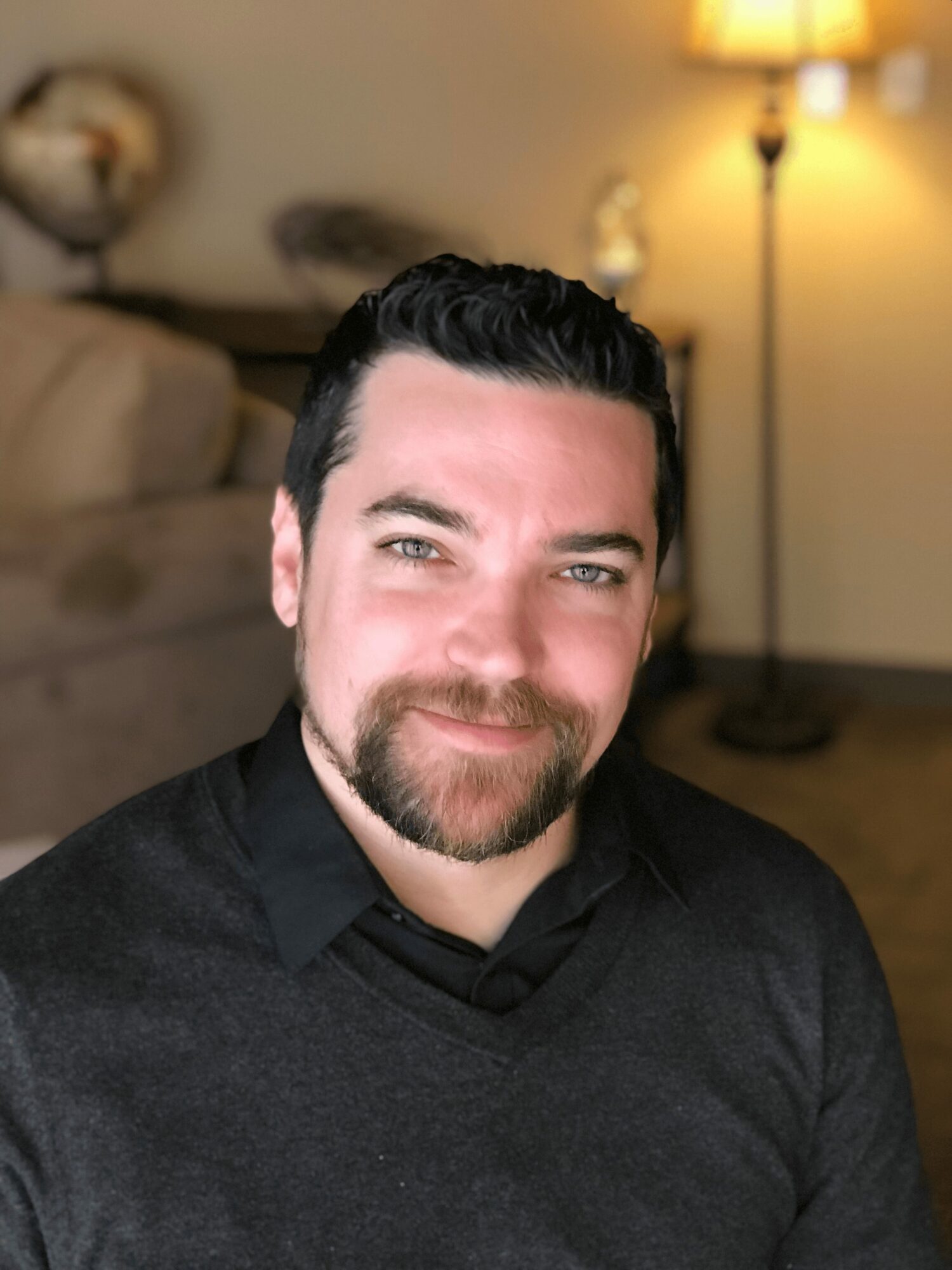
 Today we’d like to introduce you to Christopher Nahumck
Hi Christopher, we’re thrilled to have a chance to learn your story today. So, before we get into specifics, maybe you can briefly walk us through how you got to where you are today?
Sometimes in life our path is a straight line, other times it meanders in ways that don’t make a lot of sense. My journey towards becoming a clinical psychologist was definitely filled with twists and turns. I’m a transplant to LA, twice over. I grew up in Northeast Ohio, about 45 minutes east of Cleveland. After undergrad I got a job working as a production assistant on the Frasier TV show and I quickly realized the Industry just wasn’t for me. I got a job in retail and tried to figure out my next steps. During that three year time span I met my now wife (an LA native), and decided that I would explore what being a psychologist would be like. We got married and moved back to my hometown.
Most of my life I was someone others found easy to open up to, and I thought that this might be a good path to explore. Little did I know what kind of a path that would be. During the first year of marriage I worked nights at a psych hospital working on an acute ward as a mental health technician (think men in white outfits and butterfly nets, minus the white outfits and butterfly nets). It was an interesting experience and even though I wasn’t doing therapy I found that it was natural for me to be therapeutic in my interactions with the patients. During this time I applied to a bunch of doctoral programs for psychology but didn’t get into any, as my education before this wasn’t really set up for this career path. Exploring other options made me realize that I could take a different route and I found a dual masters program that would award a MSW and a MDiv. The two programs were either at Duke in North Carolina or through a series of connected schools in Chicago. As my wife had family in Chicago, I applied, got in, and we moved yet again after a year of being married.
We spent the next five years doing school in Chicago, which is a great city to explore and enjoy. I had settled into the idea that I would be staying there, doing therapy as a masters level clinician until a midpoint review of my MDiv program where it was suggested that I explore a doctorate as my ideas really should be explored at that level. My wife’s mother needed more care, so I applied to doctoral programs again in the Los Angeles area and got into Fuller Graduate School of Psychology in Pasadena. We were moving again.
A PhD in psychology takes a while (and was already 5 years into graduate work at this point) so I spent the next 6 years working towards graduation, gaining the clinical experience, and finishing my dissertation to finally graduate in 2015. During the doctoral program we were able to buy a house, have our first child, and settle into the new rhythm of being in LA at a different stage of life. After I graduated I got a postdoc in private practice to finish hours for licensure, and eventually found my way to Sync Counseling Center (a group practice and training site), where I started working in 2017. Sync was a good fit for me, as the approach to therapy and psychological approach fit. It was a place where I could be me and thrive.
Currently I am the Director of Clinical and Professional Development at Sync. In addition to having my own private practice, Nahumck Psychological Corporation, I supervise student and pre-licensed therapists in my role at Sync. I see individuals and couples, and offer psychological assessments and testing for ADHD, Learning Disabilities, Psychological Evaluations, and Adult Autism. For the therapy that I provide I have a special focus on Grief and Loss, and Men’s issues.
Providing therapy is one of the most rewarding things in my life. While it isn’t easy sitting and wrestling with difficult experiences and exploring pain and loss, I find myself energized at the end of the day and wanting to show up the next. I wanted to go into entertainment to change the world, and now I do, one session at a time, one person at a time, in a much more connected and engaged way through therapy. I love being in the trenches with my patients, and I am grateful for the opportunity to do what I do. I never want to stop learning and growing as both a psychologist and human.
Would you say it’s been a smooth road, and if not what are some of the biggest challenges you’ve faced along the way?
The path hasn’t been a straight line and it hasn’t always been easy. First off, graduate school is hard. It’s hard to get in, it’s hard to juggle the demands, and it’s hard to keep relationships while you’re going through it. Thankfully, the problems that I’ve had to struggle with have been external to my relationship with my wife.
During the first year of our marriage my mother-in–law was diagnosed with Huntington’s Disease. It’s the biggest reason we came back to LA, to help with her care. Huntington’s is a genetic degenerative neurological disease. It’s horrible, and has a 50% chance of passing it on to one’s offspring if you have it. Thankfully, my wife tested negative for it, which I wrote about here: https://goodmenproject.com/guy-talk/living-with-cataclysmic-news/ We eventually had to take care of my mother-in-law full time, sleeping on the floor so she had a room. When someone dies, it’s a magical, horrible thing. She left us on a Monday after actively dying over the weekend. It’s a strange, painful place to be in when you’re waiting and counting the seconds between someone’s breaths, hoping they both breathe again and that they don’t. It was a hard thing, to be caregivers without the support that we needed while trying to build our lives, but I wouldn’t change what happened.
Professionally, private practice is something that is difficult to build as well. I’d say that the hardest part for me both as an individual and in my work at Sync was the pandemic. We had hosted an open house in February of 2020 and it went amazingly well. We made great connections with the community, bringing people into our offices to see where we work, talking with them so that they knew us, and knew our approach and philosophy. And then, three weeks later, the world shut down. It was an interesting experience for everyone, but for many of us, doing therapy at the beginning of the pandemic was like treating gunshot victims while you’ve been shot yourself. It’s not an easy thing to help others process something you’re processing as well, but I find I thrive when digging into the difficult aspects of life and trying to find the path forward.
The pivot to virtual allowed us all to keep working, but I don’t think I do my best work that way. Zoom calls leave out so much non-verbal communication that just changes the dynamic for me. I’m much better in person, and almost all my work now is back to in person.
Alright, so let’s switch gears a bit and talk business. What should we know?
As I have said, I provide therapy for individuals and couples, as well as psychological assessments. My areas of specialization are Grief and Loss and Men’s Issues. Grief and Loss are fairly self explanatory, but Men’s Issues may benefit from an explanation. Society and Culture have expectations placed upon us as individuals, and we are expected to conform. Everyone has these expectations placed on them, and it’s up to us to figure out where to conform and where to push back. Where other therapists may focus on women or LGBTQ identities, I have a passion for helping boys and men explore and embrace a mature masculinity for our modern world. There’s a host of complaints about toxic masculinity, but very few people provide a path for men and space for men to work through these things for themselves. Society does a great job of telling men what they shouldn’t be doing, but doesn’t do enough to provide answers for what or even how to rise up and become their best selves. If men make up roughly half the population, then we should want to make sure our fathers, sons, brothers, and uncles are psychologically healthy. This is where I like to focus with the men that I work with: what are the pressures you feel, and how can we make sure you’re living out your purpose and mission in a way that’s not only personally fulfilling and psychologically healthy, but also is fit for service to others. A man’s purpose should always be larger than himself, but there is freedom in rising to that challenge. It’s impressive to see when patients embrace and explore that in session.
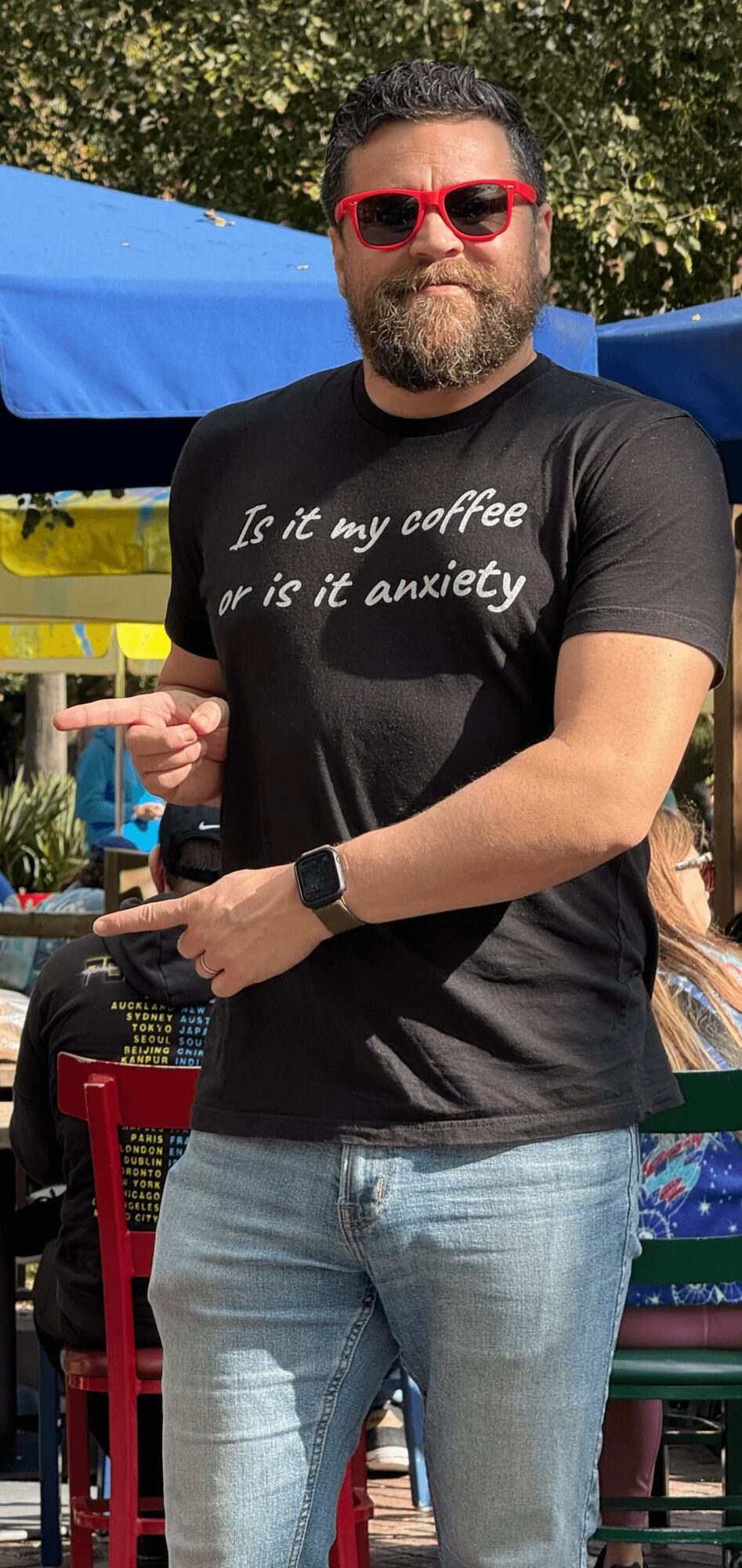
I think it’s also important to raise awareness and reduce stigma around mental health for everyone, so I’ve started an apparel brand called Self Wear (https://selfwearmha.com). We sell shirts, bags, hats and mugs with phrases intended to be tongue-in-check about mental health while not self-deprecating. It’s fun to wear the shirts around and have people comment on them, as it’s always a bit of a conversation starter. If we want to reduce mental health stigma, we should treat it as something that doesn’t need to be stigmatized.
Alright, so to wrap up, is there anything else you’d like to share with us?
I’m a work in progress, just like everyone else. I enjoy time with family and friends, making and enjoying good meals, running and Olympic weightlifting, and exploring the world around me. Human connection matters, and I am intentional about that both in my work and in my life.
Pricing:
- My rate for a 45 to 50 minute session is $250.
- ADHD/Learning disability evaluations are typically $3k for the typical 12 hour testing and report
- I have associates who work for me that are $125 per session and trainees at $60 per session
Contact Info:
- Website: https://drnahumck.com and https://selfwearmha.com/
- Instagram: https://www.instagram.com/drnahumck/
- Facebook: https://www.facebook.com/drnahumck/
- Twitter: @cwnahumck
- Other: https://www.psychologytoday.com/us/therapists/christopher-nahumck-sierra-madre-ca/202973

Popular
-

Choosing Growth Over Familiarity
-

A Full‑Circle Homecoming Rooted in Craft, Community, and Care
-

Heart Glow: Arisa on Creating Space for Healing, Connection, and Inner Growth
-
Jamarius Leaphart Is Building Safe Spaces Through Art, Ritual, and Radical Honesty
-

Justine Wentzell‑Chang Is Rewriting Power Through Storytelling and Political Messaging
-

Kerly Vallejo Is Composing Quiet Spaces for Rest, Reflection, and Healing


