




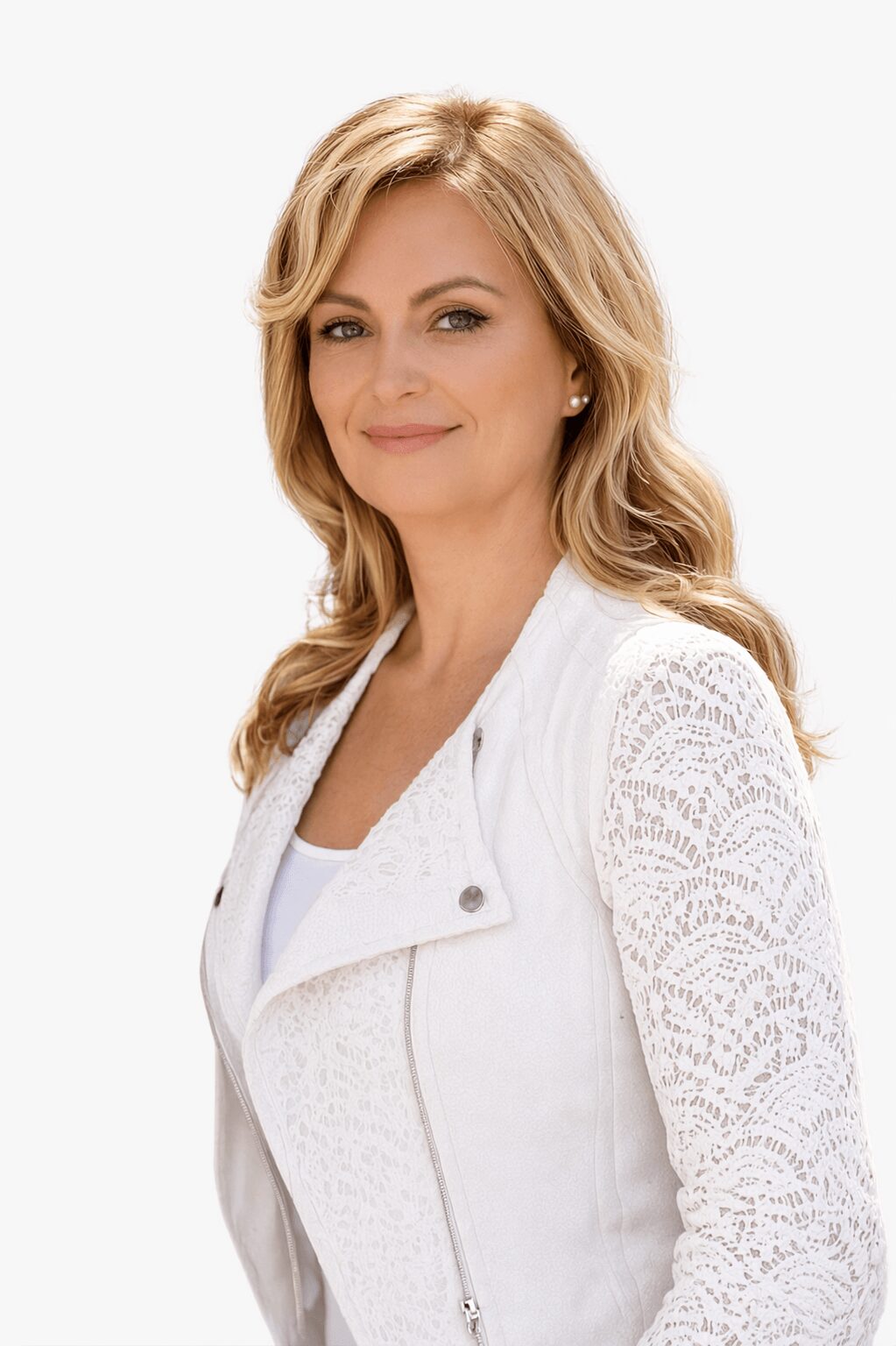
Today we’d like to introduce you to Alina Vehuni.
Hi Alina, it’s an honor to have you on the platform. Thanks for taking the time to share your story with us – to start maybe you can share some of your backstory with our readers?
I came to this country as an adult, a multilingual immigrant who arrived carrying the fullness of one world and the determination to build another. I went back to school while raising a family, moving through classrooms and district offices for nearly three decades, accumulating credentials and experience and a deep, abiding belief that education was the most important work a human being could do. I became a school leader, and I poured into that role everything I had, which, as it turned out, was far more than any human system was designed to receive. My body began speaking in a language that neither medicine nor my own training had ever prepared me to understand, through physical symptoms that pointed not to illness but to something far more fundamental. The system I had devoted myself to was one that optimized relentlessly for performance while leaving the inner lives of its people, students, teachers, and leaders alike, entirely unaddressed. I had been living inside that design for so long, and so completely, that I had lost contact with my own wellbeing, my own wholeness. That loss, and the long, searching journey back from it, became the foundation of everything I now build.
I grew up in an Armenian family carrying the weight of genocide, displacement, and survival. My last name, Vehuni, means elevated, dignified, and grand in Armenian, and I have come to understand that name as a kind of inheritance, a north star passed through generations from great-grandparents who survived the unimaginable and rebuilt their lives with extraordinary grace. The question of what it means to live with wholeness, not despite hardship but within it, is not an abstract philosophical concern for me. It is the ground I stand on. And coming to America as an adult, having to begin again in a new language, a new culture, a new educational system, while simultaneously raising children, studying and working, gave me a particular clarity about what human beings are actually capable of when they are supported from the inside out.
What I am building out of that collapse is a global humanistic education platform organized around three interconnected pathways: Parenting for Wholeness, Learning for Wholeness, and Educating for Wholeness. The work is grounded in everything I have spent a lifetime studying and practicing, from my Ed.D. at USC Rossier to my certifications in mindfulness, interpersonal neurobiology, somatic trauma therapy, NLP, and yoga. The thesis is simple, even if the implications are vast: our schools and families are optimizing for performance while leaving the inner lives of children entirely unaddressed. We are graduating generations of highly qualified, yet deeply disconnected human beings who have never been taught how to be with themselves. I lived that story, and it is precisely why I believe the next generation deserves to begin from wholeness, not spend a lifetime returning to it.
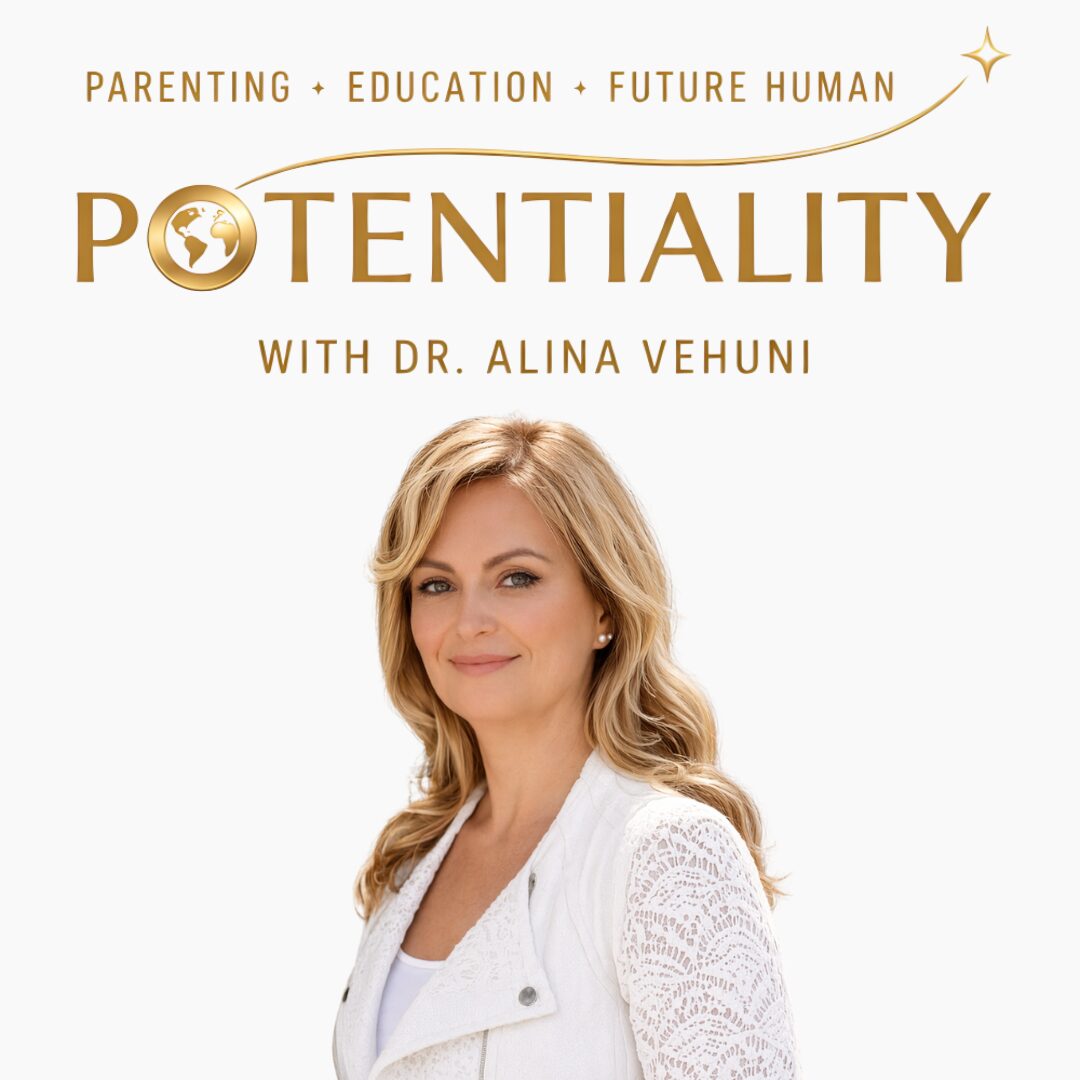
Today I host The Potentiality Podcast, a space where the most important question of our time lives and breathes: what becomes possible for humanity when we reimagine the two most formative forces in our lives, parenting and education, and begin to understand the often invisible processes that shape how we grow, connect, and become who we are. The conversation has no predetermined borders. Educators and healers, researchers and artists, parents and policy makers, technologists and spiritual practitioners, anyone whose work or life touches the question of what it means to become more fully human in this particular moment of history, all of it belongs. The podcast exists because that question belongs to everyone.
I often say that I did not choose this work. It chose me the moment my body refused to continue living a life that had no room for the soul inside it. I am grateful every day for that collapse. It was the most honest thing that ever happened to me.
I am fortunate to be based in Los Angeles, a vibrant city has shaped me in ways I am still discovering. The Armenian community anchored my cultural life here. And the extraordinary range of families, educators, healers, and visionaries I have encountered across every neighborhood and language has only deepened my belief that wholeness is not a luxury. It is the new success.
Alright, so let’s dig a little deeper into the story – has it been an easy path overall and if not, what were the challenges you’ve had to overcome?
Nothing about this road has been smooth, and I say that not as a complaint but as a truth I have come to regard with a great deal of tenderness. The struggles were not obstacles on the way to the work. They were the work, revealing itself.
Building something that does not yet have a widely recognized name is one of the quieter challenges that does not get spoken about enough. Wholeness Education sits at the intersection of so many fields, psychology, neuroscience, spirituality, pedagogy, leadership, that it can be difficult for people to find the drawer to place it in. And yet what I have learned is that the people who need it most find their way to it with remarkable precision, because it speaks to something they have always known but never had language for.
There is also the particular challenge of being an immigrant woman building a mission-driven platform in a landscape that was not designed with her in mind. I have had to learn, in real time and often without a map, how to lead an organization, develop a brand, hold a vision, and sustain myself, all at once, all while remaining connected to the inner architecture that the work itself is asking others to cultivate. That is not a small thing. There were seasons of deep doubt, seasons of financial uncertainty, seasons where the gap between the vision and the reality felt almost unbridgeable. What carried me through every single one of them was the clarity of the mission and the memory of what it felt like to lose myself inside a system that was never designed to hold me whole.
I am still on that road. And I would not trade its difficulty for anything.
As you know, we’re big fans of Wholeness Education. For our readers who might not be as familiar what can you tell them about the brand?
Wholeness Education is a global humanistic education platform built on a single, unwavering conviction: that the inner lives of human beings are not supplemental to learning and growth, they are its very foundation. Everything we design – every program, every resource, every conversation, flows from that premise.
What sets Wholeness Education apart is not any single methodology, though the work draws from interpersonal neurobiology, somatic trauma therapy, mindfulness, NLP, positive psychology, and nearly three decades of lived experience inside educational systems at every level. What sets it apart is the integration. Most approaches address one dimension of the human being. Wholeness Education holds all of them simultaneously, the emotional, the relational, the psychological, the energetic, and the spiritual, because a human being cannot be parceled out and developed in pieces. Wholeness, by definition, requires the whole.
I am also a Fulbright Specialist, and that designation matters to me not as a credential to display but as a reflection of a commitment to cross-cultural, globally informed thinking about education. The challenges facing young people today are not local. They are civilizational. And the responses we design must be equal to that scale.
What I am most proud of, beyond any single offering or program, is the language Wholeness Education is building. When a parent writes to tell me that for the first time they have words for what they have always felt, or when an educator says that something shifted in the way they see their students, that is the brand doing exactly what it was designed to do. We are not selling a product. We are cultivating a new way of understanding what it means to be human in the times of exponential change, to raise and educate the future human, and what becomes possible when we design our homes and schools around that understanding.
Wholeness is not a destination. It is a practice, an orientation, a way of moving through the world. And Wholeness Education exists to make that practice accessible, rigorous, and alive.
Can you talk to us a bit about happiness and what makes you happy?
What makes me happy is witnessing the moment when something that has lived unnamed inside a person finally finds its language. It happens in conversations, in workshops, in the comments of a podcast episode, in a message from a parent at eleven o’clock at night who says, I never knew how to say this before, but now I do. That moment, when the invisible becomes visible and a human being stands a little more fully inside their own experience, is the reason all of this exists. It never gets ordinary for me.
What moves me most deeply, and what I would name as one of my greatest sources of happiness, is human growth and transformation. Not the performance of growth, not the curated version of it that looks good from the outside, but the real kind – the kind that is sometimes slow and unglamorous. And when that authentic transformation happens in a young person, when a teenager begins to know who they are, to trust themselves, to move through the world from the inside out rather than the outside in, something in me recognizes it as the most important thing I will ever witness. That is why I do this work. And it is also, genuinely, what brings me joy.
My family makes me happy, in the deep, complicated, profoundly instructive way that only family can. My sons, my granddaughter, the intergenerational thread that I am consciously tending and transforming, these relationships are not separate from my work. They are its truest laboratory and its most honest mirror.
The natural world makes me happy in ways I have stopped trying to fully explain. The beach, in particular, does something to my nervous system that nothing else quite replicates, a kind of settling, a return. Yoga has been a practice and a homecoming for as long as I can remember, a daily conversation between my body and everything it knows that my mind has not yet caught up to. And travel, not as tourism but as immersion, stepping into another language, another culture, another way of organizing reality, restores something in me that ordinary life quietly depletes. I am multilingual by formation and by love, and being inside a language, truly inside it, is one of the most alive I ever feel.
And ideas make me happy. The kind that arrive at the edge of sleep or in the middle of a conversation and reorganize everything you thought you understood. I have spent my life in pursuit of those ideas, the ones that make the invisible visible, the ones that return us to ourselves. Finding them, and then finding the words to carry them to others, that is as close to pure joy as I know how to get.
Contact Info:
- Website: https://alinavehuni.com
- Instagram: @dr.alina.vehuni
- LinkedIn: https://www.linkedin.com/in/dralinavehuni/
- Youtube: https://www.youtube.com/@alinavehuni
Popular
-
Maagic Collins on Building a Fearless Publishing Platform for Truth, Advocacy, and Underrepresented Voices
-
Los Angeles Barea on Turning Green Superheroes into a Global Movement for Youth-Led Change
-

Trisha DuVivier on Bridging the Franchisor–Franchisee Divide with Workhero and “Franulate”
-

Portraits of the Valley
-

LA’s Most Inspiring Stories
-
Cedar Boschan on Elevating Black Music Rights and Driving Urgent Conversations Around Credit, Equity, and Artist Protection


