




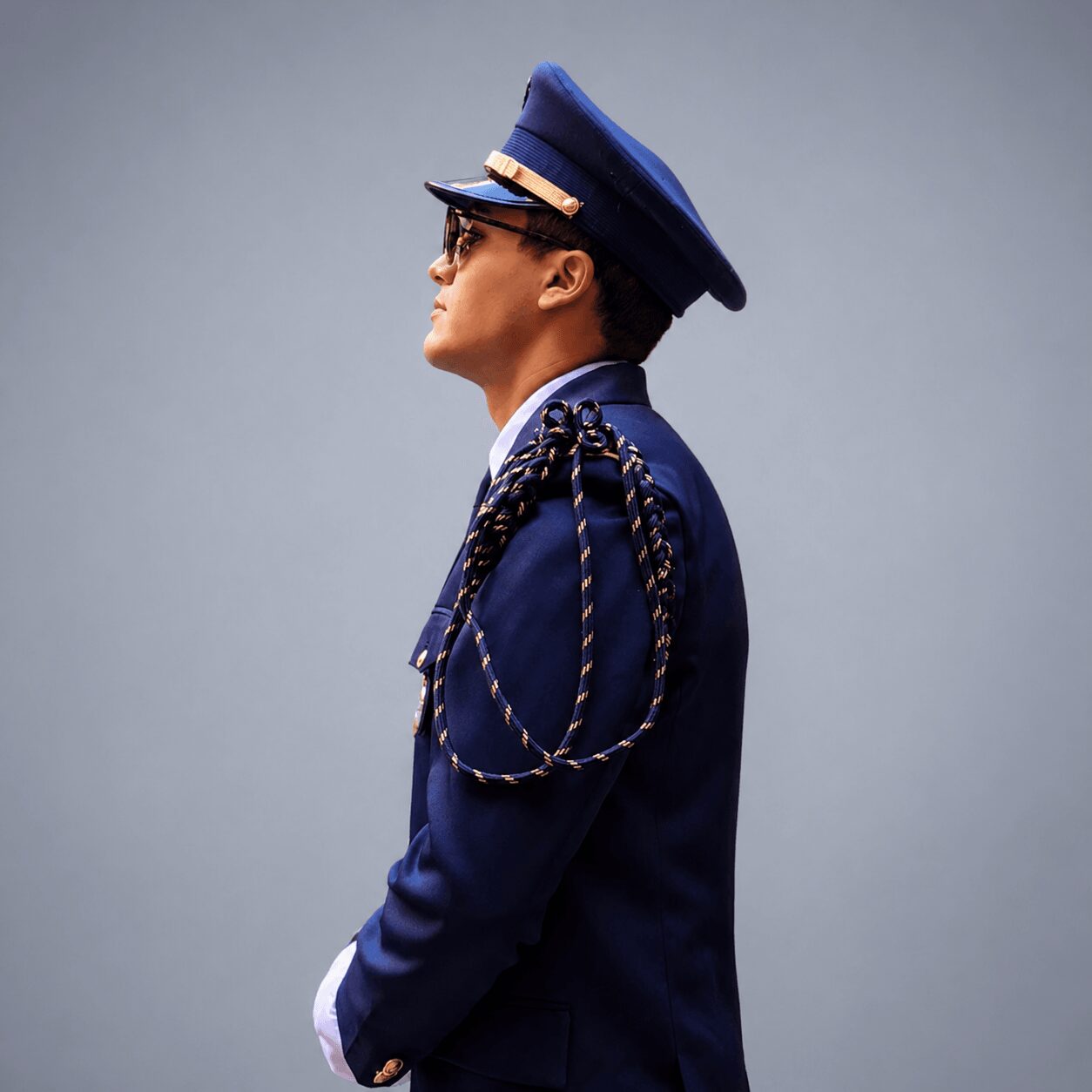
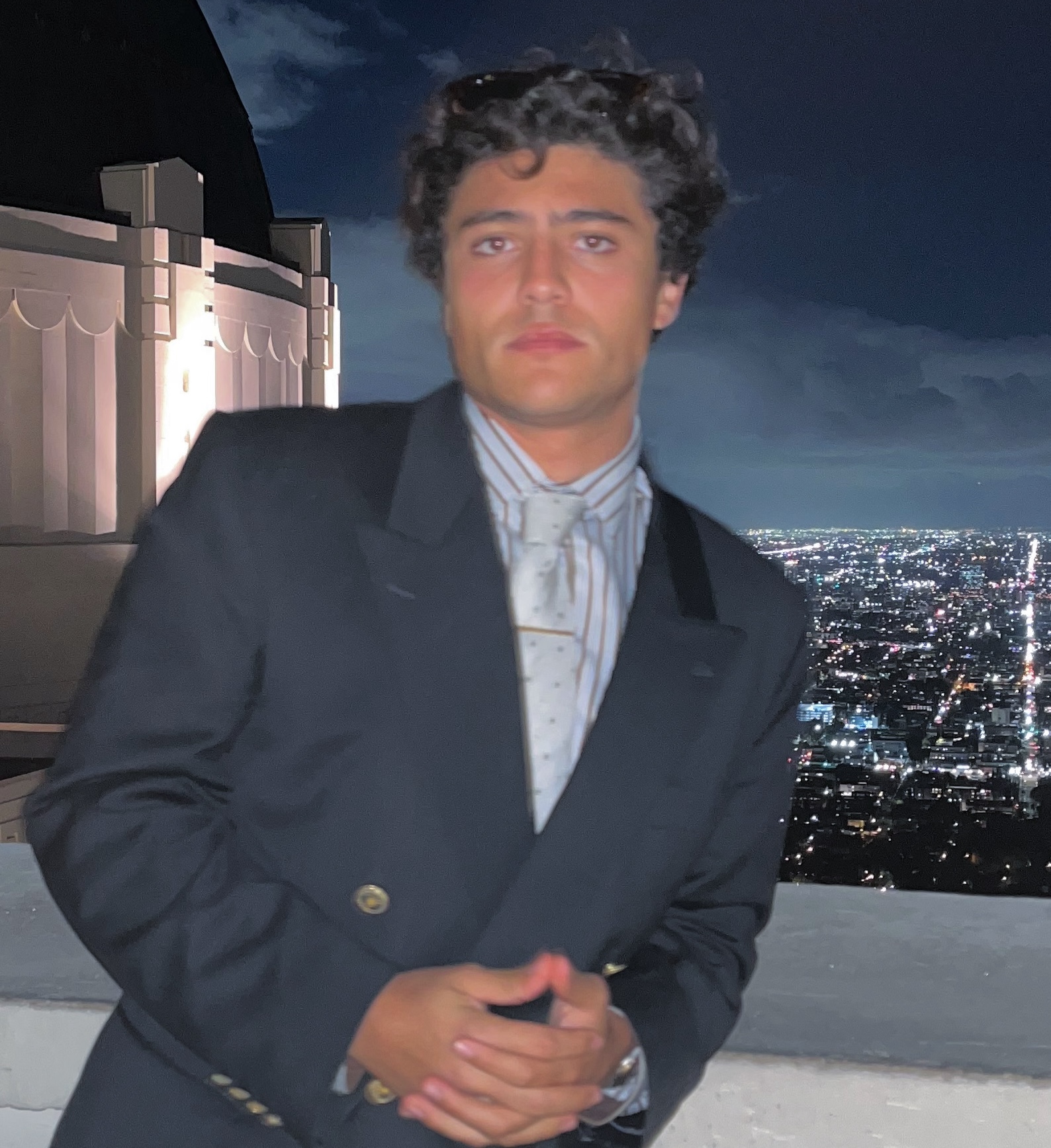
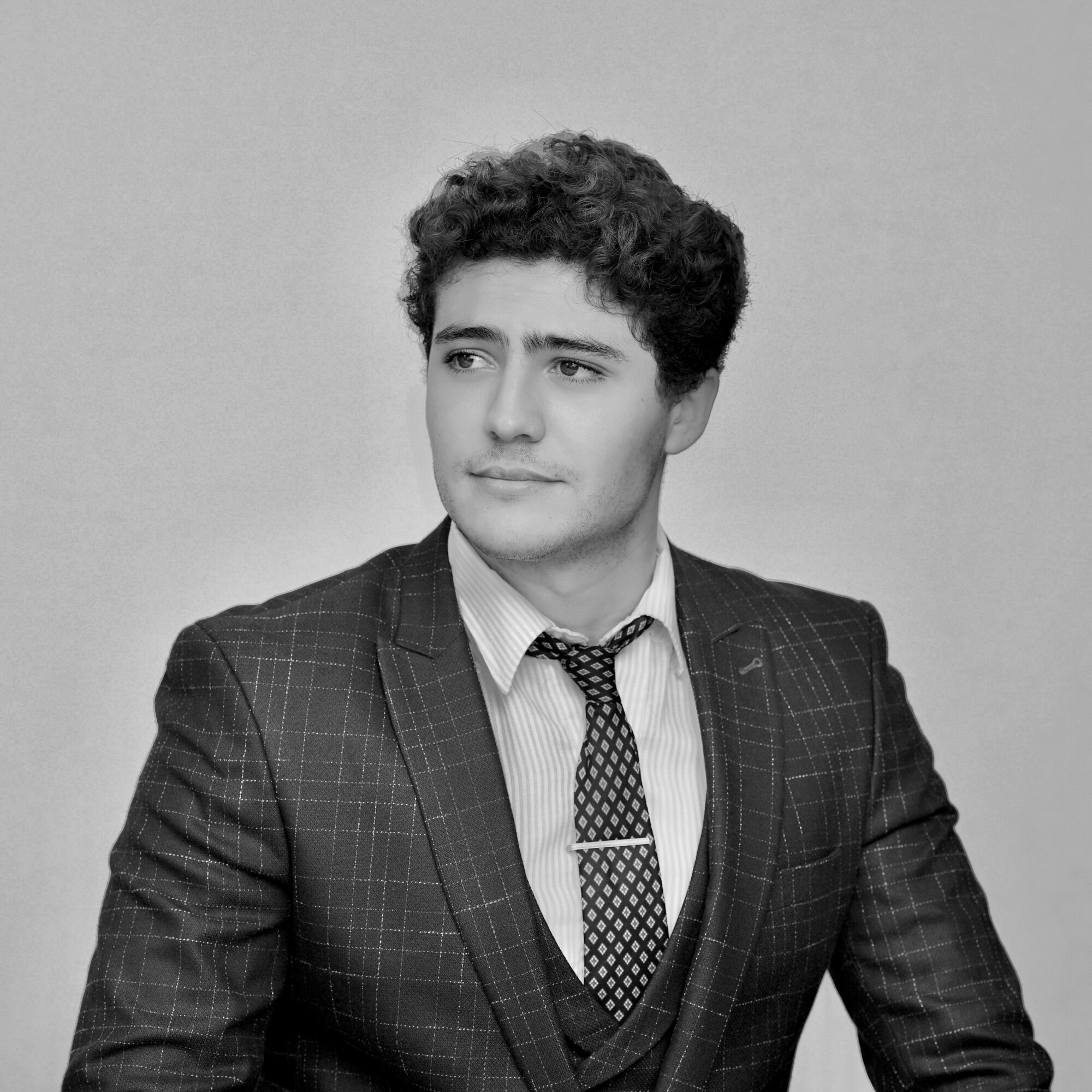
Today we’d like to introduce you to Yanis Benchekroun.
Hi Yanis, it’s an honor to have you on the platform. Thanks for taking the time to share your story with us – to start maybe you can share some of your backstory with our readers?
My name is Yanis Benchekroun. I am 25 years old, Moroccan and French. I was born in Casablanca, a city that shaped me deeply from a very young age.
Casablanca is not just a city to me. It is a crossroads. It carries the legacy of the French protectorate, the Andalusian heritage of Morocco, the Arab world, Africa, the Mediterranean, the Atlantic, the Jewish and European presence, and the larger history of a country that has always been at the intersection of worlds. Growing up there, I was constantly surrounded by different faces, languages, family names, architectural styles, stories and cultures. I think that is where my fascination with history, identity and beauty began.
My family also has roots in Monaco, where a large part of my family lives and holds different positions. But my childhood was mostly shaped by Casablanca and by aviation.
My father is an airline pilot. My uncle is also an airline pilot, my godfather is an airline pilot, and my mother worked as a flight attendant. So I grew up in a family where aviation was everywhere. Through my father, I discovered not only the beauty of Casablanca, but also the beauty of the world.
As a child, I traveled constantly. I went to school like every other kid, but almost every month I was somewhere else, in another country, often with my father. I had the chance to sit in cockpits, to see things most children never get to see, and to feel almost like a small member of the crew. I traveled through dozens and dozens of countries, and some routes — New York, Rio de Janeiro, Paris — I must have taken more than sixty or seventy times. That gave me, very early on, a sense of openness to the world. I was a good student, even a brilliant one, but I always felt that life was also happening outside of school. My parents encouraged me to do sports. I played tennis seriously and, at some point, I hoped I could maybe build a small career around it. But an injury during my teenage years stopped that path.
Among all the sports and passions I explored, two things never left me: surfing and music. Music came into my life very early. I started playing guitar when I was five years old with my mentor Ruben, a kind of mystical Peruvian character who taught me music before he even taught me the instrument. There was always a lot of music at home, so naturally my sensitivity turned toward that world.
Later, I earned a scientific baccalaureate with highest honors, then went through two years of French preparatory classes for the grandes écoles. That period was extremely intense. In the French system, preparatory classes are among the most elitist and demanding academic paths. You can have ten hours of class a day, then four or five more hours of personal work. For two years, you live under pressure and competition, because the goal is to select the strongest students and send them to the best engineering schools.
I was the top-ranked student in my preparatory class, but my first goal was not engineering. My goal was to become a pilot in Morocco, for Royal Air Maroc. After two years, I ranked first in the entrance exam, among around 10,000 candidates, and I joined the prestigious Royal Air School, the academy that trains officers for the Royal Moroccan Air Force. I began my training as an officer cadet. The plan was to complete the military officer path, return to civilian life, and become an airline pilot. But then Covid happened, and the conditions around the path changed. What had once been a clear and exciting trajectory no longer felt as interesting or aligned with what I wanted to build. So I made the decision to leave the pilot path and reorient myself toward engineering. It was not something I suffered passively; it was a conscious choice. I felt that engineering, especially artificial intelligence, would give me a stronger foundation to create, build companies and open more doors for the kind of life I wanted.
I joined ESILV, the École Supérieure d’Ingénieurs Léonard de Vinci, in Paris, specializing in artificial intelligence and data. Since I already had a strong scientific background and had gone through preparatory classes, engineering felt like the most strategic move. I had always had this business instinct, this desire to build projects. And I felt that having a strong technical foundation would allow me to create, not just imagine.
In my life, I always had three or four dreams: to become an architect, an engineer, a pilot, or a musician. The pilot dream, in a way, I experienced it through my family and through my officer cadet training. The engineering path, I pursued it fully. And then, in Paris, the musician in me really came alive. I started playing in jazz clubs such as Le Caveau de la Huchette, which appeared in La La Land, as well as Le Caveau des Oubliettes and 38 Riv. I lived a strange and beautiful double life. During the day, I was studying artificial intelligence and working alongside my studies for major groups. At night, I would trade my grey, black and blue suits for red, white and yellow stage suits, and I would perform with my band of friends. They were all engineer-musicians too. We were all living the same kind of double life: scientific discipline by day, music and stage lights by night. At one point, we even played at one of the biggest venues in Europe, Accor Arena in Paris.
After those years, I went back to Morocco. I missed my country. I missed surfing. Even when I was living in Paris, I would often go back to Morocco on weekends. I needed to return. So after that romantic Parisian chapter, I began a new life in Morocco. I surfed, I worked, and I spent time with my other passions: classic cars, vintage motorcycles, design furniture, postmodern painting and Art Deco. I am a collector. That also connects to my love for architecture and design. I have always been drawn to objects, spaces and aesthetics that tell a story.
During that period, I worked as the creator of the artificial intelligence department at Cluster Green H2, the largest green hydrogen cluster in Morocco and Africa, and one of the major clusters in the world in that field. The goal of the cluster was to create synergies around the green hydrogen industry, bringing together billions of dollars of investment. As an engineer and strategist, I worked on strategic and technical missions in a very high-level environment. I was surrounded by ministers, CEOs, major industrial players, public institutions and decision-makers shaping the future of Moroccan industry. It was an important chapter for me because it combined engineering, artificial intelligence, business strategy and national-scale industrial development.
But after that, I needed another adventure. I had always dreamed of California. As a musician, as a surfer, and as an artificial intelligence engineer, California represented something very powerful to me. It was the place where all these worlds could meet.
So I moved to Los Angeles.
I studied at UCLA, which allowed me to stay in the United States and continue building my life there. At the same time, I continued my musical journey. I performed a few times with friends in West Hollywood and kept working on my own songs. I had written hundreds of songs — at least 200 when I was living in France — and at some point I told myself that I had to release at least one. So I worked on that project and released my first song, “Set Me Free,” in March 2026. But before that release, something happened that changed my relationship with music. About a month after arriving in Los Angeles, I was filmed singing Frank Sinatra in Santa Monica. The video went viral and accumulated more than 10 million views across YouTube, Instagram and TikTok.
That moment felt like a revelation. I already knew I was a good musician. I had played in special venues, I had lived with music for years, but that video made me realize that I was also a singer — and that I had to share my art with the world.
At the same time, I continued my work as an engineer and strategist. As soon as I was legally authorized to work in the United States under my immigration status, I began working with different companies and groups. I held roles across executive functions, business development, growth and artificial intelligence. I later became Director of Growth and AI for an insurance company in the United States. After that, I left the company to focus full-time on two projects I am building today.
The first one is MyUS Management, where I am CTO. The project is still under development and has not launched yet. The idea comes from a very simple observation: managing real estate assets today often means dealing with dozens of tools, Excel sheets, lost emails and unreachable brokers. That problem exists whether you are a local investor with three properties, a family office with fifty properties, or a management company handling hundreds of clients. MyUS Management centralizes what is currently fragmented: owner and tenant onboarding, property tracking, broker mandate management, compliance and documents. The goal is to build one smooth platform for different types of users. For a small investor, it brings clarity and saves time. For a medium-sized portfolio, it brings structure and scalability. For property management companies, it becomes a professional tool that can finally replace improvised internal processes. We are not trying to reinvent real estate. We are trying to finally fix its administration.
The second project is ANFA Meridian, the company I founded. Through ANFA Meridian, we commercialize a product we developed in-house called AAOT, which stands for AI Avatar Outreach Technology. AAOT is an outreach infrastructure designed to generate up to ten times more results than the most effective traditional outreach methods on the market. The principle is simple: we clone a person’s voice and face, then use that to send personalized videos to hundreds or thousands of prospects instead of sending generic text messages. That changes the entire nature of outreach. What is usually cold, generic and impersonal becomes a human-feeling conversation. It increases response rates, engagement and, ultimately, revenue generated.
We are already working with several international structures and clients, especially in the United States and the United Kingdom, on outreach, outbound and large-scale conversation generation.
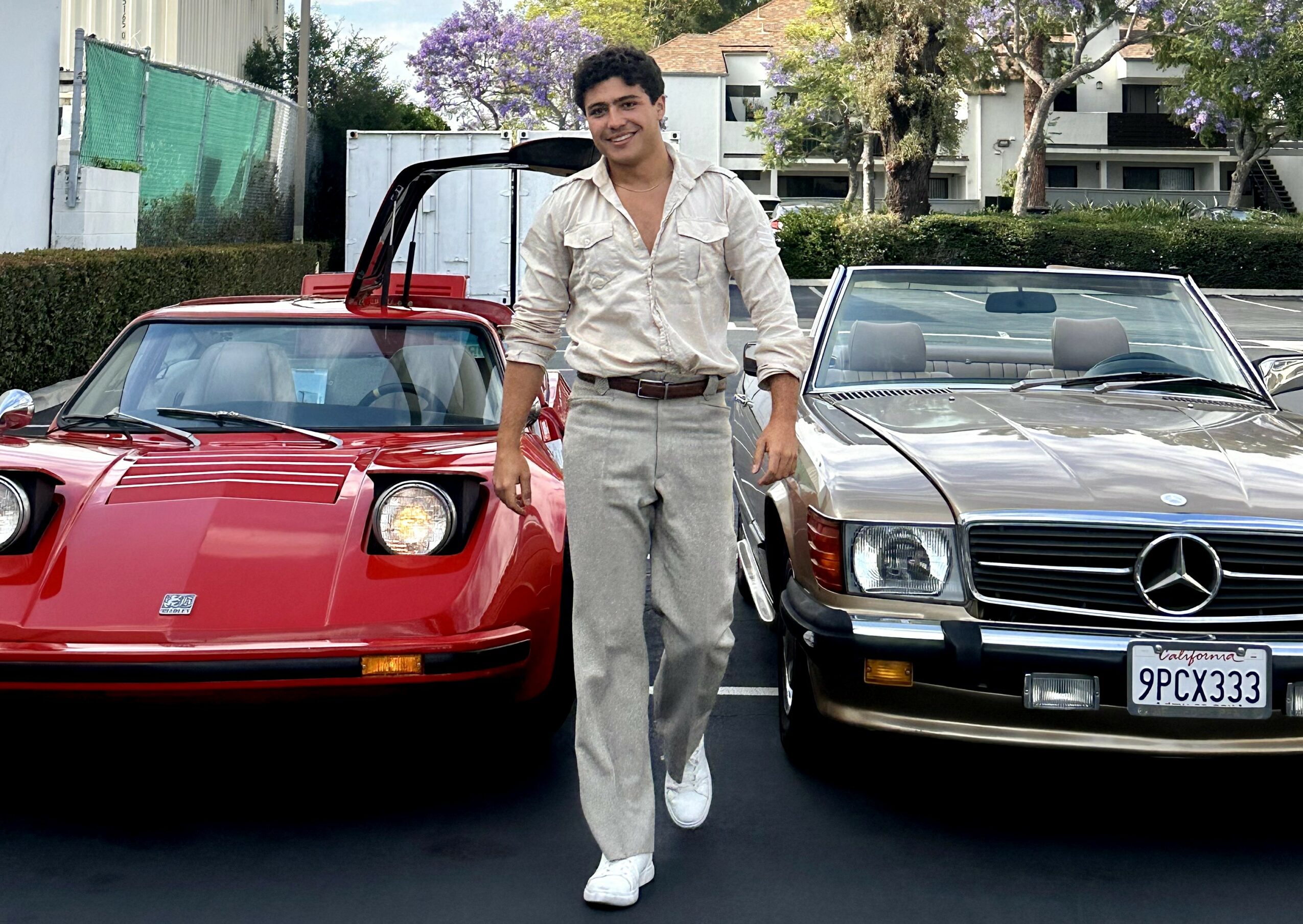
In parallel with all of this, I continue to make music. I am working on future albums and still developing my artistic universe. Music remains central to my life, just like surfing, entrepreneurship, design and collecting. In Los Angeles, I also started building a serious classic car collection. I like to have my cars appear in films from time to time, simply for the pleasure of it. For me, cars are not just machines. They are design objects, symbols, memories and characters in a larger visual world.
Today, I speak four languages: French, Arabic, English and Spanish. And when I look at my journey, I see a few constant threads: scientific discipline, artistic sensitivity, international openness, entrepreneurship and the need for adventure.
I think my life, at least so far, has been the life of a young man in search of knowledge and adventure. I have always been attracted to different worlds that people usually separate: science, music, aviation, business, the military, design, surfing, history, architecture. And today, I feel that society often pushes us in the opposite direction. We are encouraged to fit into boxes, to become easier to define, easier to understand, easier to categorize.
There is also a kind of uniformization everywhere. We see it in colors, in taste, in music, in furniture, in decoration, in lifestyles, almost in everything. Society tends to standardize people because mass consumption works better when everyone becomes the same persona. If everyone wants the same thing, then products can be produced at scale, sold at scale, and optimized through economies of scale.
But at my very young age, and with the few and humble experience I have, my message is the opposite. I believe we should not lock ourselves into one identity. We should always dream of going further. We should never be afraid of bringing together things that seem impossible to combine. You can be military and a musician. You can be a poet and an engineer. You can be scientific and artistic. You can be disciplined and romantic. These are not contradictions. They must enrich each other.
In a way, this is something we remember from some of the great figures of the past. Many of them were scientists, writers, artists, musicians and inventors at the same time. Leonardo da Vinci is probably the most obvious example, and it is meaningful to me that my engineering school carries his name.
That is really the philosophy behind this interview and behind my story. I am not trying to sound arrogant or to show off what I have done at a young age. That is not the point at all. The point is to say that at any age, from any cultural background, this logic is true, possible and necessary.
Do not reduce yourself. Do not let the world make you smaller than you are. Go beyond your limits, combine what people tell you cannot be combined, and keep moving toward what makes you feel alive.
I was shaped by Casablanca, by aviation, by music, by elite academic environments, by the military, by engineering, by Morocco, by Paris and now by Los Angeles. And I think what I am trying to build today is the result of all of that: a life where technology, art, business, beauty and movement are not separate worlds, but part of the same story.
And if I had to end with one sentence, it would be this:
It is urgent to live.
We all face challenges, but looking back would you describe it as a relatively smooth road?
No, it has not been a smooth road — but I also want to be careful with that answer.
I would not say that I had a tragic life or “real” difficulties in the deepest sense of the word. I have been lucky. I had the chance to study, to be supported, to have a roof over my head, food, structure, and access to strong academic environments. I also did not go through major health issues or the loss of someone crucial at a defining moment of my life. So I do not want to dramatize my story or pretend that I suffered in ways I did not.
But I did face challenges. Real challenges.
The first one was discipline and pressure. During my two years in the French preparatory class system, I was working close to sixteen hours a day. Beyond the workload itself, there was also a strong psychological pressure: you know that you have to make it into a very small percentage of students who will succeed and access the best schools. When you are young, that kind of pressure teaches you very quickly how to work under stress.
It is the kind of environment where you see your friends going out, celebrating New Year’s Eve, living their student life — and you are at your desk solving math problems. Today, I can laugh about it. At the time, it was not funny. But I never saw it as something tragic or dramatic. I was simply doing what had to be done.
Then came the military chapter, when I joined the Royal Air School. That was another kind of challenge. At the beginning, you go through sleep deprivation, physical pressure, mental pressure, and a complete change of rhythm. You are no longer just a student; you enter military life. You stop seeing the people you love the way you used to. Your habits change, your body changes, your mind changes. You enter a new stage of life.
And military life is something that only military people can fully understand. It is not only about discipline from the outside. It is about the way you are reshaped from the inside: through hierarchy, endurance, silence, fatigue, physical effort and responsibility. That experience changed me deeply.
Some of these experiences also left marks on my body. Through the army, through physical effort, I went through injuries and fractures. But I do not see that as something to complain about. Those marks are part of the price of a life lived with intensity. They remind me that I tried, that I pushed, that I chose movement over comfort.
And honestly, the real challenge in my life would have been not to do all these things. It would have been to stay comfortable, to avoid risk, to avoid effort, to avoid the paths that demand something from you. That, to me, would have been harder in the long run.
So I do not complain at all. On the contrary, I encourage people to take the difficult road when it calls them, because it is often the most nourishing one. The difficult path gives you more than it takes. It builds your body, your mind, your patience, your identity and your ability to understand the world.
That kind of training also prepared me for the rest of my life. Moving across countries, living between Morocco, France and the United States, adapting to different cultures and systems — none of that is easy. But I think I had already been trained to accept discomfort.
Since I was young, I was used to effort, discipline and sometimes even hardship. When I was ten, I had already climbed the highest summit in North Africa. With my parents, I traveled around volcanoes across the world. I grew up with a taste for sport, pain, lack of comfort, survival, fishing, hunting and the kind of experiences that teach you to find pleasure outside of comfort. That shaped me a lot. It made me understand that comfort is not always the goal. Sometimes growth comes from difficulty.
Another challenge was entering professional environments very young. When you are young, people do not always give you credibility immediately. You have to generate more value, more results and sometimes more money for a company than someone ten years older than you just to be taken seriously. You have to prove yourself faster.
And beyond the technical side, there is also the human side. I would say that the biggest challenges are often human challenges. Learning how to navigate people, environments, trust, ambition, alliances, misunderstandings and responsibilities is probably one of the hardest parts of any ambitious journey. You need social intelligence. You need to understand who the right allies are, who can help you move forward, who you should trust, who you should support, and where you need to create value for others before expecting anything in return. That takes time. It requires effort, observation and humility.
There were other challenges along the way too, on a more personal and human level, but those are things I would rather talk about in person than reduce into a written answer like this.
So no, it was not a smooth road. But I would define the struggles more as challenges than tragedies. I was lucky in many ways, but I also had to work very hard, adapt constantly, and learn how to survive intellectually, socially and emotionally in demanding environments.
And I think that is what shaped me: not a life of suffering, but a life of pressure, movement, discipline and adventure.
We’ve been impressed with Anfa Meridian / MyUsManagement, but for folks who might not be as familiar, what can you share with them about what you do and what sets you apart from others?
ANFA Meridian
ANFA Meridian is the company founded by Yanis Benchekroun, built at the intersection of artificial intelligence, client acquisition, business growth, and sales automation.
Its main product is AAOT — AI Avatar Outreach Technology, an outreach infrastructure developed in-house. The concept is simple: instead of sending cold, generic text messages, AAOT uses AI to clone a person’s voice and face, then sends personalized video messages to hundreds or thousands of prospects at scale.
The goal of ANFA Meridian is to transform outbound acquisition by creating real human-like conversations at scale. The company already works with several international structures and clients, especially in the United States and the United Kingdom, on outbound, acquisition, and large-scale conversation generation.
In short: ANFA Meridian builds AI-powered growth systems designed to make outreach more personal, more effective, and more revenue-driven.
⸻
MyUS Management
MyUS Management is a startup currently under development, with Yanis Benchekroun as CTO. The project addresses a very concrete problem in real estate management: today, managing a real estate portfolio often means dealing with dozens of tools, Excel sheets, scattered emails, poorly organized documents, and unreachable intermediaries.
The platform centralizes the essential parts of real estate administration: owner and tenant onboarding, property tracking, document management, compliance, mandates, brokers, and operational workflows.
MyUS Management is designed for different types of users: small investors, medium-sized portfolios, family offices, and property management companies. For small investors, it brings clarity and saves time. For larger portfolios, it brings structure and scalability. For management companies, it becomes a professional tool that can replace fragmented and improvised internal processes.
In short: MyUS Management does not aim to reinvent real estate. It aims to finally simplify, structure, and centralize its administration in one smooth and scalable platform.
We love surprises, fun facts and unexpected stories. Is there something you can share that might surprise us?
Something surprising is that many people recognize me as “the guy who sang Frank Sinatra.”
That video became very visible, so a lot of people naturally associate me first with music, performance, and singing. And that is a real part of who I am — music has been in my life since I was five years old.
But what many people do not know is that music is not my full-time profession. My main work is actually in business, artificial intelligence, engineering, growth, and entrepreneurship.
I am an engineer and a scientist by training. I studied artificial intelligence and data, worked on strategic technology projects, created AI departments, and today I build companies and technology products. I am involved in projects like ANFA Meridian and MyUS Management, where my daily work is much more about systems, strategy, product, business development, and execution than people might expect.
So the surprising part is probably that behind the singer, there is also a very technical and entrepreneurial profile. People often put me in the musician box because that is the side they discover first. But in reality, music is one expression of a much larger identity. My full-time work is building, engineering, and creating companies.
Contact Info:
- Website: https://anfameridian.com
- Instagram: yanisbenchek
- LinkedIn: https://www.linkedin.com/in/yanisbenchek
- Youtube: https://www.youtube.com/@yanisbenchek
- Soundcloud: https://open.spotify.com/intl-fr/album/5eUgbKaduIYOtzxPLVjOGK
- Other: https://www.tiktok.com/@yanisbenchek



Popular
-

LA’s Most Inspiring Stories
-

Maagic Collins on Building a Fearless Publishing Platform for Truth, Advocacy, and Underrepresented Voices
-
Los Angeles Barea on Turning Green Superheroes into a Global Movement for Youth-Led Change
-

Trisha DuVivier on Bridging the Franchisor–Franchisee Divide with Workhero and “Franulate”
-

Portraits of the Valley
-

Cedar Boschan on Elevating Black Music Rights and Driving Urgent Conversations Around Credit, Equity, and Artist Protection


