




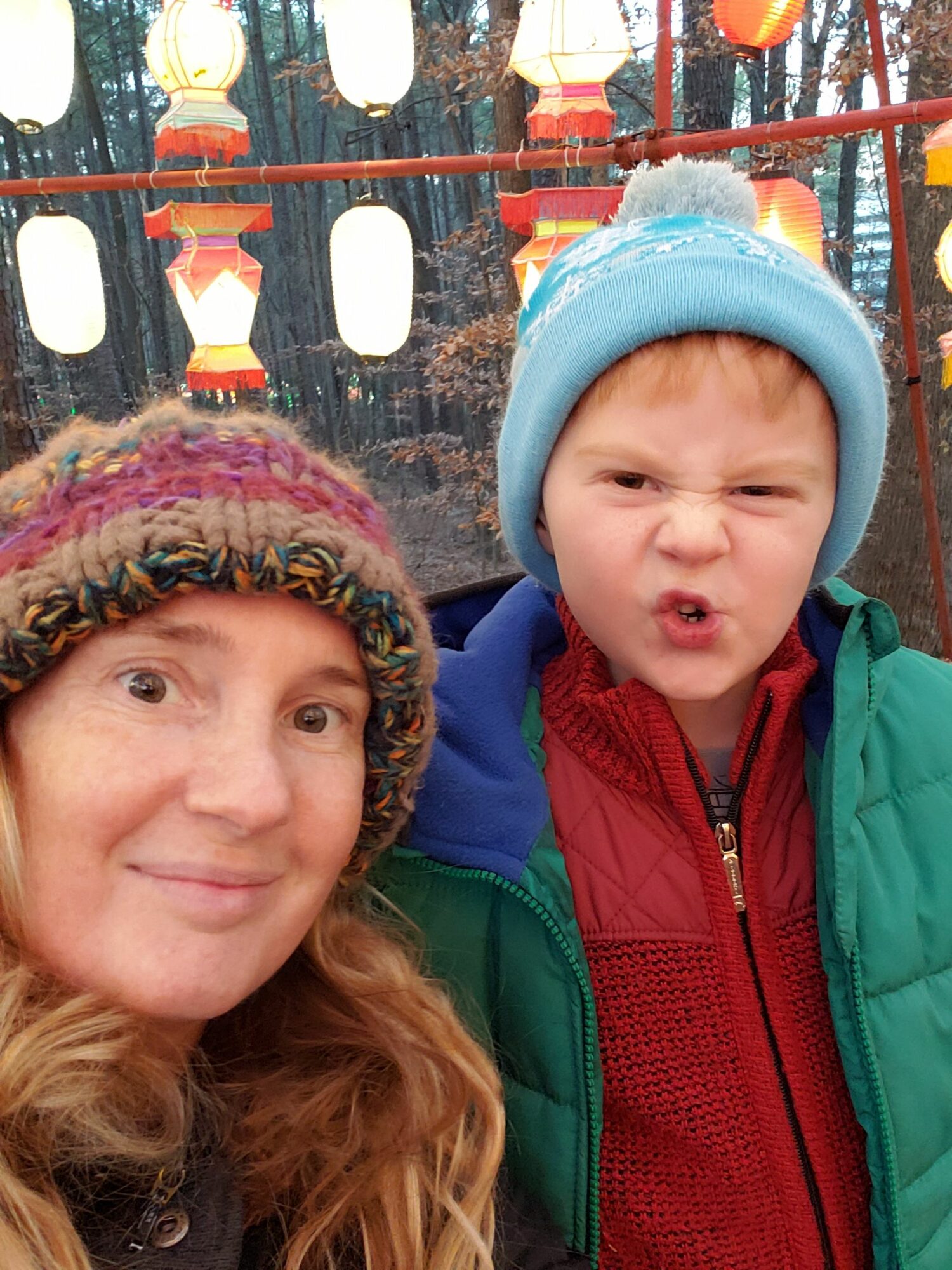
Today we’d like to introduce you to Silke Knebel.
Silke, we appreciate you taking the time to share your story with us today. Where does your story begin?
This is a story of loss, hope and gratitude. I’ve never told this story before like this; it’s never been written down. It’s just a part of me. I’m not a professional writer so please hang in there! I hope that my experiences will bring hope and strength to another family in crisis.
My story begins about 10 years ago when I became pregnant. At 39 I was taken by surprise when I found out that I was pregnant. All was fine until I had my first check-up at 3 months. What was a happy experience soon turned into a devastating one. While I was sitting in the ultrasound room after my first scan, everything went strangely quiet. The sonographer quickly left the room. Then the doctor came in, and said, “I am really sorry to tell you but your baby is showing signs of trisomies like Down syndrome (Trisomy 21), Trisomy 18, and Trisomy 13.” After more tests, it was confirmed that the baby had Trisomy 18 or Edwards syndrome, a serious genetic condition that causes severe developmental, physical and intellectual disabilities. Most affected babies don’t survive infancy. Hearing that kind of news at 39 was beyond devastating. I lost the baby and fell into a depression. I attended a few group therapy sessions specifically for parents who lost children in similar situations. It helped a little. Over time I healed but the scar remained. Then at a work conference a few months later, I went to the bathroom with an uneasy feeling. I remember thinking, I cannot be pregnant again. But I was. And, as you can imagine, I was beyond thrilled to learn that I was pregnant at 40 with a baby boy – naturally.
I drove myself to the hospital when the baby was due. I still remember how everyone looked at me, totally puzzled. They asked, are you alone? How did you get here? I drove I said. Again, puzzled looks. I quickly learned that after a C section you are not physically capable of driving so a nurse and her husband drove me and the baby home 5 days later. The minute my son was born, I knew I wanted more kids, but at 41 that seemed impossible.
Now, I am going to share something that many parents are afraid to do. Even me. But, in order to help families, to understand their struggles, we have to try to be vulnerable. So let’s fast forward a few years.
By 12 months my son was having issues with aggression, but by 2 I knew something was off. While he was physically healthy, something was definitely not right. But still, being my first child, I didn’t know better. I thought all the challenging behavior was still within a normal range.
But, the aggression only got worse with age. When he was 2.5 years old, he grabbed a little girl’s hair at an indoor play area so tight that even two adults could not tear his hands off. The little girl was screaming for relief and finally lost a clump of hair by the time it was all over. She was traumatized. At playgrounds he would hit, scratch, push, and pinch kids. I had to watch him like a hawk. I remember a play structure where kids had to climb a 6-foot rock to get to the top. There were three little girls up at the top no older than 5. My son saw them and also wanted to reach the top, but there wasn’t room. So he climbed up and was just about to push the girls off before I grabbed him. I always found myself apologizing to other parents for his aggressive behavior.
At child care, he flooded the toilet when he was 2 by throwing all the toilet paper in the toilet. That same week, he ripped up the outside floor mats at the center. When he was 4 I brought him to an Easter party. While we were sitting down to eat, he took a stick and tried to jab a dog’s eyes out. When he was 5, he tried to suffocate a friend’s dog by putting pillows on it. He tried it again with a cat.
Being a single parent with no family around, I struggled to find answers to this behavior. What was going on? Did I do something wrong? Was all of this my fault. Could I have been a better parent? Was he born this way? My son’s behavior was so extreme that even with two parents, a family would struggle to manage it.
He was kicked out of two summer camps when he was 5 years old for running off, trying to throw sticks and rocks at other kids, and misconduct. When he started kindergarten at a highly regarded charter school I thought, finally, everything will get better. But, it was the opposite. Things got worse. My son was constantly in trouble by the school staff. He was removed from his class almost every day by the end, hurting children, chasing them with sticks, throwing rocks, not listening, not sitting at his desk, destroying school property, and on and on. Then the IEP meetings started. During the last meeting the teacher said, and I quote, “I was afraid for my life.” While all of this was happening, I was undergoing IVF treatment to have my second child.
One day, my son (at age 5) said to another student, I want to kill my brother. “His brother” meant the baby who wasn’t even born yet. So, as you can imagine, that student went to a teacher and told them what he said. And, that lead to Child Protective Services (CPS) showing up at my front door. The social worker left a note saying, “call me.” My first thought was, why is someone showing up at my door, is this for real? It was real, and after several calls and meetings with CPS, someone finally explained to me why they were at my front door – it was because of what my son had said. That was the first CPS visit, we have had more.
Nevertheless, that was our first experience with kindergarten and CPS. It was awful. My son was basically kicked out of Kindergarten with the school saying that they just don’t have the resources to properly manage my son’s behavior. The second experience wasn’t any better. It was; however, Kindergarten that triggered my son’s first visit to see a medical social worker who diagnosed him with ADHD, ODD, and Conduct Disorder. Having some answers did help. For those who don’t know, Conduct Disorder (CD) is a serious mental health condition in children and teens marked by persistent, aggressive, and rule-breaking behaviors that violate others’ rights and societal norms, including aggression, destruction, deceit, and theft.
My son started stealing at 4, first it was a couple coins from my wallet, then dollar bills, then items at a store like toys, candy, and whatever he could quickly grab. He would steal things out of people’s garages including nails, toys, and sharp objects. He would sneak into the tool cabinets and gardening supplies and take razor blades, staples, and gardening shears and destroy things outside. He threw rocks on landscaping stepping stones and shattered them. He broke brooms and rakes. He would find glass pieces on the nearby streets and use them to scare children. He would throw sticks and rocks in the middle of the street to see what cars would do. I would find open batteries, wires, and broken toys in his tree-house. When I asked him why he took apart all of his electronic toys and expensive remote-control cars, he simply said, because I wanted to. He went through a period where he wanted to start a fire by using pieces of his electronic toys and batteries.
At 5 he was already so good at lying that I couldn’t tell if he was telling the truth anymore. Just recently he stole a few credit cards at a drop off child care center. He said he didn’t do it. Everyone believed him until they watched the video of him taking it.
It’s not just the children who struggle with these disabilities, it’s also the parents. It’s hard to understand how parents cope with these severe cases. I don’t many days. Some months I feel like I have PTSD from all of it. If our society had better resources parents many wouldn’t feel so alone and desperate for help. Even recently, at 8 years old, he was kicked out of The Boys and Girls Club for misconduct.
After homeschooling my son for several months and taking care of a newborn, and working, I enrolled him at the local public school. If I thought the first experience with Kindergarten was bad, this time it was hell. He was pulled out of his general education class and placed in a 2nd grade class several days per week thinking that would help. Teachers threatened to put him in the closet if he didn’t obey orders. He didn’t obey. He was tossed around and constantly in trouble. The school had a behavioral team following him around all day. But still, the suspensions started again, a few days, then they were longer, 4-5 days, and then the IEP meetings turned into manifestation review meetings. For those who are not familiar with any of these terms, consider yourself lucky. Google it. “When an IEP meeting turns into a Manifestation Determination Review (MDR), it means a student with an IEP faces disciplinary action (like long-term suspension/expulsion), triggering a special meeting to decide if their misbehavior was a direct result of their disability or the school’s failure to implement their IEP. Remember, he is only 5 years old at this time.
The special education teachers, who were trained to work with children with disabilities, were coming to me personally and reporting to me that the school administration were abusing my son, calling him names, threatening him, and discriminating him because of his disability. The CEO of the county’s Exceptional Children’s Department then showed up at my front door with a note saying, “Call a lawyer!” The note had the lawyer’s name on it. I filed a lawsuit against the Department of Education. After a few months of dealing with the lawyers, and finally getting around to subpoenas, I just couldn’t continue to pay for the long-term costs of a lawsuit against the county school district. I had a case, but it came at a cost that was greater than the worth of my well-being. So I dropped the case, lost money, and just tried to forget about it.
Fast forward a few more years. It has gotten a little easier. For many parents that have children like my son, none of this may be a surprise. In the U.S., estimates suggest that 3-5% of children may have Conduct Disorder. But for those who have not experienced a child with Conduct Disorder or severe ADHD, this next sentence may alarm you.
Before putting my son on medication at age 6, I used to lock my bedroom door for fear of him hurting us. I had to make sure the cat and my other son, an infant back then, was safe in my room. I would walk on eggshells every day unsure of when his next explosion would be. I could never bring him to a restaurant or store because I couldn’t control his outbursts or behavior. The kids in the neighborhood were afraid of him. I couldn’t bring him to a grocery story without him getting into trouble, running around, taking things off shelves, not listening, scaring staff, or breaking things. I remember the day I brought him to see the psychiatrist for the first time. He climbed over the furniture, jumped off tables, crawled under desks; it was painfully comical. People said to try sports or martial arts so I tried Tae Kwon Do and soccer. Within the second session of Tae Kwon Do, he had all the kids in chaos, teachers were furious, and parents were yelling at him, then me. The master told us not to come back. Same with soccer, he was more fascinated with kicking dust everywhere and taking the ball away from kids that he didn’t make it to the next season.
Can you talk to us a bit about the challenges and lessons you’ve learned along the way. Looking back would you say it’s been easy or smooth in retrospect?
While the first 5 years of parenting left me traumatized, I am so glad that it didn’t stop me from having more kids. My IVF story is for another day, but after 6 failed IVF treatments over the last 7 years, I finally gave birth to two beautiful boys, one at 46 years old and the last at 49 (8 months ago). And now I understand how parents can love parenting. Some kids are just tough, and some aren’t.
Alright, so let’s switch gears a bit and talk business. What should we know about your work?
People often ask me, why did you start National Emergency Child Care Network (https://emergencychildcare.org/)? When I train volunteers, I share stories so they understand how important unconditional support is to a parent struggling, like I was. Just imagine, you are a single working parent trying to navigate a child with severe behavioral issues. But often times that’s not all. Most of our parents are struggling with physical or mental health problems too, or have just experienced a natural disaster and lost everything. About 90% of the families we have helped since 2024 went through Hurricane Helene or the LA Wildfires. Parenting itself is tough, but add on everything else and it becomes impossible sometimes. One day I was driving with my kids and we were stopped at a red light. While stopped at the light, we noticed that every car ahead of us was donating money to a homeless woman with a sign that read, “Everybody needs help sometimes.”
I often tell the following story when I talk about National Emergency Child Care Network (https://emergencychildcare.org/impact-news/) and why it’s so important to help parents and children with free child care and mental health support. In 2022 my second son was born. When I was in the hospital after the C section the doctors said, “Hey sorry, but we left the bandages on longer than normal over the incision area so it might feel like a sunburn for a few days. Given everything, I brushed it off and didn’t think twice about it. Until a few days after I came home, I started noticing more pain coming from the incision area. I thought, geez, these doctors weren’t joking about this sunburn feeling! I kept putting cream on it, and still didn’t think much about it. Until one morning, I woke up about a week after coming home from the hospital with a 6-inch hole in my stomach. I had a major wound infection. It wasn’t only the pain that brought my eyes to the hole, but the blood and fluid pouring out of the hole. I went into shock. I couldn’t move, let alone pick up my leg to carry my body out of the bed from the pain. So there I was, alone with two children and unable to call for help. I froze and the rest was a blur. What I do remember is that it took me 3 months to patch up the hole in my stomach, stuffing gauze in the hole with a long, sterile, medical-grade cotton-tipped applicator every morning and night before bed.
I don’t want parents to suffer like this. I want to be there for them so they can get help with no questions asked! I have often cried in my car wishing for help. No parent should be alone in a crisis — whether that’s a natural disaster or a mental health or medical crisis. I remember calling a crisis hotline to get help with my son, begging for a solution, or somewhere to take him even for a weekend so I could get some respite and relief. But instead of a solution, I was just passed around from crisis line to crisis line with no help, just a ton of questions. All I needed was a caring person to show up at my front door who could take my son for a few hours, like a grandparent or another mom, so I could recharge.
About 40% of the crisis calls we get from across the US come from hospitals or social workers, asking for child care so parents needing emergency surgery can get child care for their kids when they are in surgery. Many are moms having another baby. Some are in the hospital for mental health issues. If parents don’t have someone to watch their children when they are in the hospital, the children go into foster care.
Today I have created a solution that now exists for parents, and I am proud to say that we have helped many parents like me with emergency help and 100’s of children. I remember our first deployment to help a family in Asheville, North Carolina on October 16, 2024, two weeks after Hurricane Helene. I cried on my stairs that night knowing that we rescued a mom desperate for someone to watch her 2-year-old so she could go to work because all the child cares and schools were closed after Hurricane Helene, leaving parents with almost no options of child care. We have helped families who have children with autism and ADHD. We have helped parents during a mental health crisis, or moms in a domestic abuse shelter. We don’t ask them for their financial history. We don’t bombard families with a ton of questions. We simply deliver help when they need it and where they need it. My goal was to create a simple process that minimized the stress level for families. And it’s working. We have a 98% success rate. Meaning, families call, and we deliver help.
For me it’s about taking all of that pain and channeling it for something good. I wanted to create something so families suffer less, even if it’s one day of freedom from that struggle. And it’s not just me; hundreds of volunteers are harnessing their skills and positive energy to do something good through National Emergency Child Care Network and I couldn’t feel more proud of how much they are helping families in crisis. See for yourself!! We have a ton of great videos of our families. 🙂 https://emergencychildcare.org/impact-news/
Are there any apps, books, podcasts, blogs or other resources you think our readers should check out?
I don’t really watch podcasts or use apps or have time to read a ton of books. I wish I did. But with 3 young kids, working, and managing a house — and doing everything else — I just don’t have the time.
One thing that has helped me to be a better mom, and more resilient in general, is practicing Psychological First Aid (PFA). While all of our volunteers go through PFA training to become trauma-informed child care providers, I try to practice some of the tools myself, like breathing, grounding techniques, and holding on to as much “hope” as I can when things are really tough. I don’t have an easy life, similar to many parents, but I do believe that there is a silver-lining to many challenges. And that belief does help soften the struggle and ease the stress. And lastly, I garden A LOT! The neighbors probably think I am crazy, but gardening and weeding keeps me sane. I love it!
Thank you all for reading my story!! 🙂 Reach out if you want to hear more. I am right here (https://emergencychildcare.org/team/).
Contact Info:
- Website: https://emergencychildcare.org/
- Facebook: https://www.facebook.com/profile.php?id=61569458751190
- LinkedIn: https://www.linkedin.com/company/national-emergency-child-care-network/
Popular
-

Portraits of the Valley
-

LA’s Most Inspiring Stories
-

Rick Norris Learned That Building a Successful Business Means Building a Life You Actually Want to Live
-

How Olivia Rush Turned Survival Into a Mission to Help Others Keep Going
-

How Bibi Goldstein Is Helping Entrepreneurs Reclaim Their Time by Embracing the Power of Delegation
-

Victoria Hasson is Redefining Voice Coaching Through Community and Collaboration


