




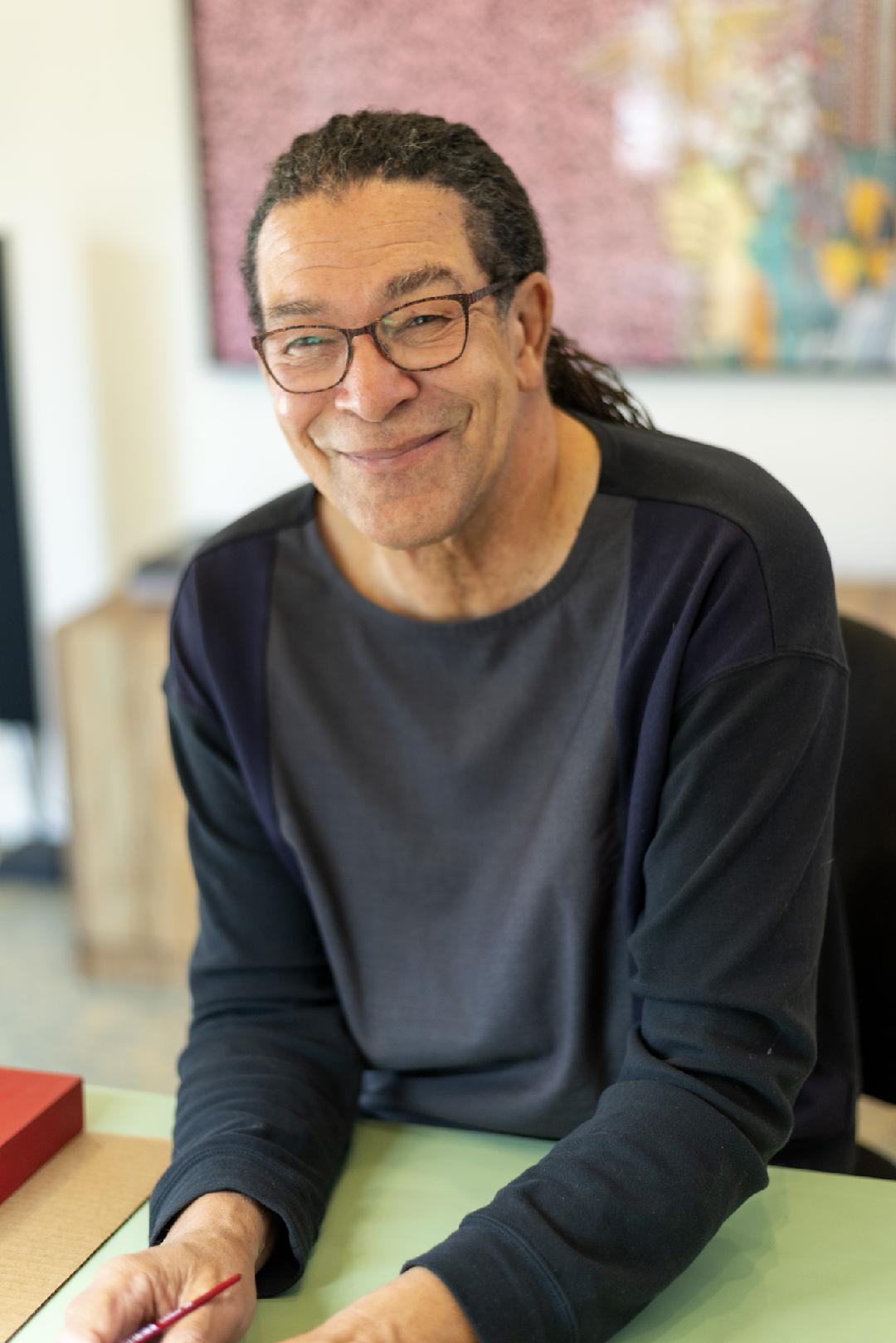
Today we’d like to introduce you to Mark Steven Greenfield.
Hi Mark Steven, please kick things off for us with an introduction to yourself and your story.
Mark Steven Greenfield was born in Los Angeles, California in 1951 to a military family; a factor that would be of considerable importance in his development as an artist. Living in Taiwan and Germany, he was exposed to both eastern and western art and philosophy at an early age and these experiences have had profound influence on him ever since. He attended California State University at Long Beach, graduating in 1973 with a bachelors degree in Art Education. He later earned a Master of Fine Arts degree from California State University at Los Angeles in painting and drawing. Over the past thirty-five years he has established a reputation as both a curator and a fine artist, having exhibited extensively in the Southern California , Europe and Asia. One of his most notable exhibitions entitled “Crenshaw Consciousness” chronicled the artist, musicians, poets, dancers and eccentrics that live in the Leimert Park area of Los Angeles. In recent years he has been exploring the effects of African American stereotypes, from blackface minstrelsy to the racists cartoons of the 1930’s and 40’s, African based spirituality and iconography
He was the recipient of a Golden State Mutual Life Insurance Company scholarship as well as a House of Seagrams scholarship, was the 2008 recipient of the LA Artcore Crystal Award ,and the 2012 City of Los Angeles COLA Individual Artist Fellowship. He was a former board member of the legendary Brockman Gallery, was past president of the Los Angeles Art Association/Gallery 825 and served on the boards of the Watts Theatre Company Korean American Museum and the Armory Center of the Arts. He was a founding member of the Black Creative Professionals Association and has served on numerous committees and community councils. He was of the Watts Towers from 1993 through 2002, retired from his position as director of the Los Angeles Municipal Art Gallery.
His most recent work, notably the Black Madonna and Halo series, plays with generally accepted notions of what constitutes sainthood and deification. His Madonnas are reinterpretation of the classical paintings by Rafael, Da Vinci, Bellini and others with references to racial supremacists , here characterized as victims in a revenge fantasy.
He intentionally draws the contrast between the unconditional love between mother and child and atrocities in hopes of stirring up feelings of empathy. In the Halo series he has researched little know figures of the African Diaspora and produce contemporary icons executed in the Byzantine style. Here he is relying on the original purpose of Icons as something carried into battle to make the not so subtle statement that “ God is on Our Side”. He feels that we need a new set of Icons to carry into a new round of battles for social justice.
Can you talk to us a bit about the challenges and lessons you’ve learned along the way. Looking back would you say it’s been easy or smooth in retrospect?
When I finished my undergraduate work I was just arrogant enough to feel I didn’t need a masters degree. It took me years to come to the understanding that not having one was an impediment to trying to market my work. Then I came to the realization that contrary to what I had come to believe, there was a certain “protectionism” in the arts. Gallerist would tell me, “We like your work, but it’s so ethnic”, which was code for Black, which was code for unmarketable. For many years I , along with many of my contemporaries, would exhibit in alternative, non-profit spaces or ethnically specific spaces. There were a few African American artists who were able to slip past the gatekeepers so as to give the appearance that the art world was not exclusionary, but it was often dependant on the content of the work. In the late ninteen-eighties things began to change, and there has been a growing appreciation for the African American aesthetic for the past 40 years. My work along with that of a younger generation of black artists is being recognized.
Thanks – so what else should our readers know about your work and what you’re currently focused on?
My life can best be described as a “Balancing Act” . I realized that I needed to find work to make ends meet, but wanted to do something which, in some way, was related to the arts. My first job out of college was doing window displays for a department store, while at the same time teaching art to children at a local recreation center. I became director of the center after four years and started an exhibition program, all the time, continuing to make my work. Later I taught graphic design in a vocational training program run by Rosey Grier, I worked for the Los Angeles Police Department as a graphic designer, as a professor at Los Angeles City College and ultimately for the Los Angeles Cultural Affairs Department as director of the Watts Towers and later the Los Angeles Municipal Art Gallery. I put in my share of long hours working from nine to five on the job and into the late hours making art. I came to look at the job as a necessary distraction that allowed me to do my work and always tell my students to find a “Side Hustle”
Can you talk to us about how you think about risk?
Every artist takes risks. The very act of making art is articulating that which cannot be explained in any other way, from a perspective that is unique to the individual making it, and invariably someone is bound to take issue with that. The end result can either be accepted or rejected, but at the very least it lends itself to contemplation. I’ve taken risks in presenting my work, particularly in the “Blackatcha” and Animalicious series that center around African American stereotypes. When the work first came out, I was roundly criticized for touching the proverbial “third rail”. I come from a spiritual teaching that tells us that if you continue to surpress something, you can never remove the power it has over you. In my work I sought to alter the content, to present an entry point, and re-appropriate the appropriated, thus neutralizing it. I’ve adopted the same strategy in my curatorial practice as well.
Contact Info:
- Website: https://www.markstevengreenfield.com
- Facebook: Mark Greenfield Mark Steven Greenfield
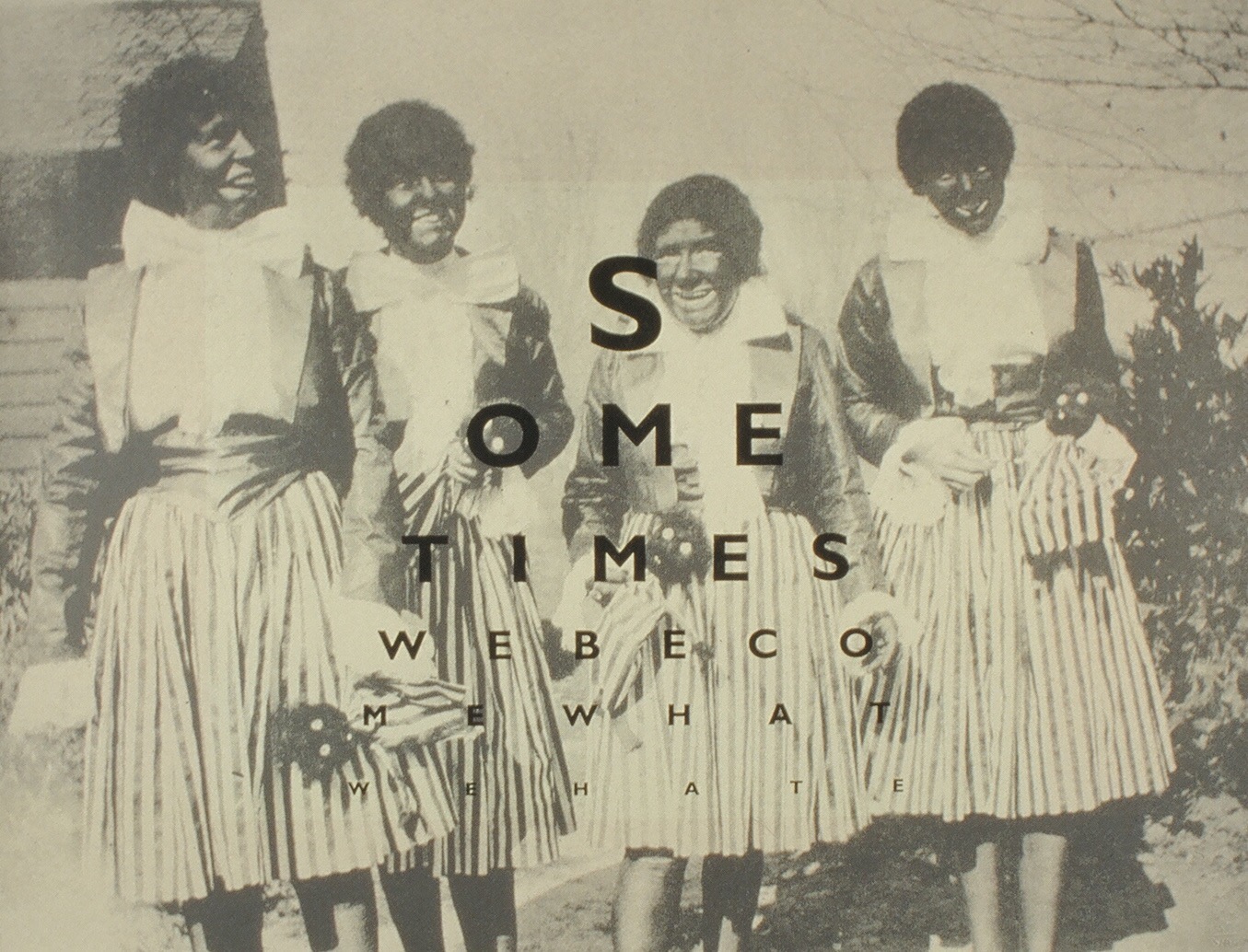
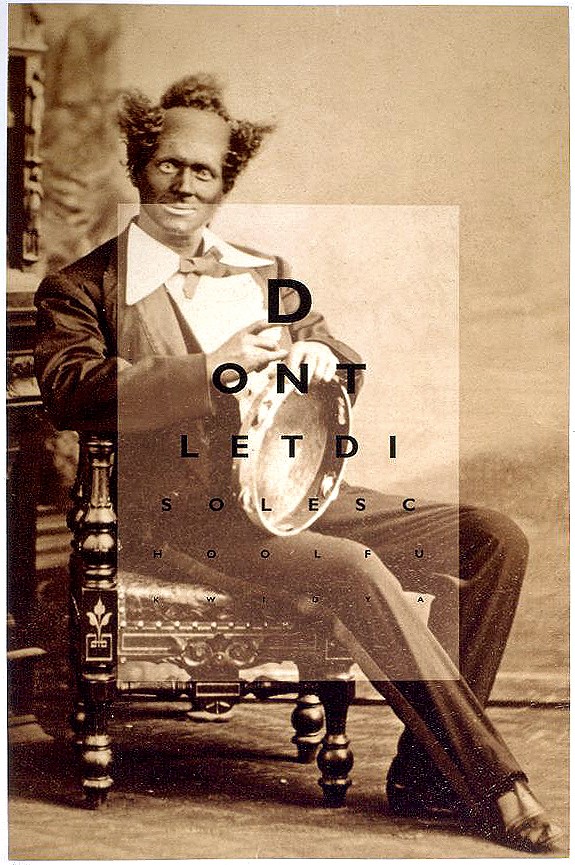


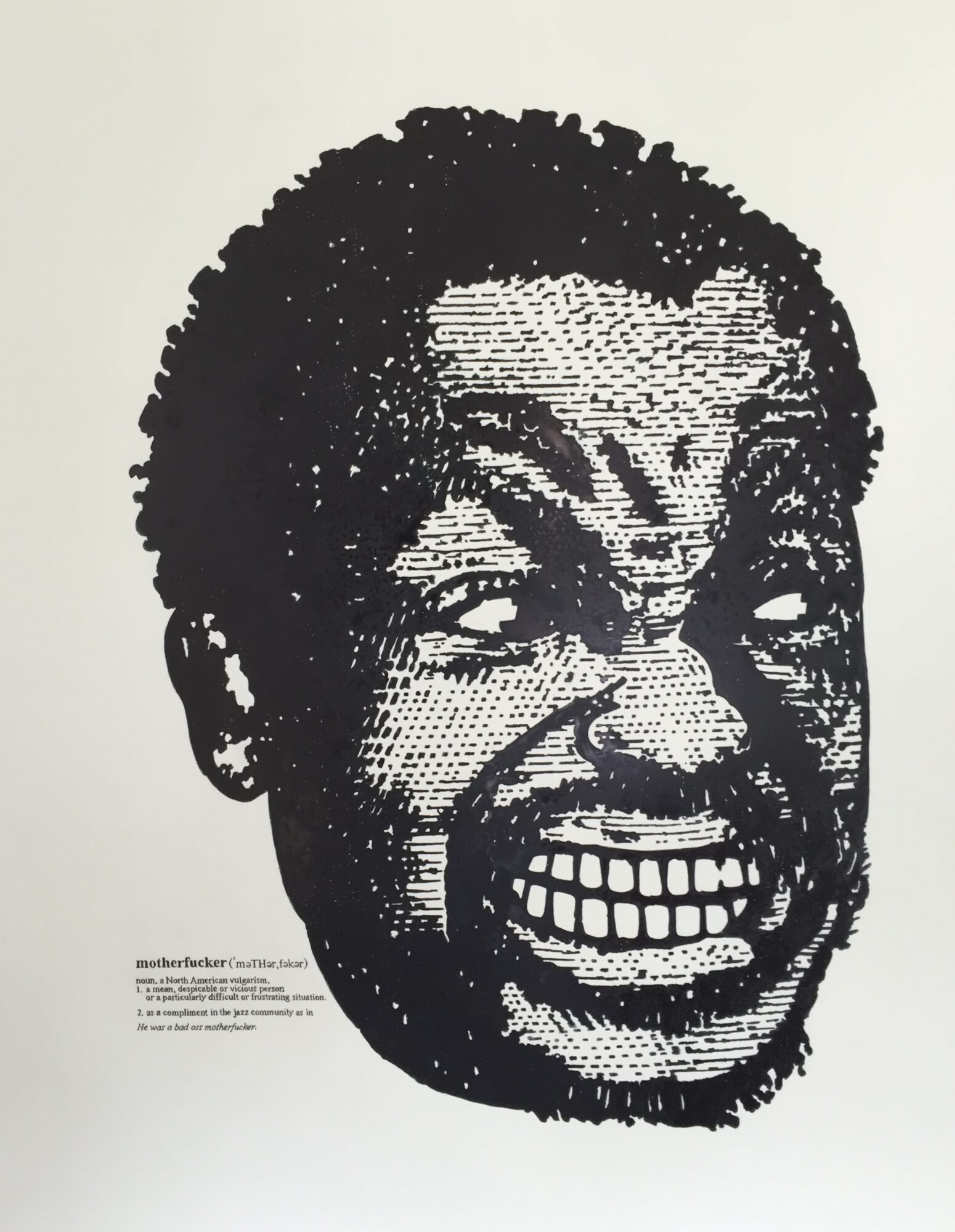
Image Credits
Tony Pinto (portrait)
Popular
-

Portraits of the Valley
-

LA’s Most Inspiring Stories
-

Maagic Collins on Building a Fearless Publishing Platform for Truth, Advocacy, and Underrepresented Voices
-

Los Angeles Barea on Turning Green Superheroes into a Global Movement for Youth-Led Change
-

Trisha DuVivier on Bridging the Franchisor–Franchisee Divide with Workhero and “Franulate”
-

Cedar Boschan on Elevating Black Music Rights and Driving Urgent Conversations Around Credit, Equity, and Artist Protection


