




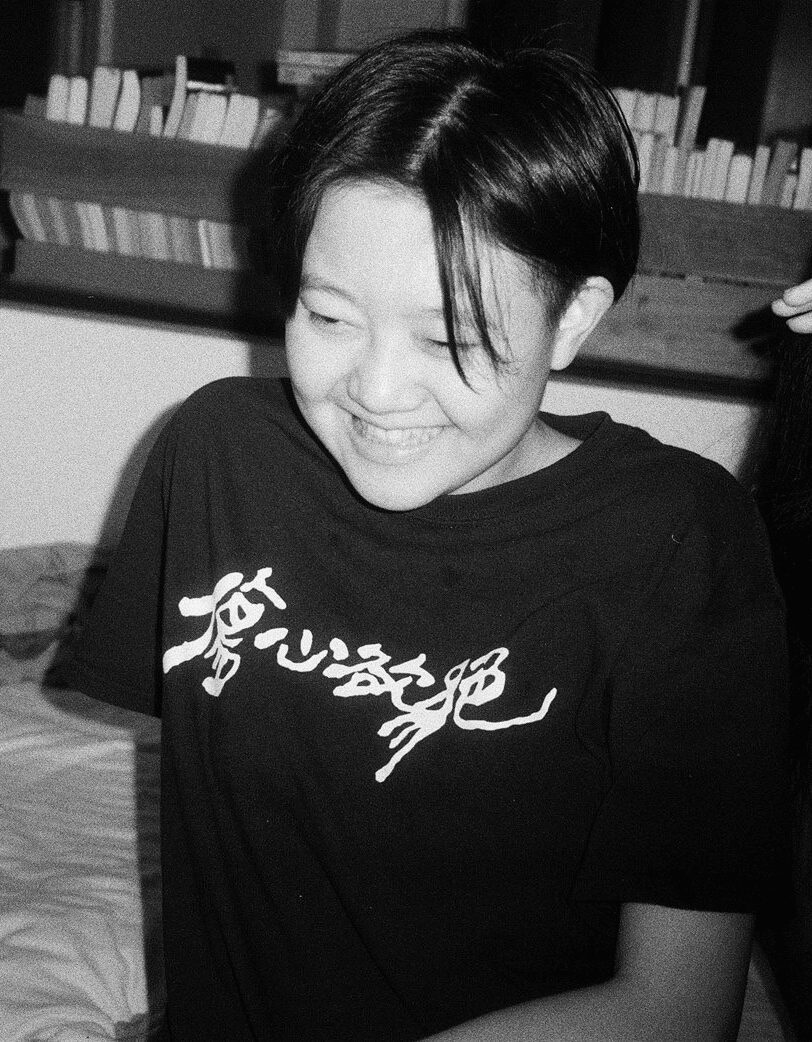
Today we’d like to introduce you to Cheng-Hsuan Hsieh.
Hi Cheng-hsuan, thanks for sharing your story with us. To start, maybe you can tell our readers some of your backstory.
I was raised in a videotape store in Taipei, Taiwan. My parents devoted themselves to the videotape industry in Taiwan during the 1980s, and some of my earliest memories are of sitting on the store counter when I could barely speak. I often think that this was where my relationship with cinema first began.
I didn’t always envision myself becoming a filmmaker, let alone a director. In high school, I was deeply interested in biology, and for a long time, I dreamed of becoming a surgeon. It wasn’t until I encountered psychology that I began to reconsider this path. I realized that my fascination of how human body function was rooted less in its physical form and more in a curiosity about how the mind works, like how people think, make decisions, and behave.
After gaining this clarity, I pursued a degree in psychology during my undergraduate studies. There, I was introduced to multiple ways of understanding the world, from neuroscience to social psychology to statistical analysis. These perspectives have since become foundational to how I approach storytelling and world-building in my filmmaking practice.
Throughout these years, however, a small but persistent desire to be part of filmmaking remained. Perhaps it stemmed from my childhood, when I would wander through the videotape store, pulling tapes and DVDs off the shelves just to read their synopses, imagining the worlds within them.
I began my journey in film as a writer. Over time, I became increasingly involved in different aspects of production, working as a production assistant, assistant director, and editor. These experiences ultimately led me to pursue formal training in filmmaking and to begin creating my own work. I am currently a student in the Film Directing Program at the California Institute of the Arts.
Would you say it’s been a smooth road, and if not what are some of the biggest challenges you’ve faced along the way?
I have come to believe that there is no smooth path in life. Since I did not study filmmaking during my undergraduate years, I often encountered obstacles and struggled with a sense of not being qualified for creative roles in this industry.
My approach has always been grounded in trial and error. While I was in Taiwan, I took on many small roles in the film industry, simply to understand how things worked, knowing that I lacked the hands-on experience that others had. The beginning was often challenging.
I wasn’t focused on what I might gain from these experiences; instead, I tried to stay open, to enjoy the process, and to take in as much as I could whenever an opportunity came my way.
Can you tell our readers more about what you do and what you think sets you apart from others?
My work spans both narrative and experimental filmmaking. While I began my journey in narrative film, my approach and methodology expanded after I moved to California.
In my narrative work, I ground my storytelling in questions of identity and relationships, both between individuals and between the individual and society. When developing a story, I often begin by constructing the world my characters inhabit, as I believe that a person’s formation is deeply shaped by their environment. I am particularly drawn to the historical contexts embedded within the worlds I create.
In my experimental practice, I explore techniques such as videographics and datamoshing. I think my upbringing in a videotape store has influenced my interest with analog signals and image degradation. I am especially drawn to the unpredictability of these processes that I can never fully anticipate the outcome.
Narratively, my experimental works often take the form of essay films, through which I explore speculative or science fiction–like ideas, frequently engaging with themes related to neuroscience.
How do you define success?
I try not to dwell on these thoughts while I am in the process of making. What matters most to me is discovering the internal logic that drives both the storytelling and its form. Each project demands its own set of rules, and my role is to uncover and follow them as truthfully as possible.
Perhaps I would define success not by external validation, but by a sense of satisfaction with the coherence of that inner logic, whether the work feels complete and honest on its own terms.
Contact Info:
- Instagram: https://www.instagram.com/hch.414/
Popular
-

Portraits of the Valley
-

LA’s Most Inspiring Stories
-

Finding Balance Through Art: Theresa Croft on Blending Music, Wellness, and Visual Storytelling into a Holistic Creative Identity
-

From Street Corners to City Tours: Chef Chuck Glaster on Building SOULD Out Into a Culture-Driven Culinary Movement
-

From Rock Bottom to Calling: How Hasani McLean-Davis Found Purpose Through Faith and Music
-

Building a Scalable, Soulful Travel Brand: How Abboud Khallouf Turned Morocco Into a Global Experience


