




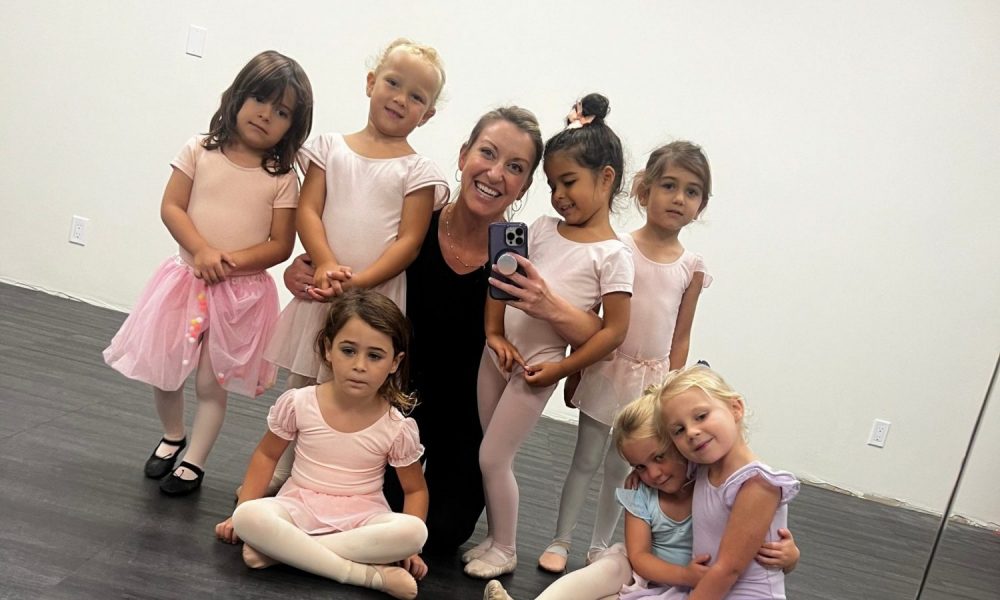
Today we’d like to introduce you to Amie Hanrahan.
Hi Amie, it’s an honor to have you on the platform. Thanks for taking the time to share your story with us – to start maybe you can share some of your backstory with our readers?
As a young girl, I loved to dance. My mother’s best friend was a former ballerina, and from a young age she encouraged my mom to get me into proper classes with solid training. During the ’80s and early ’90s, I grew up going to Long Beach Ballet Arts and trained with many Russian dancers, many who did not know English who were defecting from their country at that time for a better life in America.
Then in 1991, at the age of 9, my life changed. My older brother died at the age of 12 from an aggressive form of brain cancer. With a mourning family and a world that seemed to crumble around me, I found my refuge at my dance studio. It became an oasis and a place where I could escape the sadness of our family’s loss.
Dancing became a part of the way I functioned. I continued to dance through my middle school, and high school years both in classical ballet, then I transitioned to high school and collegiate dancing at USC. But, upon graduation I decided it was time to “grow up” and stop dancing and start becoming an adult.
After getting married and being home with two small boys, I was looking for a way to make a little income. Some of my other new mom friends I met at the park encouraged me to begin teaching some dance classes for their children. I rented a small room in the basement of a local church and began a small weekly class in 2011, which was called “Ballet with Miss Amie”. Over the next eight years, my little children’s ballet classes developed into a thriving petite dance in a small room on a side street in Sierra Madre for students 3-10 years old.
Then in 2019, knowing that our small dance studio was running out of space, we were graciously offered to build a new studio in an underutilized 2,700 sq ft office building/church meeting hall at Christ Church Sierra Madre. We transformed this old building, rebranded into Sierra Madre Dance Center, and opened our doors in September of 2019….only to be met with covid six months later.
During those long days, months, and eventually years of covid, I found myself creating the same space for our students that I so desperately needed exactly 30 years prior. During that period of life when everything stopped, our youths’ need for community, physical activity, and purpose remained, but it was all stripped from them. Our studio did all that we could to just keep going during that time with closures, re-opening, closing again, park classes, private lessons, zoom classes, pod classes, six-foot dancing zones, socially distanced outdoor recitals, masks, shields, hand washing, temperature checking…we did everything and anything we could to keep moving forward for our students.
Once we were able to come out of that period of life and see it finally in the rearview mirror I realized that I had not just opened up a dance studio to teach kids how to plié, relvé, and jeté. Instead, I, along with the amazing men and women who work at our studio, have represented an extended home for so many of our students when they desperately needed it.
Would you say it’s been a smooth road, and if not what are some of the biggest challenges you’ve faced along the way?
The struggles of Covid were significant. I would watch the “covid counts” daily to try to see if we were going to be forced to close again. Living in a constant state of concern that everything you invested and poured yourself into would not return or if we were unable to operate our business and pay our employees and bills. As a true small business, when we were eventually able to apply for PPP we were only given $3,500, all while we were trying to maintain our staff. Since then, the struggles with our current business is usually trying to keep up with a business that is always changing! As our students grow, we are constantly trying to find new ways to extend them as dancers. In the last six months, we opened an additional 2,500 sq feet in our facility to try to keep up with our dancer’s growing bodies, because dancers need space. Plus, we are producing a Nutcracker at the San Gabriel Mission Playhouse for the first time.
Thanks – so what else should our readers know about your work and what you’re currently focused on?
Our studio has a distinct style and reputation. For many years we were known as a “little kid studio”, because of our fantastic preschool ballet program. Our preschool classes introduce young students to the joy of dancing through a playful yet structured class curriculum. The vast majority of our students began with us at a very young age and so as they have grown, we have had to evolve.
Today, our focus is to create well-rounded dancers with a solid technical ballet foundation. Many studios will either be specific only to ballet, and some studios will focus on other styles such as hip hop, jazz, etc. We strive to create dancers that are proficient in both. My own experience of classical ballet training and then integrating high school, collegiate, and competitive dancing helped me understand the value of being well-rounded but understanding the importance of a firm technical foundation. We provide options for our students and are blessed with incredible instructors who are able to stretch and encourage our students in multiple genres.
Can you talk to us about how you think about risk?
I would consider myself a high-level risk taker! I am also someone who walks through life in strong faith, and I believe that every decision we make will have a purposeful outcome, whether it is positive or negative. I would rather fail forward than not fail at all and we encourage that same philosophy with our students.
As a dancer, you must take risks, try new steps, and push yourself to do something that feels odd or uncomfortable at first. Dancers ask themselves to control their bodies in ways that are unique and defy regular natural movement. But, through consistency, lots of mistakes, and eventually resilience, you learn to become proficient in something new.
Also as a dancer, we ask students to take a good look in the mirror and determine how to self-correct and improve. This is a discipline that will help them in all aspects of their life as an adult. We must be willing to celebrate things we do well, but also be willing to recognize and acknowledge where we can improve upon so we can become the best version of ourselves.
Contact Info:
- Website: www.sierramadredancecenter.com
- Instagram: SierraMadreDanceCenter


Popular
-
Cedar Boschan on Elevating Black Music Rights and Driving Urgent Conversations Around Credit, Equity, and Artist Protection
-

Portraits of the Valley
-

LA’s Most Inspiring Stories
-

Robin Olive on Building an Inclusive Performing Arts Movement and Expanding Opportunities for Every Student
-

Que Johnson on Building Brands That Last: From Visibility to True Market Authority
-

Christina Wren Steps Into the Director’s Chair to Tell Stories That Feel Like Home


