


Hi Oscar, so excited to have you on the platform. So before we get into questions about your work-life, maybe you can bring our readers up to speed on your story and how you got to where you are today?
My path to being a public educator has been non-traditional. My undergraduate degree from California State University, Northridge is in Criminology. I had every intention of being a lawyer and being an advocate for the underrepresented. I held a part-time position as a campus supervisor at a middle school in the Los Angeles Unified School District during my college years. While working part-time, I was regularly also helping with an after-school program that accidentally had me tutoring middle students. This apparently caught the eye of the principal and would later lead to my career as an educator. I am a 1994 Northridge earthquake graduate. The earthquake and its impact delayed my graduation by a semester so I received my undergraduate degree in December of 1995. I had planned to study heavily for the LSAT and was gonna take the time to be ready and go to law school.
The principal at Porter Middle School called me in for a meeting that changed my life. She had presented me with a full-time teaching position. Before I knew it, I was in downtown Los Angeles at Human Resources of LAUSD signing a contract via an emergency credential. It didn’t take long for me to fall in love with being a teacher. I soon enrolled in a formal credentialing program and a Master’s in Education program. My studies extended to the USC Rossier School of Education and a doctoral degree in Educational Leadership in 2014.
I worked a total of 8 years as a classroom teacher in the Burbank Unified School District serving at-risk students at the Community Day School.
Through good fortune and opportunity, I was mentored and guided to explore school administration leadership. In 2007, I was appointed assistant Principal at John Burroughs High School. Through mentoring and more coaching, I was then afforded another opportunity to serve as a principal at Luther Burbank Middle School in 2015.
As a school principal, I was fortunate to have worked with a community that earned the following state-level award distinctions: Gold Ribbon School (2017), Exemplary Arts Education (2017 and 2021), Exemplary Career Technical Education (2017), Title 1 Academic Achieving School (2017), and a California Distinguished School (2021). I was also named Middle School Principal of the Year for the Association of California School Administrators (ACSA) Region 15 (the largest region of the state).
In the Fall of 2022, I was fortunate to have been offered a position in a central management leadership role in the Glendale Unified School District as the Director of Equity, Access, and Family Engagement. I proudly work with a team that is responsible for providing coordination and leadership for culturally responsive education, family engagement, District and site-level categorically funded programs (federal and state-funded), grant-funded programs, and the Local Control Accountability Plan process for the district.
My story continues and has grounded me and shaped my educational philosophy. The work of diversity, equity, inclusion, and belonging has to begin with self-awareness. All educational partners must recognize how race, ethnicity, gender, sexual orientation, religion, socio-economic status, and abilities/disabilities all intersect. We must acknowledge personal biases and seek to better understand differences. My professional mission is to “over serve the underserved.”
We all face challenges, but looking back would you describe it as a relatively smooth road?
Enrique and Bertha Macias are my parents and my heroes. They have afforded me with so many amazing opportunities. I am so blessed with this good fortune. They both have shown me how to live, to love, and to appreciate what this world has to offer. I work hard so I can make them proud. My hope is that one day, I can pay them back for all that they have done for me. They have lived a life of work and sacrifice for their sons. I have an endless amount of love and admiration for them both. They are also immigrants from Mexico who once married, decided to come to the United States in 1968. My older brother was born in 1968 and in 1972, I was born. My youngest brother was born in 1980.
My childhood was full of family, love and adversity. It was also a childhood entrenched with Mexican culture. Even though I was born at Kaiser hospital in Panorama City, my first language was Spanish. I was an English language learner. As a matter of fact, I didn’t speak English until I was confronted with my first education experience at Montague Elementary School in Pacoima in the Los Angeles Unified School District. In this Kindergarten class, I unfortunately experienced discrimination. Yes, this happened to me at age 5.
Here is what I remember: I was yelled at for not speaking in English. I recall that there were two adults in the classroom and they were attempting to ask me something. I didn’t understand and said something back to them in Spanish. I was told that “we are in America and in America, we speak English. The only reason I know that was said to me was because one of the two adults was a Latina who came to my rescue and translated for me. The other adult, the teacher, was a white woman.
I felt a sense of embarrassment and shame and at that very moment, it instilled a sense of drive and determination. I decided at that young impressionable age that I never wanted to be made to feel that way ever again. This was my origin for my drive to learn and learn quickly. Not only did I want to learn the English language as rapidly as possible, I also had a thirst to learn as much as this world had to offer.
My quest to master a new language monopolized my early years and memories. I would use television and my older brother to learn as much English as quickly as possible. I also would encourage more English to be spoken at our house. This actually served the entire Macias family well because we all had a chance to practice and better assimilate. This assimilation didn’t come without unintended consequences.
The older I got, the more I was exposed to the discrimination/racism my parents faced because they were Mexican. “Do you speak English? Go back to your country! Wetback! Beaner!” This is only a small sampling of what I heard my parents had to endure in my presence. For the most part, my parents insulated my brother and I from this ugly societal reality. We were looked at and treated differently because of our brown skin and ethnic background. My elementary school years were dominated by experiences like this. These experiences would drastically shape my teenage years and early adulthood.
The unintended consequence was, in many ways, my denial of my own cultural identity. In order to avoid shame and embarrassment, I felt the need to be as American as possible and fully assimilate. To me, this meant to speak and not have an accent. To dress in a fashion that seemed more White than Mexican. I also wanted to be consumed with learning. I became a voracious and anxious child that couldn’t get enough of textbooks, newspapers, and World Book Encyclopedias were my best friends. I wanted to know about everything!
Grades 1 through 8 were spent in a catholic school in Pacoima, CA. Pacoima was, and still is, a largely low socioeconomic city that was Hispanic. High school was a different story. I attended a highly reputable and prestigious private institution in a middle to high-socioeconomic city. From a demographic standpoint, there weren’t many students of color in the entire high school of 1,100 students. I believe we made up less than 10% of the entire school population. The faculty had less representation of color. Probably only 5%. Needless to say, I was in the minority and it was very obvious and thick.
I had a terribly tough time transitioning to this social and academic environment. There were many tears and strong moments of anxiety and fear. All I wanted to do was fit in and be accepted. I didn’t want to be that Mexican kid or have any reason to stand out as a minority figure in every class I was in. This was exhausting. At home, I refused to speak in Spanish and would practice speaking without an accent. Consequently, this led me to start a period of my life where I was ashamed of being a Mexican American. I had no cultural pride. Shame on me for that. I also created family conflict because of this. Shame on me for that too.
Baseball was an opportunity for me to get involved more socially and be more accepted. Initially, this worked. As a 9th grader, I made the junior varsity baseball team and with that, I gained 20 teammates and friends. I felt so much pride and was full of excitement to be on that team until one fateful bus trip to a game to Oxnard High School. For those familiar with the drive, getting to Oxnard High School required a trip on the 101 freeway headed north pass the many beautiful scenic farm fields that lined the freeway in the city of Camarillo. The following incident is a sad but true story. It also turned out to be a very powerful moment in time for my personal life and one that I often refer to as an educator.
My teammates and I had our usual spots on the bus for any road game. This game was no different. I always sat near the front. The two coaches for the team also sat near the front. “Hey Oscar, what farm is your dad working on right now?” was shouted as we traveled through Camarillo. The entire bus erupted into laughter. I shrank with anger and sadness. Since I was in the front of the bus, I was a few rows from our coaches. I anxiously looked towards them for help and/or support. I did not get it. What I did get was a reminder about race and discrimination again. The two coaches turned back and joined in on the laughter. Both the head coach and assistant coach were white males.
I again resorted to pushing that aside and resorting to mix in and assimilate as much as possible. This was my way to survive high school. For perspective’s sake, that meant an additional three more years. Here is what I can tell you about my high experience. I learned so much. Truth be told, I learned about life and social interactions to a great extent. I learned more outside the classroom than I did inside.
California State University, Northridge was my next academic chapter in my life. Immediately, I faced internal and external confusion regarding my background. I was encouraged to join the Latino Business Association and my courses of study were predestined. All my courses and students rostered in them were all Latino young men and women. One class in particular, troubled me greatly. It was an Introduction to Chicano Studies course. The very first class setting had its usual practice of everyone introducing themselves and indicating high school attended and if you were local to the community. I was near last amongst roughly a class of 30. I had a huge ache in my stomach and knew my response would have solicited ugly responses.
“Hi, my name is Oscar Macias and I went to XXXXX XXXX High School in Sherman Oaks. I grew up in Pacoima but now live in Granada Hills.” As I predicted, my introduction was met with snickers and comments such as “oh oh a coconut, brown on the outside but white in the middle.” Much like my baseball trip bus encounter, it involved laughter from everyone, including, in this case, the professor in the classroom. I felt alone, ashamed, and embarrassed. I shriveled up and decided again to survive.
Here I was at a young age of 18 years of age, questioning my place and fit in my community. I was a brown boy of Mexican descent who experienced shame and pain because of it in high school. Now, I wasn’t brown enough to be a part of my actual ethnic peer group. It created stress, anxiety, and confusion.
It didn’t take long after completing the semester for me to make changes. I pulled out of the Latino Business Association and decided on a different course for myself. I changed majors and took more classes that I wanted and felt more control of my academics.
I am not a person who immediately cries out against racist/discriminatory acts upon me. I have been able to process it quickly and decide to be the bigger person and allow myself to reflect and grow from the experience. I also know not to react and engage because of the irrational behavior behind the act. Age and experience have also been a great influence to me. Add this to my role as a public educator, I feel more empowered and better suited to create positive and inclusive change. I work to do as much as I can to ensure that every student, especially those of color, never are made to feel like I did. I have actually adopted a new motto and way of operating as a public educator. My goal and mission is to “over serve the underserved.”
I am a proud Mexican-American citizen of the United States. I have used the term Chicano or Latino when pressed to name my ethnicity. I am aware that there are new more politically acceptable terms gaining popularity, such as Latinx. I also know the deep pride that I have of my Mexican ancestry and my American upbringing.
Can you tell our readers more about what you do and what you think sets you apart from others?
I am the Director of Equity, Access, and Family Engagement in the Glendale Unified School District in Glendale, Ca.
I am responsible for providing coordination and leadership for culturally responsive education, family engagement, District and site-level categorically funded programs (federal and state-funded), grant-funded programs, and the Local Control Accountability Plan (LCAP) process for the District.
I am most proud of all the professional friendships that have been created throughout my career. I am most blessed for all the mentorship and guidance that I have received from many outstanding educators that have greatly influenced my career.
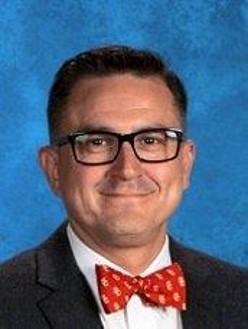
Wearing a bow tie is what I am known for and is what also sets me apart from others. The bow tie is symbolic to me and is a reminder of the importance of public education to help all the underrepresented/underserved.
Dr. Pedro Garcia, from USC’s Rossier School of Education, was one of the many professors assigned during my studies while I pursued my goal of attaining a doctoral degree in educational leadership. He later guided me during my dissertation research and writing as Co-Dissertation Chair. Ultimately, I was able to call him a mentor and friend. Sadly, he passed on in 2019.
I can assure anyone without any hesitation that each professional leadership experience has been greatly influenced by Dr. Garcia. Why did I hold him in great esteem? He simply taught me to appreciate the role and influence of being a public educator. Most importantly, he taught me to embrace the good fortune of being in a position to greatly influence.
Dr. Garcia immigrated to the United States from Cuba when he was 15, one of 14,000 Cuban children relocated through the Catholic Welfare Bureau’s Operation Peter Pan. His parents were both educators. He grew up knowing the value and importance of education. He always mentioned that his mother would say, “You can lose everything you own, but no one can take away your education.”
Dr. Garcia lead multiple school districts in the role as Superintendent in the communities of Carpinteria, Corona-Norco and, from 2001-08, Nashville schools, where his efforts to improve equity for the city’s Black students often met fierce resistance.
Dr. Garcia was my mentor and my friend. He is the reason why I wear a bow tie. It is my homage to him and my reminder of the importance of my role in service leadership in the field of public education.
My reference to Dr. Garcia is important and here is the reason. He is still mentoring me. Of the many phone calls, lunches or visits to his leadership classes at USC, I remember him always saying, “nothing can be accomplished in education unless we remember that we need to put kids first, we need to put people first before policies.
Dr. Garcia reminded me quite often: “You make your living by serving students, teachers, parents, district officials, and community members, but your profession is humanity.”
Let’s all partner together.
Before we let you go, we’ve got to ask if you have any advice for those who are just starting out?
Always be grounded in being authentic as an educator. Be honest, be open, be willing to learn and most importantly, be vulnerable. Vulnerability is the key to true human interaction.
I would also tell anyone starting out in the field of public education to never lose sight of appreciating people. My mentor and friend, Dr. Pedro Garcia, reminded me quite often: “You make your living by serving students, teachers, parents, district officials, and community members, but your profession is humanity.”
Contact Info:
- Website: www.gusd.net
- Email: [email protected]


Image Credits
myburbank.com gusd.net Oscar Macias, Ed.D.