




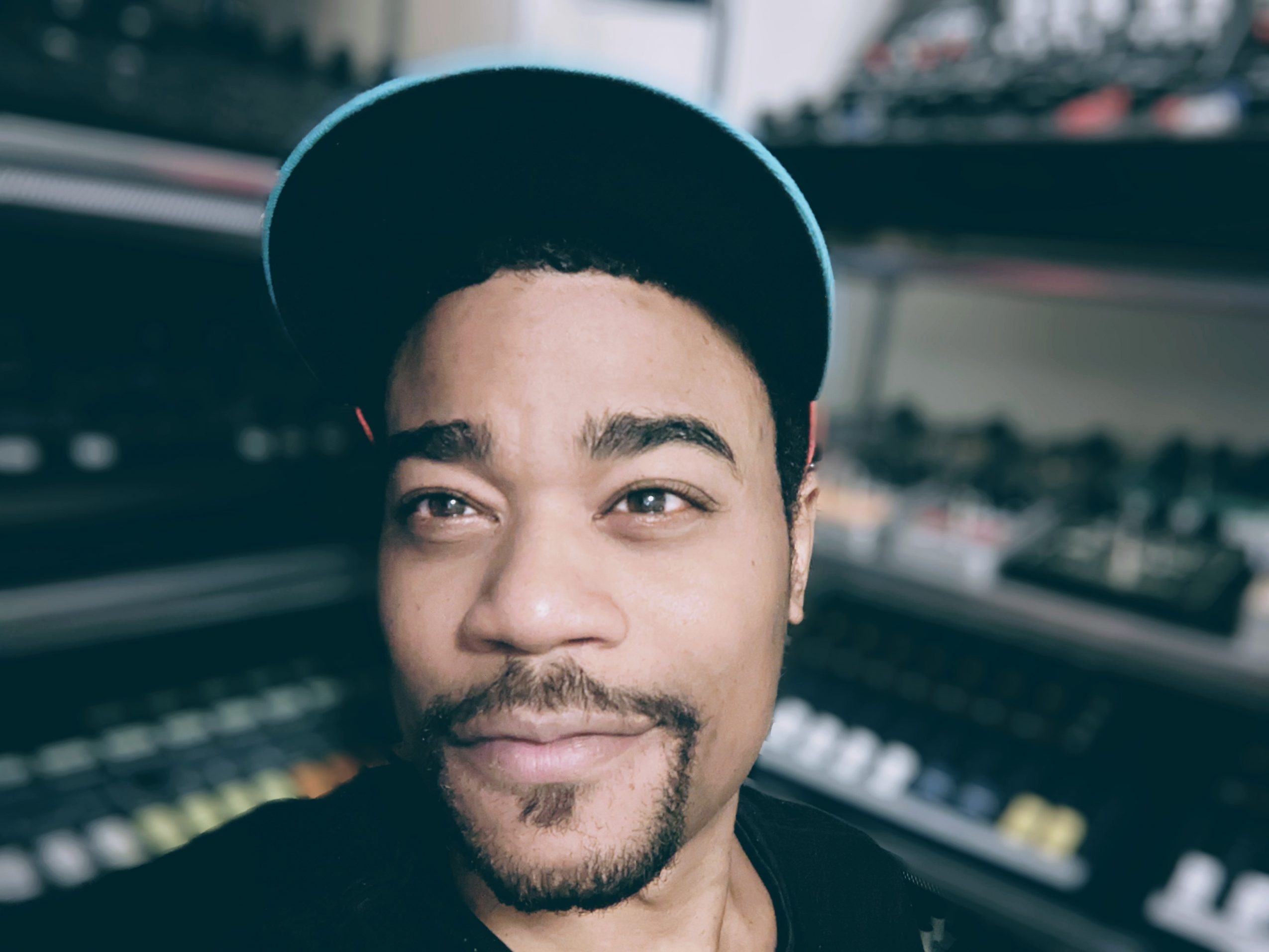
Today we’d like to introduce you to Stylés Akira.
Hi Stylés, we’d love for you to start by introducing yourself.
Thank you so much for allowing me the opportunity to share my story, it’s an honor to be here speaking with Voyage LA.
I grew up in Flint, Michigan. If you know anything about Flint—which everyone probably does at this point—you know that it’s an area very hard hit by modern social, economic, and political challenges. The city often gets a bad rap but what most people don’t know is that before things turned for the worst, it was one of the most prominent cities in the United States. It’s a community full of talent, and the challenges of its environment have given rise to glimmers of hope and opportunity that allow many to go out into the world and rise above their circumstances. I came to LA on the strength of one of those glimmers of hope and opportunity.
I did my undergrad at Pace University in New York City with a B.A. in Applied Psychology. While I was in school, I worked in the music industry, starting out as an intern for Sony Music at Epic Records: working in the office in the marketing and promotions department during the day and handing out flyers and working records in the clubs at night. I worked my way through the music business with several other companies including Bad Boy Entertainment, MTV Networks, and a Def Jam joint venture imprint, where I eventually became a Director of A&R. My goal was to explore every aspect of the media business through my work in music. These experiences gave me a really sstrong foundation in the practical application of marketing, advertising, and brand strategy. During this same period, I sought to enhance my theoretical understanding in graduate school at St. John’s University in New York where I did an M.A. in Liberal Studies with a concentration in Sociology.
I’ve had a lifelong affinity for learning, especially for education of an interdisciplinary nature. So, immediately after completing my work at St. John’s, literally the week after graduation, I moved to Los Angeles to attend USC where I got an M.A. and a PhD in Communication from the Annenberg School. This had the most profound impact on my current career path because it taught me how to view and think about the world from differing perspectives. A lot of the philosophy that underpins the agency I run today is founded upon the intellectual framework and training I received in my doctoral program. While there, I competed and placed three years in a row in the USC Libraries Wonderland Awards, where students develop creative projects based on the life and work of Lewis Carroll, most notably ‘Wonderland’ and ‘Through the Looking Glass’. I completed the requirements for the USC Sidney Harman Academy for Polymathic Study Fellowship, where students attend seminars and regularly engage in intense discourse on a broad range of topics for the sake of their scholastic enrichment. I traveled and presented research at academic conferences and was fortunate enough to have my work printed by publishers in edited volumes. I taught undergraduates and got to meet a diverse range of interesting personalities. At the conclusion of my program, I spent two years composing my doctoral dissertation entitled ‘Project Designer ID: Brands, T-Shirts, & the Communication of Identity’. I got to travel the country meeting and interviewing fashion industry insiders for that work, and I produced a website and documentary film of the same name from those interviews (www.projectdesignerid.com).
After moving back to New York City to complete my dissertation, I also began doing freelance market strategy work. I networked extensively: signing up for all manner of conferences, speaking engagements, and events. I joined social media boards and meticulously surveyed agency websites for projects and opportunities. Most importantly, while still in school, I reached out to people from my direct network and bootstrapped my market positioning by doing free projects for clients, which allowed me to gain experience for my resume and my portfolio. I also knew that if I did a good job, these clients would, in turn, recommend me to other paying clients from their own professional networks. This freelance work opened up opportunities for in-house contract work with some smaller agencies that bolstered my resume and snowballed into further corporate freelance work and eventually full-time positions at ad agencies.
This experience significantly enhanced my skill set on the technical side of creative marketing strategy. Building on all of my past experiences and my formal academic training, I had a unique perspective from what was generally expected in this line of business. My freelance work put me under a constant drill of researching, analyzing, strategizing, and executing. It gave me the opportunity to explore a wide range of sectors in the consumer market: in popular culture, in counter culture and folk culture, and in high culture. I was being compensated to do the thing I already loved to do in the first place—which was to learn. I explored all different consumer segments from many walks of life in order to learn things like what motivates them and what appeals to them, and why they may align themselves with a specific set of values.
Eventually, while I was freelancing, I returned to my old stomping grounds and became a lecturer teaching graduate marketing courses in the USC Annenberg Master of Communication Management (MCM) program and, more recently, also the newly created Master of Science in Digital Media Management program (DMM). After the first year of doing this, a situation presented itself through some sizable client work. Seeing all the pieces right in front of me, I used that opportunity to form an advertising and creative strategy agency by tapping the most elite graduates that I had taught in the program.
In addition to all this, I’m a musician. Audio and video production are a key part of my company’s service offering, and I handle all of the music and audio. So, I’m a songwriter, composer, instrumentalist, record producer, and engineer. I have an analog home recording studio and I just went in with a partner of mine on a studio facility we’re opening in Glassell Park. But that’s another story altogether.
Would you say it’s been a smooth road, and if not what are some of the biggest challenges you’ve faced along the way?
I had a lot of doors slammed in my face every step of the way. But I never gave up. I let it motivate me to be even more thorough in the pursuit of the next opportunity. Early on, there were many experiences where I knew I was being under-compensated for the work that I was doing for some big-name clients. So, I always knew that someone else was taking the lion’s share of the earnings from my labor. But that only made me work harder in order to take what was mine.
Setbacks are merely devices to be used for increasing your strength. You can’t let them get you down. You have to push forward with greater enthusiasm. You have to learn from them in order to become stronger. If you’re running from a vicious dog and you fall down and scrape your hands and knees, you can’t afford to worry about the blood or the pain or stop to cry and lick your wounds. You can address that part of the situation once you make it to safety. In the meantime, you have to prioritize on your feet at lightning’s pace in order to escape the threat. So, you keep running as fast as you can. In fact, the fall slowed you down, so you need to run harder because you’ve got ground to make up. But the chase makes you faster, the fall makes you less susceptible to pain and injury, and the fact that you got away gives you the confidence to overcome other threats. That’s how obstacles and challenges are dealt with where I come from. Anything else could cost you dearly.
Alright, so let’s switch gears a bit and talk business. What should we know?
Throughout the process of freelancing and building my portfolio, I held the notion in the back of my mind that one day I would become a leader in that space and do things differently because I was constantly calculating all of the right and wrong moves in the formulas of all of the different brands and agencies that I was working with. These collective experiences became the impetus for the start of The Annie Agency. I always had the goal of doing things in a way that was different, not just for the sake of being different but for the sake of doing it better.
The graduate students that I teach at USC are all business professionals. Many of them work at Fortune 500 companies in management positions and are seeking the degree to transition their careers into marketing or to help them reach executive or C-Suite level roles. The agents I selected were among the hardest working and most thorough in their execution. They tended to be individuals seeking to transition into this line of work from tangentially related areas.
My whole purpose for starting this company was to make it better for everyone who came in the door after me. I didn’t want them to have to do things like take unpaid or low-pay internships at companies that wouldn’t even reciprocate the exchange of their labor. I also didn’t want them to have to spend as much time and effort as I did in piecing together a portfolio from scratch. I recognized the value in numbers and used that to my advantage in order to build a team that could do things faster with greater efficiency while presenting a unified front that clients would respect in a way that is not generally afforded to the individual. The intention was to create an opportunity for them to gain professional experience and build portfolios with their own business enterprises through a collectively organized creative marketing services brand.
At most agencies, and most businesses in general, you have a founder or a head, possibly with investors and an executive class, that take all of the revenue in, then they write the employees off as a business expense by paying them whatever they see fit. That’s not how we do things at The Annie Agency. This organization is about empowering the individual to take ownership of their work and the value they produce by partnering with them as a business. Agents bring in clients and take leadership over their accounts, and they make multiple times the national average for the accounts they work on. We incentivize our business development and client acquisition through lofty and perpetual finder’s fees. We’ve gone from zero to one hundred strictly by operating in this unselfish manner because we know everything we give comes back manifold. And this is the system that has gotten us to this point.
The company’s first initiative is its altruistic promotion of equality and justice, used to empower those who have been overlooked by the modern work economy. It has accomplished this by establishing an egalitarian business model where every agent is compensated equally with the lion’s share of the earnings from their labor. At the same time, we maintain an unparalleled ability to perform in the market using the philosophical principles of Positive Deviance to collect information, analyze its meaning, and draw rational conclusions in ways that no one else is doing.
Our core values are using PURE INGENUITY to create something from nothing and to be A NEW KIND OF AGENCY with A NEW BUSINESS MODEL and A NEW WAY OF THINKING.
Our mission is to change the way people see the world by asking the questions no one is asking and finding the answers.
The Annie Agency is a socio-cultural movement housed in a creative marketing company.
Our goal is to disrupt markets left, right, and center.
We aim to change the way things are done by first changing the way the world is understood.
What matters to me most are the things no one else seems to mention.
What I mean by that is that within any type of system—whether it be government, business, social hierarchy, economic, or cultural—there are a number of processes that take place in order to make that system function. On the surface level, everyone understands how the mechanisms engage one another and interact in order for the system to work. But there are often critical underlying processes that drive a system forward that no one ever mentions and that people tend to dismiss despite the fact that this leaves enormous blind spots in the comprehensive understanding of the system. Without complete information, you will be subject to all types of strategic errors and poor decision-making due to both false positives and false negatives.
This is the first and last thing I think about every day in the morning and at night and all-day in between. Finding the things that no one else is mentioning is how our company has managed to create value for itself in the market. We constantly seek to discover the undercurrents driving the system forward. We specialize in doing this from numerous perspectives, not just social and cultural. We take the world into account holistically.
The crisis has affected us all in different ways. How has it affected you and any important lessons or epiphanies you can share with us?
There have been many lessons that have come to the forefront as a result of the Covid-19 Crisis. I have no intention of undermining the severity of those events because it has been a humanitarian disaster with a significant impact in terms of loss of life, and that should always be respected first. However, there are other factors that can be evaluated within the context of those conditions because they continue to affect us all in various ways, regardless. Some of the most important lessons we can take away have involved having a first-hand opportunity to experience special circumstances that dramatically alter the laws of market dynamics. With that, we saw in real-time how chaos is a breeding ground for opportunity.
In everything from the value of Amazon skyrocketing overnight to the production of designer face masks, we got to see how various sectors of the modern market respond when blue oceans or free spaces open up. We saw movies reposition themselves with direct to streaming releases and we saw cryptocurrency respond with the rise of NFTs and Metaverse real estate. Then we saw it all come crashing down. We saw staple goods fly off the shelves in the opening weeks of the pandemic only to lead manufacturers to overproduce in response and leave excess inventory collecting dust on the shelves for an overzealous and oversupplied market. So, the general takeaway from these lessons, in the broadest sense, is to always be prepared for the most unlikely circumstances, read the market and adapt quickly, and don’t over-leverage based on rare and novel market conditions—in other words, be prepared for the fallout, and have an exit strategy, because what goes up must come down.
Contact Info:
- Website: https://www.theannieagency.com
- Instagram: https://www.instagram.com/theannieagency/
- Facebook: https://www.facebook.com/theannieagency/
- Linkedin: https://www.linkedin.com/company/the-annie-agency
- Twitter: https://twitter.com/TheAnnieAgency
- Other: https://www.linkedin.com/in/stylesakira/


 Image Credits
All Images ©2023 Stylés Akira
Popular
-

Portraits of the Valley
-

LA’s Most Inspiring Stories
-

Robin Olive on Building an Inclusive Performing Arts Movement and Expanding Opportunities for Every Student
-

Que Johnson on Building Brands That Last: From Visibility to True Market Authority
-

Christina Wren Steps Into the Director’s Chair to Tell Stories That Feel Like Home
-
JordanL on ‘Breathe,’ Belief, and Building a Movement Beyond the Music


