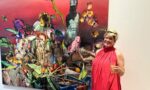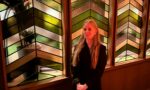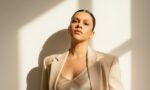



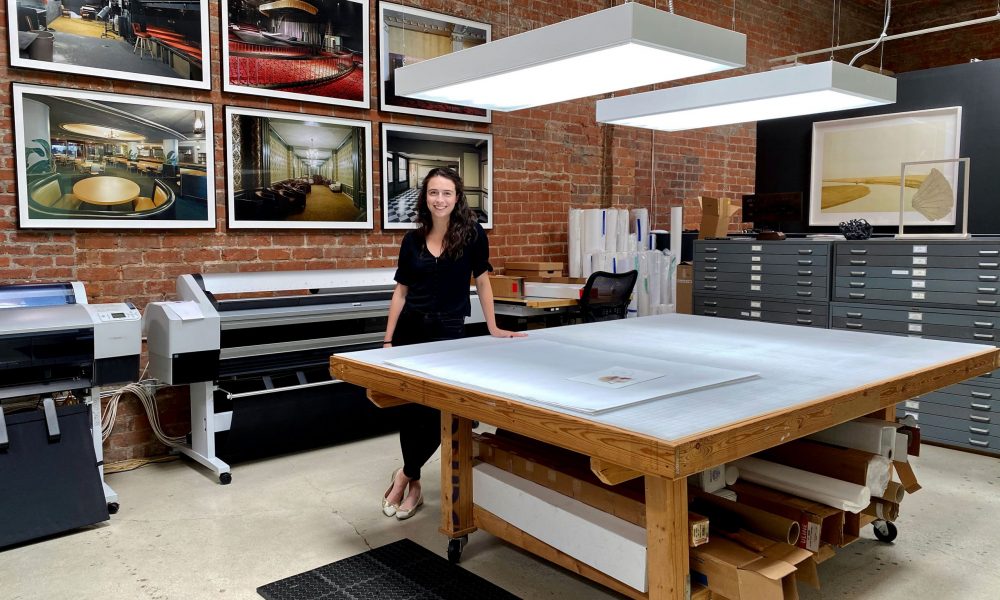
Today we’d like to introduce you to Camilla Johnston.
Thanks for sharing your story with us Camilla. So, let’s start at the beginning and we can move on from there.
I was fortunate enough to attend an elementary school with the most amazing art teacher, Ms. Walters. Although I never imagined art to be a career path at that time, she planted the seed. By the time I reached high school, I was fairly certain I would end up in art or politics, but in both scenarios I thought law school would be involved — after the Shepard Fairey/AP lawsuit I saw art law could be a possible career.
Late in High School, I received the opportunity to intern for a blue chip gallery, and I managed to hold on to that through most of college, eventually becoming an Executive Assistant for one of the Directors, Candy Coleman. Being an intern or assistant can feel incredibly unglamorous in the moment, but it is the best training and provides unparalleled exposure. Some of the ambient knowledge I picked up in that position is still helpful today. I was also fortunate enough to report to someone who explained what was going on and allowed me to ask questions along the way.
After college, I moved to Los Angeles to attend graduate school at Claremont Graduate University and Sotheby’s Institute of Art joint program. Although only 18 months long, this experience was quite helpful in allowing me insight into other areas of the art world that I had always known about but never had the opportunity to explore. The two people who encouraged me to attend the program Tory Benoit (then Associate Director of External Affairs) and Dr. Jonathan TD Neil (then and current Director) are still important mentors years after graduation. While attending graduate school, I worked for an art collection management company that focused on the financial aspect of collections. Amber Noland is another incredible force in the art world and I am grateful to have worked for her. She is so smart and has an innate ability to see around every corner. Just like Candy, Amber was generous with her time and mind, teaching me anything I needed to know and always encouraging me to push for more.
During graduate school, I was introduced to the late Peter Loughrey while on a trip to Art Basel, Hong Kong. He and his wife Shannon built Los Angeles Modern Auctions, which is (I believe) the only auction house that still combines art and design in sales. Peter was a treasure trove of knowledge and experience, and he truly cared about the story behind each lot. Peter and Shannon offered me a position on the administrative side of the company. I was sad to leave Amber, but going to LAMA allowed me to explore the auction industry since it was an area I had only understood from the client perspective. One of my favorite memories of all my career was driving with Peter to pick up a work by Alma Thomas. The painting is nothing short of perfect and was sold with a letter from Alma to the original owner. LAMA crushed the world auction record for Thomas with that painting. It was nearly identical in composition, just different colors, to the painting by Thomas that hung above the dining table in the White House while President Obama was in office.
After a few years in many areas of the art world, I managed to combine enough contacts that I could go out on my own doing a variety of jobs in the art world. Everything from cataloguing collections, to market research and advice, to writing projects, I loved doing them all. I enjoyed the freedom to pick and choose projects and to utilize all parts of my brain by having a few types of projects on my plate at once. The art world can be unforgiving and taxing in many ways, and taking this time on my own but remaining in the industry allowed me to better understand exactly what I wanted to do long term.
This time is what ultimately led me to the Sales Director position at The Lapis Press. I was not hunting for a new job when the opening was sent to me by a friend — in fact it took me about a month to apply because I wasn’t sure I was ready to give up the really great thing I had going on, but once I did and came in to interview, I was certain about working for Lapis. The Owner and Director, Anthony Nicholas, really cares about the work produced by Lapis, and in continuing the mission set forth by Sam Francis more than 30 years ago. Lapis was created by artists, for artists, with the belief that medium or technology should not inhibit an artist’s ability to create what they have in mind. I have been here since February, and look forward to many more years.
We’re always bombarded by how great it is to pursue your passion, etc – but we’ve spoken with enough people to know that it’s not always easy. Overall, would you say things have been easy for you?
This industry can be unforgiving and taxing in many ways. It is not an easy industry to make a lane change or pivot your career — of course it is possible, but it is difficult. I have been immensely lucky that I have always worked for people who believe in fair pay, which is not something a lot of people in the art world can say. The biggest challenge or obstacle has always been the barriers inherent in a small industry — it is not easy to move up when there are always people willing to do the same job for less money. Over the years, people like Candy, Amber, Tory and Jonathan have taught and guided me in getting to the next level, but it is difficult to do so when the whole industry is mercurial and not uniform in title or pay.
So, as you know, we’re impressed with The Lapis Press – tell our readers more, for example what you’re most proud of and what sets you apart from others.
I am the Sales Director at The Lapis Press in Culver City, Los Angeles. The company was founded in 1984 by artist Sam Francis. It was created with the goal of producing unusual and timely projects in a variety of mediums and formats – everything from lithographs and etchings to poetry and Jungian philosophy. It was a place created by artists, for artists, with the understanding that medium and technology should not be a prohibitive determinant in an artist’s practice. We continue in this vein and mission by striving to be a place where artists are able to explore new techniques and technologies, thereby expanding the scope of the artist’s imagination.
In recent years Lapis has focused on experimenting with the limits of printing technology. For example, we previously completed and are about to release a new edition with Analia Saban where our wildly talented printers make paper out of paint and then print on it. It is hard to explain, but they managed to create a process in which several layers of paint dry in the form of a sheet, and act as paper when going through the printer. I am in awe of our printer’s and their talent, and I am very excited to release the new body of work. Another great example of allowing artists to move outside of their technological area of expertise is our sculptural editions with Ed Ruscha. Ed came to our studio and saw a bronze sculpture we produced with Betye Saar and felt inspired to also work with us on a bronze. We are now in production for our second sculptural edition with Ed Ruscha, and it is inspiring to see the dedication and craftsmanship that goes into each example.
So, what’s next? Any big plans?
The world has changed dramatically since I started in this position four and a half months ago. I am not sure how I would have answered an interview question about pandemics if I had been asked. Luckily, our team at Lapis is really nimble and we found a way to move forward while still following all the government protocols. Even with the future relatively unknown in many ways, the art world and market continues to show signs of strength. Although I would prefer to believe that this is because people view art as essential to their daily lives, it is more likely due to the investment value. Following 2008, there was a brief dip in the art market — I don’t mean to be cavalier, as many people suffered financially during the recession, but it was overall not as devastating to the industry as outsiders might have expected. The financial upside of investing in art allows it to remain lucrative even as the economy and markets fluctuate beyond comprehension.
I am looking forward to releasing our new, previously mentioned editions with Analia Saban and Ed Ruscha. Both projects are stunning and compelling.
Contact Info:
- Address: 8563 Higuera Street
Culver City, Ca 90232 - Website: www.lapispress.com
- Phone: 310-558-7700
- Email: [email protected]
- Instagram: @lapis_press


Image Credit:
The Lapis Press
Suggest a story: VoyageLA is built on recommendations from the community; it’s how we uncover hidden gems, so if you or someone you know deserves recognition please let us know here.