


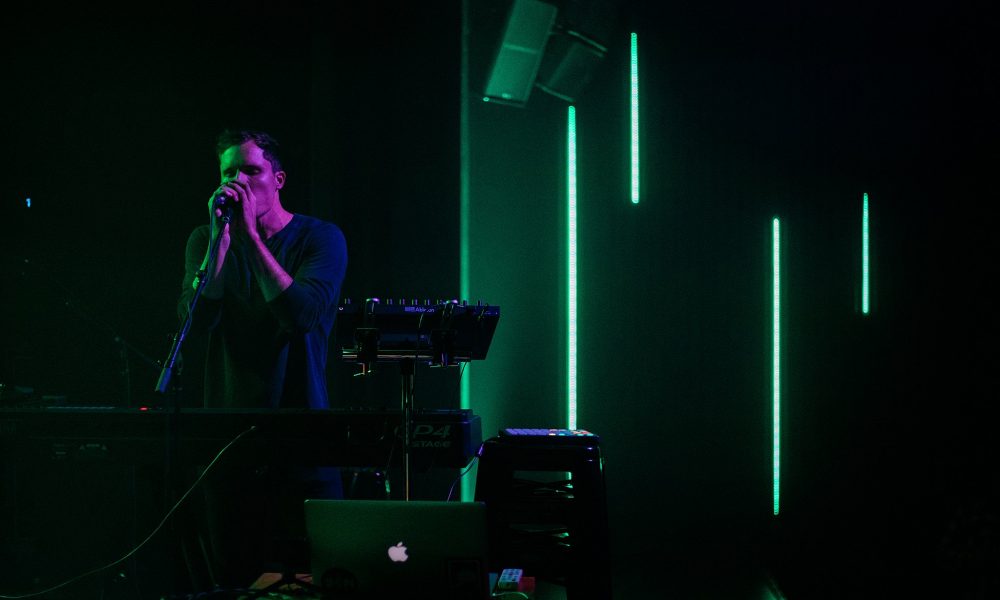
Today we’d like to introduce you to Freddy Avis.
Freddy, please share your story with us. How did you get to where you are today?
I studied music at Stanford but had originally gone there to play baseball, with the intention of playing professionally afterwards. Unfortunately, a shoulder injury cut my career short halfway through college, and I found my way back to music after years of prioritizing my baseball career. On campus, I spent most of my time at Stanford’s Center for Computer Research in Music & Acoustics (CCRMA for short, pronounced “karma”). CCRMA is this beautiful, gothic-looking building toward the back of campus that everyone mistakes for the president’s house at first. But you walk into the place and it’s filled with music gear, old computers, and studio spaces. It became my home post-baseball. It’s truly an extraordinary community of scientists and artists alike whose approaches to music and sound are so wildly imaginative and far beyond conventional definitions of “music.” Somewhere during that time, I started making music that would eventually become my electronic project, Arswain. Looking back, I’m endlessly thankful for that community because it gave me an appetite for experimentation I certainly didn’t possess when I entered college. It was also a creative haven for me on an otherwise tech-dominated campus, and Arswain became sort of a reaction against a type of Stanford groupthink.
After graduating, I moved to Los Angeles and began writing music for film & television under James S. Levine at Hans Zimmer’s studio (Remote Control Productions) in Santa Monica. I was more or less an outsider to the film scoring world, and I felt like I’d won the lottery because I got to write music on a salary. In many ways it felt like grad school – it’s an intense environment and the shows we worked on generally demanded a lot of music, so the hours were long. After two years at Remote Control, I moved into my own studio across town in Highland Park so I could redirect my attention to Arswain and also continue to write for film & TV.
Great, so let’s dig a little deeper into the story – has it been an easy path overall and if not, what were the challenges you’ve had to overcome?
Two years ago, I nearly left music altogether. I was working at Remote Control and becoming decreasingly convinced of music’s importance in the world, especially in the face of our horrifying climate situation. I was on the brink of selling my equipment, and I actually submitted job applications to several environmental nonprofits in other parts of the country. Around that same time, I read a book called The Great Derangement by Amitav Ghosh, and it kind of changed my life. The book helped me understand climate change as a crisis of the humanities, and it kickstarted me to begin writing what became my debut Arswain record, Partitioning.
We’d love to hear more about your work and what you are currently focused on. What else should we know?
By trade, I’m a composer for visual media, ranging from TV to film to art installations. Among other projects, I’ve been lucky to work on series such as Major Crimes (TNT), Chambers (Netflix), Star (Fox), and Instinct (CBS). Versatility is an essential skill in my field, and I really enjoy working to the constraints of visual media, as well as writing across wildly different genres. But I also take pride in being a relative outsider to film music. A lot of people assume that film music must conform to certain genres, most commonly orchestral music. That music is great and often appropriate, but it’s by no means the only way to approach music for visual media. At my core, I fundamentally believe that “film music” is not and should not be considered a genre. It’s always open for reimagining. Sometimes I joke that it would be fun to include a “no strings” clause in my composing contracts.
Arswain is a space for me to explore, away from the constraints of film scoring. Writing Partitioning was like a creative cleansing, especially after a particularly intense period of writing for TV. It was opportunity for me to realign my musical persona and distill it down to what it actually is. There’s no question that Arswain has informed my composing work and vice verse.
What moment in your career do you look back most fondly on?
Partitioning is the album I had always wanted to make. It’s by far the most thoughtful, vulnerable, and cohesive body of work I’ve ever written. It’s also an album that wouldn’t exist without my dual – and often conflicting – instincts: my production-heavy film scoring side on one hand, and my more experimental, academic side on the other. The sonic world of the album is definitely electronic-heavy, but I found myself drawing on my more traditional rock upbringing by incorporating vocals, guitars, and songwriting structure. I also included a lot of field recordings I captured, such as rivers and construction/machinery, to build the sound world of Partitioning, to give it a sense of place. The whole thing felt exciting to write because it felt holistic like I was able to finally combine my several musical alter-egos into one.
Partitioning is, in general terms, a concept album about an existential reckoning with climate change and how it affected a previous relationship of mine, as well as my attitude toward humanity at large. The writing process felt extremely intuitive because I finally had something to write about; something I really wanted to say.
It was also exciting to work with some key collaborators on this album, including mastering engineer Francesco Donadello. He’s worked with some of my heroes, including Thom Yorke, Apparat, Johann Johansson, and Hildur Guðnadóttir. It was also a pleasure to work with mixing engineer Jules de Gasperis and drummer Jacob Lauing, both of whom played essential roles in crafting the sound of Partitioning.
Contact Info:
- Website: arswainofficial.com (Arswain), freddyavismusic.com (composing)
- Email: [email protected]
- Instagram: @arswain_
- Facebook: https://m.facebook.com/arswainofficial/
- Other: https://open.spotify.com/artist/0jf4JL3MwgM0w0qBQscB3N?si=gbJz37EsRu6GTGn_7M-YLw


Image Credit:
Aleksandra Was, William Hamilton, Jacob Lauing
Suggest a story: VoyageLA is built on recommendations from the community; it’s how we uncover hidden gems, so if you or someone you know deserves recognition please let us know here.
Popular
-
Cedar Boschan on Elevating Black Music Rights and Driving Urgent Conversations Around Credit, Equity, and Artist Protection
-

Portraits of the Valley
-

LA’s Most Inspiring Stories
-

Robin Olive on Building an Inclusive Performing Arts Movement and Expanding Opportunities for Every Student
-

Que Johnson on Building Brands That Last: From Visibility to True Market Authority
-

Christina Wren Steps Into the Director’s Chair to Tell Stories That Feel Like Home