


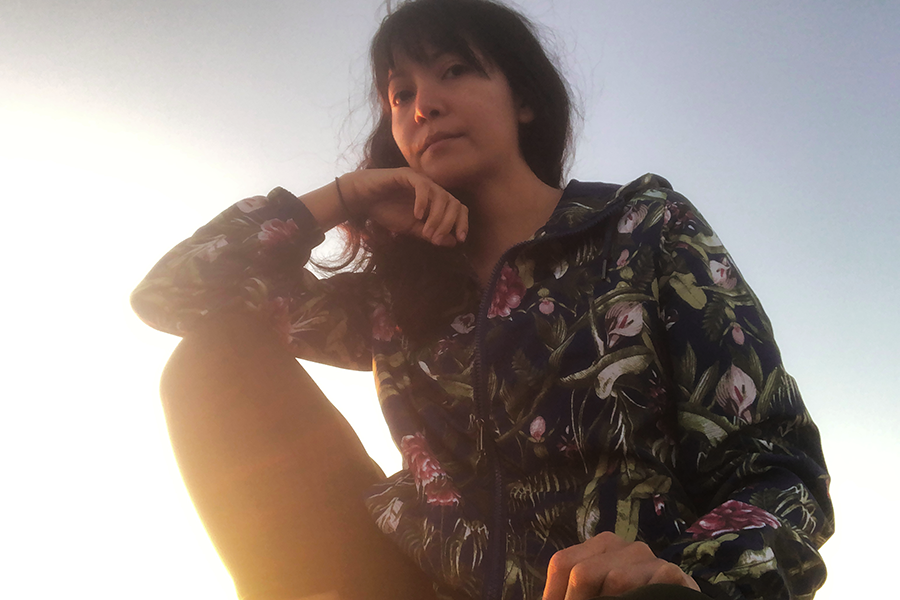
Today we’d like to introduce you to Monica Ekabutr.
Thanks for sharing your story with us Monica. So, let’s start at the beginning and we can move on from there.
I’ve been making stories since I could draw. I’d staple pages together and make picture books like the ones I read. After being exposed to Sailor Moon and the world of anime and manga at a young age, I’d begin to staple issues of comics about magical girls and high school comedic romances.
Growing up in Arizona, there’s an unfortunate limit to art education and my choices were either fine art or CG animation. So I decided to dabble in performance where I tried stand up, took skit writing and improv classes. These were all a challenge for my quiet personality but the lack of visual art options allowed me to explore a different creative outlet for the first time.
Later I would reflect back on my first love of drawing and knew I wanted to continue my storytelling. I came across some 2-D animated student films that impressed me and found out they were coming from the same school—Calarts. The more I thought about it. I realized animation was an art form that could house my love for drawing, storytelling, writing and performance. I had never animated before so I taught myself Flash to test out my liking. It was reaffirming as I felt a special satisfaction to see drawings of a character come to life.
My time at CalArts was the most exhilarating and most exhausting experience of my life. It turns out making a film all on your own is hard. And all my ideas were grand, world-building concepts that would eventually be my pitch for a series and my key to getting hired in the biz. My delusions of grandeur complicated the process and stressed me out. I abandoned my initial plan and later realized that I needed to just have fun making my film. Also, the pressure of being a month from the deadline really helps you commit to an idea. Flash forward roughly three weeks and two days with no sleep, my film was finished. It didn’t win me any awards but it was done and it was a testament to my abilities.
During my second year, I interned at Cartoon Network, where I learned most of what I know about TV series production. I’d decided to pursue storyboarding for TV. And later, I’d return to comics and self publish a few to sell at zinefests and comic shops in Southern California. I just finished a storyboarding gig at Netflix Animation and am currently teaching at CalArts. I am also working on a TV series pitch and making more comics.
Great, so let’s dig a little deeper into the story – has it been an easy path overall and if not, what were the challenges you’ve had to overcome?
I got rejected twice from CalArts. I went there for two years and wrecked myself with stress. After my second year and for the first time in my life, I couldn’t draw because my body prevented me. Flash forward almost two years and many story tests later. I landed my first job at a studio. And a major one. Imposter syndrome was hitting me hard. And I didn’t know what I was doing. I get fired after three weeks. I wasn’t fast enough. Which, as I took it, equates to not being good enough. And it shook my confidence. I’d realize later I was letting people tell me what my limitations are.
Ultimately my main struggle is overcoming my self-doubts. And trying not to take rejection to heart. And to get back to the 8-year old me who wasn’t immediately comparing my art to others’ standards.
These roadblocks I encountered informed my art and helped figure out what I want to express. It seems you need to not only appreciate the highs but endure the lows of life to gain the experience to tell interesting stories.
Tell us about your work – what should we know?
I’m known for my slice of life comics. I tend to focus inward and include topics of self-care and mental health. I started posting my comics online every week as a challenge to my creativity and also to make sure I was producing new art.
My most vulnerable comics seem to get the most attention. At times I worry if I’m revealing too much of myself. But then I read messages about how my work resonated with someone. I’ll always feel a sense of pride if something about my work makes others’ feel less alone.
Is there a characteristic or quality that you feel is essential to your success?
My willingness to persevere. And this delusion to convince people to pay me for things I imagine.
Overall I think success is an endurance test.
Contact Info:
- Email: [email protected]
- Instagram: eelhips
- Other: https://eelhips.tumblr.com/


Suggest a story: VoyageLA is built on recommendations from the community; it’s how we uncover hidden gems, so if you or someone you know deserves recognition please let us know here.
Popular
-

Finding Balance Through Art: Theresa Croft on Blending Music, Wellness, and Visual Storytelling into a Holistic Creative Identity
-

From Street Corners to City Tours: Chef Chuck Glaster on Building SOULD Out Into a Culture-Driven Culinary Movement
-

Portraits of the Valley
-

LA’s Most Inspiring Stories
-

From Rock Bottom to Calling: How Hasani McLean-Davis Found Purpose Through Faith and Music
-

Building a Scalable, Soulful Travel Brand: How Abboud Khallouf Turned Morocco Into a Global Experience