



Today we’d like to introduce you to Serena Brooks.
Alright, so thank you so much for sharing your story and insight with our readers. To kick things off, can you tell us a bit about how you got started?
My mother was a master seamstress, and my father, a classic mid-century architect. I grew up surrounded by cutting-edge art, architecture, furnishings and clothing of the 1960s and ’70s. Art was not a career I considered, to support myself financially, however throughout my life, I explored every kind of art and craft imaginable. After majoring in business in college, I worked in the world of marketing and business consulting. A few years later, I went back to school to receive my master’s degree in Marriage and Family Counseling. I currently have a thriving private psychotherapy practice in West L.A., working with wonderful clients.
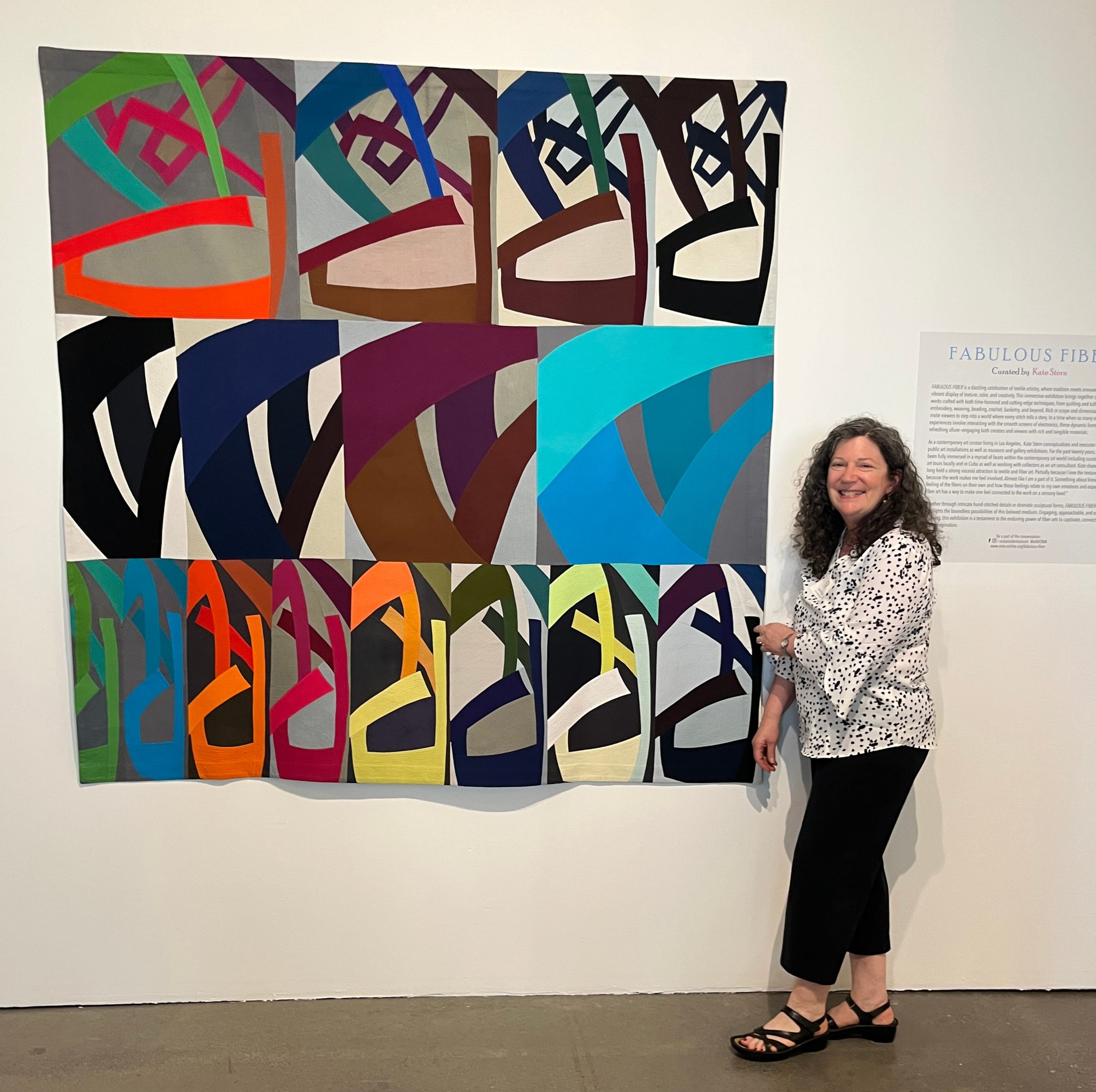
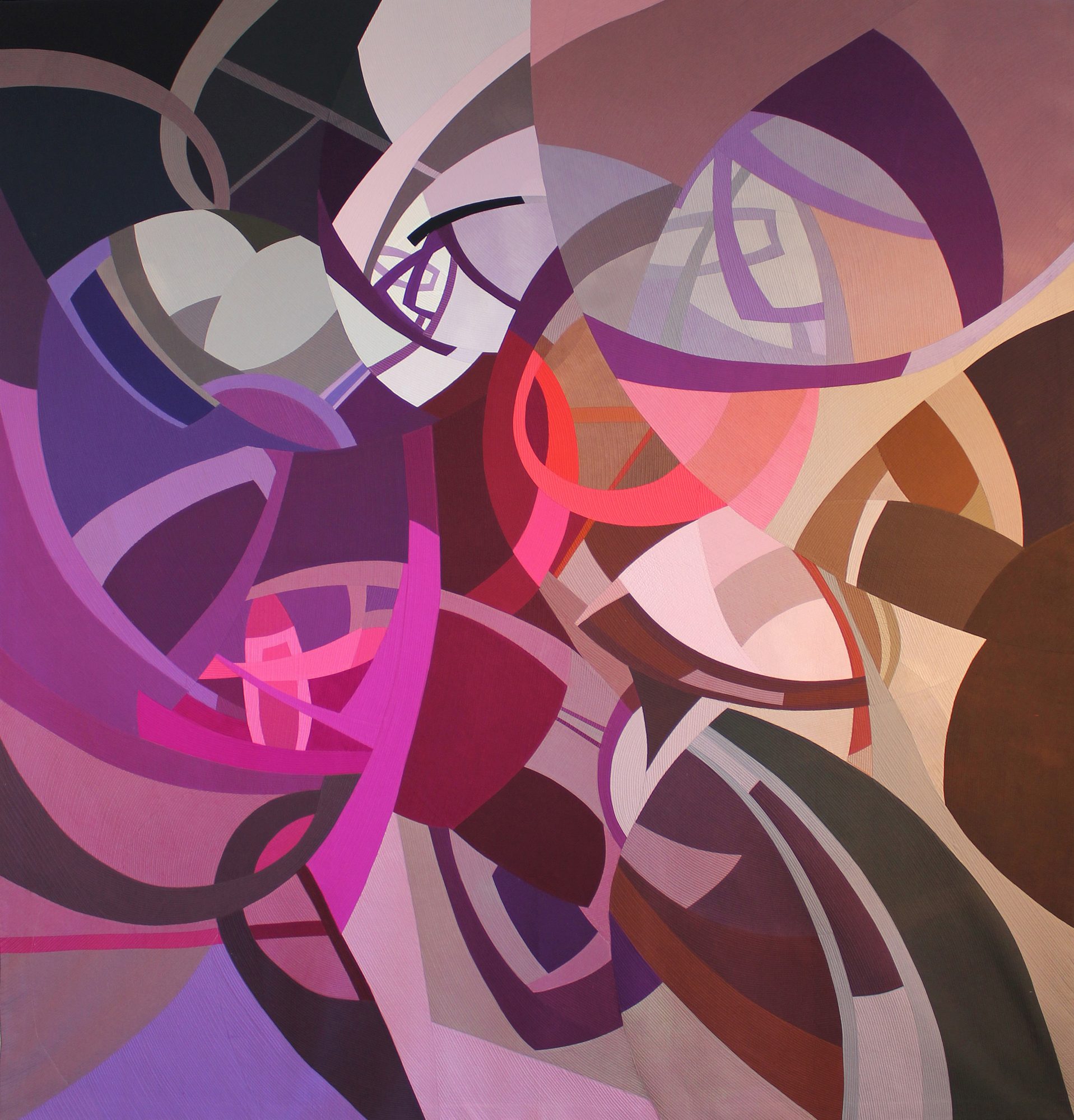
I’ve always had an art or craft project underway, but in 2004, my focus shifted to fabric and quilting. My daughter received a quilt kit for Chanukah, and after making it together, I was hooked. Through taking classes and watching lots of videos, I learned a wide range of techniques and made a ton of quilts. Beginning in 2010, taking workshops with Nancy Crow (www.nancycrow.com), I discovered how machine-piecing with solid fabrics could produce a beautiful, contemporary, painterly effect. I loved the crisp edges that the sewn lines and shapes created. Even so, the construction process fascinated me most: figuring out how to sew a complex composition into a visually striking, well-crafted work of art that could hang flat against a wall. Designing with fabric is challenging—and I like it because it is challenging! As I create a composition that is dynamite visually, I’m always thinking, “How am I going to sew this together?”
Inspired by the shapes in a landscape, or the color palette on a greeting card, I find inspiration everywhere. My kids would get annoyed when I would come to a dead stop walking on a sidewalk, or in front of a grocery store display, to snap a photo of what was in front of me. Big, bold shapes, graphic images and vivid colors draw me in, and therein, my love of the modern shines through my work. Through the influences of my childhood, I feel that I have found my own way to design architecturally, using fabric as my medium.
Would you say it’s been a smooth road, and if not what are some of the biggest challenges you’ve faced along the way?
“What’s next?” is ALWAYS a challenge. I’ve finished a piece, and it has found a new home or owner, and now what? Over the years, I’ve come to accept this as just part of my creative process. Struggling with “what’s next” isn’t FUN, but it’s a crucial part of the process; I know I need to go through it to get to the next phase before I’m off and running again. Working in a series helps, having some direction about what’s next (although I will eventually reach the end of a series). Mostly, I rely on trusting that I’ll eventually figure it out; I just can’t will it to happen exactly when I want to.
Another challenge is knowing that a composition isn’t working without immediately knowing why or how to fix it. It’s frustrating, but I’ve learned to trust the process, and again, know that I’ll eventually figure it out. Sometimes I step away for the day and return the next morning with fresh eyes, and it becomes super clear how to proceed. Working on several pieces at different stages also helps. Switching between them gives my mind a break, so I can return to a challenging piece with renewed energy and clarity.
As you know, we’re big fans of you and your work. For our readers who might not be as familiar what can you tell them about what you do?
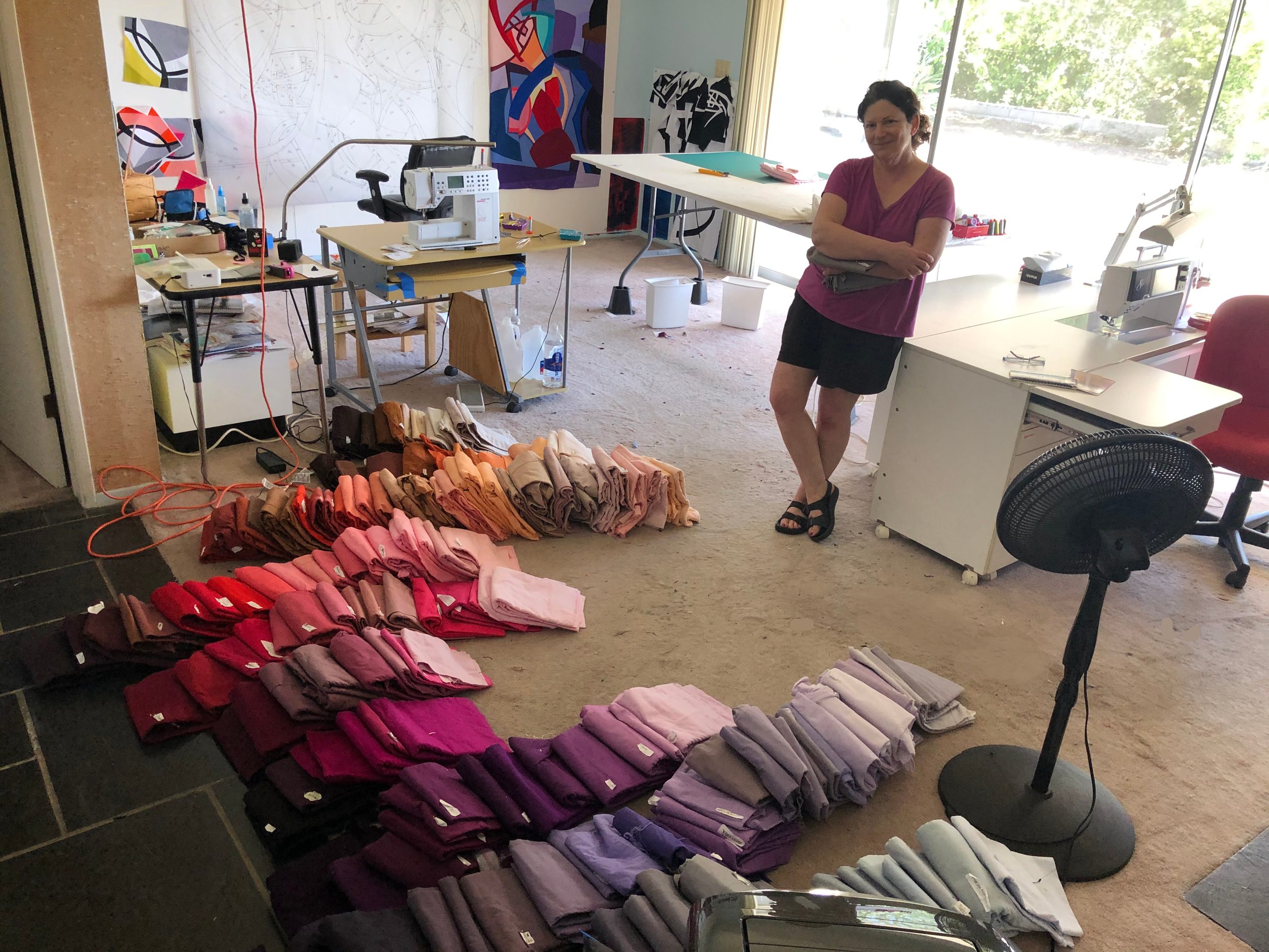
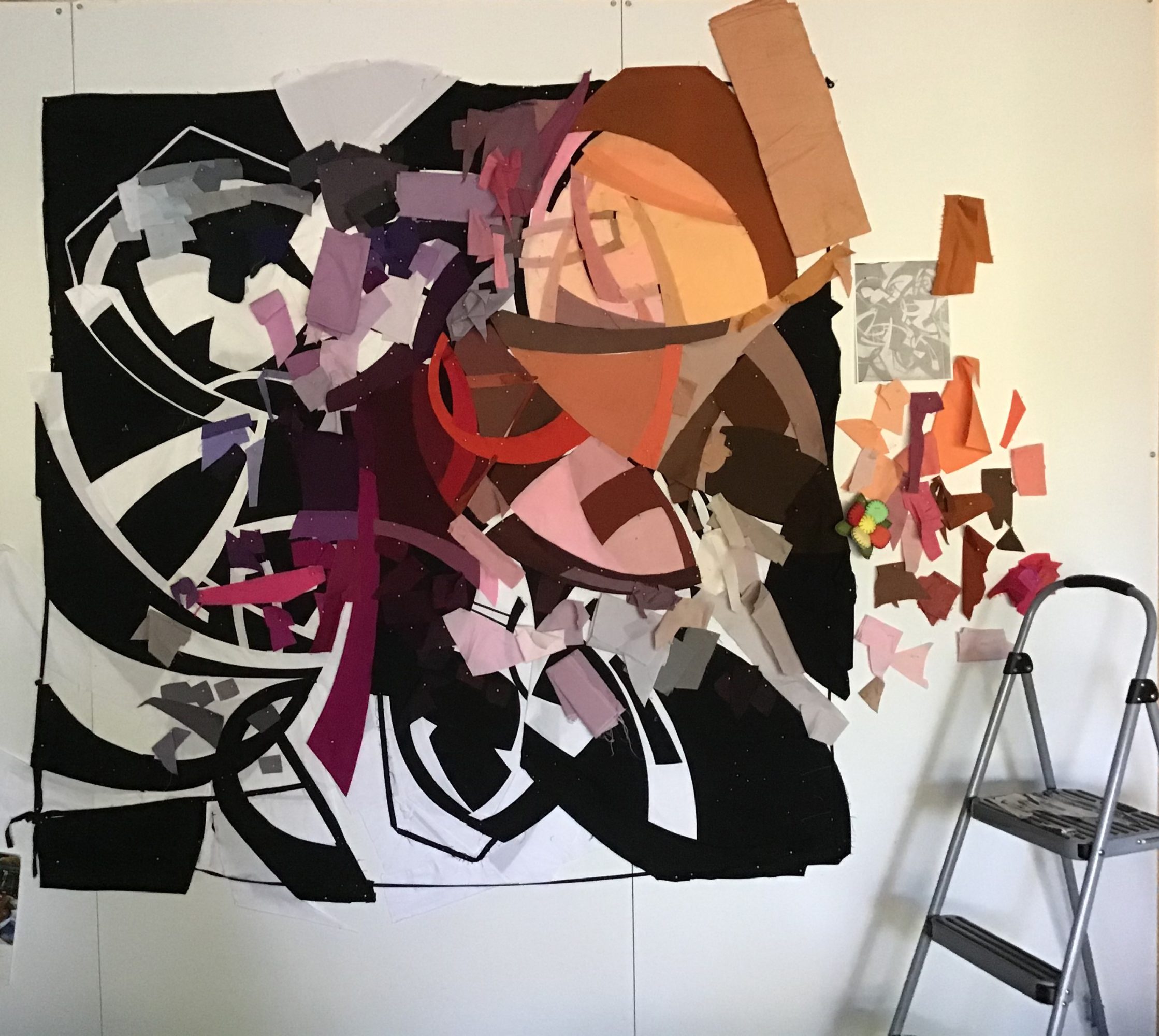
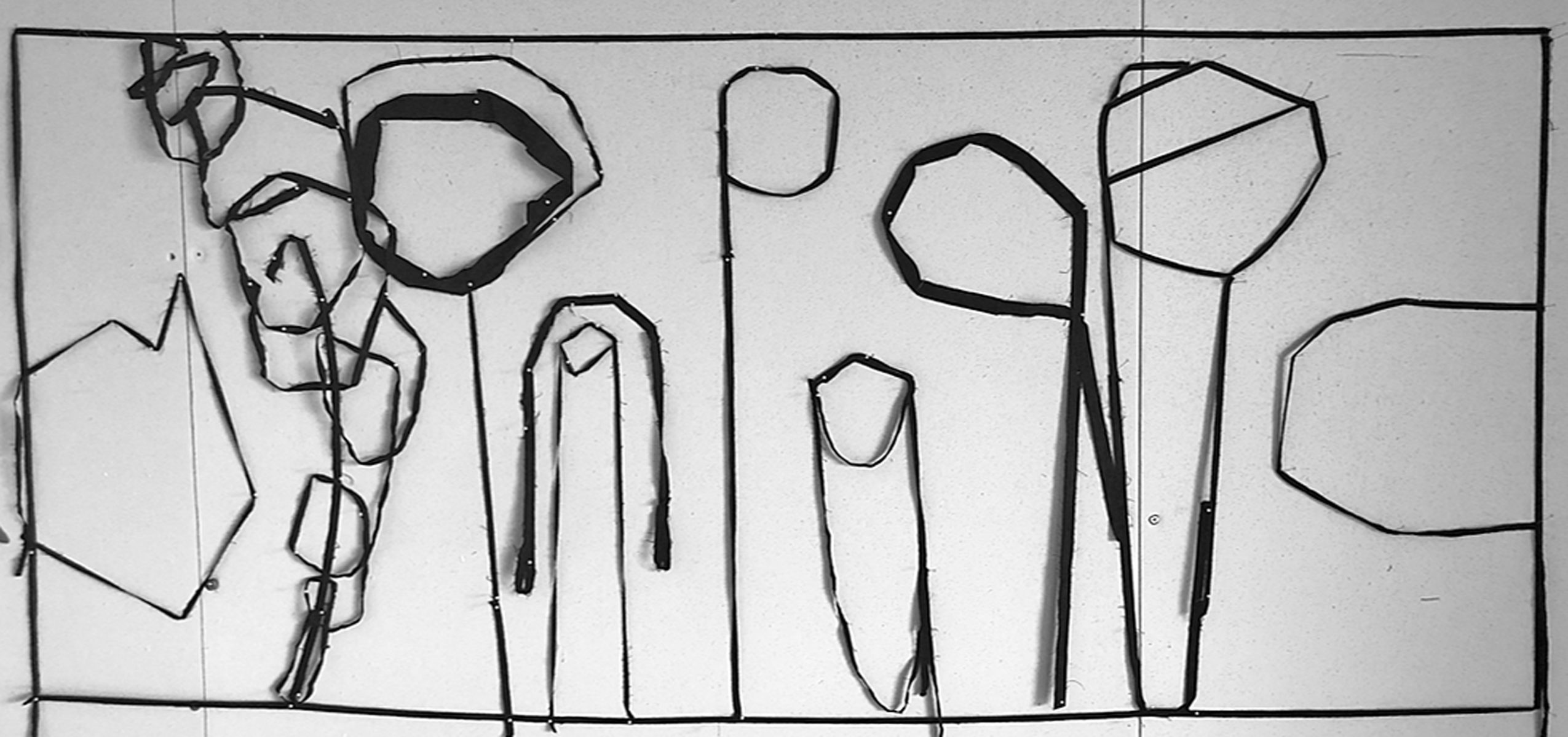
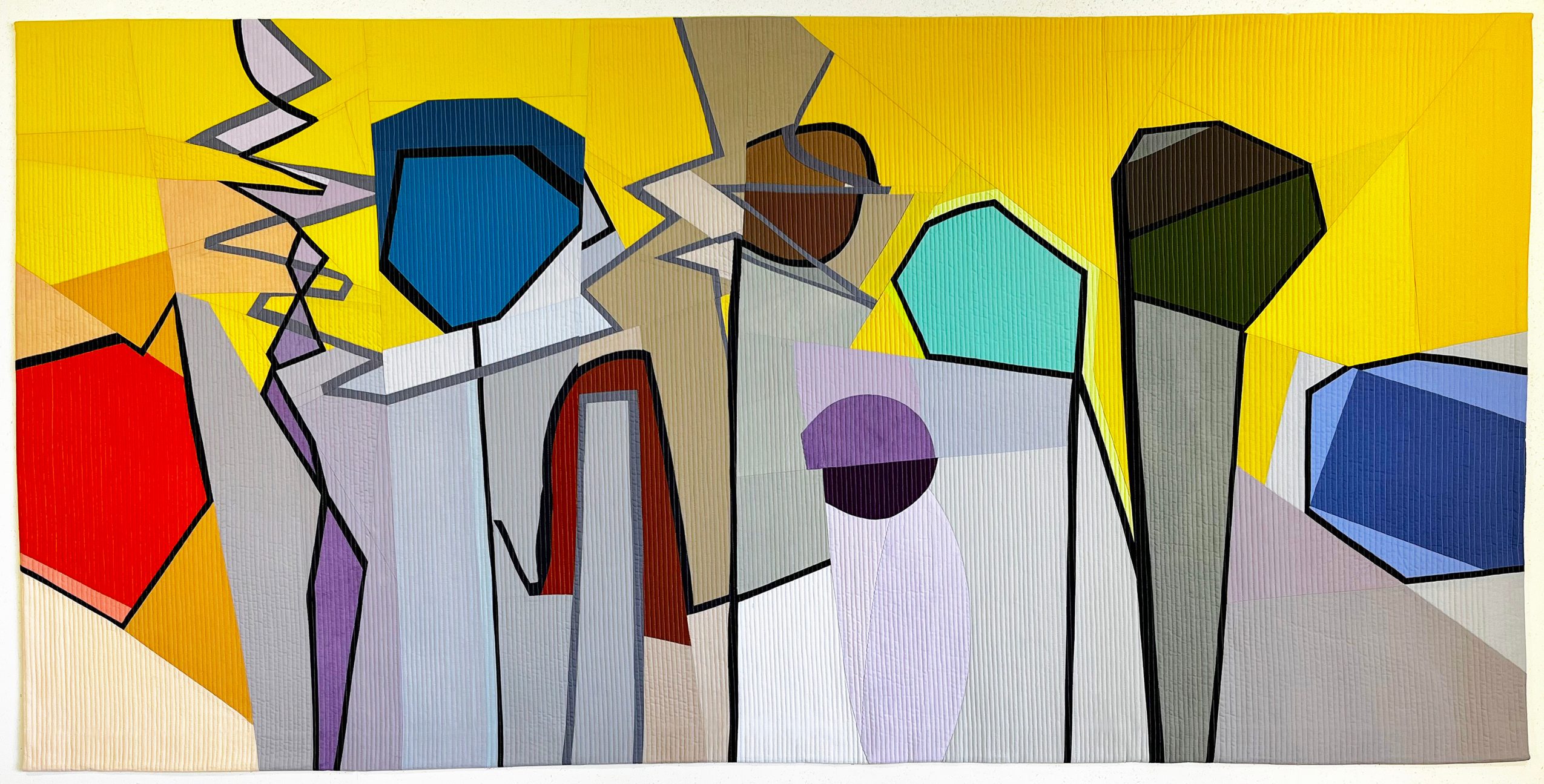
I would describe my design process as an improvisational approach to quilting. My quilts are designed to be displayed on a wall as a piece of art. I work on a floor-to-ceiling, wall-to-wall design wall, beginning a composition in black and white so that I can nail the elements of the design before moving into color. I then identify one color that I want to work with and begin pulling fabrics of every value, from the darkest dark, to the lightest light, of that color, laying fabrics out on my table and floor, and pinning scraps to the wall to see how the fabrics work together. I’ll then add another color, doing the same thing, on the table and on the wall, continuing this process until I have a composition that works. Then I sew all the pieces together (the MOST fun part of the process for me)!
I usually have three projects underway on each of my three sewing machines, each at a different stage, while designing a fourth piece on the wall. I quilt all my own work on my long-arm machine (one of my three machines). Doing the actual quilting, the last phase of the quilt design, can be very zen and meditative, as well as adding another layer of design to the piece. I used to send my quilts out for this step, but choosing the quilting design and thread colors as I go has become an integral part of my improvisational design process.
What are your plans for the future?
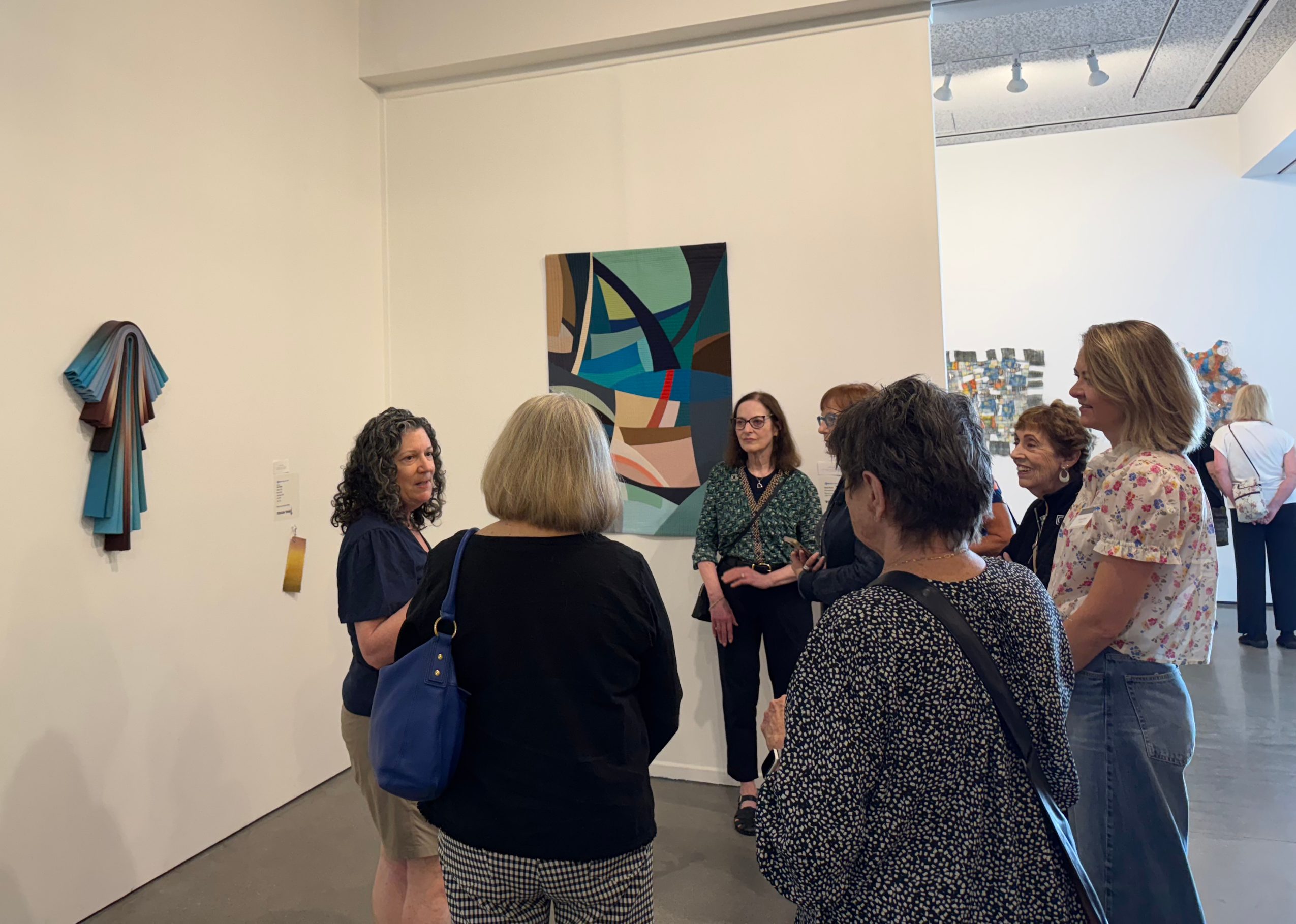
My work hangs in many homes and has been exhibited in museums, galleries, and shows across the United States. Last year, I was proud to exhibit in two San Diego County museums. During my exhibition at the Visions Museum of Textile Art in San Diego, I taught an improvisational quilting workshop (fulfilling my childhood dream of teaching a class at a museum!). I hope to keep creating beautiful work—both improvisational pieces and commissions—that people want to display in their homes, while continuing to exhibit in galleries, museums, and shows. My dream is to see my larger pieces in large public spaces, where I can share my work and process with the widest possible audience. I love creating, but, as with my work with psychotherapy clients, the greatest honor is connecting with someone and knowing that something I’ve said or created has moved them emotionally.
Pricing:
- I have an inventory of available pieces, and I also take commissions. Pricing available upon request.
Contact Info:
- Website: https://www.serenabrooks.com
- Instagram: @serenabrooksart
Popular
-

Portraits of the Valley
-

LA’s Most Inspiring Stories
-

Mason Ewing Is Bringing a World of His Imagination to Life Through Film
-

Dr. NanaEfua Afoh-Manin Is Rethinking What It Means to Be Healthy, Not Just Healed
-

Greg Hex Is Turning the Everyday Kitchen Knife Into a Modern Design Object
-

Rick Norris Learned That Building a Successful Business Means Building a Life You Actually Want to Live


