




Today we’d like to introduce you to Zaynab Qazi.
Hi Zaynab , it’s an honor to have you on the platform. Thanks for taking the time to share your story with us – to start maybe you can share some of your backstory with our readers?
Ever since I was a little girl, I grew up surrounded by family in public service, so helping others always felt natural to me. I was born and raised in the South Bay, and being able to now serve the same communities that shaped me makes this work even more meaningful.
My public service career started when I was 19 as a Park Ranger for the City of Rancho Palos Verdes. It was my first enforcement job and definitely a learning experience. One day I’d be leading interpretive hikes, the next I’d be relocating rattlesnakes off trails. No one really grows up thinking, “I want to relocate rattlesnakes for a living,” but somehow that became part of my résumé. It taught me how to communicate with all kinds of people and stay calm in unpredictable situations.
After that, I joined the Redondo Beach Police Department as a Municipal Services Officer, working in parking enforcement and animal control. Let’s be honest — nobody is excited to see the person writing a parking ticket. You learn very quickly in enforcement work not to take things personally. That job taught me a lot about empathy, patience, and how important it is to treat people with respect, even during frustrating situations. It also gave me the chance to advocate for animals, which was a huge part of why I loved the role.
I later worked for the South Bay Regional Communications Authority in dispatch, where I became the calm voice behind 911 calls during some of the hardest moments in people’s lives. While I valued that experience tremendously, I realized I missed being outdoors and connecting with the community face-to-face.
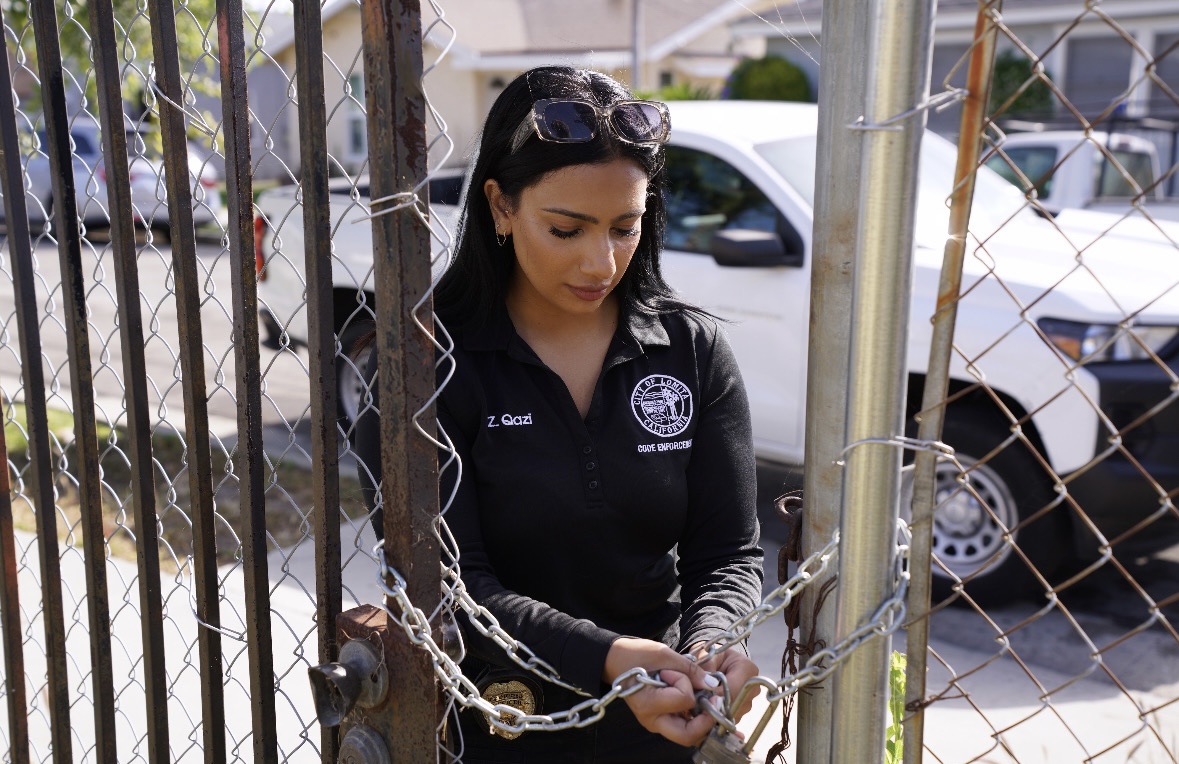
In 2024, I found my way to the City of Lomita’s Code Enforcement Division, and everything kind of clicked. A lot of people think Code Enforcement is just about citations, but most of the job is really about communication and problem-solving. It’s a tough job because you’re dealing with people’s homes and private property, which can feel very personal. I try to approach every situation in a friendly and respectful way while still doing my job — really embracing Lomita’s motto, “The Friendly City.” I’ve been incredibly fortunate to be part of such a welcoming and supportive team at City Hall. The leadership here — from our City Council and Mayor to our City Manager and Director of Community and Economic Development — genuinely care about the community and the people they serve. That kind of positive and collaborative environment is rare, and it’s made me feel proud to be part of the Lomita team.
As a Muslim Pakistani woman in enforcement and public safety, I know I may not be what people traditionally expect in this field, but I’m proud of that. I’m proud to represent my community and hopefully show other young women that there’s space for them in careers like this too.
At the end of the day, I just want people to know there’s a real person behind the uniform — someone who genuinely cares about the community she serves.
We all face challenges, but looking back would you describe it as a relatively smooth road?
It definitely hasn’t been a completely smooth road. Public service can be rewarding, but it also comes with a lot of pressure and learning curves, especially early on. When I started as a Park Ranger at 19, everything was new — the authority, the responsibility, and learning how to handle situations where people didn’t always agree with you.
One of the biggest challenges for me was learning how to stay grounded in difficult interactions. In roles like parking enforcement and code enforcement, you’re often dealing with people on what might already be a frustrating day for them. Early on, I had to really learn not to internalize those reactions and instead focus on communication and empathy. Through effective communication, I learned how to just speak to people directly, stay calm, and keep it real with them in a respectful way.
Somewhere along the way, I’ve also realized outdoor enforcement comes with its own unofficial hazards. I think I’ve unintentionally started completing a “wildlife interaction bingo card” — at this point I’ve been bitten by enough random animals that it’s basically part of the job description. I’ve just accepted that nature occasionally files a grievance against me.
Another challenge was navigating high-stress environments, especially in dispatch, where you’re responding to people during some of the worst moments of their lives. There is no room for error — when you press that enter key, that information is going out. You have to be confident in what you heard and trust your training because there are no second chances in that moment. That experience taught me resilience, but it also made me realize how important it is for me personally to be in a role where I can connect face-to-face with the community again.
As a Muslim Pakistani woman in enforcement, there have also been moments where I’ve been aware that I don’t always fit the “traditional” image people expect in this field. For me, that hasn’t been a limitation — it’s been a strength. It means I naturally bring a different lens to situations. I understand what it feels like to be underestimated or misread, so I’m very intentional about not making assumptions about others. I also understand the importance of representation — especially in public service — and I try to show up in a way that is approachable, professional, and human, so people can see that this field is not one-size-fits-all.
Overall, the struggles along the way have really shaped how I show up today — more patient, more aware, and more focused on treating people with respect even in difficult situations.
Thanks for sharing that. So, maybe next you can tell us a bit more about your work?
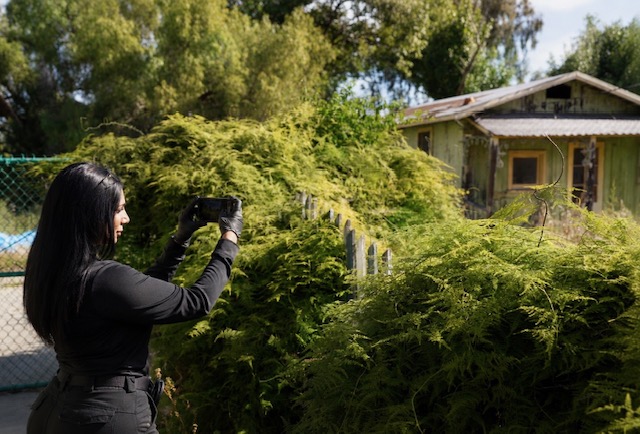
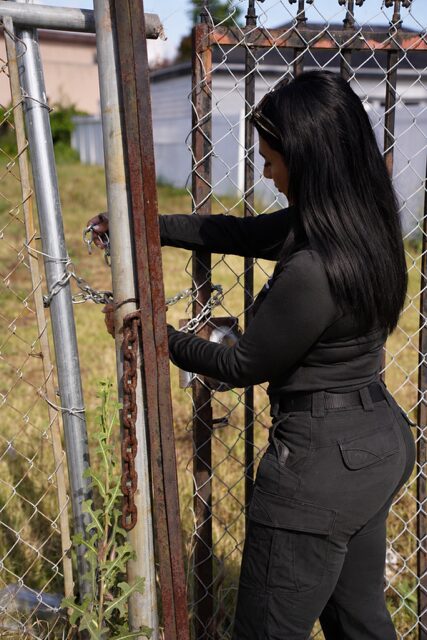
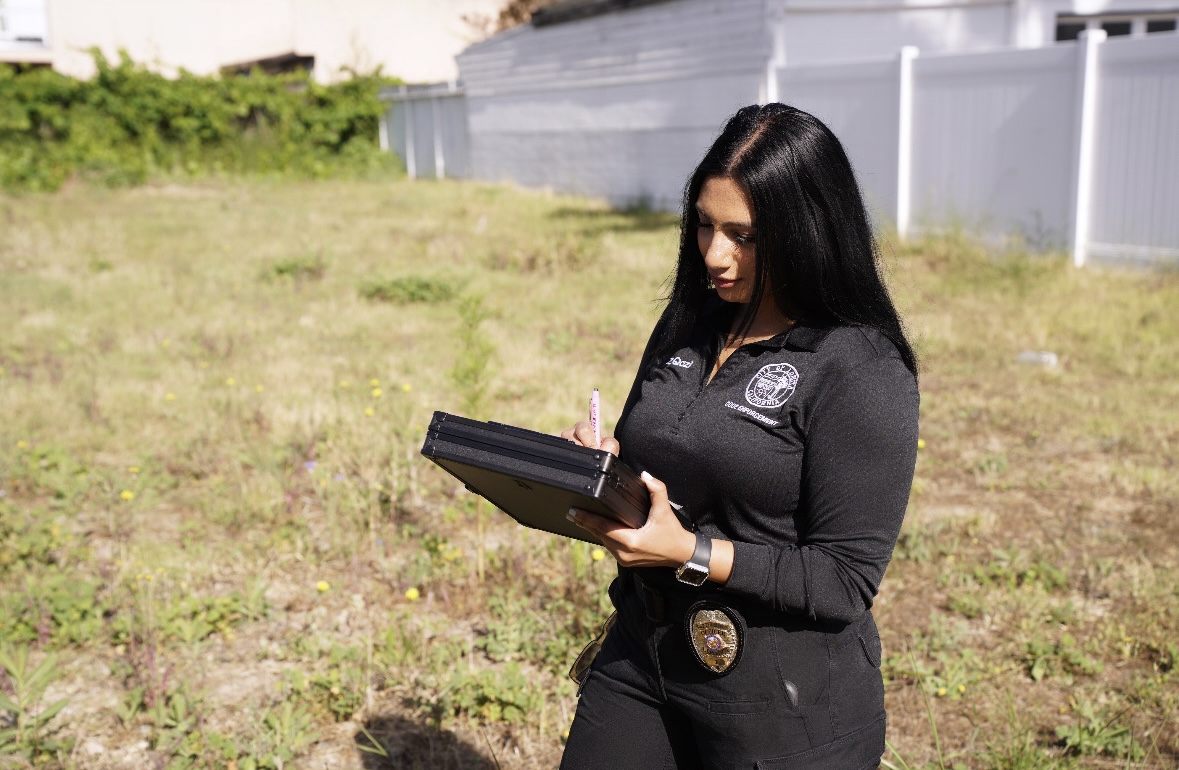
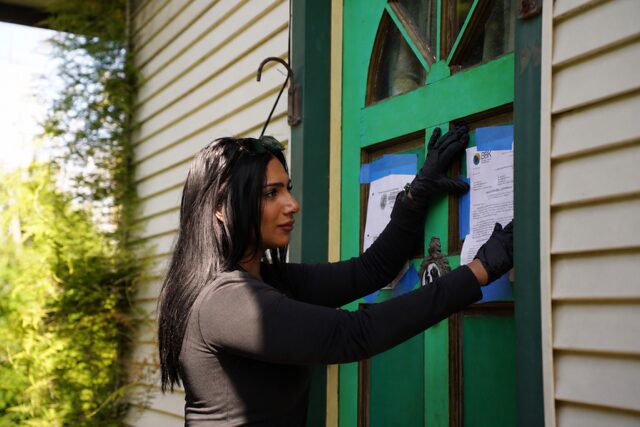
In my current role as Code Enforcement Officer II for the City of Lomita, I focus on maintaining community standards, addressing neighborhood concerns, and helping residents understand and comply with city regulations. A big part of my job is education and communication — not just enforcement. Most situations are really about problem-solving with people and finding respectful, practical solutions that work for both the resident and the City.
I wouldn’t say I “specialize” in one thing, but my strength is definitely communication and de-escalation. I try to be fair above all else. I give people time to fix issues when it’s appropriate, and I approach situations with the mindset that most people do want to do the right thing — they just sometimes need clarity or a little guidance on how to get there.
I’ve learned that good code enforcement is really about balance. It’s about protecting the community while also understanding that people are human and life can get complicated. Our role is to help maintain safe, clean, and healthy neighborhoods, but also to work with residents in a way that feels respectful and solution-oriented rather than punitive. When done well, code enforcement helps strengthen the overall sense of pride people have in their community.
I’m probably most known for being approachable. Code Enforcement can feel intimidating from the outside, so I make a conscious effort to be friendly, calm, and human in every interaction. I try to embody Lomita’s motto, “The Friendly City,” while also reflecting the City’s core values — Professionalism and Integrity, Respect, Innovation and High Performance, and Health and Safety Awareness. To me, that means treating every person with professionalism and honesty, respecting residents and business owners, thinking creatively to find solutions, and always keeping public health and safety in mind while helping people maintain a healthy community.
I’m also known for giving people what I call “reasonable human time.” Life happens — people need time to fix things — so I try to balance accountability with fairness instead of expecting perfection overnight. I also try to be as helpful as possible, walking people through each step so they feel supported, understand what’s needed, and can get into compliance in a way that feels fair and manageable.
What I’m most proud of is building trust in situations that don’t always start off easy. Whether it’s helping someone understand a violation or turning a tense interaction into a respectful conversation, those moments matter. And yes, sometimes that even includes laughing with a resident about how Code Enforcement is basically the “unexpected guest nobody invites over, but somehow still shows up.”
What sets me apart is my path to getting here. I didn’t come into Code Enforcement through a traditional route, and I think that’s been an advantage. My background in parks, animal services, and dispatch gave me a wide perspective on people and situations and taught me how to stay calm under pressure. As a Muslim Pakistani woman in enforcement, I also bring a perspective that people may not expect in this field. I don’t see that as something that separates me — I see it as something that helps me connect with people in a more understanding, grounded way.
At the end of the day, I just want people to walk away feeling like they were treated fairly, with respect, and by someone who actually cares about the community behind the badge— basically, not like they just ran into a very polite robot running on too much coffee.
What has been the most important lesson you’ve learned along your journey?
The most important lesson I’ve learned along my journey is that every interaction is really about the people, not just the job or the issue in front of you. Early on in my career, I thought success in enforcement or public service was about being correct, efficient, or by-the-book. Over time, I realized it’s actually about how you make people feel while doing your job.
In every role I’ve had — from Park Ranger work to municipal services, dispatch, and now Code Enforcement — I’ve had to learn how to separate people’s reactions from who I am personally. A lot of the time, people are reacting to the situation, not to you as a person. Once I understood that, it completely changed how I approach my work.
I’ve also learned that patience goes a long way. Giving people time, listening to them, and approaching situations with empathy often leads to better outcomes than rushing or escalating things. Most people do want to do the right thing — they just need clear communication and a fair chance to get there.
And honestly, I’ve learned not to take things too personally — which is easier said than done in this field. You can have a whole day where someone is upset about a parking ticket or a violation, and then five minutes later you’re helping someone who genuinely appreciates what you do. You learn to stay steady through all of it.
At the core of it, the biggest lesson has been this: stay professional, stay respectful, and stay human — because that’s what people carry with them, even after the situation is over.
Contact Info:
- Website: https://lomitacity.com/code-enforcement/
- Instagram: https://www.instagram.com/lomitacityhall/
- Facebook: https://www.facebook.com/LomitaCity/?ref=embed_page#
Popular
-

Portraits of the Valley
-

LA’s Most Inspiring Stories
-

Cedar Boschan on Elevating Black Music Rights and Driving Urgent Conversations Around Credit, Equity, and Artist Protection
-

Robin Olive on Building an Inclusive Performing Arts Movement and Expanding Opportunities for Every Student
-

Que Johnson on Building Brands That Last: From Visibility to True Market Authority
-

Christina Wren Steps Into the Director’s Chair to Tell Stories That Feel Like Home


