




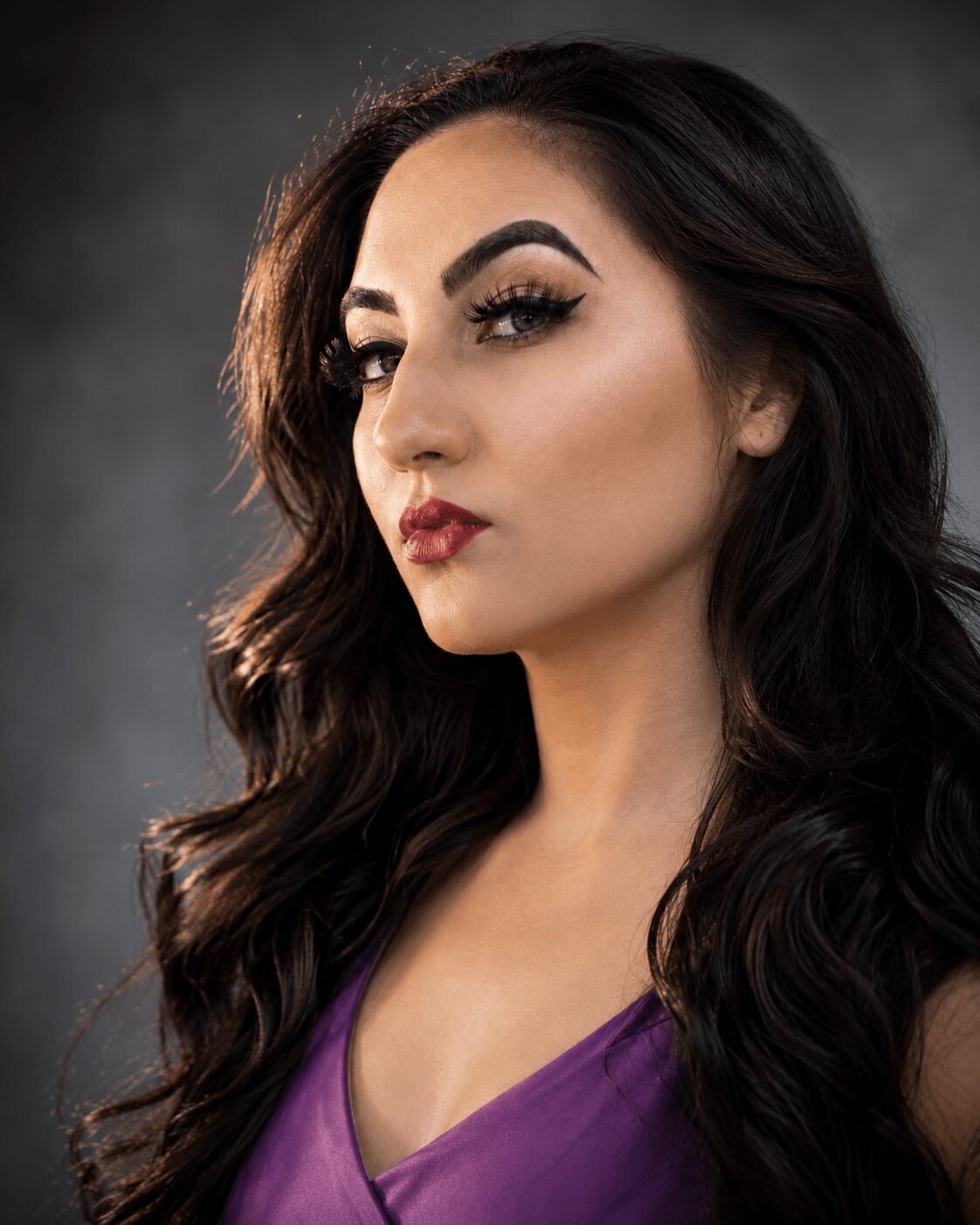
Today we’d like to introduce you to Nikki Dimitrijevich.
Nikki, we appreciate you taking the time to share your story with us today. Where does your story begin?
I’ve been telling stories for as long as I can remember, even before I knew that’s what I was doing. As a kid, I was always performing. One of my earliest images of myself is dancing in the living room in a matching sweatsuit set, doing karate-dance moves to Michael Jackson like I was training for a very tiny arena tour. When my dad had the camcorder out, I was usually jumping in front of it by age three. I did comedy, impersonations, little characters, fake commercials, dramatic reenactments, and action choreography in the living room like I was secretly preparing for a very low-budget blockbuster.
People used to ask me to do my funny voices and impressions. A lot of it came from stand-up, the Blue Collar Comedy Tour, Jeff Foxworthy, MadTV, especially Stuart and his mom, Kenan & Kel, and whatever else my brain had absorbed and decided to weaponize at the dinner table. My sister and I should never have been seated across from each other if silence was the goal. I was often hilarious at deeply inconvenient times, and my dad would try to be mad and fail, which was one of my earliest reviews.
I was born and raised in Garden City, Michigan, a small city in Metro Detroit, and went to high school there before attending Schoolcraft College in Livonia, where I earned my associate degree in arts. Garden City was small, scrappy, weirdly formative, and full of characters. When I was young, it felt brighter and more colorful in that small-town way. We could ride bikes all over the city as kids, which feels almost like folklore now.
Creativity came from both sides of my family in different ways. My mom was the creative one. She was a cosmetologist and nurse, and later became a stay-at-home mom. She made beautiful wreaths, table settings, crafts, and art projects, and she was always bringing creativity into the house. We went to Frank’s or Michaels almost every week to get something to make: paint, clay, yarn, crystal-growing kits, whatever strange little creative portal was calling. She taught me to crochet, drew with me, did my hair and makeup for dance performances and school dances, and helped me start experimenting with makeup in middle school, which is also around the time I started dyeing my hair purples, reds, black, and bright red. My natural hair color has rarely been seen since 1998, much to her dismay and to the eternal suffering of several bathtubs.
My dad gave me a different kind of creativity: the tactile, mechanical, hands-on kind. He is a highly skilled machinist who works on performance racing engines and can calculate within thousandths of an inch like a human calculator. He has built and installed in-wall dressers, replaced our furnace, installed central air, and fixed more things than I can count. That need to understand how things work, to build with my hands, to solve problems, to make something real from parts, came from him. He is also his own very specific flavor of brilliant, and while he may not care much about the backstory of my AuDHD diagnosis, he has said I’m just his unique, strange daughter and he loves me as I am. That means a lot.
My family history also shaped me. My dad’s parents were from Yugoslavia, and I grew up with Serbian Orthodox traditions and holidays. My baba was with us until 2017, and she was a huge part of my life. She loved gothic romance novels and soaps, and looking back, I think part of that was longing. Falling in love with gothic, romantic, strange, lush storytelling later in life felt natural, like I had inherited part of her. She supported everything I did in her own quiet, devoted way: acting, writing, drawing, swimming, softball. She would give you the jewelry off her body if you said you liked it, and I still have dolls, jewelry, and keepsakes from her. Apparently she taught me to sing “Popeye the Sailor Man” in Serbian when I was three, which I desperately wish I remembered.
I was never without certain things: a handheld video game system, music, headphones, a camera, and usually my bike. Game Boy, DS, Walkman, anti-skip CD player that absolutely skipped anyway, iPod, film camera, digital camera, sometimes both. Those were not just hobbies. They were grounding tools before I had language for grounding tools. I used to go on long walks or bike rides while listening to soundtrack music and create entire worlds in my head. I would imagine scenes, camera angles, costumes, landscapes, dramatic entrances, lighting, and emotional beats. I didn’t just daydream. I built.
My bedroom was part museum, part archive, part teenage headquarters. The walls were covered with movies, music, video games, actors, bands, comics, anime, lights, figures, trophies, photos, and memories. There was a lot of Keanu Reeves. There was a lot of Foo Fighters and Dave Grohl. There were also friends on the walls. It was trinket-90s-nerdy-punk-maxxed before I had language for what that even was.
I was also constantly documenting life around me. Looking back, I realize I was directing, producing, staging, photographing, and world-building long before I knew those words applied. I would organize group outings, create little photo shoots out of our hangouts, pose people, give prompts, capture candid shots and videos, and turn ordinary nights with friends into little visual records. My MySpace, rest its chaotic soul, was full of now semi-lost media. Some of it may still exist on burned CDs, flash drives, memory cards, and boxes of developed film somewhere, which is both terrifying and sacred.
There were also teachers who helped shape me. My kindergarten and first grade teachers gave me early confidence, especially Mrs. Mehl, who was kind, wise, and helped nurture my sensitivity rather than make me feel ashamed of it. My fourth grade teacher, Mr. Fernimos, was one of the most important people in my creative life. He was Greek, I’m Serbian, and my mom would send me to school with dyed eggs so he and I could “egg fight” for Orthodox Easter. He ran school plays, spelling contests, and chess club, and he was the first person who really started me officially in acting. He told me I was highly intelligent, talented, and that I would go far with acting and writing. I wish I had been able to tell him how much that mattered before he passed.
Other teachers carried that spark forward. Mr. Lentz nurtured my love of geography, trivia, and recall. Mrs. Waldron, my junior high sports, swimming, and first-aid teacher, was fierce, funny, and unforgettable. She called me Flipper because she practically had to drag me out of the diving pool. She taught me CPR, first aid, swimming, golf, football, soccer, and a kind of ferocious gentleness I still remember. In high school, Miss Curlee, my Japanese teacher, was one of the first adults I met who felt like proof that someone loud, passionate, unusual, and smart could thrive. She encouraged my Japanese, which I had started learning in second grade, and we are still connected. Miss Mitoraj was one of my artistic beacons through art, digital imaging, photography, multimedia, and design. Mrs. Shimskey picked up the acting baton in drama and honors drama. She was hilarious, alive, deeply human, and helped me shape pain and chaos into performance. She believed I would end up on her wall of students who went on to accomplish something, and I still hope one day I can tell her she was right.
The things that shaped me creatively were everywhere. I was obsessed with Jim Henson: The Muppet Show, Muppet Babies, The Dark Crystal, Labyrinth, and Sesame Street. I loved Power Rangers, TMNT, Barbie, Disney movies, Ghostbusters, The Little Mermaid, Beauty and the Beast, The Jungle Book, and anything that felt colorful, strange, funny, emotional, or immersive. As I got older, I fell hard for movies like Die Hard, The Fifth Element, The Matrix, The Princess Bride, Heat, and anything with De Niro, Pacino, Stallone, Schwarzenegger, or Bruce Willis. My dad looked enough like some of them that we still joke, “Hey Dad, you’re on TV.”
Gaming was another major thread. My grandpa got me an NES Sports Set when I was three, shortly before he died, and that started something huge for me. Video games became an outlet, an escape, and a dream engine. Super Mario Bros. 2, World Cup Soccer, Beach Volleyball, Back to the Future, The Flintstones, Tiny Toon Adventures, Turtles in Time, Adventure Island, and so many others became part of my internal language. Later came Sega Saturn, Nights into Dreams, Clockwork Knight, Croc, Virtua Cop, Virtua Fighter, Myst, Gex, PlayStation, GameCube, Metal Gear Solid, Monster Rancher 2, Legend of Mana, Spyro, Crash Bandicoot, Halo, Call of Duty, Marvel vs. Capcom 2, Capcom vs. SNK 2, DDR, Amplitude, and rhythm games. I still have a bookcase of video games, and that is only part of the lifetime archive.
My godparents also helped cement the gamer in me. They had an enormous game collection, and my godmother would sometimes wait for me to come over and help her get through parts of games. We would go to craft shows, art fairs, laser tag, dinner, movies, and places like Bennigan’s. I was often the kid who stayed over because my sister had a harder time being away from my mom. In a lot of ways, I got to be their kid too, and that gave me even more room to explore art, games, imagination, and being myself.
Schoolcraft College became a bridge. It gave me community through the Project Playhem Gaming Society, where I became the PR/Media Officer. It kept me connected to art, history, theatre, and performance. It also deepened my love of art history, architecture history, Broadway history, world conflict, anatomy, geology, earth science, public speaking, and the machinery of how the world works. I have always wanted to know why. As a kid, you could not give me enough to read, and it was not just stories. I read encyclopedias, trivia books, animal books, medical books, anything that answered questions or created new ones. I had little trivia gadgets and educational computer programs. I wanted information the way some kids wanted candy.
One of my favorite college memories was walking late into my World Conflict class on the first day. The professor said, “Ms. Dimitrijevic, thank you for joining us, and thank you for starting World War I.” I did not understand the joke for weeks, until we learned about the assassination of Archduke Franz Ferdinand, the Black Hand, and a distant ancestor named Dragutin. That class cemented my love of history, trivia, and the way real events can feel as dramatic and strange as fiction. I did college while working multiple part-time jobs, struggled with math, and excelled in history, art, science, speech, and public speaking. I was even published in a teacher’s book and workbook for a few years, and appeared on the cover of some college programs, partly through modeling and partly through being involved.
What is strange is that it took me until much later in adulthood to realize I was not “just making stuff.” In the last five years or so, I finally understood that I had been documenting, directing, staging, designing, DPing, building worlds and sets, writing scenes, choreographing, storyboarding, and orchestrating experiences my whole life. I just did not have the professional language for it yet.
As I got older, that creative energy kept shapeshifting. It moved through theatre, comedy, visual art, fandom, gaming, film, TV, writing, music, photography, performance, and content creation. I have always been drawn to the strange little intersection where humor, emotion, pop culture, beauty, chaos, gaming, music, theatre, and meaning all start talking to each other. That is where I feel most alive creatively.
A lot of my work now comes from that same place. I love creating things that feel layered, funny, emotionally honest, visually interesting, and a little unexpected. Whether I am making art, talking about movies and characters, building a brand, creating content online, or developing a larger project, I am always looking for the human thread underneath it: why something matters, why it makes us laugh, why it hurts, why we remember it, and why certain stories imprint on us even when we do not understand why at the time.
I think my path has been less of a straight line and more of a constellation. Different creative points lighting up over time: performer, artist, storyteller, gamer, commentator, world-builder, photographer, host, walking trivia machine, and chaos gremlin with a camera roll full of ideas. But the pattern has always been there. I have always wanted to make people feel something, whether that is laughter, recognition, curiosity, comfort, nostalgia, connection, or the very specific joy of realizing someone else’s brain is weird in a compatible way.
So that is where I started, and honestly, it is still where I am: making things, finding meaning in the margins, collecting fragments, turning life into scenes, and trying to turn all the strange, funny, beautiful pieces into something that connects.
Would you say it’s been a smooth road, and if not what are some of the biggest challenges you’ve faced along the way?
My path has not been linear. It has been interrupted, rerouted, delayed, burned down, rebuilt, and occasionally dragged through the mud by its ankles. Trauma, survival mode, failing relationships, lack of support, lack of community, and chronic illness made it very hard for me to follow the kind of clean, continuous creative path people like to package neatly. There were years where survival took up more space than ambition. There were years where I knew who I was, but didn’t have the stability, health, money, resources, or support to fully become her. Growing up in Metro Detroit also didn’t afford me a ton of access to entertainment resources, but I found what I could when I was able.
Another challenge has been the lifelong experience of being loud, different, and often misunderstood. I was made fun of for my body, for being short, curvy, and muscular, for my pale olive skin that people said made me look sick, for my loud cackling laugh, for the way I dressed, and for the things I loved. I was a girl who loved wrestling, video games, skateboarding, metal, rock concerts, theatre, makeup, dance, and art, and a lot of those interests were treated like they belonged to boys. I grew up with close guy friends who were truly like brothers to me, some of them going all the way back to childhood, but there was often misunderstanding around my belonging in those spaces. Some boys made fun of me because I didn’t fit what they expected. Some girls misunderstood me because they didn’t understand why I was included. Some girlfriends were jealous because I had genuine shared interests and history with those friends, not because I was trying to take anyone’s place.
There was always this strange tension of being social, but not always fully understood. I made friends everywhere, floated between groups, and could talk to almost anyone, but I rarely felt like I fully belonged anywhere. I was the kid in video game shirts, backwards hats, colorful eyeliner, bright socks, hi-tops, and maybe a mini skirt thrown into the mix because why choose one lane when you can cause a small identity traffic incident? I was AFJROTC, Japanese Club, softball, Pom Pon, theatre, art, gaming, dance, rock shows, comedy, and whatever else sparked my curiosity. I had core friends, of course, but I never had one neat box. I was always a little too much of one thing for one room and too much of another thing for the next.
Looking back now as an adult with an official AuDHD diagnosis, ADHD as a teenager and autism as an adult, I can see how much that diagnosis gap affected me. That is not the fault of my parents. I presented differently. I was social, expressive, funny, curious, and often the classic “pleasure to have in class” kid who did well when I applied myself, which is often the old familiar story for neurodivergent kids who are bright, bored, overwhelmed, or secretly struggling. I didn’t always have the language for why I couldn’t force myself into a straight line. I just knew I kept trying and somehow kept slipping out of the shape I was “supposed” to hold.
For a long time, I focused on what seemed normal or secure. I tried to build the family and community I wanted. I tried to be practical. I tried to choose jobs that paid the bills and didn’t drain the life out of me completely. I was encouraged, like many people my age, to get a four-year degree, find a stable job, and build a conventional life. But I could never fully settle into that path. I have an associate degree and school debt, but I never found the four-year degree that felt like mine. I lost traditional jobs. I struggled when I had to do just one thing. Usually, I had several jobs at once, and sometimes college on top of it.
Even as recently as 2020, I was working full time as a front-of-house leader at a bakery, part time as a task leader doing warehouse work and planograms at a beauty supply chain, and doing DoorDash on the side. That kind of juggling has been a theme in my life. I have always been capable, hardworking, and willing to do what needed to be done, but I was also constantly trying to survive systems that were not really built for how my brain, body, or creative drive worked.
In 2025, after my life imploded again, something in me shifted. I sat with the pieces and finally saw the pattern. I asked myself what would actually inspire me, not what looked practical, not what would make sense to someone else, not what would sound responsible at a dinner table, but what would bring me joy and make me feel alive. And the answer was not new. The signs had been there my entire life. Performance. Storytelling. Comedy. Art. Music. Gaming. Fandom. Hosting. Commentary. Visual world-building. Connection. Entertainment. Multi-hyphenate creativity.
I think I shied away from this path for a long time because I didn’t have the language, support, money, access, or knowledge to understand that it could be a real path. I didn’t know how to build it. I didn’t know where I belonged. Most of my friends have families, marriages, careers, homes, and roots. I don’t have those things yet. For a long time, that felt like failure. Now, I’m starting to wonder if I was never meant to root permanently in the Midwest at all. Maybe part of me always knew I was supposed to keep moving until I found the rooms that could actually hold me.
That does not mean it has been easy. I am still in a liminal space. I don’t have a permanent residence in NoHo yet, and I don’t really feel permanently rooted in Detroit either. I have struggled physically, mentally, and emotionally with feeling stuck between where I came from and where I know I’m going. I have a direction now, but I am still building the stability, resources, community, and access to fully step into it. I have even considered a camping van or something similar, because apparently my life insists on remaining both cinematic and logistically complicated.
I know this path is going to be chaotic. Entertainment is changing. Content creation is changing. The old gates are cracking, but the new ones are crowded, algorithmic, strange, and exhausting. I’m not naïve about that. I know I’m walking into industries that can be brutal, especially for women, especially for women with strong voices, unconventional stories, bodies, brains, and lives that don’t fit the neat little mold. I also know that the same things that once made me feel difficult to place are the things that now make me worth noticing.
But I’m stubborn. Deeply, inconveniently stubborn. And I believe I have something people need: a point of view that is funny, emotional, strange, sharp, feminine, mythic, nerdy, honest, and very much my own. I want to be part of the wave of women taking up space in places we have historically been excluded from, whether that’s film, fandom, comedy, criticism, content, storytelling, gaming, or culture at large. I want to be visible for the loud girls, the weird girls, the neurodivergent girls, the late bloomers, the women who didn’t get a clean timeline, and everyone who thought they had missed their chance because life kept setting fire to the map.
I’m not here because my path was easy. I’m here because it wasn’t, and I kept finding my way back to the work anyway.
Appreciate you sharing that. What else should we know about what you do?
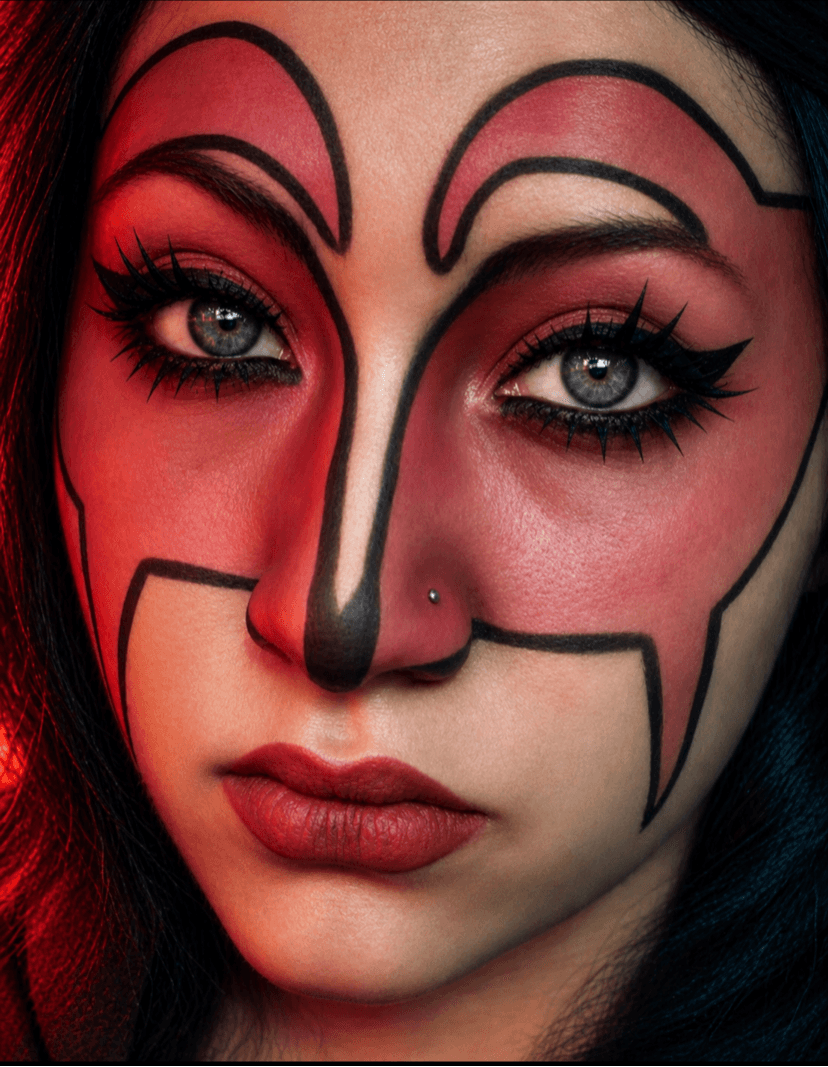
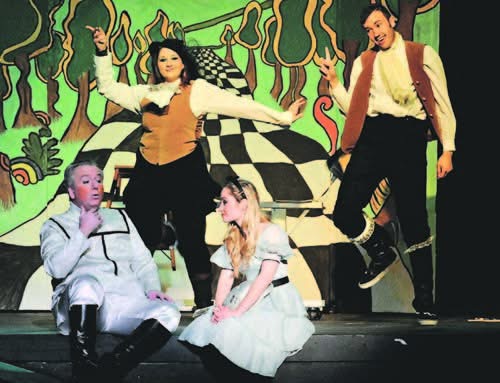
My work has always lived at the intersection of performance, storytelling, humor, fandom, visual art, and community. I’ve done a lot of community theatre over the years, both onstage and behind the scenes, assisting where I could with makeup, wardrobe, staging, and the thousand tiny practical things that make a production come alive. I’ve worked as a makeup artist for a 48 Hour Film Festival project, performed in interactive murder mystery theatre, participated in small dance galas and theatre shows with dance elements, and did cold reading performances over Zoom with Unlimited Stages out of New York, featuring original work by my close friend Katie Casebolt.
I also have a long history with live events, hosting, gaming, and community-building. In college, a close friend of mine and his best friend started something called the Project Playhem Gaming Society, and I served as the PR/Media Officer. Every year, we hosted a 48-hour lock-in livestream to raise money for Children’s Hospital so they could afford game carts for the kids. This was back in the Justin.tv days, before livestreaming became the fully grown beast it is now. I helped arrange food donations, promote the stream, gather pledges and donations, and I also streamed myself playing games and hosted portions of the event. Unfortunately, I don’t know if any footage survived, which is tragic because somewhere out there in the lost digital swamp is probably peak feral charity-gaming Nicole.
I grew up dancing, did Pom Pon in high school, and I’m planning to return to dance training as part of this next era of my creative life. It’s like riding a bike, except now the bike sounds like Rice Krispies in the morning. I’ve also walked in a charity fashion show, worked on makeup and wardrobe where I could, and have always gravitated toward spaces where performance, identity, costume, character, and community overlap.
Sports, dance, and movement have also always been part of my life in different ways. I played softball, did Pom Pon, danced growing up, and also played soccer for a year in high school and again for a company team after I graduated, usually as a defender, which made sense. I was much better at reading the field, holding my ground, and disrupting the play than trying to become a tiny gazelle in cleats. I later learned that having Ehlers-Danlos syndrome explained a lot about why running felt less like springing forward and more like fighting invisible resistance bands. SoccerAid, call me.
I’ve always had that mix of performer and athlete in me: theatrical, competitive, physical, expressive, and very willing to commit to the bit if the bit involves moving, dancing, falling, fighting, or making a face afterward. I wanted to be a WWE Diva for most of my life, and I still want to learn. Don’t tell my nurse sister. I played softball for almost 20 years, mostly slow pitch, and also played fast pitch in high school, where I was captain for one of my two years. I played pitcher, first base, and shortstop mainly, but filled in anywhere they needed an arm. Which honestly says a lot about me: I was never the fastest person on the field, but I understood timing, pressure, positioning, reaction, and power. Being a pitcher also requires the ability to lead a game and a team, something I felt naturally pulled to do. Some of my best friends played with me. Luckily, in softball, I was a power hitter, so my philosophy was simple: hit it hard enough that speed becomes someone else’s problem.
I also started streaming on Twitch in 2017 and became a Twitch Affiliate that same year, which is still something I’m proud of. To my genuine delight, I’ve been asked dozens and dozens of times over the years when I’m coming back. Life, health, space, and equipment all got in the way, so I haven’t been able to stream as consistently or at the level I wanted. Since then, I’ve still streamed periodically on Twitch, Instagram, and TikTok, but I’ve been waiting until I could rebuild with more intention.
Now, returning to streaming is a real part of my plan. I want to incorporate it into Fictional Exes, but also bring it back simply because it feels like one of the most natural places for me to be. I love live interaction, comedy, gaming, commentary, community, and the strange electric intimacy of talking to people in real time while building a world together. Streaming makes sense for me because it combines so many things I already do instinctively: performing, hosting, reacting, joking, storytelling, connecting, and occasionally making a completely unreasonable emotional investment in pixels.
What sets me apart is that I’m not coming at entertainment from one doorway. I’m not only an actor, or only a gamer, or only a host, or only an artist, or only a fandom person. I’m all of those threads braided together. I understand performance, visuals, comedy, live audience energy, internet culture, emotional storytelling, nerd spaces, and the kind of community people build around the things they love. I don’t just want to make content about pop culture. I want to create spaces where people feel the way their favorite stories made them feel: seen, entertained, understood, and a little more alive.
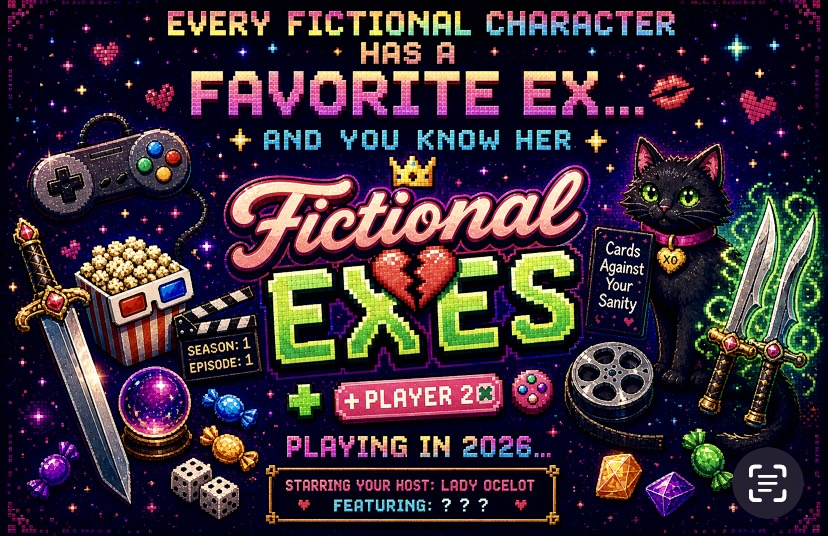
What I’m most proud of right now is Fictional Exes, a project I’m building as both a content brand and a larger creative universe. At its simplest, Fictional Exes is a comedy-driven entertainment and pop culture project about the fictional characters, celebrities, archetypes, and stories we imprint on emotionally, romantically, aesthetically, and spiritually. It plays with the idea that sometimes the people who shape us most are not actual exes at all, but the characters, performances, films, fandoms, and imaginary relationships that taught us what we wanted, what we feared, what we found beautiful, and what absolutely ruined our standards forever.
Fictional Exes will begin as social content: funny videos, commentary, character analysis, fandom conversations, reviews, sketches, and emotionally unhinged but deeply thoughtful takes on film, television, pop culture, and fictional crushes. But I see it expanding into much more: interviews, live events, merch, essays, podcasts, panels, collaborations, press opportunities, and eventually a broader entertainment platform. I want it to be funny, smart, strange, visually memorable, and emotionally honest. A place where people can laugh about being devastated by a fictional man in leather, but also talk seriously about why stories shape us.
That “why” matters to me: why certain characters imprint, why certain stories become personal mythology, why fandom becomes memory, identity, comfort, desire, grief, comedy, and community all at once.
I’m building it as a springboard, too. I want Fictional Exes to help me network, get into rooms, connect with other artists, and create opportunities in entertainment, media, and press. I think what the industry needs right now, and what audiences are craving, is not more polished sameness. People want real passion again. They want voices that are down-to-earth but not dull, weird but not manufactured, funny but not hollow, and expressive without apologizing for taking up space.
That has been me since I was born. Ask my parents. They probably deserve cake, or a vacation, or at least an apology card with glitter on it. I was never the “normal” kid. I was loud, performative, nerdy, dramatic, funny, sensitive, stubborn, visual, and always making something. I grew up with a close group of guy friends and loved wrestling and video games, but I also floated through different worlds: AFJROTC, Japanese Club, softball, Pom Pon, theatre, art, gaming, dance, and whatever else sparked my curiosity. I was a bit of a social nomad, moving between groups and interests, somehow both the skater-punk alternative gamer nerd and the tomboy who could also do makeup.
I’m proud that I have always been my own person, even when it made me stand out in ways that weren’t always easy. I was the chatty one making people laugh, taking charge, coming up with ideas, creating bits, turning moments into scenes, and trying to pull people into whatever wild concept had taken over my brain that week. In high school honors drama, I helped write, direct, and stage-design a play about bullying for our final project. The piece was recognized by the governor and the city for its message, and I played the queen bee antagonist. Afterward, people told me how much they hated my character, and I was thrilled. That meant I did my job. Theatre heel energy, honestly.
I don’t think I specialize in just one thing. I specialize in hunger. I’m a multi-hyphenate and a polymath in the making. I absorb information, images, music, characters, dialogue, trivia, visuals, and emotional patterns like a sponge. As a kid, you could never give me enough to read, enough to watch, enough to learn, enough to imagine. That included stories, but also history, trivia, science, art, architecture, anatomy, mythology, and all the strange little connective tissues that explain why people, cultures, and stories become what they are. I have always wanted to know the why underneath the thing.
That same instinct still drives me now. It shows up in my writing, acting, content ideas, visual references, humor, fandom analysis, and even in things as simple as making color-coded Christmas lists with Shakespearean levels of drama. Again, sorry Mom and Dad. I love when entertainment can be funny and accessible on the surface, but layered underneath with history, psychology, symbolism, emotional truth, and a little poetic thunder in the bones.
Music is a huge part of how I create. I’ve always loved soundtracks and scores, even when people teased me for listening to music with no words. Hans Zimmer, Alan Silvestri, Harry Gregson-Williams, and so many other composers shaped the way I imagine. Instrumental music plays in my head like a private cinema. I can see scenes, camera angles, costumes, landscapes, lighting, moods, movement, and entire worlds. I create through sound, feeling, image, and memory. I don’t just hear music. I translate through it.
Looking ahead, I want to carry forward everything I’ve always been good at: performing, connecting, making people laugh, building community, telling stories, spotting patterns, creating worlds, and refusing to become smaller just because the world is more comfortable with quiet women. I want my work to make space for other loud, weird, funny, emotional, nerdy, AuDHD and neurodivergent girls and women to see someone like me and think, “Wait, I can do that too.”
I want to be proof that you don’t have to sand down your edges to be taken seriously. You can be colorful, strange, intelligent, silly, ambitious, emotional, feminine, chaotic, thoughtful, and powerful all at once. That is what sets me apart: I’m not trying to become a brand by pretending to be simpler than I am. I’m building one by finally letting all the pieces speak.
Before we let you go, we’ve got to ask if you have any advice for those who are just starting out?
Start earlier. Don’t let other people dictate what you’re allowed to want, become, build, or try. Don’t let fear of failure, fear of being without, or fear of looking ridiculous keep you from the thing that calls to you. You will always find a way, even if you have to do it alone for a while.
Don’t talk yourself out of what you know, deep in your heart and soul, fulfills you. Life is too short to spend it shrinking yourself into something easier for other people to understand. Do what you love. Do what sets you alight. Do what keeps whispering your name even after you try to ignore it.
Money can always be made again. Time is different. You only get so many years between childhood and twilight, and they go faster than anyone wants to admit. Make them count. Don’t wait for permission. Find your path. If it doesn’t exist, make one. Dye your hair. Get the piercing. Write the thing. Do the show. Take the class. Move to the city. Love out loud. Be unapologetically curious and unapologetically yourself.
Never let go of the hand of your inner child. Hug them often. Let them lead sometimes. They usually remember what you wanted before the world taught you to be practical. Even if you are standing alone in a room with only the things you’ve made and the things that bring you joy, you are still not empty. You are still building a life that knows your name.
Share with the world. Your people will find you. Maybe not all at once, and maybe not the people you expected, but they will recognize the signal.
Learn to be soft and kind while also becoming the gatekeeper of your own happiness and peace. You are the only person who has to live every hour of your life with you. Find ways to love yourself, discover yourself, and return to yourself at every opportunity. Keep asking questions. Stay curious. It is always okay to change paths, to start again, to become more honest than you were before.
Let your heart, your inner child, and your soul be the wind in the sails you hand-stitch through life. The sail may start small. It may be patched, crooked, strange, and made from scraps. Keep sewing. Keep moving. As you explore, it will grow, and one day it will catch a bigger gust than you ever thought possible.
Don’t stop. You are the captain of your ship, and this strange life is the sea.
Contact Info:
- Instagram: Instagram.com/LadyOcelot & Instagram.com/fictionalexes
- Threads: Threads.com/ladyocelot
- Facebook: https://Facebook.com/LadyOcelot
- Other: https://Twitch.tv/lady_ocelot
Popular
-

Portraits of the Valley
-

LA’s Most Inspiring Stories
-
Cedar Boschan on Elevating Black Music Rights and Driving Urgent Conversations Around Credit, Equity, and Artist Protection
-
Robin Olive on Building an Inclusive Performing Arts Movement and Expanding Opportunities for Every Student
-

Que Johnson on Building Brands That Last: From Visibility to True Market Authority
-

Christina Wren Steps Into the Director’s Chair to Tell Stories That Feel Like Home


