





Today we’d like to introduce you to Rishi Sharma.
Hi Rishi, can you start by introducing yourself? We’d love to learn more about how you got to where you are today?
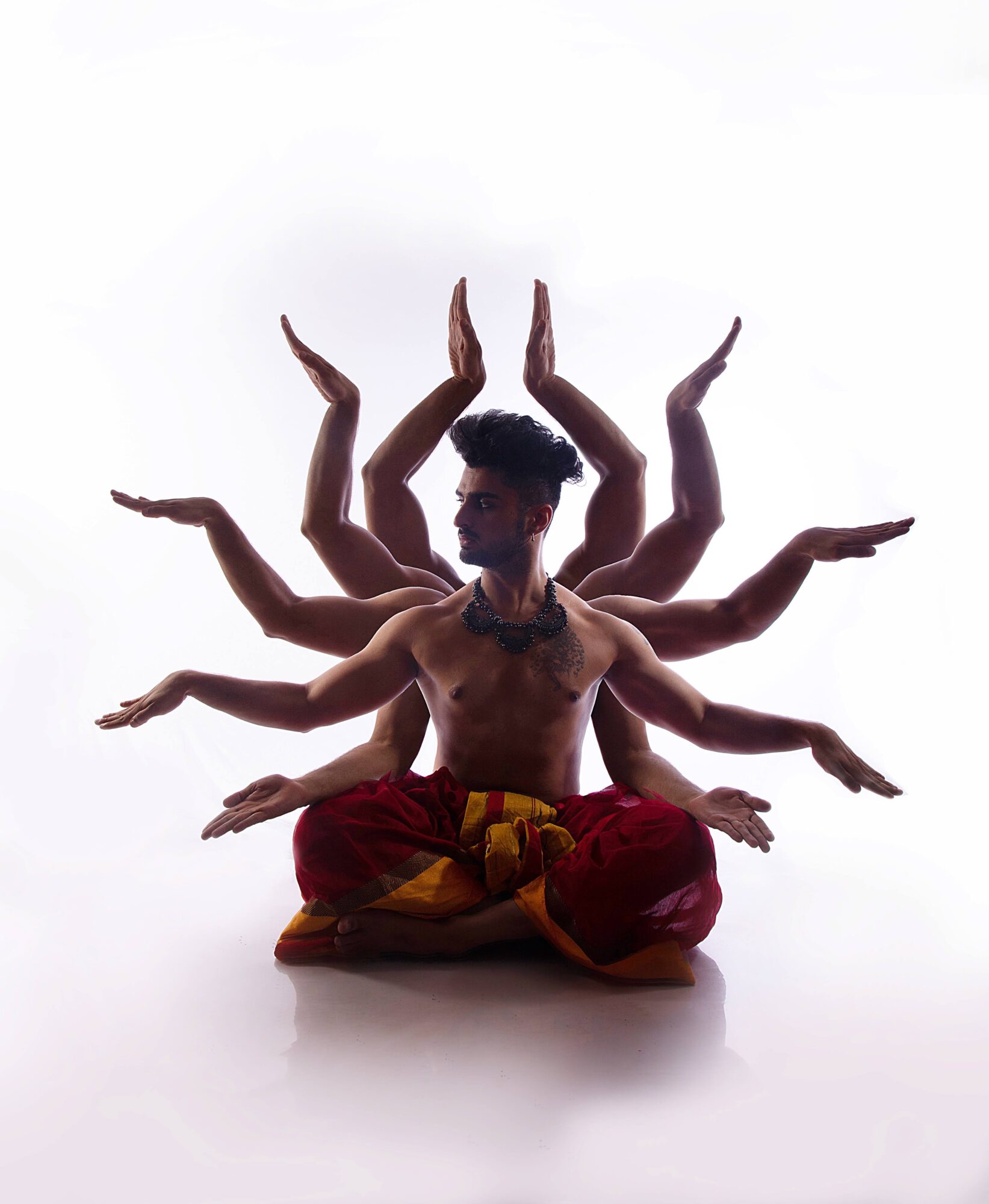
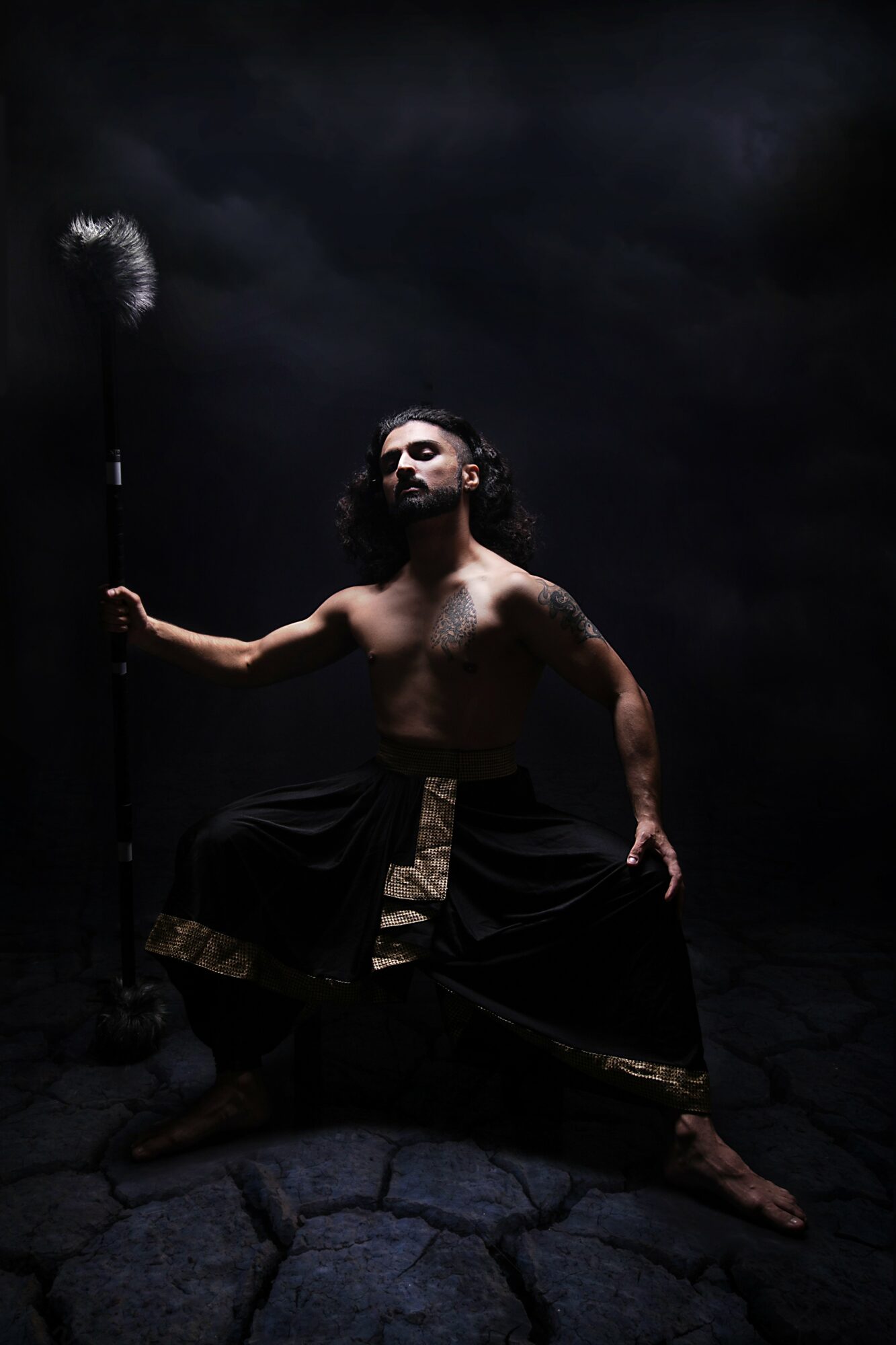
I grew up inside stories. In India, wisdom doesn’t arrive in textbooks — it’s told. The Ramayana and the Mahabharata came to me the way they’ve come to children for centuries: at night, from elders, in fragments, with the warriors and kings half-real and half-dreamt. I didn’t plan to become a choreographer or a filmmaker. What happened was that a boy from North India fell in love with Chhau — a traditional martial dance form from the Eastern Ghats, about as far from home as you can get without leaving the country — and spent the next twelve years letting it remake him. Through Chhau, the stories I had only listened to as a child returned to me through my body. I’ve played Arjun. I’ve played Karna. I’ve played Shiva. At some point, those three roles started arguing inside me, and I finally wrote the argument down.
That training opened doors I didn’t expect. I appeared on So You Think You Can Dance – India, performed with the Brahmaputras on India’s Got Talent, and began working professionally in the Indian entertainment industry — eventually as an assistant choreographer to Vaibhavi Merchant, one of the most respected choreographers in Indian cinema and stage. Those experiences taught me what it means to move in front of millions of people, and what Indian performance looks like when it’s staged at the highest level. But I also recognized that I needed a different set of tools — choreographic rigor, film language, dramaturgical depth — to make the kind of work I was hearing in my head. So I left India and came to the California Institute of the Arts to pursue an MFA in Choreography and Film.
At CalArts, everything converged. I just premiered my dance thesis — KATHA: The Charioteer’s Code — a trilingual, evening-length, multidisciplinary performance that braids three mythic and historical threads from Indian civilization: the warrior-king Kharvel of Kalinga, Shiva’s grief over Sati, and the Karna-Arjun-Krishna triangle of the Mahabharata. Eight dancers, three languages — Hindi, Tamil, and English — live musicians, projection design, original score, and a Mela installation that transformed the Sharon Disney Lund Theater into an Indian village fair before a single line was spoken. The movement vocabulary is rooted in the twelve years of Chhau I carry in my body. I wrote, directed, choreographed, and performed in it. Now I’m deep into my film thesis — Uttar-A-Adhikari — and building a practice of staging the stories India was made to forget, in the languages and bodies they were born in.
We all face challenges, but looking back would you describe it as a relatively smooth road?
Not even close. In India, being a dancer is not a career path anyone encourages. The opportunities are limited, the money is almost entirely concentrated in Bollywood, and the competition is ruthless. There’s no grant infrastructure, no MFA pipeline, no safety net. You either break through or you teach wedding choreography. That’s the landscape I came up in.
What saved me was the women in my family. My mother is a Business Law professor at Delhi University — an academic through and through — and she’s the reason I have a practice at all. When I was a child and not always enthusiastic about going to dance class, she was the one who made sure I didn’t quit. She saw something in it before I did, and she protected it. She never once told me to choose something more practical. That kind of faith from a parent — especially in a culture where dance is not considered a serious profession for a man — is rare, and I carry it with me every day.
My elder sister was the original artist in our family. She’s the one who handed me the world outside of Indian classical tradition — Michael Jackson, Patrick Swayze, Antonio Banderas, Bryan Adams, Pink Floyd, Pearl Jam, Nirvana. She introduced me to Hollywood movies. She cracked open a door into global storytelling and movement that completely changed what I thought was possible. She ended up pursuing a career in sales, but the artist inside her never left, and the inspiration she planted in me is still the root of everything I make.
And then there’s my other elder sister, who is possibly my biggest champion of all. She was the first in our family to come to the United States for higher education. She worked hard, built a life here, and paved the way for me to follow. When I arrived at CalArts, I went from being an independent working professional in Mumbai to being a student again — no income, no work authorization, no financial cushion. She took care of my finances, helped me navigate a completely new culture, and made it possible for me to focus on my art instead of my survival. I would not be here without her. Literally.
The other struggle was the climb itself. I started my professional life in Delhi, working with a dance company, and I was fortunate to be living with my parents so I didn’t have to worry about rent. But when I moved to Mumbai, everything reset. Delhi knew my work. Mumbai didn’t. The first couple of years were rough — I went from getting consistent opportunities to being unknown in a city that runs on reputation. It was hard to say no to small jobs that didn’t serve my growth, and harder to wait for the calls that would. But slowly, the work started to speak for itself. I got into the right circles. My name started reaching choreographers I had admired for years — Vaibhavi Merchant, Ganesh Hegde, Shakti Mohan — and they began calling me to assist on major productions. I ended up working on big banner Bollywood films like Shamshera, Prithviraj Chauhan, The Archies, and Bunty Aur Babli 2. Once that momentum started, there was no looking back.
But even at that stage, I knew I wanted more than what the industry was offering me. I wanted to tell my own stories — not choreograph someone else’s vision, but build entire worlds from the mythology and movement traditions I had spent my life inside. That’s what brought me to CalArts, and that’s what I’m doing now.
Thanks for sharing that. So, maybe next you can tell us a bit more about your work?
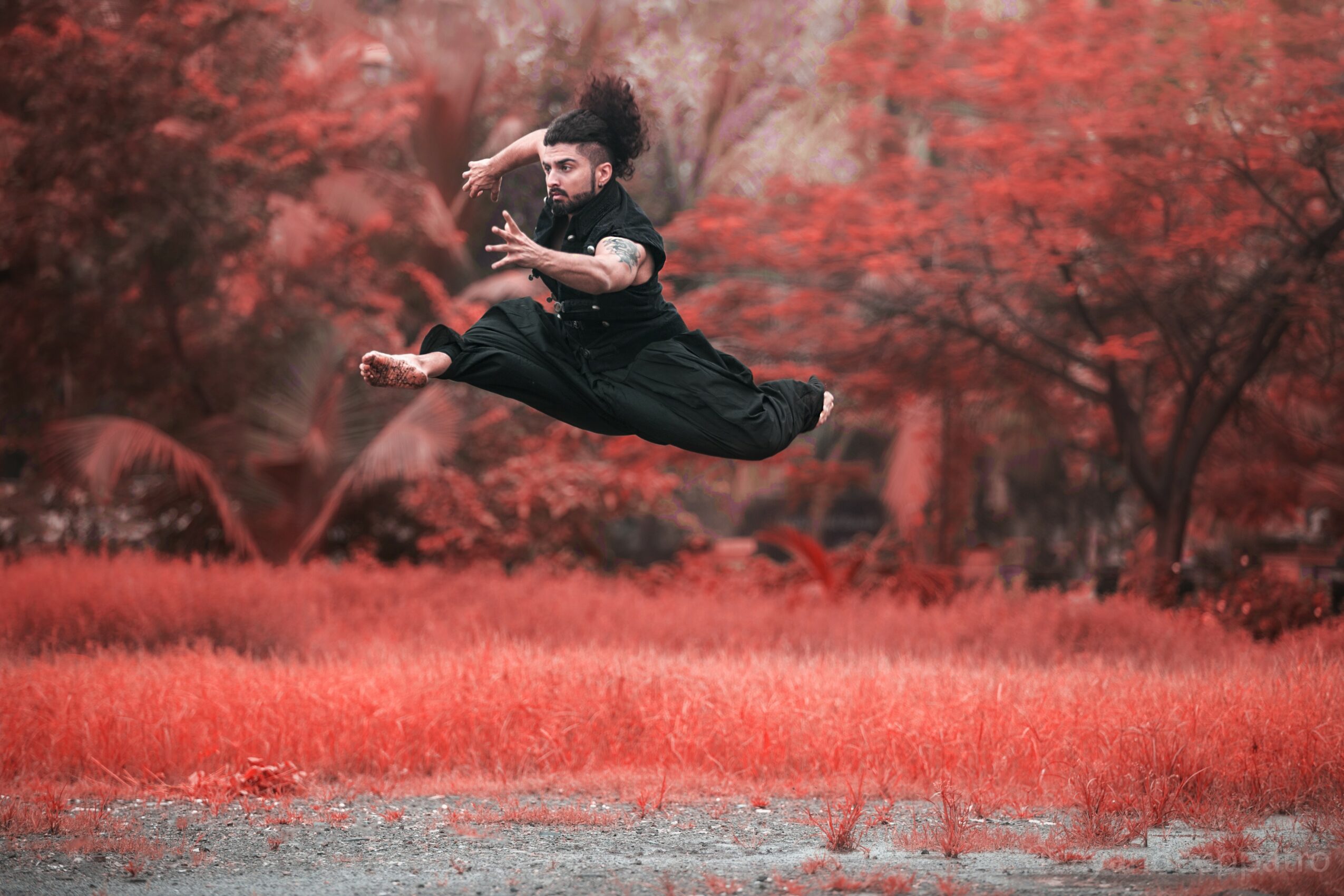
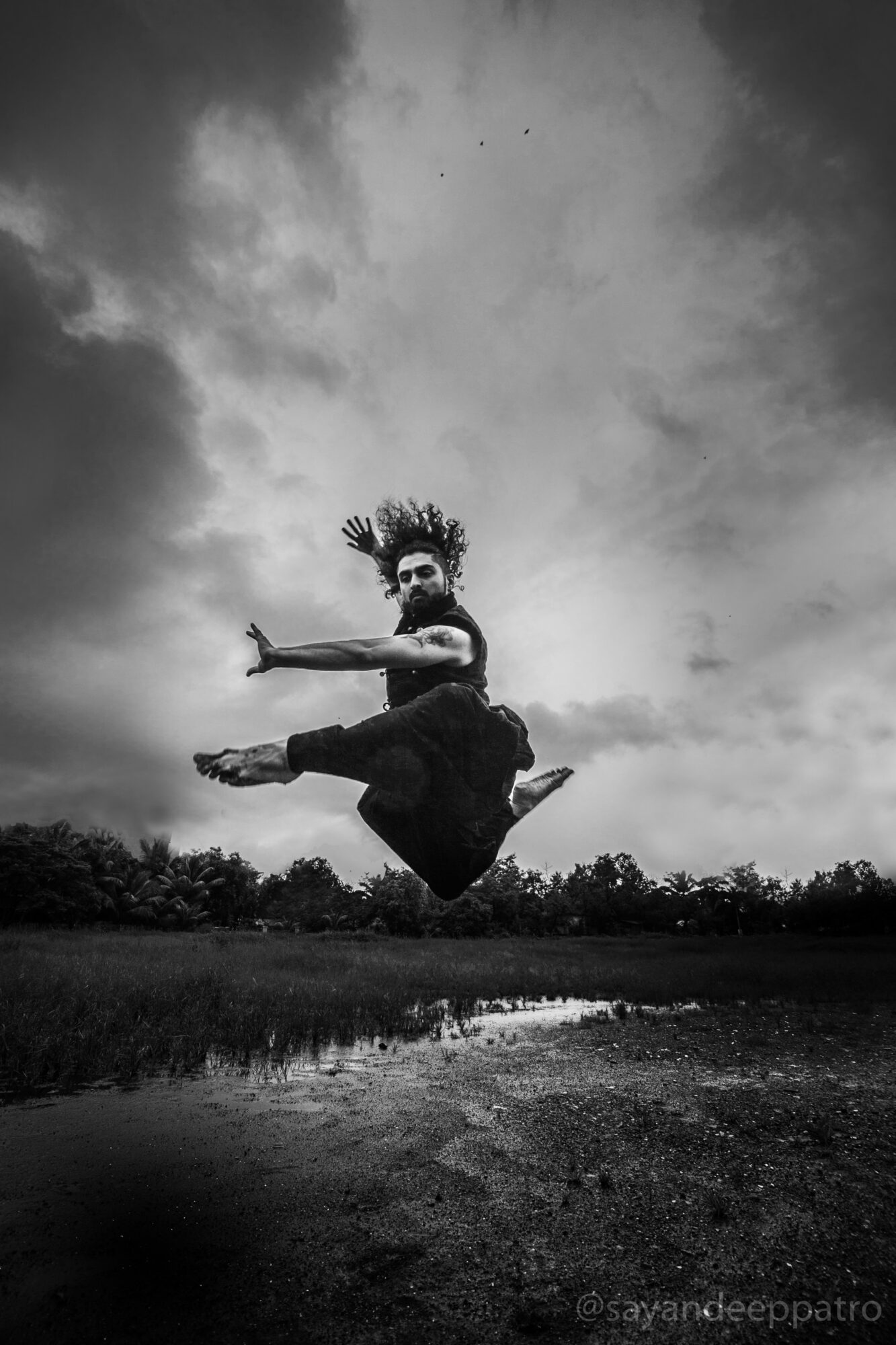
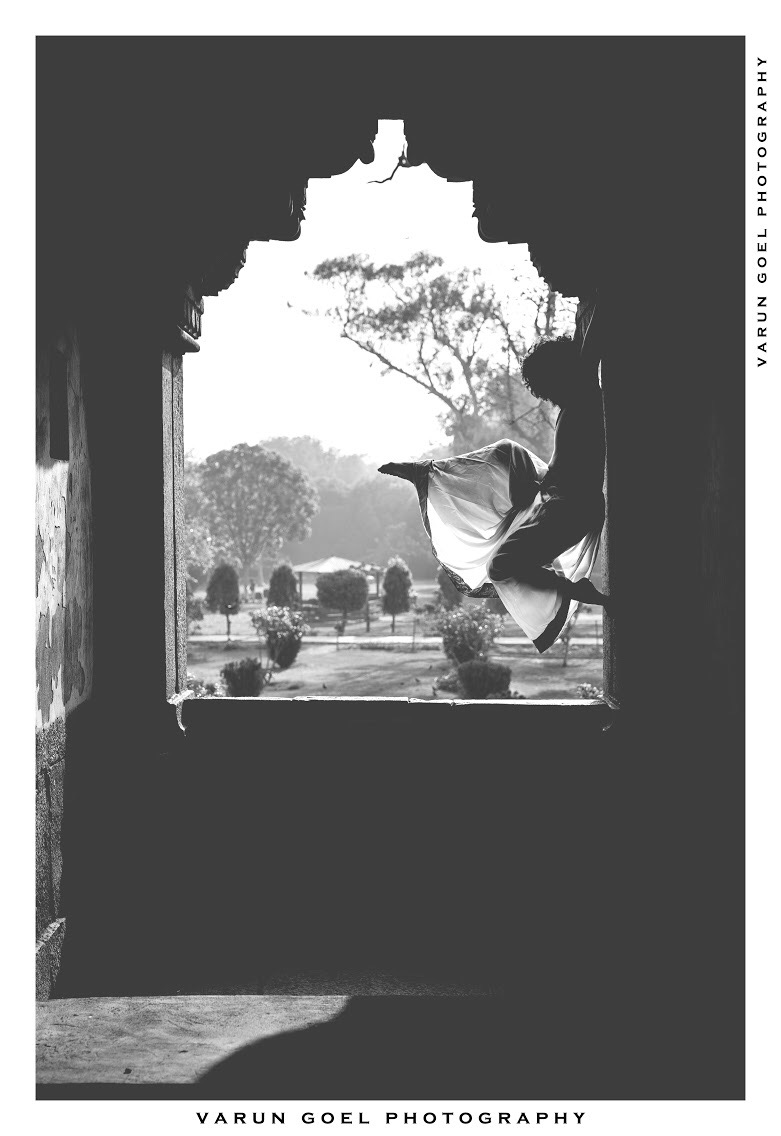
I work across three forms — dance, film, and theatre — and the through line in everything I make is Indian mythology and the body as a site of cultural memory. I specialize in creating multidisciplinary performance and cinema rooted in India’s epic narratives — the Mahabharata, the Ramayana, the Puranas — told through a movement practice that fuses Chhau, the martial dance tradition I’ve trained in for over twelve years, with contemporary floorwork rooted in Flying Low technique and Contact Improvisation-based partnerwork. That combination — a centuries-old warrior tradition meeting the most physically demanding vocabularies in Western contemporary dance — is central to how my choreography looks and feels. It’s not fusion for its own sake. It’s what happens when a body carries twelve years of Chhau and then discovers new ways to get into and out of the floor, new ways to share weight, new ways to fall.
Beyond performing and creating, I also teach. At CalArts, I’ve taught Contemporary dance and developed a program I curated called Flow & Fortitude — a movement training system I built from the ground up by distilling the martial foundations of Chhau into a contemporary pedagogy. It’s designed to develop power, agility, and expressiveness simultaneously, drawing on the warrior stances, explosive transitions, and grounded attack vocabulary of Chhau but restructured so that dancers from any background can access it. Building a curriculum that can transmit a tradition I spent twelve years learning — and having CalArts trust me to teach it alongside their existing contemporary program — is one of the things I’m most proud of, because it means the form isn’t just living in my body anymore. It’s being passed on.
In practical terms, I’m a choreographer, a movement director, a filmmaker, a writer, and an educator. In India, I worked as an assistant choreographer on major Bollywood productions — Shamshera, Prithviraj Chauhan, The Archies, Bunty Aur Babli 2 — alongside choreographers like Vaibhavi Merchant, Ganesh Hegde, and Shakti Mohan. I’ve appeared on national television on So You Think You Can Dance – India and performed with the Brahmaputras on India’s Got Talent. That professional world taught me how to stage movement for millions of people, how to work under the pressure of a Bollywood production schedule, and how to collaborate inside massive creative teams. But the work I’m most proud of is the work I’ve made on my own terms.
KATHA: The Charioteer’s Code — my MFA thesis at CalArts — is the piece I’ve been building toward my entire life. It’s a trilingual dance-theatre work in Hindi, Tamil, and English that braids three mythic threads: the warrior-king Kharvel of Kalinga, Shiva’s grief over Sati, and the Karna-Arjun-Krishna triangle of the Mahabharata. Eight dancers, live musicians, an original score, projection design, and a full Mela installation that transformed the Sharon Disney Lund Theater into an Indian village fair. The play opens with a well-meaning British narrator mispronouncing “Nataraja” with the confidence of a man who has read about it in a book. Beside him stands Vishnu, watching, eating export-quality ghee. Halfway through, Vishnu pulls the narrator offstage by the ankle and reclaims the microphone. What follows is the performance the audience came for, finally being told by the people it belongs to. I wrote, directed, choreographed, and performed in it.
What sets me apart is the conviction that drives the work. India is a country that, as a former British colony, lost enormous amounts of its own culture. Much of what survives now reaches us pre-translated, pre-flattened, pre-approved for export. Hanuman becomes a yoga pose. Draupadi becomes a feminist icon legible only in subtitles. Sanskrit becomes a sound bath. My practice pushes against that dilution. I don’t make work about mythology — I make work that insists mythology is still a living architecture, the way a civilization remembers how to be itself across centuries of pressure. The movement vocabulary is Chhau fused with Flying Low and Contact Improvisation — not contemporary dance borrowing surface-level gestures from Indian tradition, but a real integration built through years of practice in both lineages. The text stays in Hindi or Tamil when it needs to, because some griefs cannot be translated into English without losing what they are. The audience is asked to sit inside a language that is not theirs and trust the body, the music, the image.
I’m also developing my film thesis — Uttar-A-Adhikari (The Body Remembers) — a mythic drama about a Mumbai-based choreographer who travels to Belgadia Palace in Odisha and undergoes a possession-like awakening of ancestral Chhau warrior memory. The film braids contemporary life with ancient tradition, and I’m both directing and performing the lead. I’m building this work with producer Kanishka Aggarwal, cinematographer Mahadev Thakur, and we’re shooting on location at the actual Belgadia Palace with the support of the royal family. The stage and the screen are not separate practices for me — the choreographic eye informs how I frame a shot, and the filmmaker’s instinct for editing informs how I structure a live performance. Every project I make argues the same thing: that these stories deserve to be told by the people they belong to, in the languages they were born in, through the bodies that inherited them.
Who else deserves credit in your story?
My mother has a saying — Heere ko jauhari ki talaash hoti hai — which means that only a connoisseur recognizes the value of a precious gem. I don’t know if I’m a jewel, but I know I’ve been held up by people who saw something in me before I could see it in myself.
It starts with my family — my mother, my elder sister, my younger sister. I’ve already spoken about what each of them gave me, and I meant every word. They are the foundation.
Then there are the teachers. Santosh Nair is my guru — he is the one who introduced me to Chhau, and through Chhau, to the mythological world that has become the foundation of everything I make. Twelve years of training under him didn’t just teach me a movement vocabulary. It gave me a relationship to story, to history, to the body as an archive. Ashley Lobo opened the Western side of that education — he trained me in Ballet and Jazz, which gave me the technical range to move between traditions and eventually build my own hybrid practice. Without those two teachers working on me from opposite directions, I wouldn’t have the movement language I have today.
Shaira Bhan has been a mentor since my time in India and has remained a major support system even here in California — the kind of person who shows up consistently, across years and continents, because she believes in the work and in the artist making it. And at CalArts, Dimitri Chamblas became the mentor who helped me channel my energy constructively. I came to CalArts with a lot of creative intensity and ambition, and Dimitri had the patience and the precision to help me direct all of that toward making the strongest possible work. He didn’t try to change what I was doing — he helped me do it better, sharper, more intentionally. KATHA would not be the piece it is without his guidance.
My mother is right about the jeweler. I’ve been lucky enough to be surrounded by people who knew what they were looking at.
Contact Info:
- Website: https://berishibe.com
- Instagram: berishibe
- Facebook: Rishi Sharma
- LinkedIn: Rishi Sharma
- Youtube: Rishi Sharma & Berishibe
Popular
-

Portraits of the Valley
-

LA’s Most Inspiring Stories
-

Cedar Boschan on Elevating Black Music Rights and Driving Urgent Conversations Around Credit, Equity, and Artist Protection
-

Robin Olive on Building an Inclusive Performing Arts Movement and Expanding Opportunities for Every Student
-

Que Johnson on Building Brands That Last: From Visibility to True Market Authority
-

Christina Wren Steps Into the Director’s Chair to Tell Stories That Feel Like Home


