




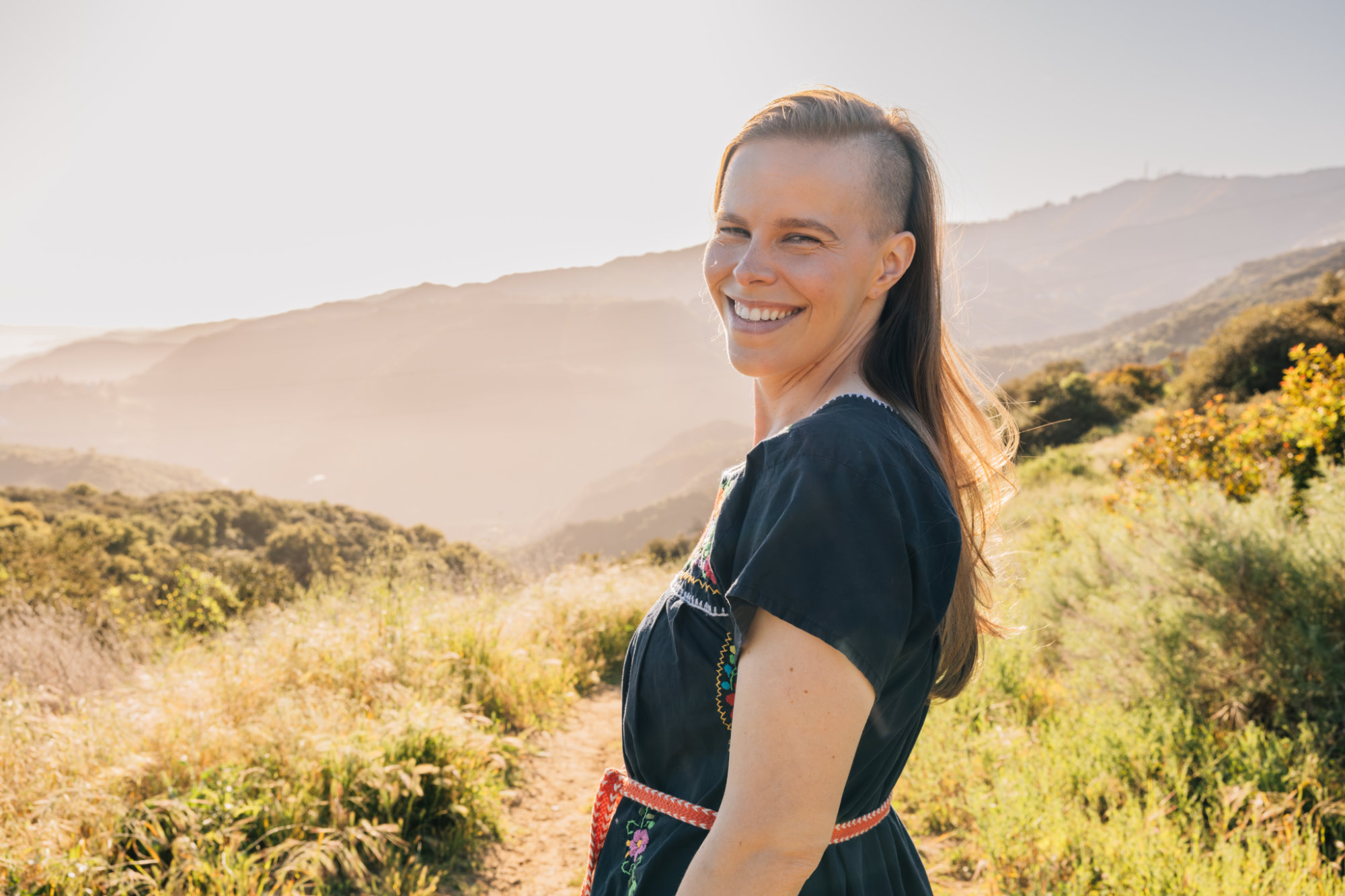
We recently had the chance to connect with Julia de’Caneva and have shared our conversation below.
Julia, so good to connect and we’re excited to share your story and insights with our audience. There’s a ton to learn from your story, but let’s start with a warm up before we get into the heart of the interview. What are you being called to do now, that you may have been afraid of before?
I am being called to step into my role as an author and public speaker. For years I imagined it being in the distant future, and while I value that time I spent learning and observing, now is the time to step forward. I need to let go of the small-scale work I’ve been focused on and expand into more.
Can you briefly introduce yourself and share what makes you or your brand unique?
I’m Julia de’Caneva, founder of If It’s The Last Thing I Do and co-founder of elemental. My work through If It’s The Last Thing I Do blends together my myriad professional certifications and interests, exploring the intersection of wellness and mortality through an active Substack, Holistic Health Coaching, and deathcare education. My intention is to provide services and resources to support people in all aspects of their life and death. At elemental, we are focused on reconnecting humans to the rest of Nature through mindful practice and social change. Disconnection from the rest of Nature and our societal death-phobia are deeply interconnected issues, and require a fundamental shift in our cultural conversations and discourse around these subjects. A lot of my work right now looks like supporting people in getting their physical and digital lives organized (yes, even your closet!), because that’s what often stands in the way of making more profound changes. It’s a natural step from organizing your inbox to organizing your end-of-life documents and wishes, all of which contributes to an examined life, lived with intention.
Great, so let’s dive into your journey a bit more. What part of you has served its purpose and must now be released?
I spent so many years stuck in a dopamine feedback loop of endless productivity and people-pleasing. At its core, I wanted people to like me, but more than that I wanted them to need me. After some excellent soul searching and excavating, I see the ways that pattern was an old one, keeping me simultaneously needed but also somewhat othered, never part of the group until I earned the spot. I see the ways that pattern drove me towards deep unwellness, but also how that invited me to find true wellness. As I step into my full soul purpose of inspiring and encouraging others to view their mortality as a welcome piece of their wellness, it’s time to let that old patterning go for good and let it transmute into a more generative version.
What did suffering teach you that success never could?
Suffering showed me all of the ways my brain tries to keep me “safe,” but it actually just perpetuates delusion, keeping me stuck. Success always seems to impart the feeling that “more is more.” Once you’ve checked something off the list, there’s always something more you could be doing or achieving. On the other hand, suffering makes you pause and think, “Am I really stuck with this, or is this just my perspective?” I learned that it can be rather complex to change your perspective on something (anything!), but it is completely possible. My greater awareness of suffering, courtesy of my mindfulness practices and a shout out to my cancer diagnosis, has shown me that there is a space between reacting and responding. It taught me that you always have a choice in how you respond, no matter the situation. Success often feels like it’s accompanied by the perception of “not enoughness” and suffering seems to reinforce the fundamental concept that exactly as I am is not enough. Make no mistake, I’m not averse to success, but I do try to take it as an opportunity for self-reflection rather than fuel for a direct path to burnout.
So a lot of these questions go deep, but if you are open to it, we’ve got a few more questions that we’d love to get your take on. What important truth do very few people agree with you on?
Mortality is the foundation of wellness. The opposite of wellness is not death, it’s disease, but people often conflate the two. You cannot claim to think about health holistically if you don’t also include death. The fact that we die is quite literally what makes health so important, every other reason is secondary. Fear of death is also lurking behind so much purported longevity medicine and very blatantly in the realm of biohackers striving for immortality. We need to shift the cultural discourse around “death as a failure” (ahem: to be productive) and back towards death as sacred and integral to life.
Okay, so before we go, let’s tackle one more area. What do you understand deeply that most people don’t?
The present moment is all we have, life is so fragile, and mortality gives us the ultimate clarifying lens. It’s not a coincidence that other survivors say similar things. When you walk up face-to-face with your mortality, it turns out that life expands to meet it, rather than to be filled by death. It becomes clear that death is only one moment of an entire lifetime, no matter how long or short. Intentional living becomes the only sane response.
Contact Info:
- Website: https://www.ifitsthelastthingido.com/
- Instagram: https://www.instagram.com/_ifitsthelastthingido
- Linkedin: https://www.linkedin.com/in/julia-decaneva/
- Other: https://juliadecaneva.substack.com/
Image Credits
Melodee Solomon
Popular
-

Portraits of the Valley
-

LA’s Most Inspiring Stories
-

Rick Norris Learned That Building a Successful Business Means Building a Life You Actually Want to Live
-

How Olivia Rush Turned Survival Into a Mission to Help Others Keep Going
-

How Bibi Goldstein Is Helping Entrepreneurs Reclaim Their Time by Embracing the Power of Delegation
-

Victoria Hasson is Redefining Voice Coaching Through Community and Collaboration


