




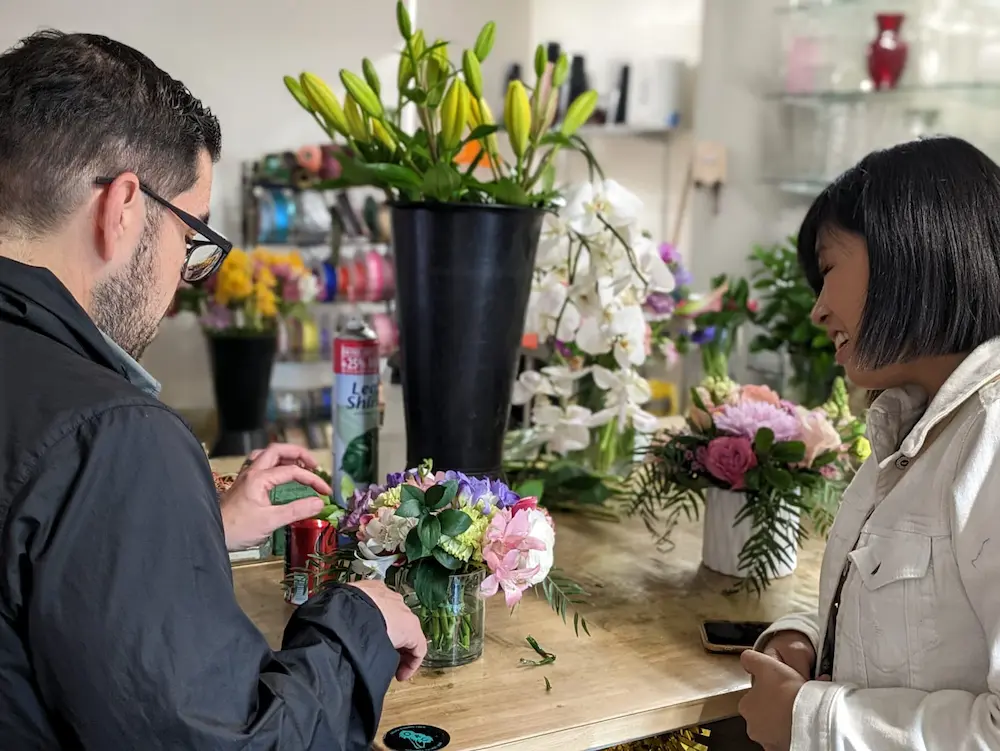
Adrian Aviles shared their story and experiences with us recently and you can find our conversation below.
Adrian, we’re thrilled to have you with us today. Before we jump into your intro and the heart of the interview, let’s start with a bit of an ice breaker: What is a normal day like for you right now?
A normal day starts early. First thing is checking what came in overnight and what needs to go out same day, especially being in Downtown Los Angeles where timing really matters. Then it’s getting flowers in, processing them, and figuring out what we actually have to work with. Every day depends on what came in from the market.
We stage orders so designers can just grab and go. Before, things would get mixed up or people would ask around for items, and that slowed everything down. Same with deliveries. In DTLA, drivers deal with traffic, buildings, security desks. So everything has to be labeled and ready. If a driver has to wait or look for something, the whole route starts slipping.
There’s always something unexpected. Late deliveries, flowers not opening right, last-minute orders. That’s really the job—adjusting without letting it feel messy. If the setup isn’t right from the start, everything else becomes harder.
Can you briefly introduce yourself and share what makes you or your brand unique?
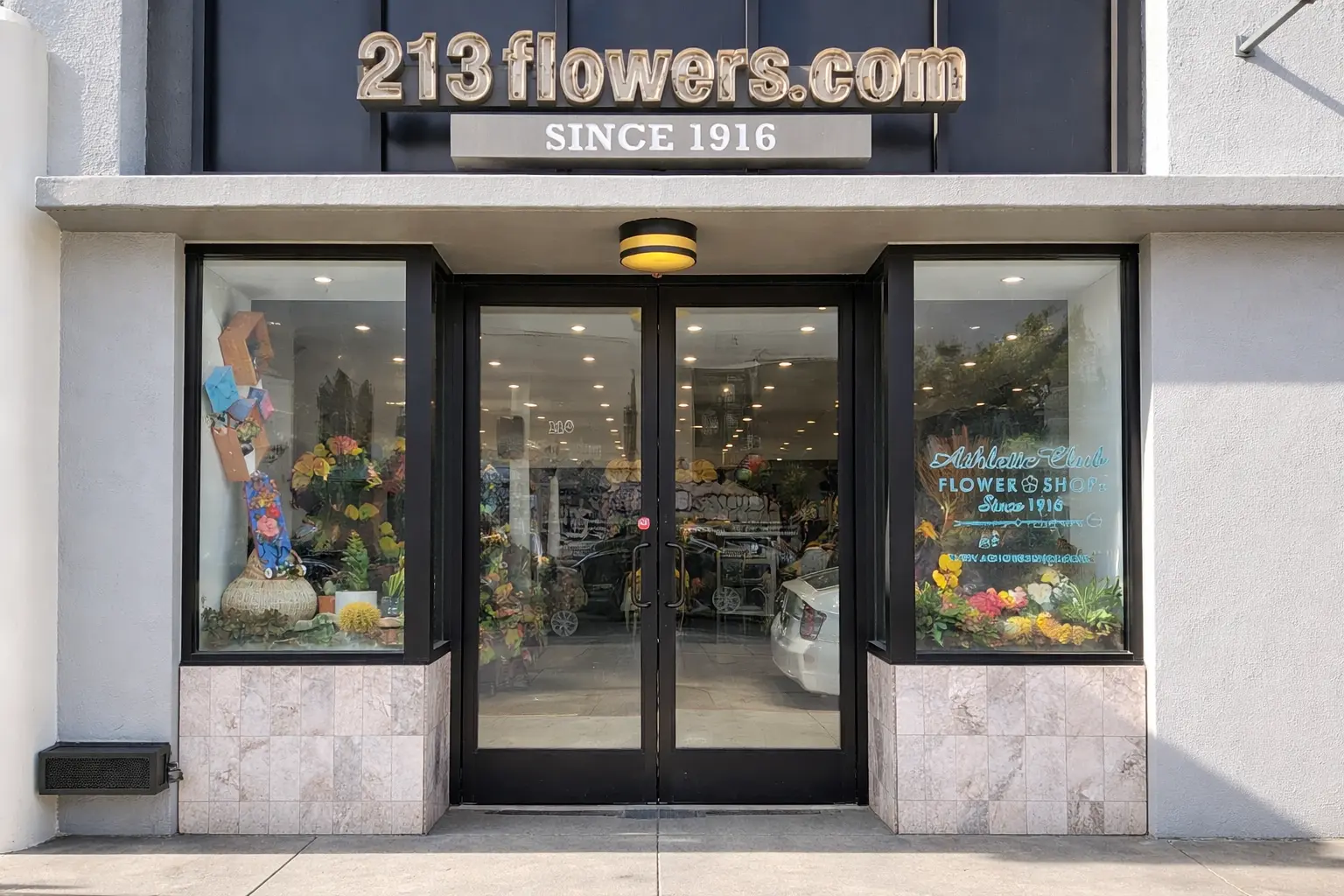
I run the Athletic Club Flower Shop in Downtown Los Angeles. We’ve been around since 1916, so there’s a lot of history behind what we do. At the core, we focus on everyday flowers for real moments—birthdays, sympathy, last-minute “I should probably send something” situations. We keep it simple, but we take it seriously.
What makes us a little different is how hands-on it is. We’re not a big operation. We design everything in-house and handle our own deliveries, so we see the whole process from start to finish. In a place like DTLA, that matters. Between traffic, building access, and timing, if you don’t stay on top of it, things fall apart pretty fast.
I didn’t grow up planning to be a florist. I kind of found my way into it, and over time it stuck. The business has also taken me around the world, which shapes how I see design and problem-solving. Right now, I’m focused on keeping things tight operationally while staying true to what’s worked for over 100 years—good flowers, honest service, and doing things the right way, even when it’s not the easiest.
Thanks for sharing that. Would love to go back in time and hear about how your past might have impacted who you are today. Who taught you the most about work?
My mom taught me the most about work. She started a floral design program at our family’s vocational school to help women build something for themselves. It wasn’t about making things look nice. It was about giving people a real shot at improving their situation.
I remember seeing how seriously she took it. Even small details mattered to her. If something wasn’t done right, she would slow it down and fix it. That stuck with me. Today at the shop, it’s the same thing. If an arrangement isn’t right, we redo it. If an order feels rushed, we reset it. That’s usually where things break down.
I didn’t fully understand it back then, but I do now. The work isn’t just the product. It’s how you carry it out. That part shows up in everything.
Was there ever a time you almost gave up?
Yeah, COVID was probably the closest thing. It wasn’t just a slow period, it was a seismic shift. Almost overnight, Downtown emptied out. Offices closed, foot traffic disappeared, and a big part of our regular business just stopped.
I remember days where it felt unusually quiet. Orders dropped, and at the same time, getting flowers became harder. Supply chains were off, prices were going up, and you couldn’t always count on what was coming in. We had to adjust fast. Smaller teams, tighter inventory, being more careful with every order. If you weren’t paying attention, things got out of control pretty quickly.
There were definitely moments where you stop and think, “Is this going to keep working?” But you keep going. You figure out what still works, what people still need. Flowers didn’t disappear, they just changed. More deliveries, more personal moments, less corporate. That’s where we leaned in. If you don’t adapt in a moment like that, that’s usually where things break.
Sure, so let’s go deeper into your values and how you think. What are the biggest lies your industry tells itself?
One of the biggest lies is that flowers are simple. From the outside, it looks easy—pick something nice, wrap it, send it out. But behind the scenes, there’s a lot that can go wrong. Timing, freshness, substitutions, delivery logistics. If one part slips, the whole experience feels off.
Another one is that faster is better. A lot of the industry has leaned into speed and volume, especially with wire services and mass-produced arrangements. We’ve seen orders come in where the photo looks one way, but what actually gets delivered is something completely different. That’s where people lose trust.
For us, it’s the opposite. We keep it tighter, more hands-on. Real inventory, real design, real delivery. It might not be the fastest system, but it’s more honest. If that part gets lost, the whole thing just becomes a transaction, and that’s not why people send flowers.
Before we go, we’d love to hear your thoughts on some longer-run, legacy type questions. What are you doing today that won’t pay off for 7–10 years?
A lot of what we focus on is consistency in how people experience us, not just the flowers themselves. Things like remembering what someone ordered before, making sure a delivery actually makes it through a front desk in Downtown LA, or taking an extra minute to get an arrangement right before it goes out.
I’ve seen it where someone orders once, then comes back a year later and says, “You guys got it right last time.” That doesn’t happen by accident. It comes from doing the small things well, over and over.
That kind of trust takes time. You don’t really see it building while it’s happening. But if you rush it or cut corners, it shows right away. That’s usually where people lose it.
Contact Info:
- Website: https://www.acflowershop.com
- Instagram: https://www.instagram.com/acflowershop
- Linkedin: https://www.linkedin.com/adrian-aviles-la

Popular
-

Portraits of the Valley
-

LA’s Most Inspiring Stories
-

Rick Norris Learned That Building a Successful Business Means Building a Life You Actually Want to Live
-

How Olivia Rush Turned Survival Into a Mission to Help Others Keep Going
-

How Bibi Goldstein Is Helping Entrepreneurs Reclaim Their Time by Embracing the Power of Delegation
-

Victoria Hasson is Redefining Voice Coaching Through Community and Collaboration


