




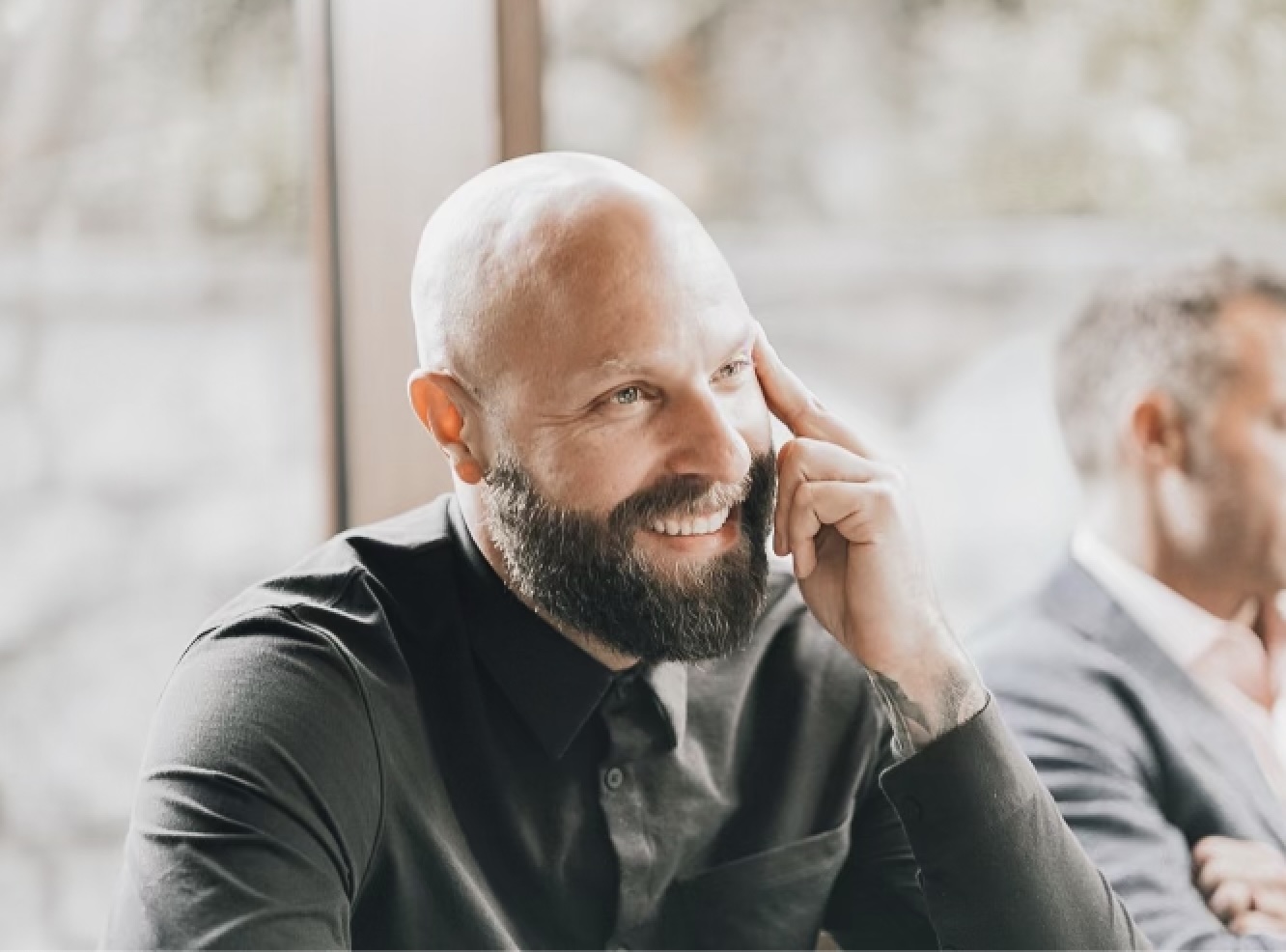
Today we’d like to introduce you to Chris Howard.
Hi Chris, it’s an honor to have you on the platform. Thanks for taking the time to share your story with us – to start maybe you can share some of your backstory with our readers?
I didn’t grow up with stability.
I grew up with uncertainty.
My mother struggled with severe mental illness, and from a young age I learned what it feels like when the person who is supposed to protect you can’t always protect themselves. That instability led to time spent in foster homes, bouncing between environments, never quite knowing where I belonged or what tomorrow would look like.
Despite what people assume about living in the San Fernando Valley, my brother and I grew up in relative poverty. It just didn’t look like what people expected poverty to look like. There were no headlines for it. No one talked about it.
One weekend, we spent our time hunting a rat that had infested our kitchen.
Food stamps—the paper ones—were our currency. When things got especially tight, my mother convinced the local liquor store to let her buy a pack of Marlboro Red 100s with food stamps. Survival has a way of bending rules, and that was the environment we learned to navigate early.
At one point, my mother’s boyfriend set our house on fire while my family was inside.
The landlord repaired the exterior of the property, but left our kitchen scorched and unusable for three years. It stayed that way until my father got out of prison, came by the apartment, saw the conditions, and called the health department. Needless to say, it was fixed within a couple of months after that.
Fortunately, my story didn’t unfold in isolation.
I had family—most notably my grandmother—who stepped in and helped raise me. My aunts also played an important role in supporting me and guiding me as I grew up. Despite numerous trials and tribulations, they helped shape me into a decent human being when the odds were stacked against me. Their presence didn’t eliminate the chaos, but it gave me something critical: values, continuity, and a sense that I mattered.
My brother also played a significant role in my life.
There’s nearly a ten-year age gap between us, and in many ways he helped usher me into manhood. While his guidance was sometimes misguided, it laid the foundation for learning how to stand up for myself and pave my own way. Eventually, there came a time when he went off to brave the world himself, and I was left to figure things out on my own to some degree. That transition forced independence early, whether I was ready for it or not—and in the absence of guidance, I mistook self-reliance for survival, a misunderstanding that eventually took the form of drug dealing and addiction.
Like many kids who grow up in unstable environments, I learned to adapt quickly—but I didn’t learn how to cope.
I found drugs at a young age, and they worked—until they didn’t. What started as a way to numb confusion, fear, and anger slowly turned into a life I couldn’t control. Addiction didn’t just take things from me; it shaped the way I saw myself and the world. I was surviving, but I wasn’t living.
At the same time, I was fortunate to have a strong peer group of friends.
That group persists to this day. In many ways, I look at them more like family than my own family in certain regards. These relationships were forged through shared experience, loyalty, and survival. I maintain strong relationships with the ones who are still alive today—and I don’t say that lightly.
I have endured an extreme amount of death in my life, starting at the age of nineteen.
Most of it has been overdoses. Some suicides.
I still think about Michael Anthony Myers to this day.
To be frank, I’m relatively unaffected when overdoses happen now. Repetition does that. But every few years, one hits differently. The harder part isn’t just the loss—it’s the quiet realization that if I’m not intentional with how I live my life, this is something I could continue to experience in my years of decline. That awareness has shaped how seriously I take responsibility, boundaries, and sustainability—not just in recovery, but in life.
Recovery didn’t come easily, and it didn’t come all at once. It also doesn’t make me special or unique. It’s a lifestyle choice. I choose my words tactfully when I say “choice”. Addiction isn’t a choice, recovery is.
It came through responsibility.
Through structure.
Through being held accountable when I wanted to run.
Through learning—often the hard way—that feelings are not instructions and that character is built through action, not intention.
As I rebuilt my life, I realized something fundamental: recovery isn’t just about stopping destructive behaviors—it’s about learning how to live.
Over the years, my journey has taken me from working on the ground level in recovery communities to managing and directing them. Eventually, I went on to found and operate multiple recovery housing programs built around structure, accountability, and integration back into real life—not comfort, not shortcuts, and not false promises.
As my work evolved, so did my scope.
Today, in addition to recovery housing and community development, I assist physicians in building and scaling psychiatric practices—helping bridge the gap between clinical excellence and operational sustainability. My focus has always remained the same: building systems that actually work for human beings, not just models that look good on paper.
Everything I do is informed by lived experience.
I know what happens when people aren’t challenged.
I know what happens when systems protect feelings instead of fostering growth.
And I know what’s possible when people are given structure, accountability, and a reason to take ownership of their lives.
Now, I’m stepping into a new chapter.
I’m about to have a baby in June, and I’m deeply excited for what this next phase of life represents. It’s a reminder that growth doesn’t stop, that healing can be generational, and that the work of becoming better—for ourselves and for others—is ongoing.
I’m still growing.
Still learning.
Still helping humans heal.
My story isn’t about redemption or perfection.
It’s about responsibility, resilience, and building a life that can withstand reality.
And that’s the work I continue to do every day.
Would you say it’s been a smooth road, and if not what are some of the biggest challenges you’ve faced along the way?
No, it hasn’t been a smooth road.
There have been challenges along the way—personally and professionally—as my work evolved from hands-on recovery support into leadership, ownership, and building businesses. With each step forward came a new set of responsibilities and a new level of accountability.
Professionally, some of the biggest challenges showed up through business partnerships.
Not every venture worked out, and not every partnership was the right fit long-term. In most cases, it wasn’t about conflict or failure as much as it was about misalignment—differences in vision, pace, or priorities. I’ve been fortunate that even when things didn’t work out, I’ve been able to walk away while maintaining quality relationships with the people involved.
That’s always mattered to me.
I try not to let those experiences shape the way I see the world or the people in it. Most professional breakups don’t happen because relationships are thriving—they happen because alignment changes. I’ve worked to approach those moments with perspective, diplomacy, and respect, understanding that we’re all fallible and doing our best within our own limits.
Along the way, I’ve also faced a fair amount of self-doubt.
There were moments where I questioned whether I was ready for the next step or capable of carrying the responsibility in front of me. In those moments, the work was simple, if not easy: put one foot in front of the other, stay focused on what needed to be done that day, and keep moving forward.
That mindset—showing up consistently, learning as I go, and adjusting when needed—has allowed me to grow without becoming rigid or cynical. It’s helped me stay grounded, maintain perspective, and continue building meaningful work and relationships over time.
It hasn’t been perfect, but it’s been intentional—and that’s what’s made the difference.
Appreciate you sharing that. What should we know about Ethos Recovery?
Ethos Recovery exists because I’ve lived on both sides of the system.
I’ve been the person who needed structure, accountability, and direction—and I’ve spent years working inside recovery models that promised change but didn’t always prepare people for real life. Ethos was built out of that gap.
At its core, Ethos Recovery is a long-term, structured recovery community for men who need more than short-term stabilization. It’s designed for individuals who want to build a life that actually works outside of treatment, not just stay sober in a controlled environment.
What Ethos reflects most is how I understand recovery now.
Recovery, in my experience, isn’t about comfort or constant emotional reassurance. It’s about learning how to tolerate discomfort, take responsibility, receive direct feedback, and function in the world. Ethos is structured intentionally around those principles. Residents are expected to work, show up, contribute to the community, and take ownership of their behavior. The structure isn’t punitive—it’s formative.
I’m deeply intentional about who Ethos is for.
We don’t try to be everything to everyone, and we don’t promise outcomes. Ethos works best for men who are willing to be challenged, who are open to feedback, and who understand that long-term change requires effort and consistency. That clarity allows us to maintain a culture rooted in accountability and mutual respect.
One of the things I’m most proud of is how Ethos integrates clinical care.
Rather than defaulting to one model or one provider, we work with clinicians and physicians based on best fit. This allows residents to receive meaningful clinical support while still living in a real-world environment where they’re responsible for their routines, relationships, and progress. The goal isn’t to insulate people from life—it’s to help them learn how to engage with it effectively.
Brand-wise, what matters most to me is integrity.
Ethos doesn’t market comfort as transformation. We don’t soften the reality of recovery to make it more palatable. We’re transparent about expectations, honest about challenges, and clear about what success actually looks like. That honesty attracts the right people—residents, families, and referral partners alike.
What I want readers to know is that Ethos Recovery is personal.
It reflects my experiences, my mistakes, my growth, and what I’ve seen work over time. It’s a place where people are supported, but not coddled; challenged, but not abandoned. For the right individual, Ethos provides the structure and community necessary to build a life that can be sustained long after they leave our care.
Ethos isn’t about fixing people.
It’s about helping them build the capacity to live well—and stay well—on their own terms.
Let’s talk about our city – what do you love? What do you not love?
What I like best about our city
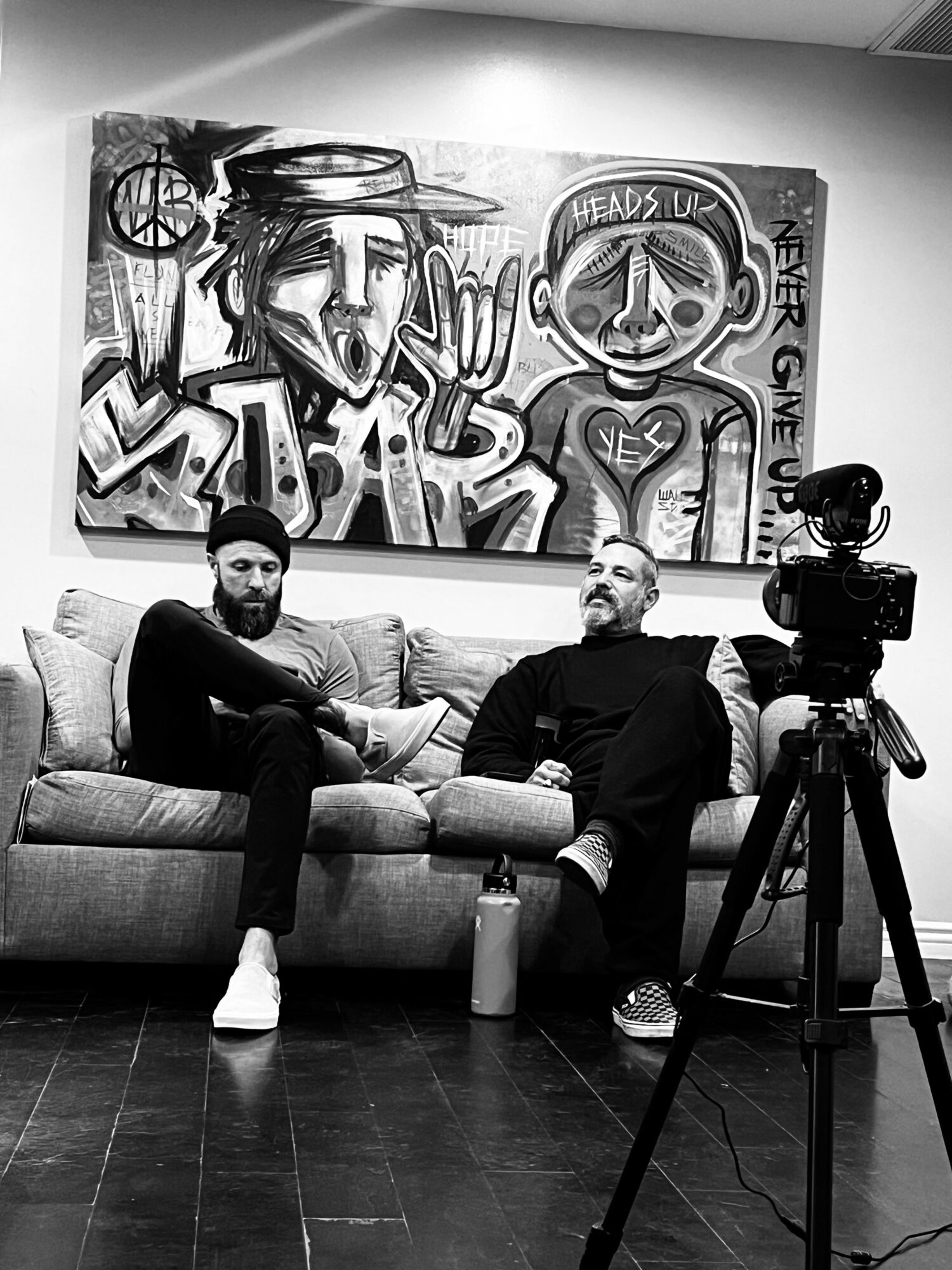
I love Los Angeles for its people and its diversity. It’s a true melting pot—of cultures, food, perspectives, and lived experience. You can feel the world here. There’s an immense amount of creativity, and that shows up everywhere, especially in the art. I genuinely love Los Angeles graffiti. It’s raw, expressive, and honest. To me, it reflects the city itself—layered, imperfect, and alive. I also appreciate how much opportunity exists here for people who are willing to work, create, and build something meaningful.
Despite its flaws, LA has a pulse that’s hard to replicate anywhere else.
What I like least about our city
I struggle with how the city approaches homelessness and substance use.
Public policy in Los Angeles often feels disconnected from reality. The current version of harm reduction—handing out meth pipes while allowing open-air drug markets to operate unchecked—creates serious public health and safety issues. I don’t see that as compassion; I see it as neglect. The refusal to acknowledge or correct the downstream consequences of these policies does real harm to individuals and communities alike.
To be clear, I do support harm reduction when it’s done effectively—things like safe injection sites, regulated drug supply, and structured pathways into treatment. Those models can save lives when implemented with accountability. What doesn’t work is harm reduction without boundaries or responsibility.
LA is a city worth fighting for.
That’s why the frustrations exist in the first place—because the potential here is enormous, and the people deserve systems that actually work.
Contact Info:
- Website: https://www.ethosrecovery.com
- Instagram: https://instagram.com/ethosrecovery
- Facebook: https://www.facebook.com/ethosrecovery
- LinkedIn: https://www.linkedin.com/in/real-chris-howard
Popular
-

Portraits of the Valley
-

LA’s Most Inspiring Stories
-

Que Johnson on Building Brands That Last: From Visibility to True Market Authority
-

Christina Wren Steps Into the Director’s Chair to Tell Stories That Feel Like Home
-

JordanL on ‘Breathe,’ Belief, and Building a Movement Beyond the Music
-

Megan Birney Rudert on How Access to Light Is Powering a More Sustainable and Equitable Future


